Before a recent USDT transfer to a new counterparty, I treated the send like a two step control, not a single confirmation.
First I verified the destination itself. I did not rely on the first and last characters alone. I compared the full address against the source that provided it, confirmed the network, and checked that nothing had changed in the clipboard between copy and paste.
Then I screened the address. The check returned exposure I was not expecting: inbound links to higher risk flows that were not visible from a casual look at recent transactions. I stopped the transfer, requested a different destination, and screened the replacement address before proceeding. The second wallet was clean. The first one never received the funds.
That pause did not change the size of the transfer. It changed the quality of the decision. A correct looking address is not the same as a destination whose history you are willing to inherit. I now use the same sequence on every send, including wallets I have used before: confirm the address, confirm the network, then review the on chain history.
Checking before you send is not extra process. It is the last reversible step.
#SimpleSwapxAMLBot
Before a recent USDT transfer to a new counterparty, I treated the send like a two step control, not a single confirmation.
First I verified the destination itself. I did not rely on the first and last characters alone. I compared the full address against the source that provided it, confirmed the network, and checked that nothing had changed in the clipboard between copy and paste.
Then I screened the address. The check returned exposure I was not expecting: inbound links to higher risk flows that were not visible from a casual look at recent transactions. I stopped the transfer, requested a different destination, and screened the replacement address before proceeding. The second wallet was clean. The first one never received the funds.
That pause did not change the size of the transfer. It changed the quality of the decision. A correct looking address is not the same as a destination whose history you are willing to inherit. I now use the same sequence on every send, including wallets I have used before: confirm the address, confirm the network, then review the on chain history.
Checking before you send is not extra process. It is the last reversible step.
#SimpleSwapxAMLBot
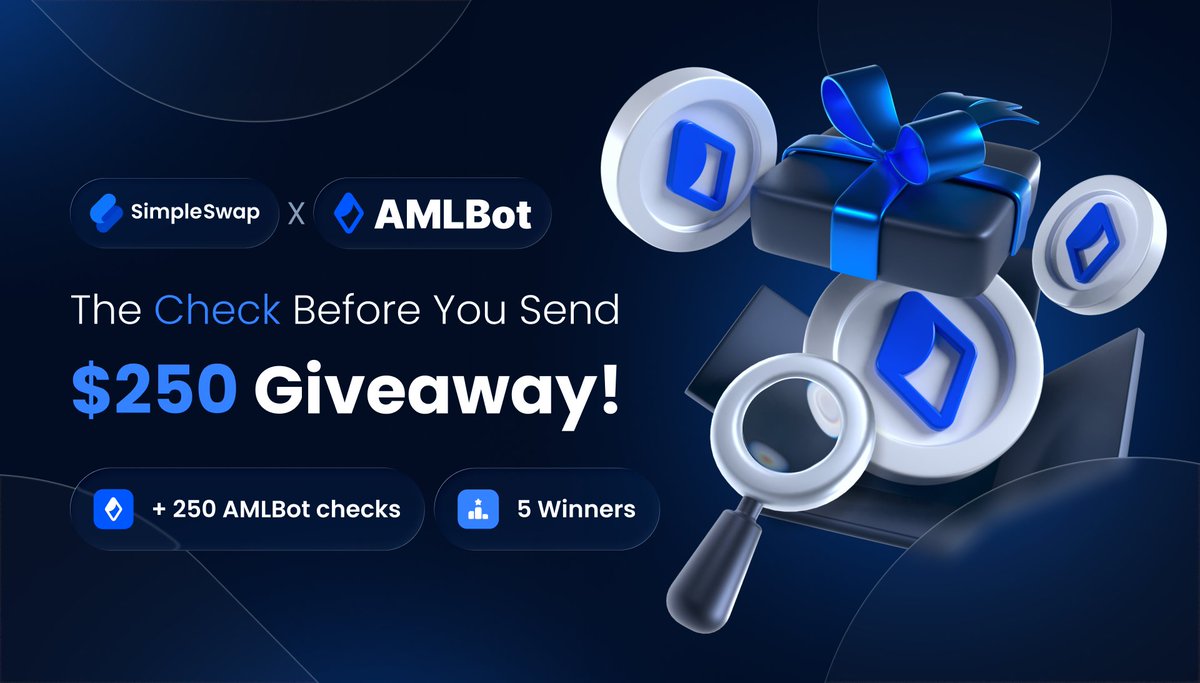
The Check Before You Send – $250 Giveaway + 250 AMLBot checks
Before crypto leaves your wallet, there are two different things worth checking.
Is this actually the address you meant to send to?
And does its on-chain history give you any reason to pause?
Tell us about a specific moment when checking before a transfer made a difference, or when skipping that check taught you a lesson.
Maybe you spotted a lookalike address copied from your transaction history. Maybe an address check showed risk you weren't expecting. Maybe one last review made you stop before sending funds somewhere you shouldn't.
How to enter:
1️⃣ Follow @SimpleSwap_io and @AMLBotHQ
2️⃣ Quote-repost this post with your story and #SimpleSwapxAMLBot
🏆 5 winners, chosen at random from valid entries: $50 in USDT + 50 AMLBot checks each
🗓 Campaign ends October 5. Winners announced October 6.
The Check Before You Send – $250 Giveaway + 250 AMLBot checks
Before crypto leaves your wallet, there are two different things worth checking.
Is this actually the address you meant to send to?
And does its on-chain history give you any reason to pause?
Tell us about a specific moment when checking before a transfer made a difference, or when skipping that check taught you a lesson.
Maybe you spotted a lookalike address copied from your transaction history. Maybe an address check showed risk you weren't expecting. Maybe one last review made you stop before sending funds somewhere you shouldn't.
How to enter:
1️⃣ Follow @SimpleSwap_io and @AMLBotHQ
2️⃣ Quote-repost this post with your story and #SimpleSwapxAMLBot
🏆 5 winners, chosen at random from valid entries: $50 in USDT + 50 AMLBot checks each
🗓 Campaign ends October 5. Winners announced October 6.
The $SELECT flywheel is not a treasury buyback.
It is not a promise. It is not discretionary.
It is baked into every launch on https://t.co/q9BVTUrHtQ.
Every project that succeeds becomes a buyer of $SELECT. Locked. On chain. Permanent.
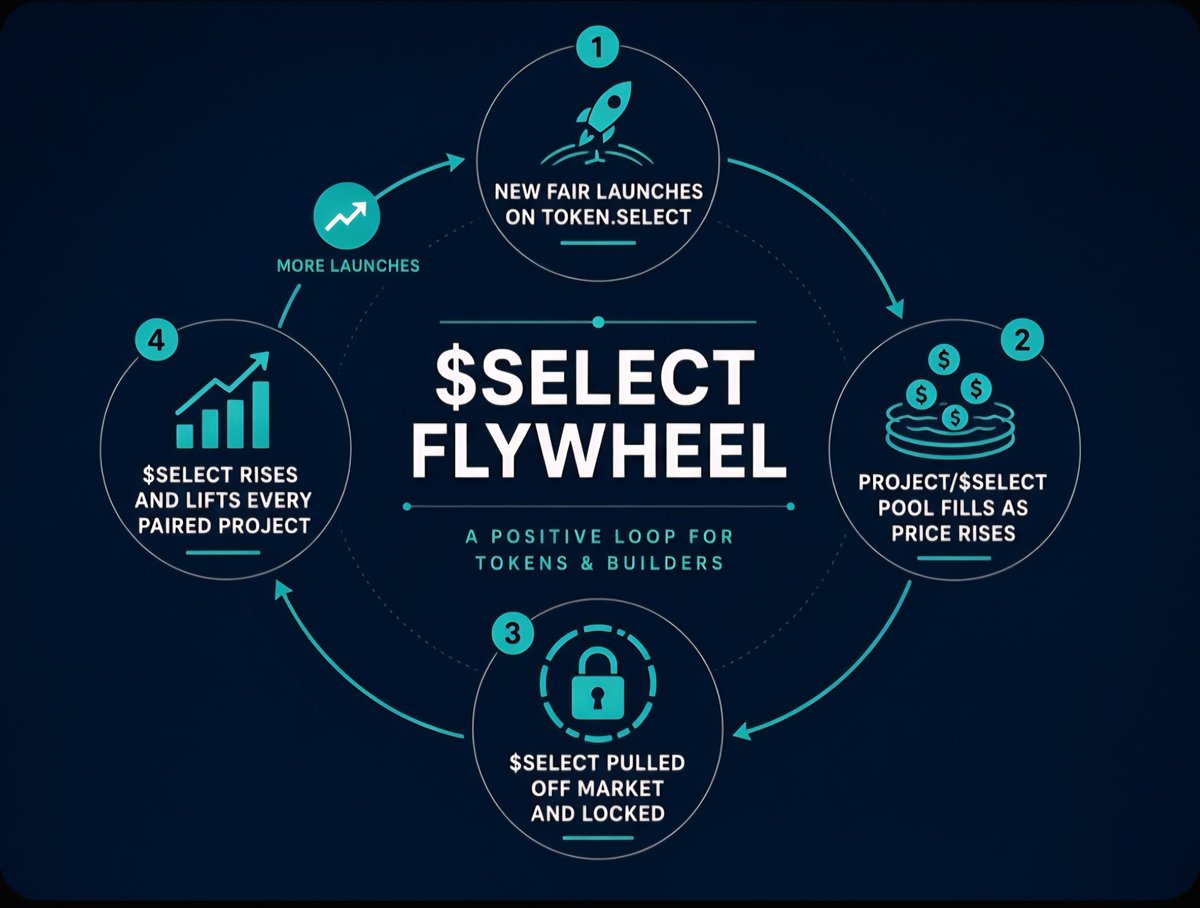
Here is how the loop actually works.
@selectfdn
Most launchpads isolate projects from each other. Liquidity leaves. Communities leave. The next token starts from https://t.co/CGa7Gqaqc2 does the https://t.co/CS4DaDMWsY project’s upside becomes structural demand for the token at the centre.
The people who backed early keep earning fees if the token keeps trading.Fair at launch. Aligned after launch. Compounding at the protocol layer.That is the $SELECT flywheel.
The $SELECT flywheel is not a treasury buyback.
It is not a promise. It is not discretionary.
It is baked into every launch on https://t.co/q9BVTUrHtQ.
Every project that succeeds becomes a buyer of $SELECT. Locked. On chain. Permanent.
Here is how the loop actually works.
@selectfdn
Then the second half of the wheel turns.$SELECT gets taken off the market → $SELECT price rises → every other project paired with $SELECT gets a lift.A stronger $SELECT makes the next launch more attractive.
More launches mean more pools.
More successful pools mean more $SELECT locked.That is the flywheel:More launches → more $SELECT demand → higher $SELECT → stronger ecosystem → more https://t.co/ngGwEEZbIj announcement. No committee. Protocol level demand.
This is the https://t.co/S2YuAMOTIt buyers push the project price up into that range, the pool has to pull $SELECT off the open market to rebalance.Successful launches do not “support” $SELECT with words.
They absorb $SELECT into locked liquidity.$GOOD alone has already pulled ~30 million $SELECT into its pool. That is 3% of total supply.
$SELECT sits at the centre.
It launched through the same Genesis rules as every other token.
After that, every new project seeds two pools:
• 90% Project / ETH
• 10% Project / $SELECT
The $SELECT pool does not start full of $SELECT.
It starts single sided, with the project’s own tokens sitting just above launch price.
https://t.co/q9BVTUrHtQ is a fair launchpad on Robinhood Chain.Everyone contributes at the same flat price.
Refunds stay open until the target hits.
Team, marketing and community tokens vest by contract.
Liquidity is locked.Contributors do not just get tokens. They earn a share of trading fees for the life of the project.That is the first alignment layer.
Week 3 Competition is live: win $100 for explaining the $SELECT flywheel.
Do it your way. A thread, a video, a chart, a meme, anything. The entries that make the strongest case win.
$50 for first, $25 each for second and third, paid in USDG.
Entries close Friday 2 October, 08:00 UTC.
🇰🇷🤖 #BOTChain KBW GIVEAWAY
KBW week is here, and we’ve got something for the community. 👀
① Follow @BOTChain_ai
② Like + Repost
③ Reply with #BOTChainKBW + tag a friend
🎁 5 winners × 20 USDT + limited BOT Chain merch
Winners will be randomly selected from all eligible entries.
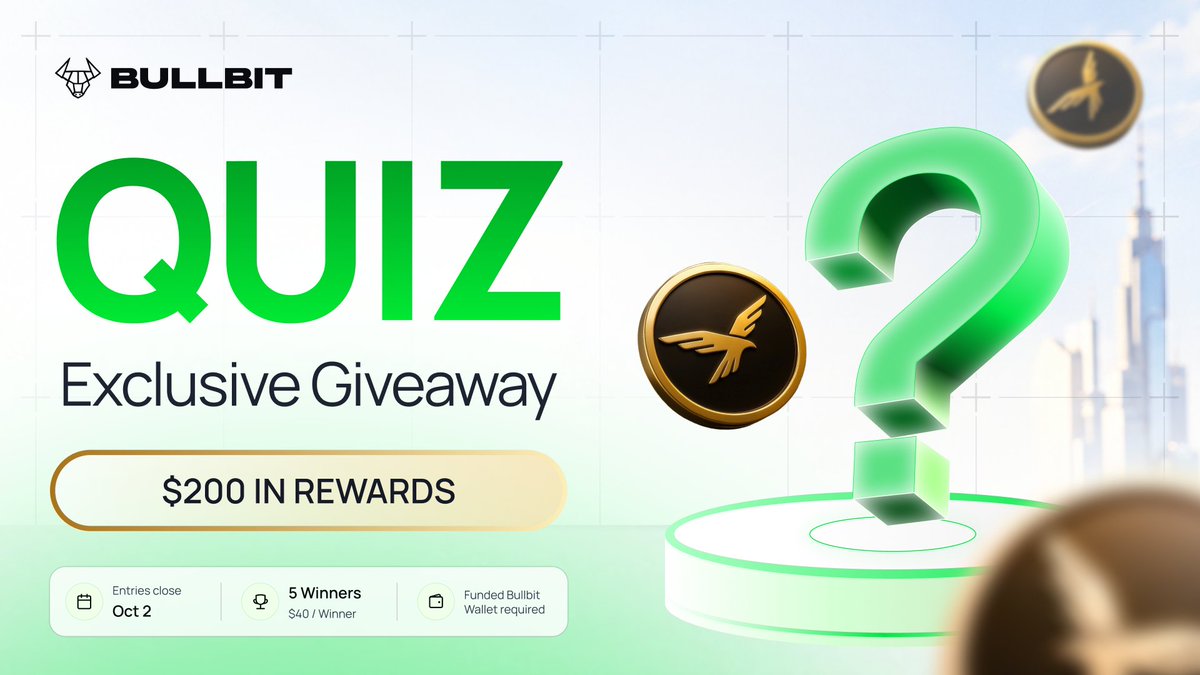
BULLBIT x WLFI Quiz: $200 in Rewards 🧠
WLFI/USDC is available on Bullbit, with zero trading fees until Oct 10. To mark it, we're running a WLFI quiz with $200 up for grabs.
Now tell us: how much do you actually know about WLFI?
Question: What is WLFI?
A. A Bitcoin Layer-2 network
B. The governance token of World Liberty Financial
C. A stablecoin issued by Tether
D. An NFT marketplace on Solana
How to join:
✅ Follow @BullbitDEXHQ
✅ Like & Retweet this post
✅ Comment your answer (A/B/C/D) + tag 3 friends
✅ Drop your Bullbit Wallet address
🏆 5 winners will be selected by lucky draw from all correct answers, $40 each
📅 Entries close: Oct 2
Must have a funded Bullbit Wallet to be eligible.
Drop your answer below 👇
We’re serving you a little appetizer before Wave 2 🍕
The first Housebets Original is coming.
Think you know what it is?
One random person who gets it right will win 100 $USDT when we reveal the game.
Drop your guesses below 👇
A year ago payments were the real job after the work was done: send a PDF, wait on a wire, then convert whatever finally arrived. AllScale Invoicing ended that. I send a clean invoice, the client pays without creating an account, and I receive USDT or USDC in self custody. Checkout and Claim Link close the loop so I can collect on one side and pay contractors on the other, with payroll doing the same at team scale. What I love is that it feels ordinary: professional invoice, flexible payer, stablecoins in my wallet, status I can trust. For year two, give us exportable history with fees vs net received, overdue reminders, recurring invoices that roll into payroll, and one timeline from created to paid to settled to claimed. Build that and this stops being a crypto tool and becomes the account people run a business from.
One year ago, we officially launched Invoicing.
To celebrate, we’re giving away 300 USDT.
How do you use AllScale? What do you love, and what should we improve?
Drop your story below by Oct 4, 12:00 UTC👇