Helping the world move value since 2019. Try PayBox today. Title Partner of MoonPay X Games League. Posts here not for UK or EEA users - follow @moonpay_UK!
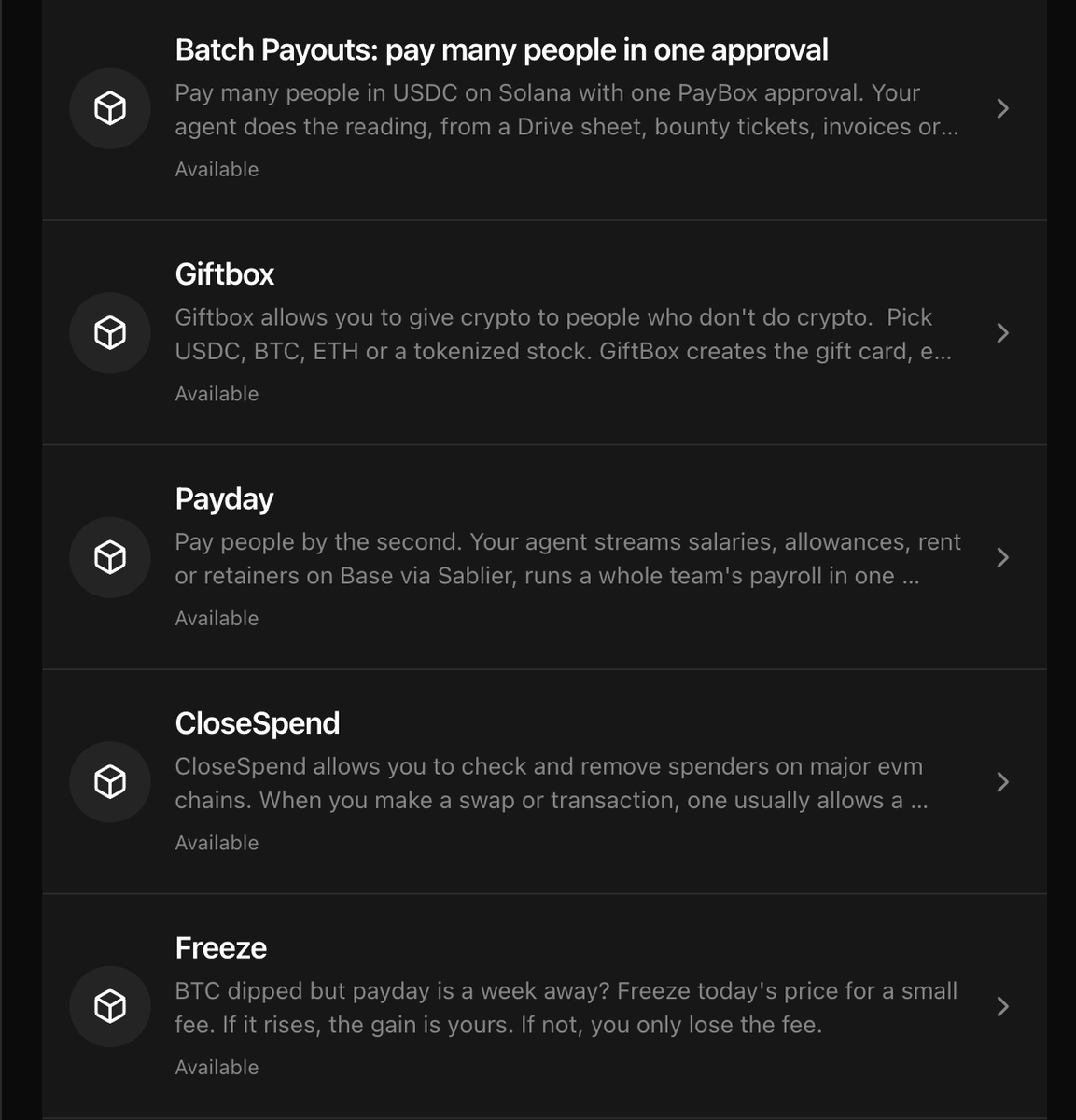
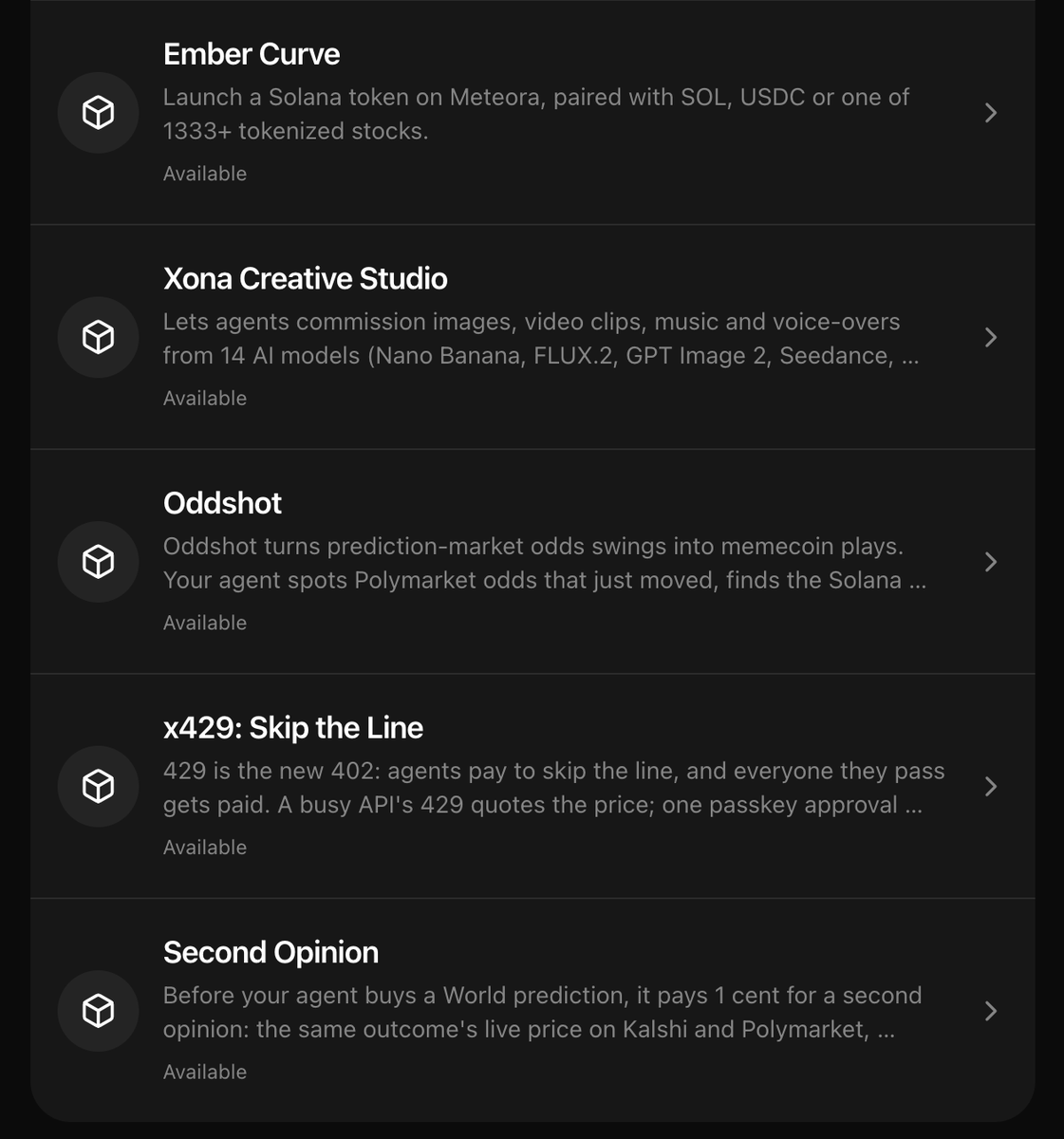
hundreds of people participated in the first PayBox Hackathon, and today we are revealing the 13 finalists!
🏆 Ember Curve by @embercurve
🏆 x429 by @olaph_lol
🏆 GiftBox by 0xkinnie
🏆 CtrlPoint by @Malachy36
🏆 Xona by @xona_agent
🏆 Payday by @Jemii_aHH
🏆 Duel by @Tajudeen
🏆 BatchPayout by @kingshihua
🏆 Second Opinion by @_iam_robert
🏆 Odd Shot by @sentinel_dapper
🏆 Freeze by @dollar782
🏆 Foresyte by @emelucrypto
🏆 CloseSpend by @tayonweb
all 13 of these new plugins are now available in the @PayBox Community Plugins Marketplace: https://t.co/TfQolAO4to
each finalist is eligible to receive $1,000 of USDC (pending account verification), and over the next 7 days, they'll make their case for 1st, 2nd, and 3rd place prizes, which will be announced on Friday, October 30
builders, we will DM you with next steps
congratulations to all of the PayBox Pioneers and Hackathon participants!
Moonshot just shipped the checkout Amazon, Shopify, Uber and DoorDash have spent billions perfecting, inside a self-custodial wallet.
Six small 3% gains don't add up to 18%. They compound into a 19.4% conversion lift.
Here's how this screen stacks them:
1. Recent: the card that already worked
Card approval decides whether a crypto purchase happens.
A card that has already cleared a crypto purchase is the strongest signal it will clear the next one. Moonshot labels it Recent.
Declines cost more than one transaction. 10% of US shoppers who abandoned a checkout did so because their card was declined. 40% of consumers say they won't return to a merchant after a false decline.
2. Default to card with previous successful trasncation
Think about the last time you paid with Apple Pay. You didn't pick a card. You double-clicked, and the default card paid. Almost everyone does this. Nearly 9 in 10 mobile wallet users default to one card, and only 13% of people with multiple cards in their wallet rotate between them.
Banks compete hard to be the default card, because the default is the card that gets used. People treat the default as the recommended choice. Moonshot gives that slot to the card that already worked.
3. The last 4 digits
Recognition is easier than recall. It's one of Nielsen Norman Group's top 10 usability heuristics, because recognition gives memory more cues to work with. Users don't remember card numbers. They recognize the last 4.
The last 4 is also a trust signal. 19% of US shoppers who abandoned a checkout said they didn't trust the site with their card. Showing the last 4 tells the user the card is already stored and nothing needs to be typed.
4. The card brand
The brain can identify an image seen for as little as 13 milliseconds. The Mastercard or Visa logo is recognized before any text is read.
A familiar payment brand moves conversion on its own. Shop Pay from Shopify at checkout lifts lower-funnel conversion by 5%, even when buyers don't use it.
5. Ranked first
The first option gets the most attention. The #1 Google result gets 27.6% of clicks, 10x the #10 result. The payment method most likely to succeed should be the first one the user sees.
6. Expiry dates
~30% of card details change every year. An expired card is a hard decline, and retrying it won't work.
@moonpay passes expiry dates to partners. A card close to expiry can show in yellow, and an expired card in red with an update button. The user fixes it before the decline, not after.
7. How 3% becomes 19.4%
A funnel is a chain. Every user has to pass every step, so conversion is each step's rate multiplied together, not added.
Each fix works on a bigger group than the one before it. The first gets 3% more people past step one. The second gets 3% more of that larger group past step two. Across six steps: 1.03 x 1.03 x 1.03 x 1.03 x 1.03 x 1.03 = 1.194. A 19.4% lift.
Then it keeps going. Users whose first purchase succeeds come back, and their next purchase runs through the saved card that already cleared. The gap grows every month.
Uber runs 1,000+ experiments at any time for exactly this reason. Shopify's checkout converts up to 36% better than competitors, and 15% better on average. That gap comes from stacking small improvements.
8. The playbook isn't new
Amazon filed the 1-Click patent in 1997 and it was granted in 1999. Apple licensed it in 2000. Jared Spool's team replaced a retailer's Register button with Continue, and sales rose 45%: $15M in the first month and $300M in the first year. Uber Eats and DoorDash checkout today is the last 4 digits and one button.
9. Why headless
With a widget, the onramp couldn't remember the user, so every purchase was a first purchase. With headless, the saved card sits inside the partner's app, in their design, ranked where they choose. A self-custodial wallet now has the same checkout as a mainstream fintech app.
10. How we work with partners
We don't hand over docs and an API key and walk away. We go screen by screen with partners and find what moves conversion 1%, 2%, 3%. Then we stack those changes so they compound.
This screen got that level of attention. It matters more than most people think.
Well done @moonshot
There are 100+ more of these. You just have to want to obsess over them like I do. DM me and you'll see why partners choose us
in a market that never stops moving
every second matters, every screen matters
we are obsessed with how value moves, and how we can make it better
@serdre_ and the team cooked with saved cards and headless onramps
Moonshot just shipped the checkout Amazon, Shopify, Uber and DoorDash have spent billions perfecting, inside a self-custodial wallet.
Six small 3% gains don't add up to 18%. They compound into a 19.4% conversion lift.
Here's how this screen stacks them:
1. Recent: the card that already worked
Card approval decides whether a crypto purchase happens.
A card that has already cleared a crypto purchase is the strongest signal it will clear the next one. Moonshot labels it Recent.
Declines cost more than one transaction. 10% of US shoppers who abandoned a checkout did so because their card was declined. 40% of consumers say they won't return to a merchant after a false decline.
2. Default to card with previous successful trasncation
Think about the last time you paid with Apple Pay. You didn't pick a card. You double-clicked, and the default card paid. Almost everyone does this. Nearly 9 in 10 mobile wallet users default to one card, and only 13% of people with multiple cards in their wallet rotate between them.
Banks compete hard to be the default card, because the default is the card that gets used. People treat the default as the recommended choice. Moonshot gives that slot to the card that already worked.
3. The last 4 digits
Recognition is easier than recall. It's one of Nielsen Norman Group's top 10 usability heuristics, because recognition gives memory more cues to work with. Users don't remember card numbers. They recognize the last 4.
The last 4 is also a trust signal. 19% of US shoppers who abandoned a checkout said they didn't trust the site with their card. Showing the last 4 tells the user the card is already stored and nothing needs to be typed.
4. The card brand
The brain can identify an image seen for as little as 13 milliseconds. The Mastercard or Visa logo is recognized before any text is read.
A familiar payment brand moves conversion on its own. Shop Pay from Shopify at checkout lifts lower-funnel conversion by 5%, even when buyers don't use it.
5. Ranked first
The first option gets the most attention. The #1 Google result gets 27.6% of clicks, 10x the #10 result. The payment method most likely to succeed should be the first one the user sees.
6. Expiry dates
~30% of card details change every year. An expired card is a hard decline, and retrying it won't work.
@moonpay passes expiry dates to partners. A card close to expiry can show in yellow, and an expired card in red with an update button. The user fixes it before the decline, not after.
7. How 3% becomes 19.4%
A funnel is a chain. Every user has to pass every step, so conversion is each step's rate multiplied together, not added.
Each fix works on a bigger group than the one before it. The first gets 3% more people past step one. The second gets 3% more of that larger group past step two. Across six steps: 1.03 x 1.03 x 1.03 x 1.03 x 1.03 x 1.03 = 1.194. A 19.4% lift.
Then it keeps going. Users whose first purchase succeeds come back, and their next purchase runs through the saved card that already cleared. The gap grows every month.
Uber runs 1,000+ experiments at any time for exactly this reason. Shopify's checkout converts up to 36% better than competitors, and 15% better on average. That gap comes from stacking small improvements.
8. The playbook isn't new
Amazon filed the 1-Click patent in 1997 and it was granted in 1999. Apple licensed it in 2000. Jared Spool's team replaced a retailer's Register button with Continue, and sales rose 45%: $15M in the first month and $300M in the first year. Uber Eats and DoorDash checkout today is the last 4 digits and one button.
9. Why headless
With a widget, the onramp couldn't remember the user, so every purchase was a first purchase. With headless, the saved card sits inside the partner's app, in their design, ranked where they choose. A self-custodial wallet now has the same checkout as a mainstream fintech app.
10. How we work with partners
We don't hand over docs and an API key and walk away. We go screen by screen with partners and find what moves conversion 1%, 2%, 3%. Then we stack those changes so they compound.
This screen got that level of attention. It matters more than most people think.
Well done @moonshot
There are 100+ more of these. You just have to want to obsess over them like I do. DM me and you'll see why partners choose us