After the failed Fable 5.2, I started wondering: is the AI industry a fake and a scam? If you dig into the latest releases from AI labs, here's what you find:
1. In the five years since LLMs appeared, there has been no revolutionary leap in intelligence. It's the same transformer, stuffed with more parameters and increasingly elaborate RL tuned for specific tasks. No radically different architectures are on the horizon, so our experience with AI will stay at the same level
2. The cost of compute keeps rising and will keep rising. AI has been heavily used in large projects for more than 10 years. CUDA and GPUs in servers are ancient history. Before giant LLMs there were plenty of other important, resource-hungry workloads: GANs, CNNs, diffusion models, and many derivatives. Yet the cost of compute only went up
At the chip level, we never came up with anything radically better than what we have now. And nothing cheaper or newer is in sight either
3. Look closely at the models themselves, and you'll see labs resorting to all kinds of tricks to work around the problems above. Fable 5.2 is the apotheosis of this. It handles a certain class of tasks brilliantly but is awful at others. They clearly tried to compress it and focus it on what shows up most often in agentic systems. Opus 5.5 is the best coder in the world. But give it anything else and it performs like ancient NLP from 2017
4. This includes distillation, cramming more thinking resources into fewer layers, synthetic training (which it's now fashionable to call RSI), and many other things I'm not aware of. No lab does this because things are going well
5. AI doesn't invent scientific solutions, despite what the press releases say. It brute-forces millions of candidates until at least one fits. If you dig into OpenAI's recent papers presenting solutions to math problems, you'll see that most of them are meaningless. They're found by trial and error, and all they do is prove solvability, not applicability to real-world laws. This is also a direct consequence of point 1
6. AI is not capable of inventing in the sense we're used to. It's the same iteration over tokens already embedded in the training data. The transformer architecture doesn't allow it to go beyond that. At a fundamental level, it's still brute-forcing answers. And brute force won't get you very far
As a result, we have models like Opus 5.5, GPT-6.1 Terra, and Fable 5.2 that have lost their evenness of intelligence because of the problems described above. The labs are trying to cut costs. The new generation of models has already started to degrade on certain intellectual tasks
Walmart and Kroger are quietly rolling out an internal store technology across America that could either modernize retail or bankrupt the middle-class family budget.
Starting across thousands of locations heading into 2027, traditional paper price tags are being ripped off grocery shelves and replaced with cloud-connected digital screens. Raise the price of bottled water by 20 percent the second the afternoon temperature hits 90 degrees. Surge the cost of ground beef, milk, and sandwich bread between 5 PM and 6 PM when exhausted commuters are rushing home from work. Drop prices at 10 AM on a Tuesday, then hike them right back up the minute the after-school crowd walks through the sliding doors.
Every price change happens wirelessly in seconds from a central corporate dashboard. No store employee has to touch a single shelf.
Walmart has already signed a massive deployment deal with VusionGroup to wire 2,300 American supercenters with EdgeSense digital shelf rails by 2027. Kroger is expanding its own Microsoft-backed system called EDGE across hundreds of supermarkets. Over 60 million digital price tags are already blinking on US grocery aisles right now.
This is not supply chain inflation. This is Uber-style surge pricing built directly into the shelves where Americans buy baby formula, eggs, and medicine.
Last week I sat down for coffee with a former retail pricing director who spent 14 years building supermarket margin algorithms before leaving the industry. What he shared over the table completely changed how I look at a grocery aisle.
"Retailers just turned static shelves into live stock tickers. The question is not whether grocery chains will use instant price changes, because they already spent billions installing the hardware. The question is how much extra money a family of four will lose every week simply because both parents work until 5 PM and cannot shop during off-peak hours."
Here is how the digital grocery pricing system actually works, how it tracks you in the aisle, and the exact phone settings and checkout playbook you need to beat it.
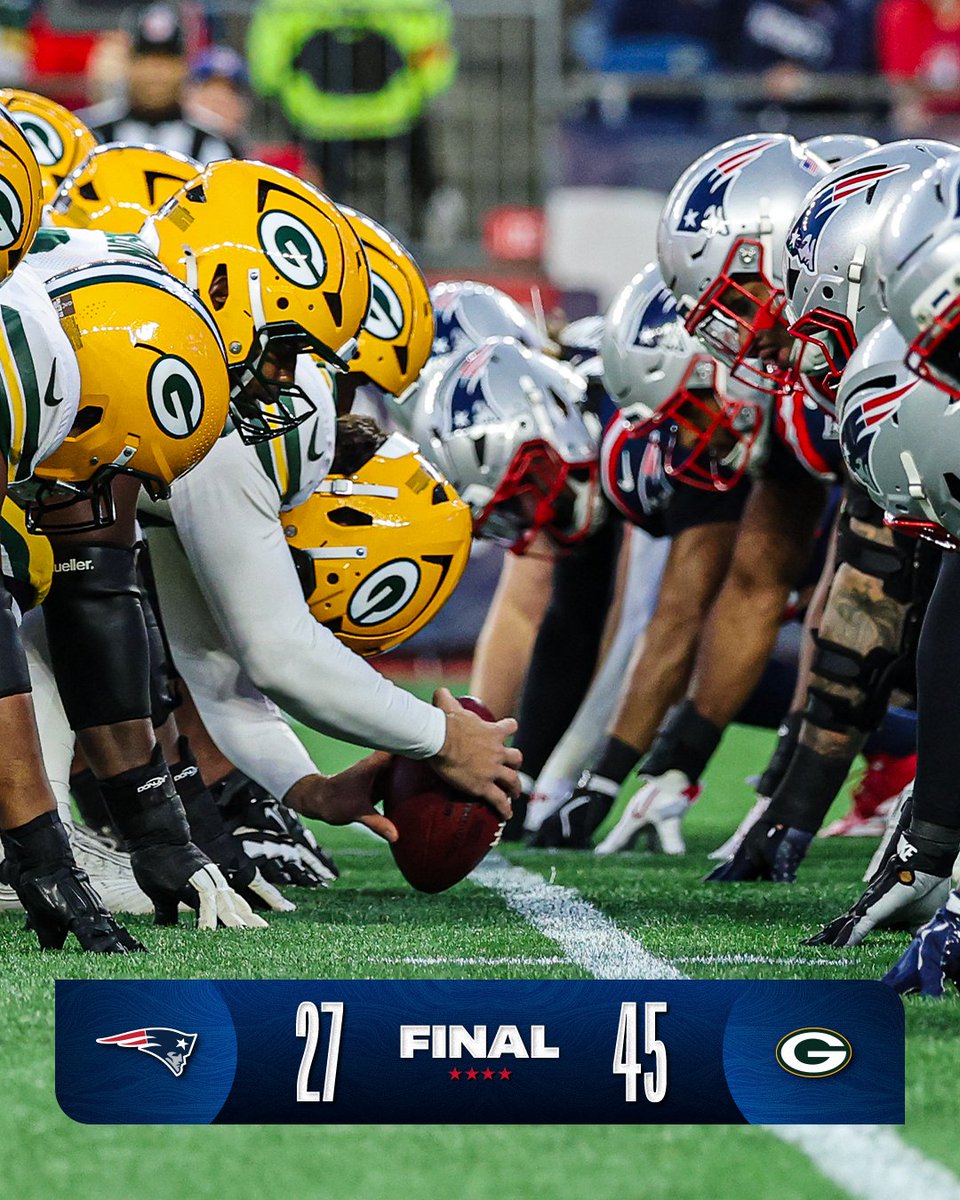
@TonyMassarotti Pats and this coach are overrated - another Pete Carroll. Sucks as I had high hopes but two massive embarrassments (this and the Jags)...no excuse.
Two massive embarrassments this year by Vrabel's Pat's (this one and the Jags). Disappointing. Starting to think that we are overrating the coach because his roster management is awful (no WR's) and Drake is often finding himself under pressure throwing into triple coverage. Just another bad coach. Peter Carroll?
@PeterBerezinBCA To run a decent open sourced model, you can use a standard laptop. You still need an external sources like a data center with access. And I am unsure what AI can I can from my phone other than those who are the frontier or an AI using a data center.
The AI layoff gamble is backfiring.
Companies that rushed to replace workers with AI are now cleaning up the mess, per The Guardian.
Meta scaled back plans to cut staff and use more AI agents after employees spent growing time cleaning up the agents’ technical and security errors. It’s now rehiring managers.
Microsoft and McKinsey are limiting employee AI use as costs pile up.
Walmart workers say AI scheduling and task tools set impossible standards and generate false alerts.
The payoff isn’t showing up: 90% of executives say AI hasn’t yet boosted productivity at their companies, per an Atlanta Fed working paper.
Yet more than 112,000 US job cuts this year have cited AI, per Challenger, Gray & Christmas.
Interesting chart on the vol of vol - The volatility of VIX — a measure of how uncertain traders are about uncertainty itself — closed at 135.0 vs a recent high of 150 and a 1 year low of 82. The combination is notable - an already-extreme reading that also crossed its own median intraday on an unusually large single-day move. When vol-of-vol spikes like this, it signals that options markets are not just pricing in risk but they are actively disagreeing about how much risk to price in.
#vix #volatility $SPY
Global hedge funds have reduced gross equity exposure by more than 8% since June, marking the largest unwind since at least 2017 and pushing gross leverage among US long/short funds to the 10th percentile of its one-year range, according to Morgan Stanley.
I wonder if #Warsh has the real 🏈 to draw down the base….if he does, these fake markets will go away, it will be painful but then balance will follow and real markets will be the result.
FED CHAIR WARSH SAYS ANY CHANGES TO THE BALANCE SHEET WILL COME AFTER SERIOUS CONSIDERATION OF THE TASK FORCE RECOMMENDATIONS, AND THAT WHEN THE FED REMOVED A DOSE OF ACCOMMODATION, THE EFFECTS ON FINANCIAL MARKET CONDITIONS WERE CONSISTENT WITH EXPECTATIONS
Harry Kane’s words to his family, One of the most beautiful #BallonDor speeches ever: 🤍
All those years, the sacrifice, taking me to training, coming to watch me play all around England... There was never any pressure to become a footballer. It was always about working hard.
Last month, we demonstrated high-rate alchemy: turning mercury into real, stable gold, beating CERN’s record by a factor of 10.
Last week, we enriched isotopes in the world’s most powerful plasma centrifuge, beating the Soviet record that stood for 40 years.
Now, we’re building a fusion reactor in San Francisco to achieve record power density.