Les superchalutiers, des bateaux mesurant entre 80 et 150m trainant des filets de 200m, posent un vrai problème, à la fois pour l´environnement et pour les pêcheurs artisans.
Ils peuvent mesurer jusqu'à 145 mètres de long et pêcher entre 100 et 400 tonnes de poissons par jour. On les appelle superchalutiers ou navires usines. Ces géants de la pêche industrielle sont accusés par les ONGs et les pêcheurs artisans de surexploiter les mers. #UNOC3
Gotta hand it to @amnesty for consistency. They haven't mentioned our ballistic missile strikes on Ukrainian civilians since this, they've not posted about any we've done since.
And they're probably not gonna.
The Kremlin's version of history requires forgetting its own treaty with Nazi Germany in August 1939.
Its version of current affairs requires forgetting February 2022.
We had a valuable exchange with Commissioner @CostasKadis. Several priorities from our Vision for fair, low-impact fisheries were reflected in the discussion. We look forward to seeing these ambitions integrated in the Commission's #Vision2040 proposal. 🐟 #RethinkFisheries
Great meeting with EU Commissioner on Fisheries, Mr Kadis, where we shared our views and ideas to make the sector more resilient and robust to the energy shocks and ongoing climate and biodiversity crisis.
Find out more about our concrete ideas here: https://t.co/EifMTzcdzP
Constructive dialogue with NGOs representing fishers, consumers, and environmental groups to discuss the future of EU fisheries and aquaculture.
Many of their goals for #Vision2040 align with ours: healthy oceans, thriving coastal communities, and fair access to resources.
We’re working to rebuild fish stocks while supporting small-scale fishers, shift to low-trophic aquaculture like seaweed, and improve animal welfare standards. We’re also empowering consumers with better labelling and traceability.
Grateful to the NGOs for their invaluable input as we shape policies that work for people, the planet, and the future of our seas. 🌊
Pity that the @EP_Fisheries is using a picture of fishing vessel in South Carolina, USA, instead of a nice vessel picture in our beautiful Europe...
https://t.co/sxkrE3qXJX
🚨 Landmark ruling for Europe’s oceans
A Dutch court has ruled that destructive #BottomTrawling can no longer take place in the Dutch #DoggerBank#MPA without proper permits & envi assessments. This is a major breakthrough for marine protection in Europe! https://t.co/Tz5sqdBWDT
L’image d’un pays se joue dès l’arrivée :
🇸🇬Singapore Airport : 10 minutes le week-end dernier entre la sortie de l’avion et le taxi, en heure de pointe.
🇧🇪 Brussels Airport : 1h ce matin entre la sortie de l’avion et la douane. Un boxon total.
Catastrophique pour l’image de la Belgique et par conséquent le tourisme et l’économie.
Il faut absolument revoir la capacité aux contrôles et s’inspirer des meilleurs aéroports. @BrusselsAirport
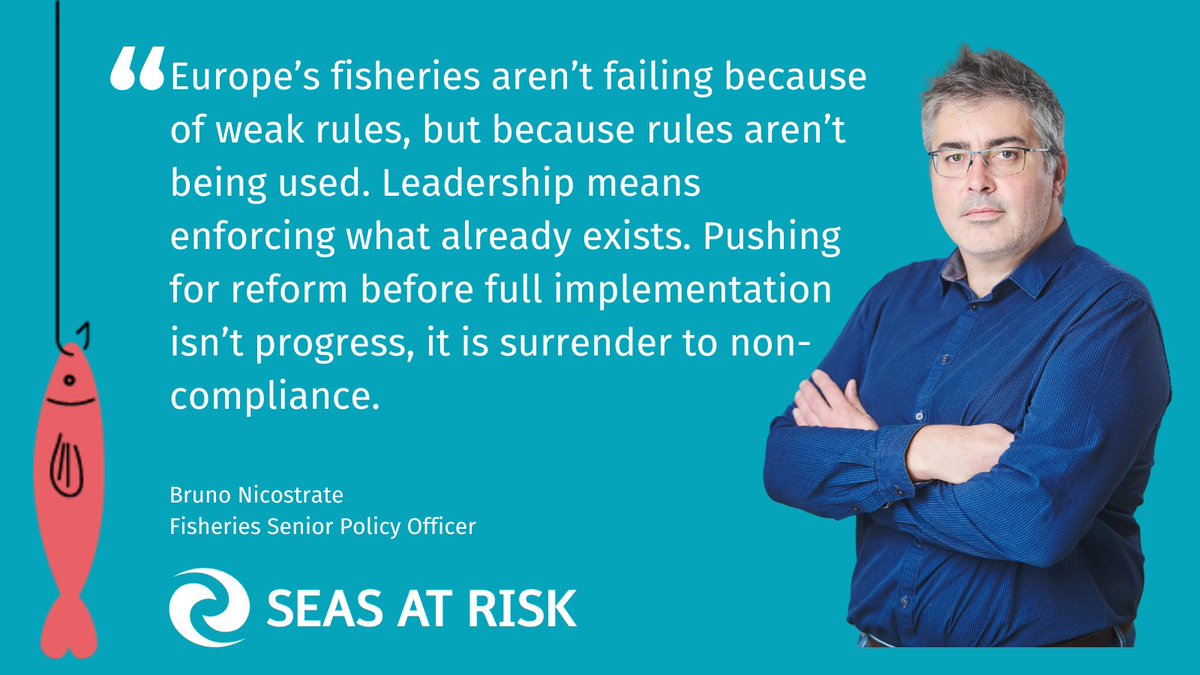
The EC's evaluation on #CFP is out!
1⃣law is sound.
2⃣Implementation is failing
What we need is implementation! The Vision for fair, low-impact fisheries helps to embrace long-term sustainability. Read our #PressRelease 👉https://t.co/gvLieQGIvN #RethinkFisheries#EUFisheries
Rumen Radev, whose party took the lead in Bulgaria’s elections tonight, has long been linked to the Kremlin in a “controversial manner”.
Leonid Reshetnikov is a retired Lieutenant General of Russia's Foreign Intelligence Service (SVR) who headed the Russian Institute for Strategic Studies (RISI) from 2009 to 2017. RISI, formally part of the SVR until 2009 and thereafter under the presidential administration, served as a key instrument of Russian soft power and influence operations across Eastern Europe. After leaving RISI in 2017, Reshetnikov became chairman of the supervisory board of Tsargrad TV, a neo-imperial Russian news channel financed by Kremlin-linked oligarch Konstantin Malofeev.
The core of the Radev–Reshetnikov link traces to the 2016 Bulgarian presidential election. According to a U.S. State Department report on Russian disinformation, Reshetnikov directly interfered in that election. His institute commissioned a sociological study conducted between July 1–15, 2016, specifically designed to identify the profile of an ideal pro-Russian BSP presidential candidate - one who would increase support for Russia while eroding support for the US, EU, and NATO. The results of that survey, analysts noted, mapped almost precisely onto Rumen Radev's public profile. Crucially, just two weeks after the study concluded, General Radev resigned as Air Force commander on August 1, 2016 - and within days, BSP and ABV were already promoting him as their presidential candidate.
After Radev won the 2016 presidential election, Reshetnikov himself publicly acknowledged that he had discussed Radev's candidacy with BSP leader Kornelia Ninova, effectively confirming Russian intelligence involvement in shaping the nomination. This admission was cited directly in Bulgarian and international media. The U.S. State Department subsequently included the 2016 Bulgarian presidential election in its broader report on the Kremlin's global propaganda and disinformation ecosystem.
The Reshetnikov connection deepened in September 2019, when Bulgarian Prosecutor General Sotir Tsatsarov charged Nikolai Malinov - head of the pro-Russian Russophile National Movement - with espionage for Russia, and simultaneously announced that Reshetnikov was banned from entering Bulgaria for 10 years on national security grounds. Investigations revealed that Malinov had controlled accounts receiving funds from RISI and the Double-Headed Eagle Society - organizations linked directly to Reshetnikov and Malofeev. At the time, President Radev responded cautiously, demanding "incontrovertible evidence" and suggesting the prosecution might be a politically motivated domestic maneuver — a reaction that critics interpreted as shielding the network.
On the eve of today's election, the Washington Post published an analysis describing Bulgaria as the "Kremlin's next best bet" following Viktor Orbán's defeat in Hungary - framing a potential Radev government as Moscow's most significant remaining lever of influence inside the EU and NATO. Analysts and former diplomats interviewed expressed concern that Russian influence operations, with Reshetnikov's 2016 template as the blueprint, had now produced a political vehicle - Progressive Bulgaria - capable of reaching government.
Poor implementation of the #CFP continues to harm low-impact fishers. Quotas are required to be allocated using envi & social criteria. Yet large vessels still take the biggest share. It's time Member States fully implement the #CFP! @CostasKadis#RethinkFisheries#EUFisheries