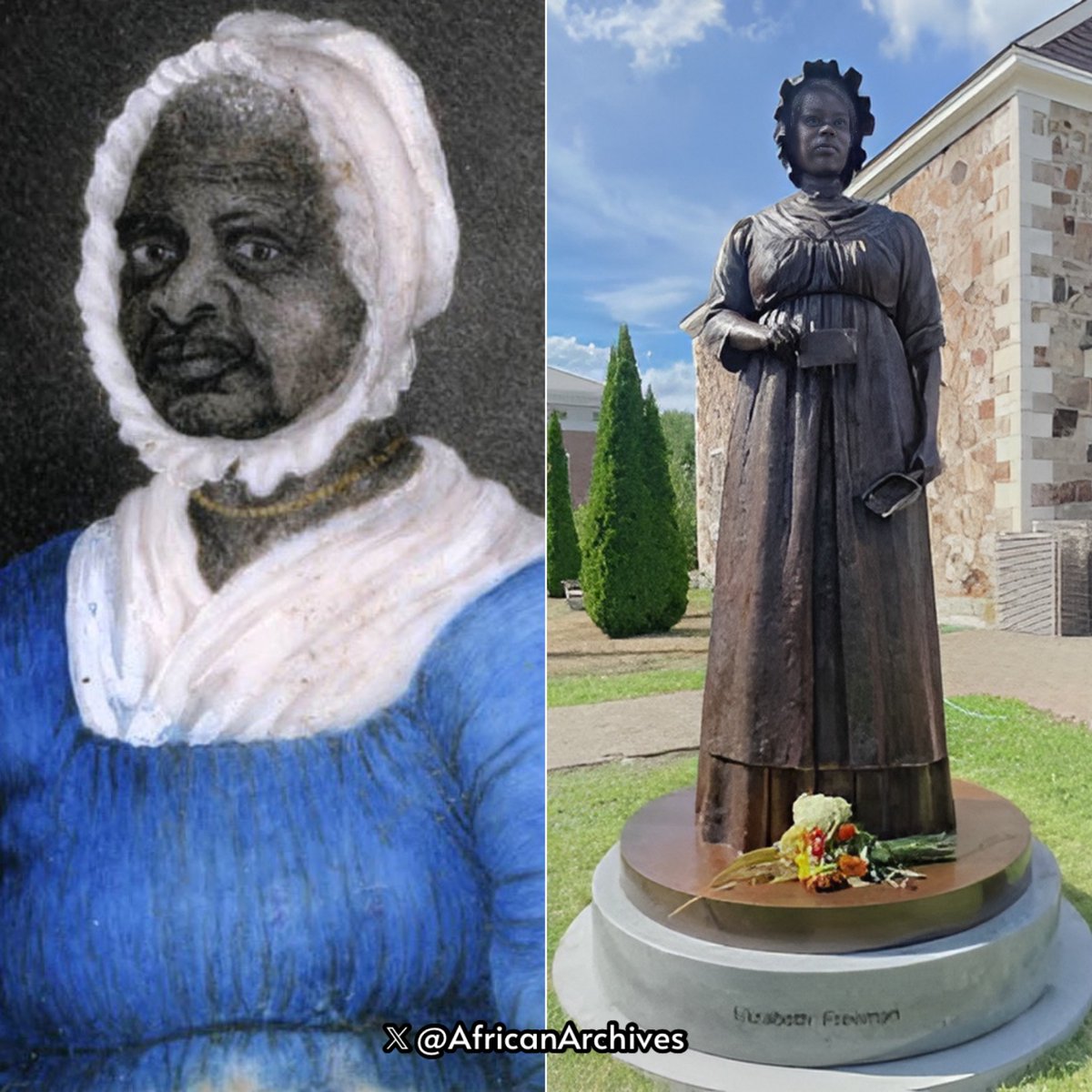
Mum Bett was one of the first enslaved black American to sue for freedom and win in Massachusetts. As a free woman she took up the name Elizabeth Freeman.
She was W.E.B Du Bios great grandmother.
Her case served as precedent in the state that brought an end to the practice of slavery in Massachusetts.
Freeman's real age was never known, but an estimate on her tombstone puts her age at about 85. She was buried in the Sedgwick family plot in Stockbridge, Massachusetts. She died in 1829.
Freeman was among the first enslaved black Americans in Massachusetts to file a "freedom suit" and win in court under the 1780 constitution, with a ruling that slavery was illegal. Her county court case, Brom and Bett v. Ashley, decided in August 1781, was cited as a precedent in the Massachusetts Supreme Judicial Court appeal review of Quock Walker's "freedom suit". When the state Supreme Court upheld Walker's freedom under the constitution, the ruling was considered to have informally ended slavery in the state.
LIFE & TRIAL:
Elizabeth Freeman was illiterate and left no written records of her life. Her early history has been pieced together from the writings of contemporaries to whom she told her story or who heard it indirectly, as well as from historical records.
Freeman was born into slavery about 1742 at the farm of Pieter Hogeboom in Claverack, New York, where she was given the name Bett. When his daughter Hannah married John Ashley of Sheffield, Massachusetts, Hogeboom gave Bett, then in her early teens, to them. She remained with them until 1781, during which time she married and had a child, Betsy. Her husband (name unknown, marriage unrecorded) never returned from service in the Revolutionary War.
Throughout her life, Bett exhibited a strong spirit and sense of self. She came into conflict with Hannah Ashley, who was raised in the strict Dutch culture of the New York colony. In 1780, Bett prevented Hannah from striking her daughter Betsy with a heated shovel, but Elizabeth shielded her daughter and received a deep wound in her arm. As the wound healed, Bett left it uncovered as evidence of her harsh treatment.
Soon after the Revolutionary War, Freeman heard the constitution read at Sheffield and these words:
“ All men are born free and equal, and have certain natural, essential, and unalienable rights; among which may be reckoned the right of enjoying and defending their lives and liberties; that of acquiring, possessing, and protecting property; in fine, that of seeking and obtaining their safety and happiness." —Massachusetts Constitution, Article 1.
Bett sought the counsel of Theodore Sedgwick, a young abolition-minded lawyer, to help her sue for freedom in court. Sedgwick willingly accepted her case. He enlisted the aid of Tapping Reeve, the founder of America's first law school, located at Litchfield, Connecticut.
The case of Brom and Bett vs. Ashley was heard in August 1781 before the County Court of Common Pleas in Great Barrington. Sedgwick and Reeve asserted that the constitutional provision that "all men are born free and equal" effectively abolished slavery in the state. When the jury ruled in Bett's favor, she became the first African-American woman to be set free under the Massachusetts state constitution.
The court assessed damages of thirty shillings and awarded her compensation for their labor.
After the ruling, Bett took the names Elizabeth Freeman.
LEGACY:
The decision in the case of Elizabeth Freeman was cited as precedent when the State Supreme Judicial Court heard the appeal of Quock Walker v. Jennison. Walker's freedom was upheld. These cases set the legal precedents that ended slavery in Massachusetts. Vermont had already abolished it explicitly in its constitution.
🖋️if you love our content, please consider supporting our page on https://t.co/MkzBtV9AwG (follow the ko-fi page too for weekly posts roundup)
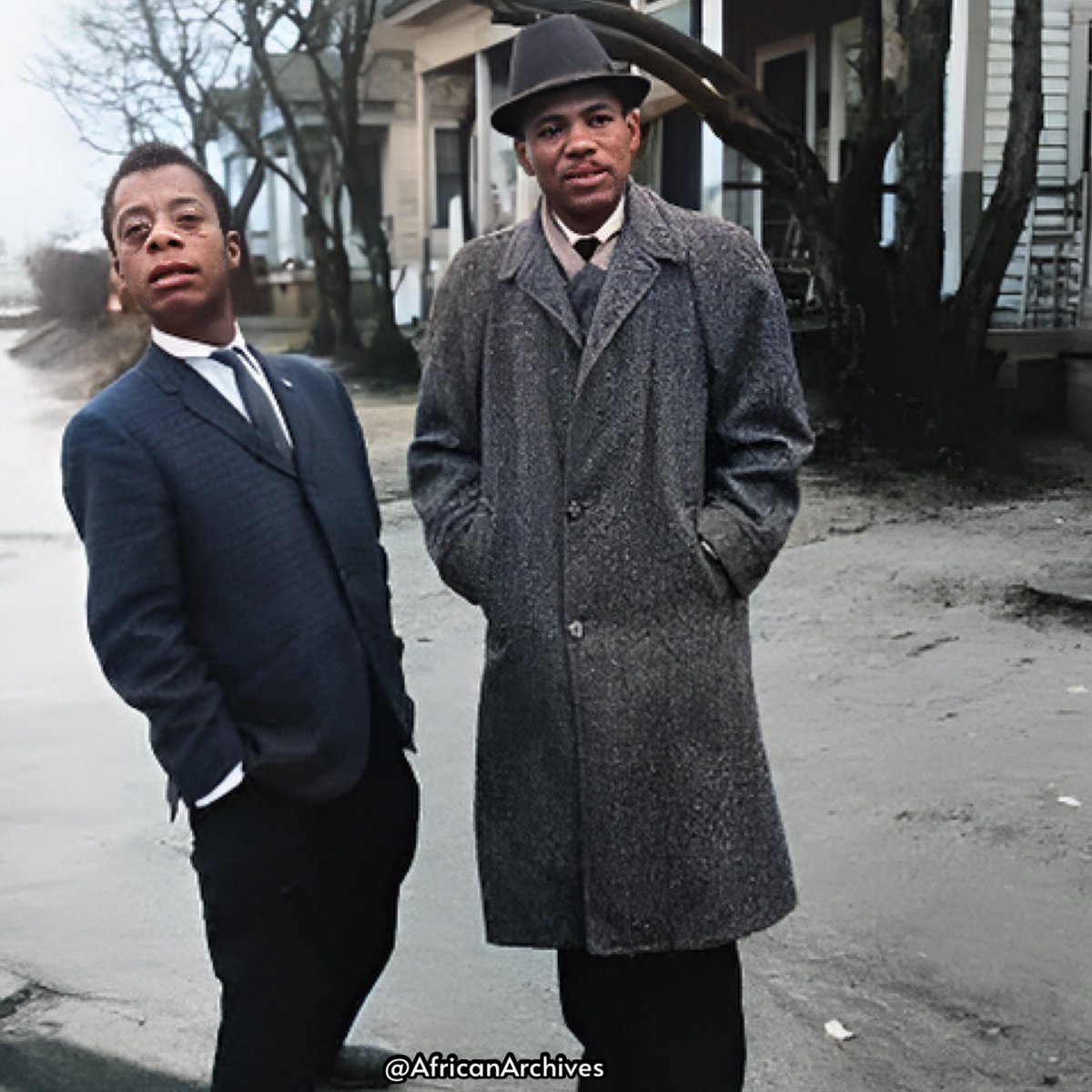
James Baldwin with activist James Meredith, Jackson, Mississippi, in 1963, a year after Meredith became the first African American student admitted to the University of Mississippi.
James H. Meredith, in 1962, became the first African American to attend the University of Mississippi.
A former serviceman in the U.S. Air Force, Meredith applied and was accepted to the University of Mississippi in 1962, but his admission was revoked when the registrar learned of his race.
A federal court ordered "Ole Miss" to admit him, but when he tried to register on September 20, 1962, he found the entrance to the office blocked by Mississippi Governor Ross Barnett.
On September 28, the governor was found guilty of civil contempt and was ordered to cease his interference with desegregation at the university or face arrest and a fine of $10,000 a day. Two days later, Meredith was escorted onto the Ole Miss campus by U.S. Marshals — setting off riots that resulted in the deaths of two students. He returned the next day and began classes.
In 1963, Meredith, who was a transfer student from all-black Jackson State College, graduated with a degree in political science.
Three years later, Meredith returned to the public eye when he began his March Against Fear. On June 6, just one day into the march, he was sent to a hospital by a sniper's bullet. Other civil rights leaders, including Martin Luther King, Jr., and Stokely Carmichael, arrived to continue the march on his behalf.
It was during the March Against Fear that Carmichael, who was leader of the Student Nonviolent Coordinating Committee, first spoke publicly of "Black Power" — his concept of militant African American nationalism.
James Meredith later recovered and rejoined the march he had originated, and on June 26 the marchers successfully reached Jackson, Mississippi.
BT Richardson has a show on 06/17/2023 at 11:15 AM @ Dogfish Head - Milton Brewery in Milton, DE https://t.co/5ki6ORfJSw #concert https://t.co/No27MiOEB6
BT Richardson has a show on 04/29/2023 at 11:15 AM @ Crooked Hammock Brewery in Middletown, DE https://t.co/IJmuukbTSL #concert https://t.co/No27MiOEB6