Join us at 1 p.m. ET tomorrow for a virtual briefing about states’ efforts to implement new Medicaid work requirements, which have created new administrative demands on states at a time of federal funding cuts, slowing revenue growth, and increasing spending demands.
Register: https://t.co/XHGdBIdBlP
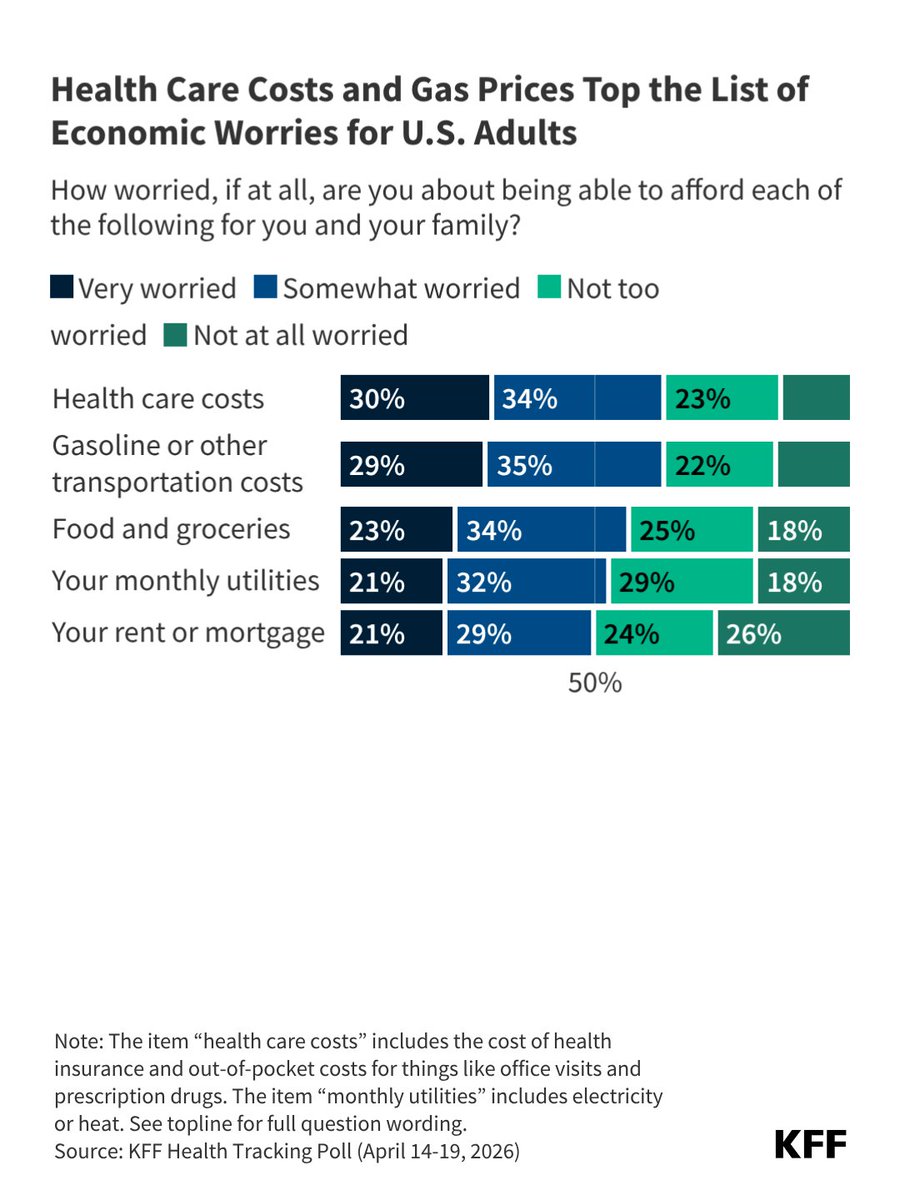
Nearly two-thirds (64%) of U.S. adults are worried about being able to afford health care costs for their families — the same share who are worried about gasoline or other transportation costs. https://t.co/F9OkkSOecx
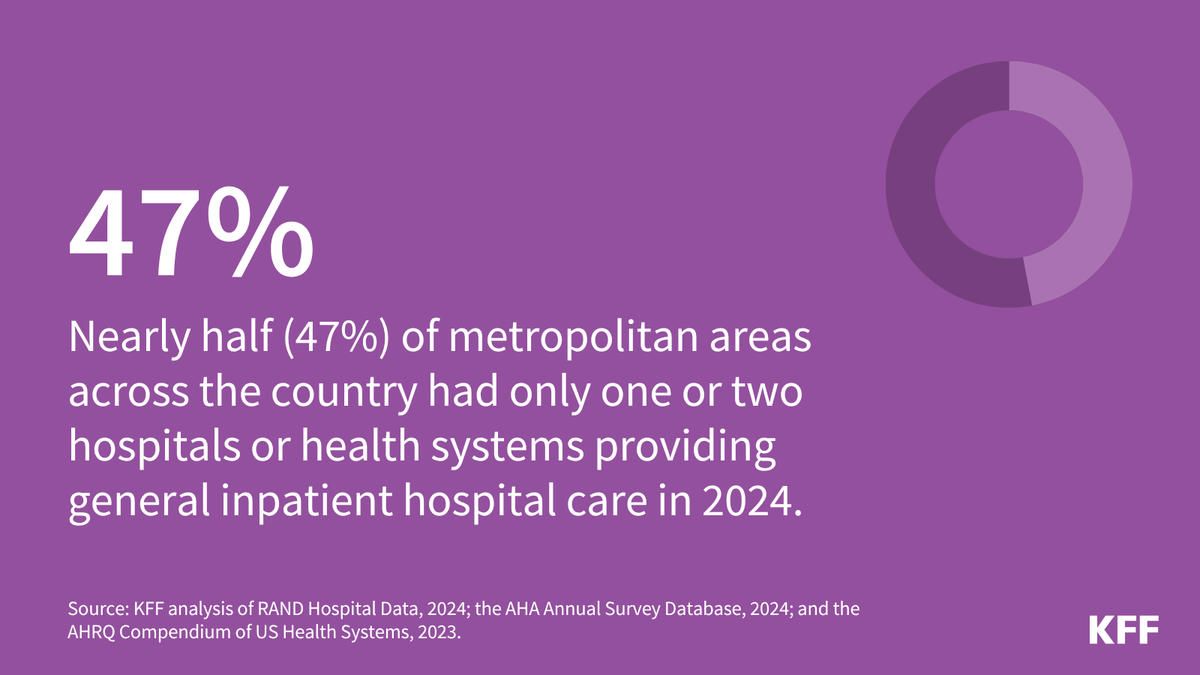
Just one or two hospitals or health systems controlled the entire inpatient hospital market in nearly half of metropolitan areas across the country.
In case you missed it, our analysis explores the competitiveness of hospital markets amid a continuing wave of consolidation: https://t.co/JOFC7g3KCG
Middle-aged adults faced some of the steepest increases in Obamacare premium payments this year. Some are waiting to get health care until they’re old enough for Medicare.
It's a risky move and could lead taxpayers to foot bigger bills down the line.
https://t.co/Zgbf0C8r1C
A majority of those who re-enrolled in an ACA Marketplace plan say they have cut or plan to cut spending on food or other basic household expenses to afford their health care costs.
The impact is even greater for those with chronic health conditions: https://t.co/TCjs7JJBGy
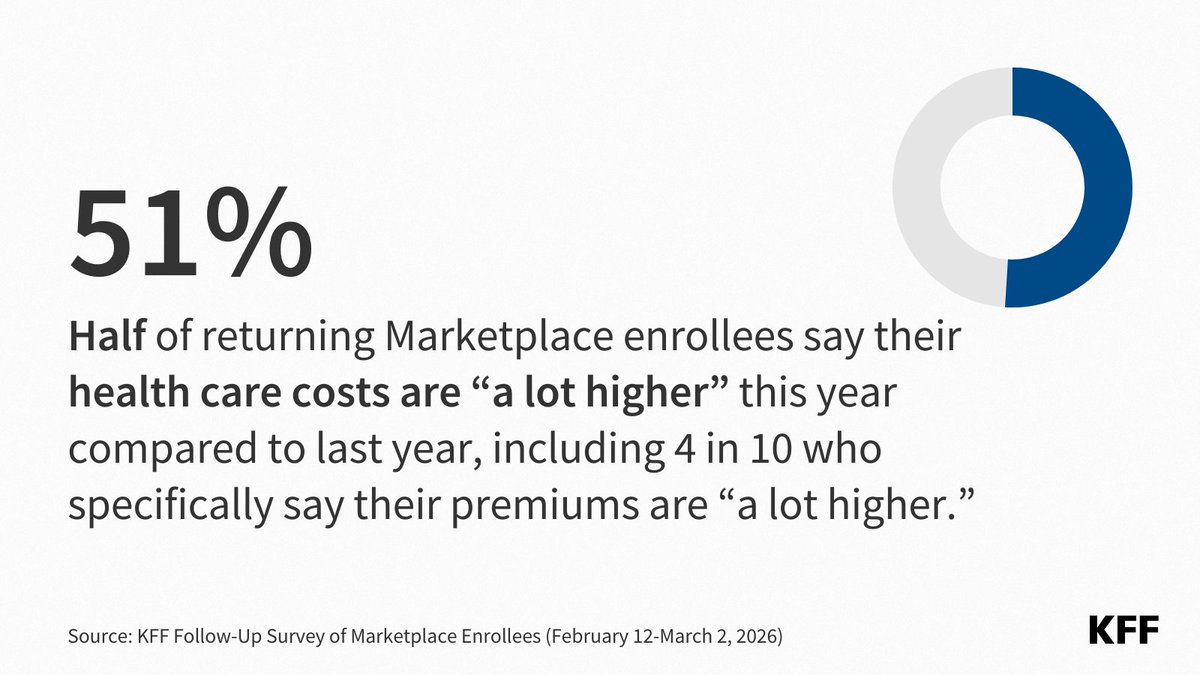
NEW: A follow-up survey of the same Marketplace enrollees KFF surveyed in 2025 finds half (51%) of returning enrollees say their health care costs are “a lot higher” this year compared to last year.
This includes 4 in 10 who specifically say this about their premiums. https://t.co/UDVIyEZqnY
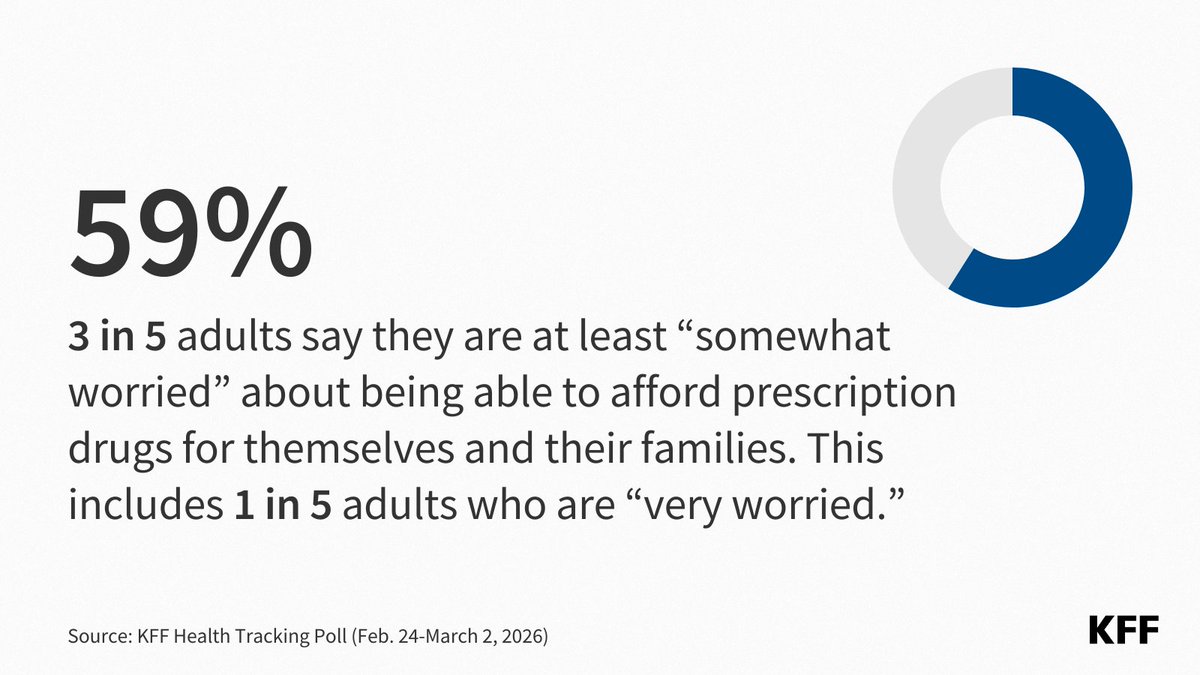
KFF’s latest poll shows a majority of the public (59%) now say they are at least “somewhat worried” about being able to afford prescription drugs for themselves and their families.
This is the largest share since KFF first polled on this question in 2018. https://t.co/N8KlQdUfYe
In 2024, about 1 in 6 adults delayed or went without some form of health care due to cost.
Our updated chart collection explores trends in how the cost of healthcare affects access to care: https://t.co/cNxdIrjj7B
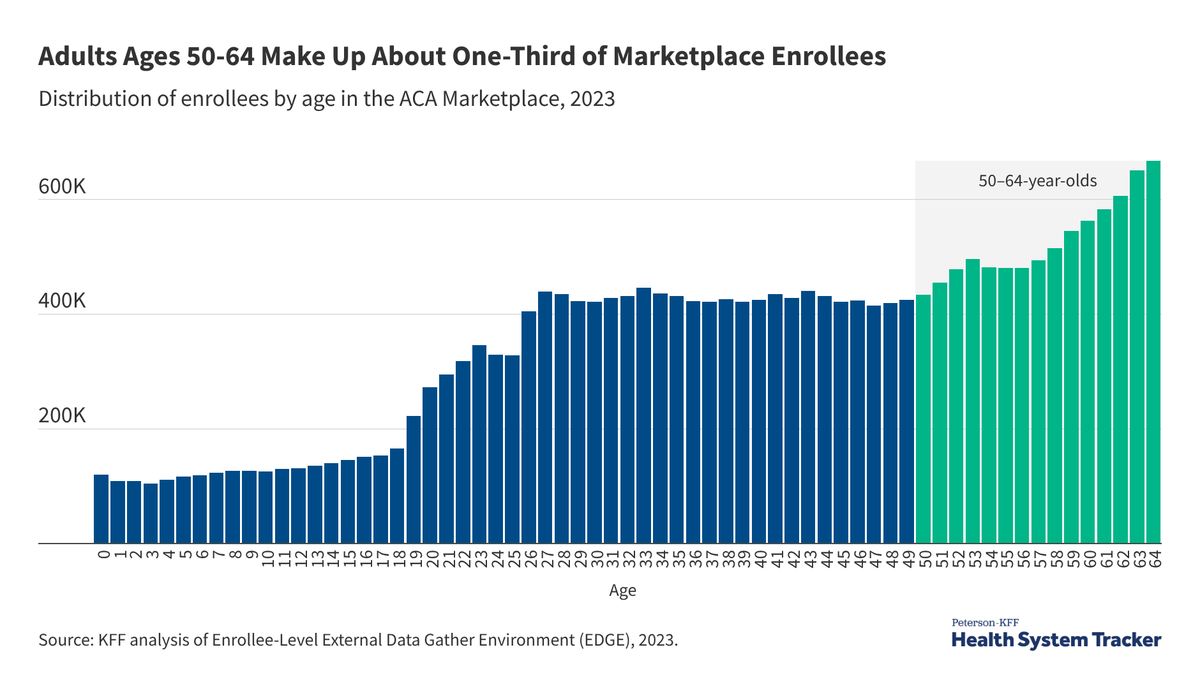
Adults ages 50 to 64 are disproportionately affected by the expiration of ACA enhanced premium tax credits because they make up a large number of Marketplace enrollees and premiums rise with age.
Our analysis shows that older enrollees with moderate to higher incomes have been hit hardest: https://t.co/oNLs73LmgV
#HM703#PolicyMatters
The ACA health coverage subsidy lapse hit 22 million people. Here are some of their stories - https://t.co/r7aRtqJI4o #GoogleAlerts
Recent US drug pricing reforms adopt international prices shaped by quality-adjusted life-year (QALY)-based assessments, despite longstanding federal prohibitions on using QALYs in coverage and payment decisions. | Forefront
Dominique Seo, et al. | @UUtah
https://t.co/z54iBwoyim
If health care was a normal market, moving from opaque prices to transparent prices would lead to lower prices and a boon of bargain shopping. That has not happened. Low-priced providers don't win. https://t.co/b0dozGqb5H.
Last week, we held our #EconomicOutlook26 Forum, where our panel discussed the themes and trends coming out of the J.P. Morgan Healthcare Conference.
Read the full recap: https://t.co/zW4nxa577Y