it just… feels sluggish too?
I still get a lot of value from my dot in day to day work but it’s missing the delight of muse and the snappiness of grok bot
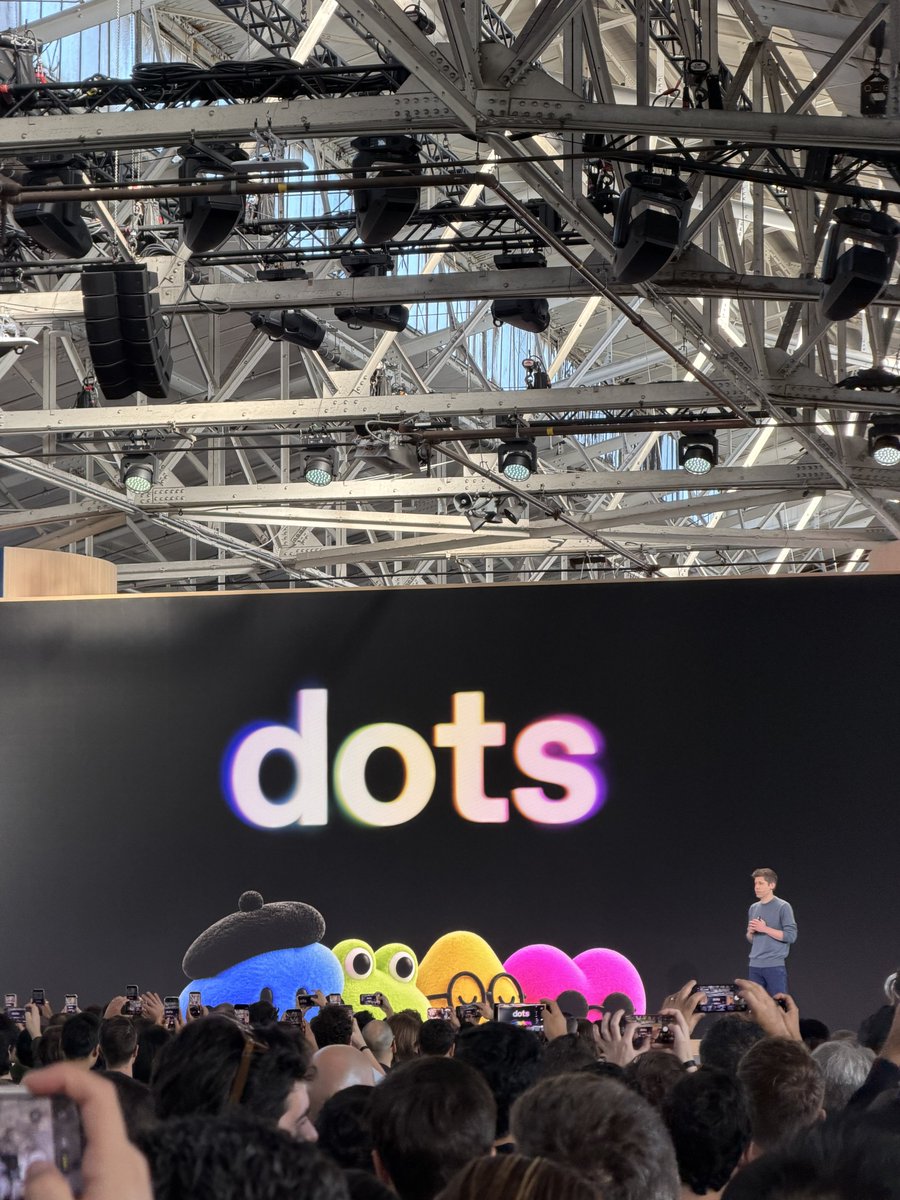
OpenAI’s Dot is capable, but seems to be falling further behind in its interface compared to Muse and Duet. The single-threaded conversation, lack of inline generative flourishes (like maps), & the inability to see what tasks it is assigned makes it harder to use than the others.
there is no replacing a founder like Jensen.
There never has been, and there can never be, a true succession for a founder like him. Nvidia ends today, and is replaced with a thing cosplaying nvidia. It will be run by custodians trying and failing to preserve the flame he ignited
Companies spent years battling bots. Now they’re fighting for their business.
AI agents are the majority of Web traffic and generate most code pushed to production. Soon, they'll be buying most of what gets sold online.
New piece with @omooretweets on the B2A economy 👇
every product i use should just be a headless mcp, that feeds into an agent, where i never have to think about anything underneath.
except for our product, of course.
in our product, customers love the ui and love us very much.
we're special that way.
1) Trying again.
TLDR: Everyone can win. Open-source, frontier labs, infrastructure, applications and most importantly the American people.
I understand all of the jitters about Anthropic losing share, real rates, spreads and second derivatives. Still think the most likely future outcome is a hybrid, multi-model future where almost everyone wins, open-weight tokens are likely the overwhelming majority of tokens, the dominant frontier model companies still do well albeit perhaps not the outcome that seemed possible in May and AI infrastructure/applications benefit immensely from the increased fragmentation, competition and lower margins at the model layer.
Lower margins at the model layer mechanically drive higher compute demand as long as someone is willing to pay for the training. And Jensen is obviously willing to be the “trainer of last resort.” As below-market compute contracts signed in 24/25 roll-off and reprice higher, cloud and neocloud revenue should continue to accelerate which will help address financing fears; I think we may be near peak external financing for this buildout. Noteworthy that using data from 3Fourteen Research, B200 clusters will generate a 37% IRR *if* their rental price declines 40% per year. Prices are still going up, but that IRR math is too ridiculous to print. 37% IRRs available at scale should get funded.
Re: this weekends controversy about MOUs, Anthropic’s $413 billion of real contractual commitments sounds scary. Reality is that it works out to roughly $31 billion of annual cloud spend, which is easily internally financed given their reported ARR, and $161 billion of spend at Broadcom which will be financed by Broadcom and private credit.
Continue to believe fragmentation at the model layer is the best outcome for ordinary Americans and humans everywhere. As I have said before, do not trust any 5-20 individuals to make the best possible decisions about the direction of this technology. I want as many AIs as possible to maximize the odds that they encompass the diversity of human values across the world and richness of human variation. And I want an AI that shares my own personal values. Safety, freedom and the maximization of human agency through democratization, distribution and diffusion vs. centralization. History has spoken on the dangers of the latter path.
Finally, from my perspective anything that slows this buildout down is net positive over the long-term as the biggest risk and worst outcome is an *actual* overbuild. We are structurally short watts, wafers and increasingly capital. That is all good. God forbid we were still in ZIRP, TSM ramped capex to 3x their current plan and we weren’t short turbine blades: there would almost certainly be an overbuild and a bubble. That would be terrible. Slower and smoother for longer is better both for investors and for the world. A terrible cyber event is the most plausible near term bear case IMHO, but AI cyberdefense ramping quickly and I was happy to hear Sholto say that cyber probably becomes defense dominant in the near future.
Longer, threaded version follows:
@iamgingertrash zitron has been banging this drum for years at this point though? he’s one of the ultimate skeptics
don’t disagree on being skeptical about their “pacing” though
@obie@thorstenball I think we’ll get there but in between might be a library of components that a model can piece together on the fly
especially with faster classification/judgement using jev type models