@gladyswanga Nothing like that! You now get CDF and other monies from the government to cater for roads. Your leadership is the problem. Account for the 33B given to you in your tenure....
@MigunaMiguna Hakuna kitu kama hii, let Homabay show us what they have done with 91B. They are able to do latrines for 500k, roads is where they draw the line? They all get money to build roads from the national government. LEADERSHIP is the problem!
I repeat. The number of foreigners Relocating to Kenya with an advantage of having earned in dollars and euros is increasingly high. Something needs to be done. Some regulation of sort,Otherwise They are going to buy us out of our lands. Na itakua mbaya sana
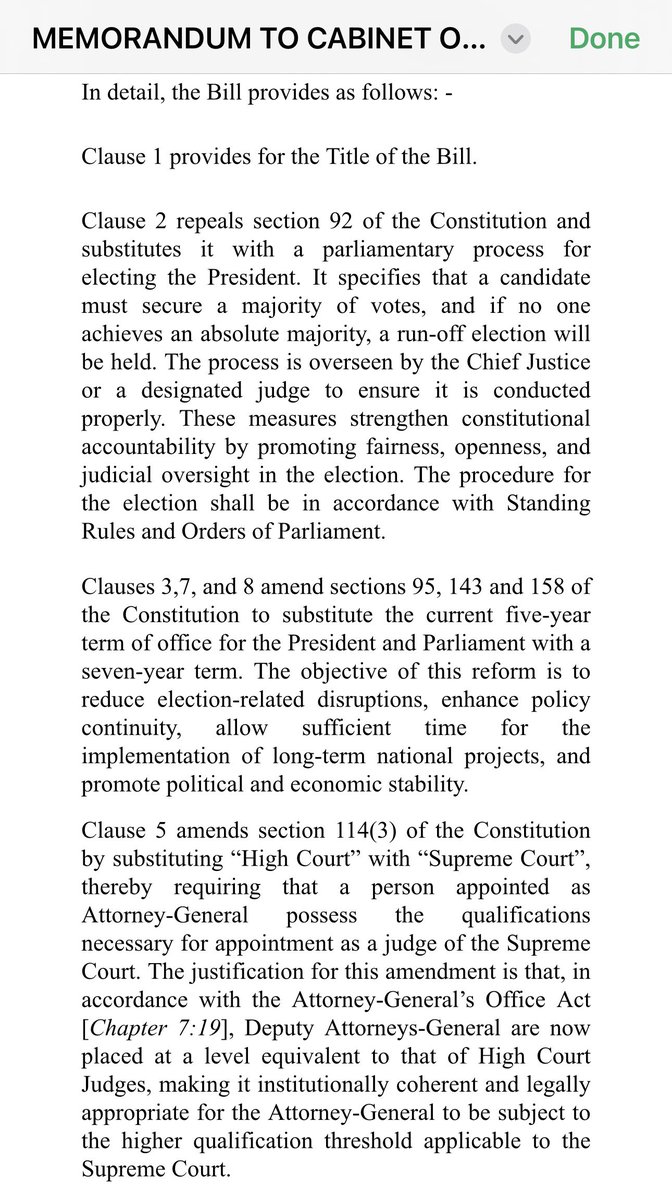
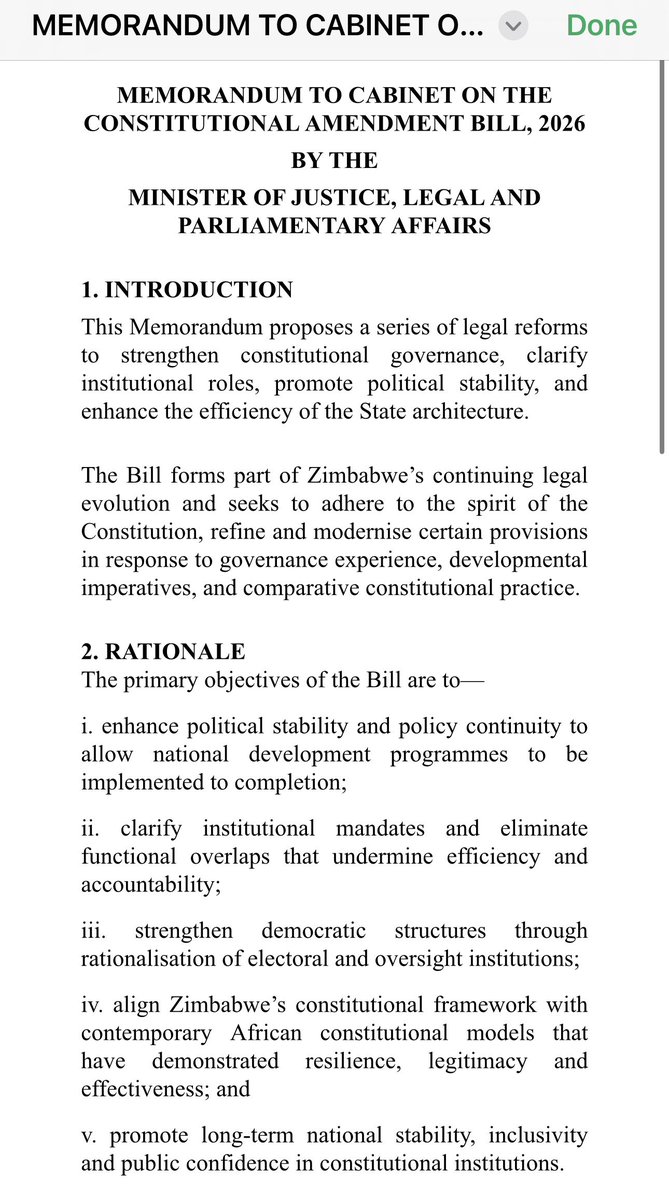
President Emmerson Mnangagwa is planning to fundamentally change the Zimbabwean Constitution in a way last seen in 1987 when ZANUPF brought the executive presidency.
According to documents leaked to the media, a memorandum with these changes is set to be presented to Mnangagwa’s rubber-stamp Cabinet today.
Sweeping constitutional changes are being proposed that fundamentally alter how Zimbabwe is governed, how its President is elected, and how key democratic institutions function.
These proposals signal a far-reaching restructuring of the State that consolidates executive power, weakens electoral accountability, and extends political tenure beyond what is currently provided for in the Constitution.
1. Removal of direct presidential elections.
Shifting the election of the President from a public vote to Parliament removes citizens’ direct say in choosing the Head of State. In a dominant-party system, this effectively guarantees that the ruling party’s parliamentary majority decides the presidency, reducing electoral competitiveness and public legitimacy.
2. Extension of presidential and parliamentary terms.
Moving from five to seven years lengthens the period voters must wait to remove an underperforming government. Longer terms entrench incumbents, reduce accountability cycles, and delay democratic renewal, especially where institutions are already weak.
3. Increased presidential influence in Parliament.
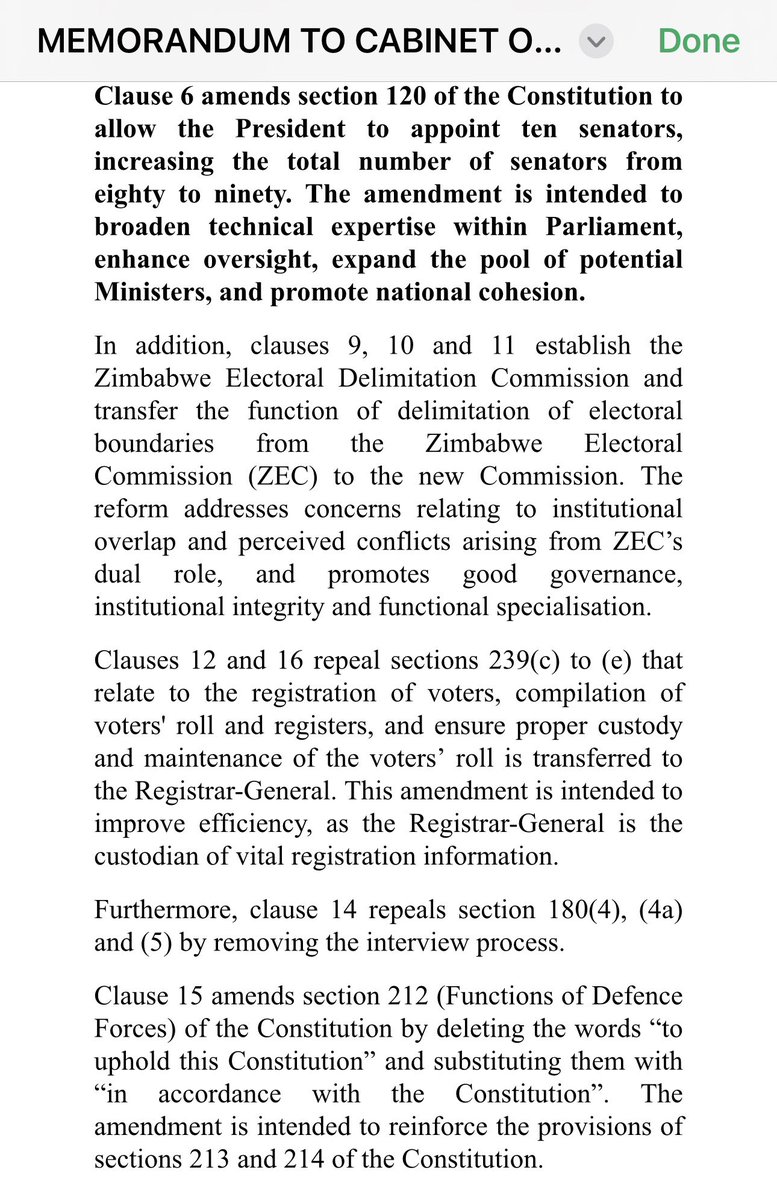
Allowing the President to appoint ten more senators expands executive influence over the legislature. Appointed senators often vote with the appointing authority, weakening parliamentary independence and oversight.
4. Transfer of voters’ roll to the Registrar-General.
Moving custody of the voters’ roll from the electoral commission to the Registrar-General raises credibility concerns. The Registrar-General’s office has historically been viewed as executive-aligned, so this shift will undermine confidence in electoral transparency and independence.
5. Fragmentation of electoral management.
Creating a separate Delimitation Commission removes boundary delimitation from ZEC. While framed as reducing overlap, splitting electoral functions will create coordination problems and open space for political manipulation of constituency boundaries.
6. Weakening judicial appointment transparency.
Removing the public interview process for judicial appointments reduces openness. Public interviews were designed to enhance scrutiny, merit assessment, and public trust in the judiciary. Their removal will now politicise appointments.
7. Security sector constitutional dilution.
Changing the Defence Forces’ duty from “to uphold this Constitution” to acting “in accordance with the Constitution” weakens the strength of their constitutional obligation. The original wording imposed an active guardianship role, while the new wording is more passive.
8. Abolition of the Gender Commission
Scrapping the Zimbabwe Gender.
Commission and merging its functions into the Human Rights Commission risks downgrading gender-specific oversight. Dedicated institutions exist because gender equality requires focused monitoring and enforcement.
Taken together, the amendments centralise authority around the executive, extend tenure, influence Parliament, reshape electoral systems, and dilute independent oversight. The cumulative effect may be institutional weakening rather than strengthening.
Reasons why Gaddafi was killed:
1. Libya has no electricity bill, electricity came free of charge to all citizens.
2. There were no interest rates on loans, the banks were state-owned, the loan of citizens by law 0%.
3. Gaddafi promised not to buy a house for his parents until everyone in Libya owns a home.
4. All newlywed couples in Libya received 60,000 dinars from the government & because of that they bought their own apartments & started their families.
5. Education & medical treatment in Libya are free. Before Gaddafi there were only 25% readers, 83% during his reign
6. If Libyans wanted to live on a farm, they received free household appliances, seeds and livestock.
7. If they cannot receive treatment in Libya, the state would fund them $2300+ accommodation & travel for treatment abroad.
8. If you buy a car, the government finances 50% of the price.
9. The price of gasoline became $ 0.14 per liter.
10. Libya had no external debt, and reserves were $150 Billion (now frozen worldwide)
11. Since some Libyans can't find jobs after school, the government will pay the average salary when they can't find a job.
12. Part of oil sales in Libya are directly linked to the bank accounts of all citizens.
13. The mother who gave birth to the child will receive $5000
14. 40 loaves of bread cost $0.15.
15. 25% of Libyans had all Ilisna diplomas.
16. Gaddafi has implemented the world's biggest irrigation project known as the "BIG MAN PROJECT" to ensure water availability in the desert.
If this is called “DICTATORSHIP” I wonder what democracy is?