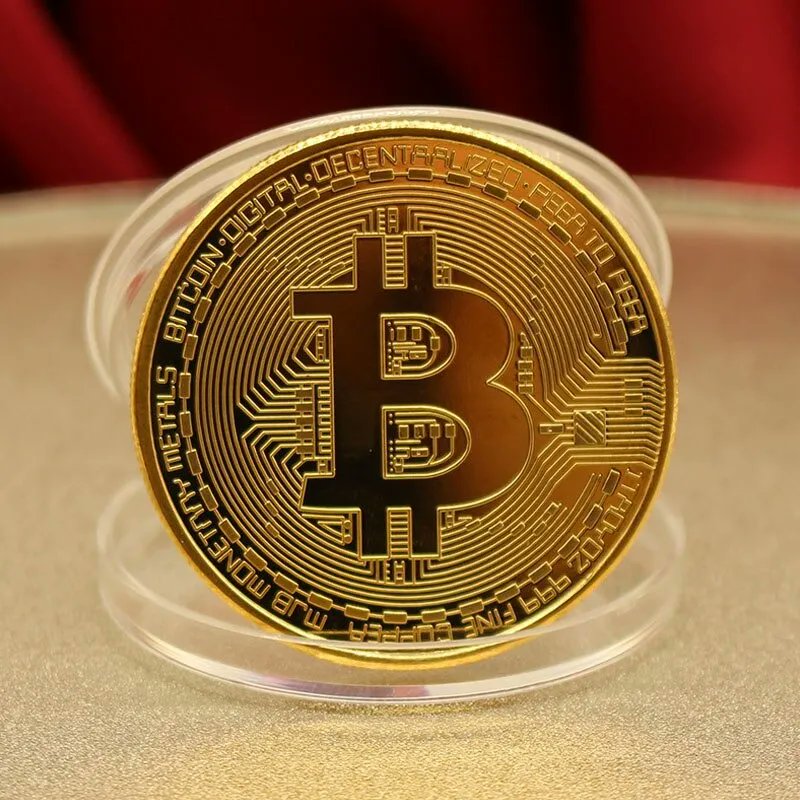
Three hundred eleven wallets. Five different blockchains. One hardware wallet reseller nobody outside the industry has heard of.
On October 9, on-chain investigators flagged over 86 million dollars in losses, with some estimates reaching nearly 93 million, tied to users of Ledger hardware wallets. Ledger’s own systems are not the source. The trail leads to CryptoBilis, a third-party reseller and official Ledger distributor in parts of Southeast Asia. Ledger has told the reseller to pause all sales and shipments while it investigates. Binance’s Changpeng Zhao floated a localized supply-chain problem with that one vendor, but called it an assessment, not a finding. Nothing here is confirmed yet.
The affected wallets span Bitcoin, Ethereum, TRON, BNB Chain, and Polygon, which tells you this was not a flaw in one blockchain. It points at the device or its distribution chain itself, the exact layer people buy a hardware wallet to trust.
Bitcoin barely moved on the news, holding near 82,760 dollars. That gap between a six-figure security story and a flat chart is its own lesson. The market did not price this in, but the 311 people who lost access already know the price was never really about the chart.
A hardware wallet is only as trustworthy as the hands it passed through before it reached you.
A podcaster gave Bitcoin a 50 percent chance of losing half its value in two years. Vitalik Buterin's reply was to bet nearly his entire net worth against it.
The prediction came from Liron Shapira, who hosts the Doom Debates podcast, posted on September 7. His argument is not about demand drying up. It is about security, the idea that AI will erode the guarantees Bitcoin holders have always assumed protect the network.
Buterin answered in the same thread within hours. "I take the opposite side of that," he wrote. He said he is optimistic about cybersecurity long term, that the real challenge is just getting through the current transition period, and that he expects Bitcoin to handle the parts that do not require broad social agreement, like upgrading client software and mining pools against network level attacks. He put the odds of an actual break in Bitcoin's proof of work mechanism at close to zero.
He also pointed out the obvious catch. If AI really does undermine crypto's security model broadly, Shapira would likely say the same thing about Ethereum, since both men hold assets that would fall together. Buterin's own answer to that was blunt: "I'm basically taking this bet, with about 90 percent of my net worth already."
This argument is not happening in a vacuum. Bitcoin is trading near 82,000 dollars right now, down through a real selloff driven by oil prices, bond yields, and ETF outflows. The AI security debate is playing out while the thing it is debating is already under pressure for completely unrelated reasons.
$DOOD will be launching on Solana 🔜
we’ve optimized for a smooth experience and will be airdropping $DOOD to eligible communities, whether you’re a current Doodles NFT holder or a New Blood community member.
here's how to get your airdrop ↓
Meet Raiku, Solana’s coordination layer 🐉
Redefine transactions and use cases on Solana to reach exponentially higher performance, reliability, and scale.
This is the Raiku moment.
1/7
SirenAI x SOON—real-time crypto intelligence meets high-performance execution.
With SirenAI deployed on SOON, users gain instant, AI-powered insights across blockchains while benefiting from SOON’s ultra-fast, cost-efficient stack.
The future of on-chain intelligence is SOON.
@elonmusk@elonmusk If you think that you can talk about peace with russia, then just look at how many wars it has started against the civilian population!!!
If you think that you can talk to them, you are stupid