Crypto 不仅有 AI Agent,竟还有玄学?让 AI 给你推荐今天运势最佳的代币,牛市就靠它了!
🌕 AI Agent 现已成为本轮牛市确定性叙事之一,明年一月将再次引爆市场
🆕 跟了很久的 AI Agent 基础设施网络 @hajime__ai 推出了第一个 AI Agent,能算代币投资运势,直接在 TG 上就能问它
详细教程 🧵
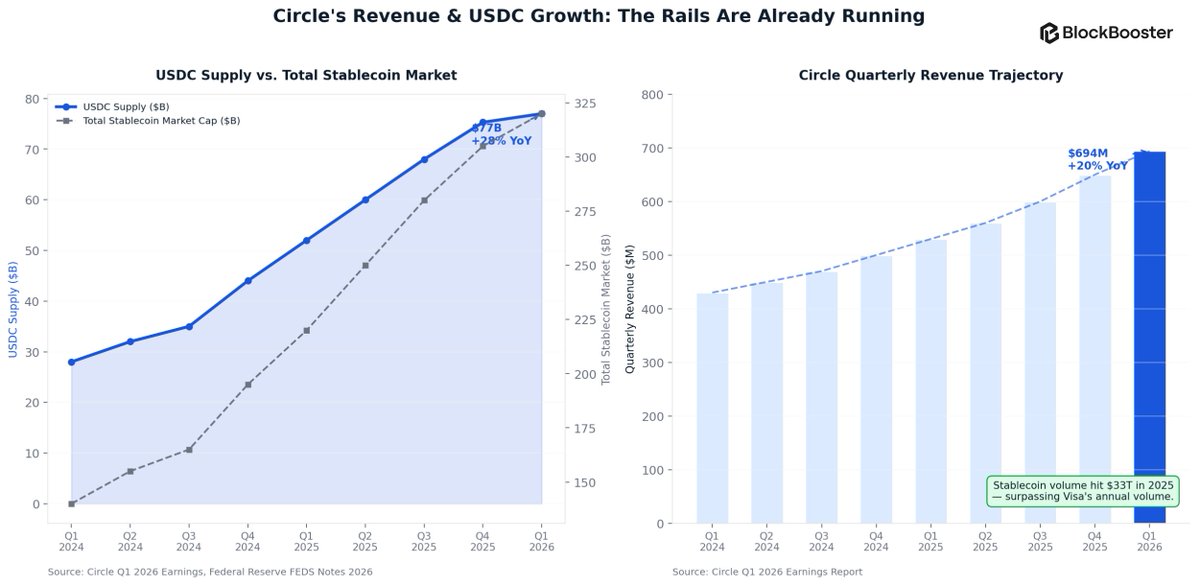
Circle raised $222M at a $3B valuation for ARC, a Layer-1 built for regulated institutions. The round was backed by BlackRock, Apollo, ICE, Standard Chartered, Janus Henderson, SBI Group, ARK Invest, and a16z.
The architecture is purpose-built around two barriers that have kept institutions off public blockchains: auditability requirements and counterparty whitelisting. Configurable privacy, permissioned validators, and compliance-focused transaction design are the direct responses.
Gas fees are paid in $USDC. There is no treasury friction and no exposure to volatile tokens. Those fees flow back through validator rewards and burns, keeping institutions comfortable while value accrues to ARC holders.
But here’s the part most people miss: Circle holds 25% of the initial supply and operates core validator infrastructure. The issuer, validator, and primary token beneficiary are all the same entity. This structure represents a company-led financial infrastructure layer, not a community-driven token network.
100+ institutions are already on Arc testnet, working through tokenized fund issuance, onchain settlement, and capital markets workflows.
The real differentiation is not speed or throughput. It is the combination of institutional RWA infrastructure, onchain FX settlement, and multi-stablecoin liquidity on a rail that incumbents can adopt without triggering their own compliance frameworks.
Three signals worth watching:
→ When does mainnet beta launch?
→ Which institution migrates production workflows first?
→ Does meaningful inter-institution USDC settlement volume emerge on ARC?
If Circle converts USDC distribution into ownership of regulated transaction rails, it will be significantly more difficult for competitors to launch another institutional blockchain.
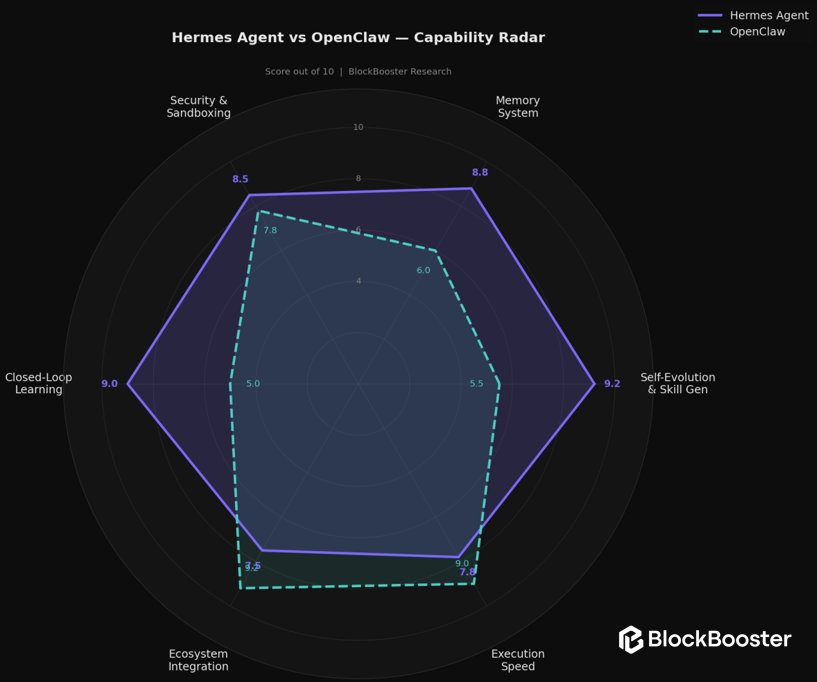
While much of the recent attention in AI agents has centered on @openclaw, @NousResearch’s Hermes Agent highlights where the category may be heading next.
The key signal is not just traction. It is architecture.
Hermes shifts the focus from brute-force context expansion toward structured memory, reflection, and skill accumulation. That suggests a different path for agent development: not simply better task execution, but systems that can improve through experience and compound capability over time.
For the market, this is an important distinction.
If the first phase of the agent race was about proving agents can act, the next phase may be about proving which agents can learn, retain, and adapt more efficiently. That has direct implications for where durable value will accrue across the stack.
In our view, the long-term winners in AI agents may not be defined by speed alone, but by the strength of their cognitive architecture and their ability to convert usage into compounding intelligence.
OpenClaw accelerated market attention. Hermes may be highlighting the next layer of differentiation.
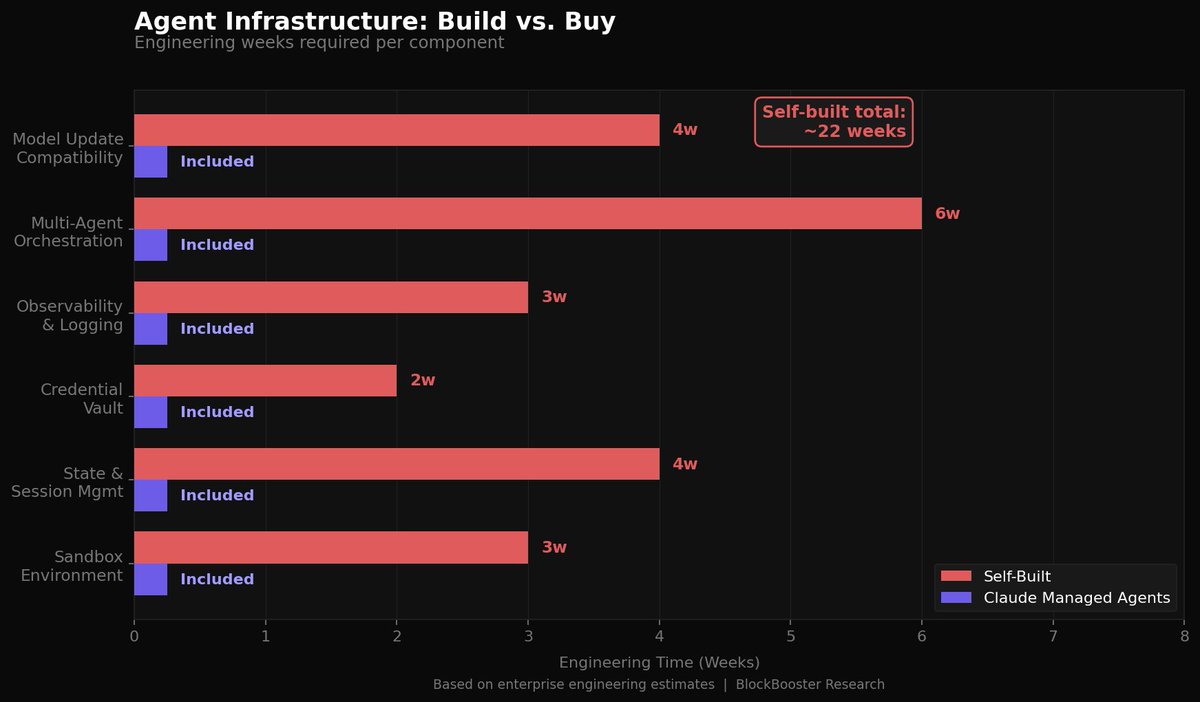
@claudeai just made its most important move yet with Managed Agents. This isn’t about better models. It’s about owning where agents actually run.
Right now, every major player is racing to become the gateway for AI agents. Most are competing on intelligence. Anthropic is competing on execution.
Before this, shipping a production-grade agent meant months of infrastructure hell: sandboxes, state, credentials, recovery, observability. Claude Managed Agents compresses all of that into one API. You define the task. Anthropic runs the system.
Customers aren’t just paying for tokens anymore. They’re paying for the runtime layer.
And that’s where things get sticky. Models can be swapped. Runtimes don’t get replaced easily.
We’ve seen this before. Cloud wasn’t won by who had compute. It was won by who owned where applications lived. AWS didn’t sell servers. It owned the execution layer.
Same pattern is forming again. Agent infrastructure is where lock-in happens. And Anthropic is positioning itself to own that layer.
@opentimestamps CA in the bio ✅
Dev is one of the legendary Bitcoin developers ✅
Dev is about to launch plan, idk maybe buyback and lock tokens? 👀
Finn hasn't woken up yet 👀
Perhaps this is why $TIME is still above 300k, whales remain bullish, waiting for more updates
@opentimestamps CA in the bio ✅
Dev is one of the legendary Bitcoin developers ✅
Dev is about to launch plan, idk maybe buyback and lock tokens? 👀
Finn hasn't woken up yet 👀
Perhaps this is why $TIME is still above 300k, whales remain bullish, waiting for more updates
Just did some further research on the contributors to OpenTimeStamps, and they're all top-tier Bitcoin developers
$Time is getting increasingly bullish
DYOR