Bioengineering lab led by Dr. Ambika G. Bajpayee. Drug delivery to charged tissues such as cartilage, meniscus, intervertebral disc and mucosal membranes.
Congratulations to Helna Mary on receiving the OARSI 2026 ECI Travel Support Award! Well-deserved recognition for her work and a great opportunity to connect with the OA research community in West Palm Beach. https://t.co/r4XAz6pSxF #OARSI2026#ECIAwards
Day 2 of ORS. We will have Hengli’s presentation at 10:20 @ ballroom CD. Later on we will have poster by Helna and Bill in the evening @ hall A. Stay tuned!
The Han Lab is excited to present our work at #ORS2026 in Charlotte, NC! Explore the sessions below to discover the latest research in our lab. We are looking forward to meeting new friends and reuniting with old ones. See everyone in Charlotte!!! @ORSsociety@OrsMeniscus
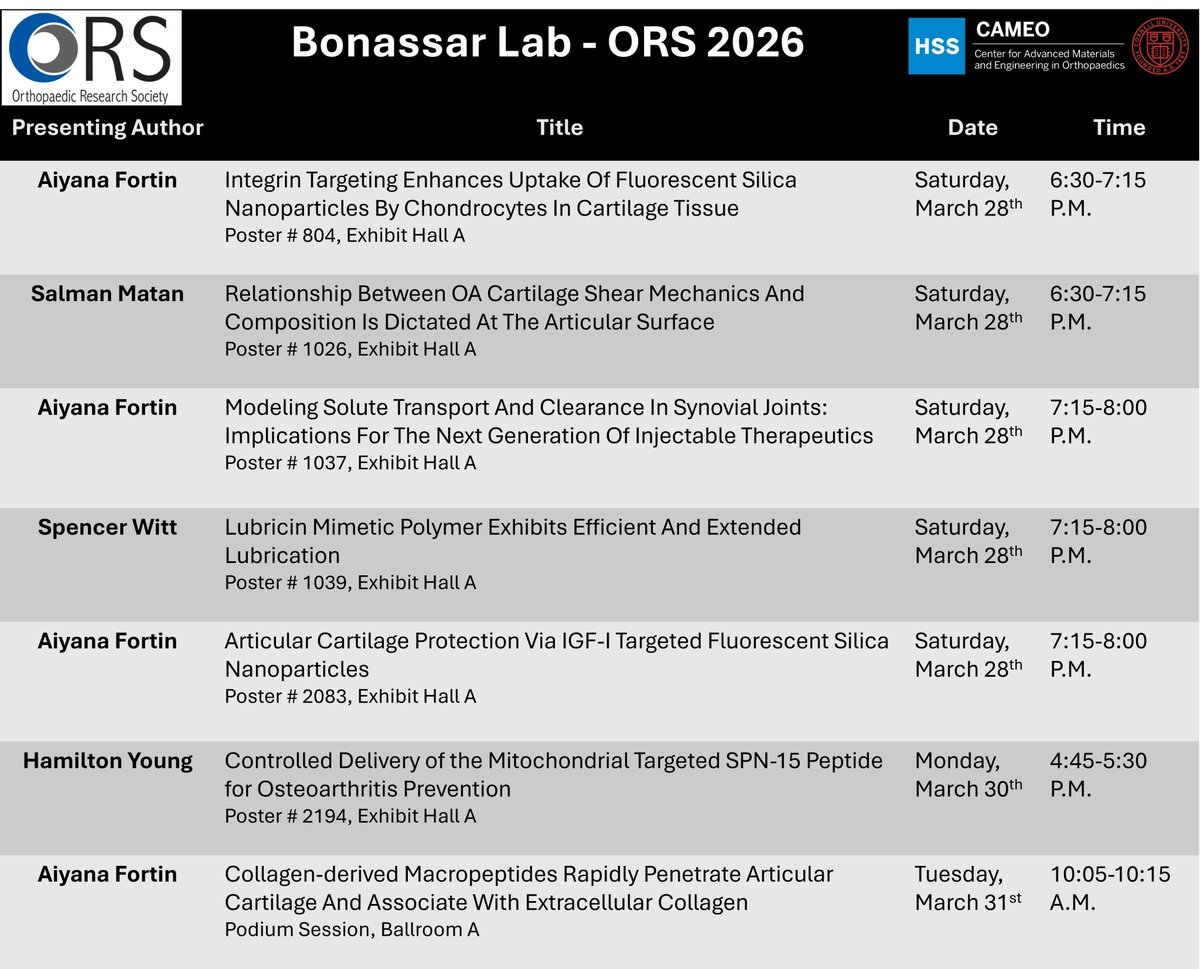
We're at #ORS2026 in Charlotte this week! The Bajpayee Lab is presenting our latest work on cartilage-targeted drug delivery for OA. If you're working on OA, biomaterials, or musculoskeletal therapies. Come find us! #Osteoarthritis#Biomaterials#Orthopaedics@ORSsociety
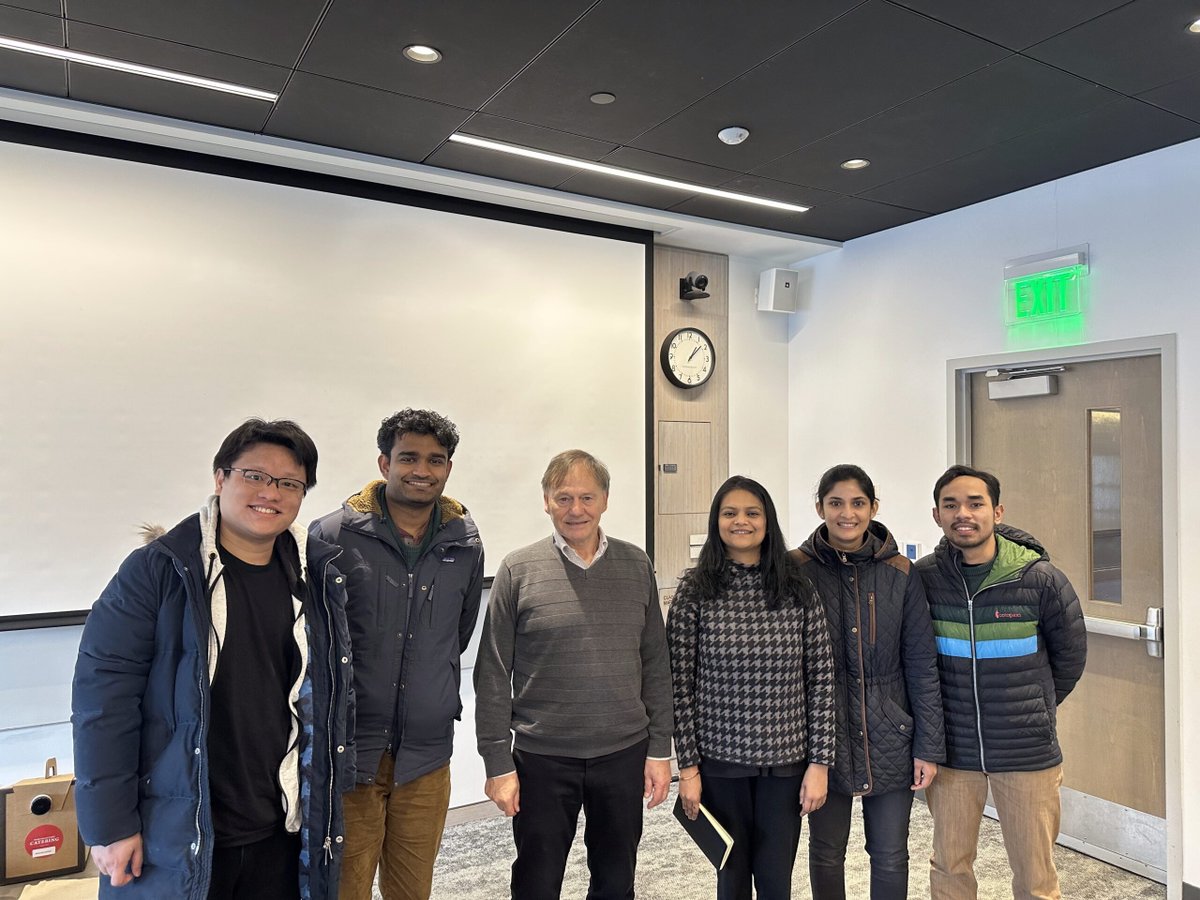
Recap on last week's seminar! Dr. Chris Evans, professor of orthopedics at the Mayo Clinic @MayoClinic, visited Northeastern University and gave a wonderful seminar talk. It was great to learn about his amazing work in osteoarthritis IL-1RA gene therapy!
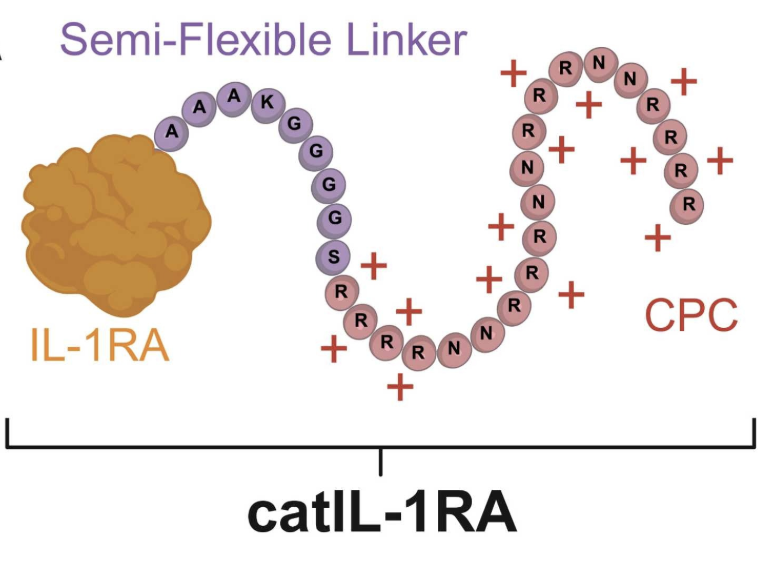
Engineered catIL‑1RA shows superior joint retention and blocks IL‑1–driven cartilage inflammation far better than Anakinra. Single‑dose intra‑cartilage depots protect tissue for 16 days with 25× higher synovial levels in vivo. https://t.co/DzmfTtFV1b
These key barriers include cartilage, the blood–brain barrier, the GI tract, the eye, and the skin, and the effects on PK and tissue transport. We also present engineering design principles to enhance EV targeting and overcome these barriers for more effective therapeutics.
Our new review, led by Helna, which examines how extracellular vesicles (EVs) interact with key biological barriers, is online now!
https://t.co/L7WCAtUbDC
Encapsulation within alginate-core polymeric microparticles (AlgPLGA-MP) extended pain relief to approximately one week, while avidin surface modification further enhanced joint retention and shows promise for prolonging analgesic effects even further.
We are thrilled to share our latest work led by @Henry2833884 titled “Extended osteoarthritis pain relief with neosaxitoxin using alginate-core polymeric microparticles” published in @nanoscale_rsc
Link: https://t.co/pwCWF6D3iz
We demonstrate that Neosaxitoxin (NSTX) is a potent analgesic for osteoarthritis (OA) associated pain but is limited by rapid joint clearance and short therapeutic duration when delivered as a free drug.
Come see us at ICRS 2025 18th World Congress in Boston! Dr. Bajpayee and Helna Baby will present our works on Extracellular Vesicles (EVs) at session 1.1 elEVate Your Game of ICRS 2025 (Sat 10/11) #ICRS#Cartilage
Congratulations to Dr. Timothy Boyer @Boyer_TL for successfully defending his doctoral thesis! Tim’s work has focused on designing cartilage targeting cationic fusion proteins for the treatment of OA. Tim is heading to Rush University for his postdoc! He will be missed very much!
We are thrilled to share our latest work titled "Spatial charge-hydrophobicity configuration modulates cationic peptide transport in cartilage," published in @BiophysJ
Free access: https://t.co/OUQKwJHrCL
By combining experimental and computational approaches, we investigated the contribution of charge and hydrophobicity arrangement on cationic peptide’s intra-cartilage transport. We found that there is an optimum cationic peptide's residue configuration for cartilage targeting.
Calling all Disease-Modifying OA Drugs‼️
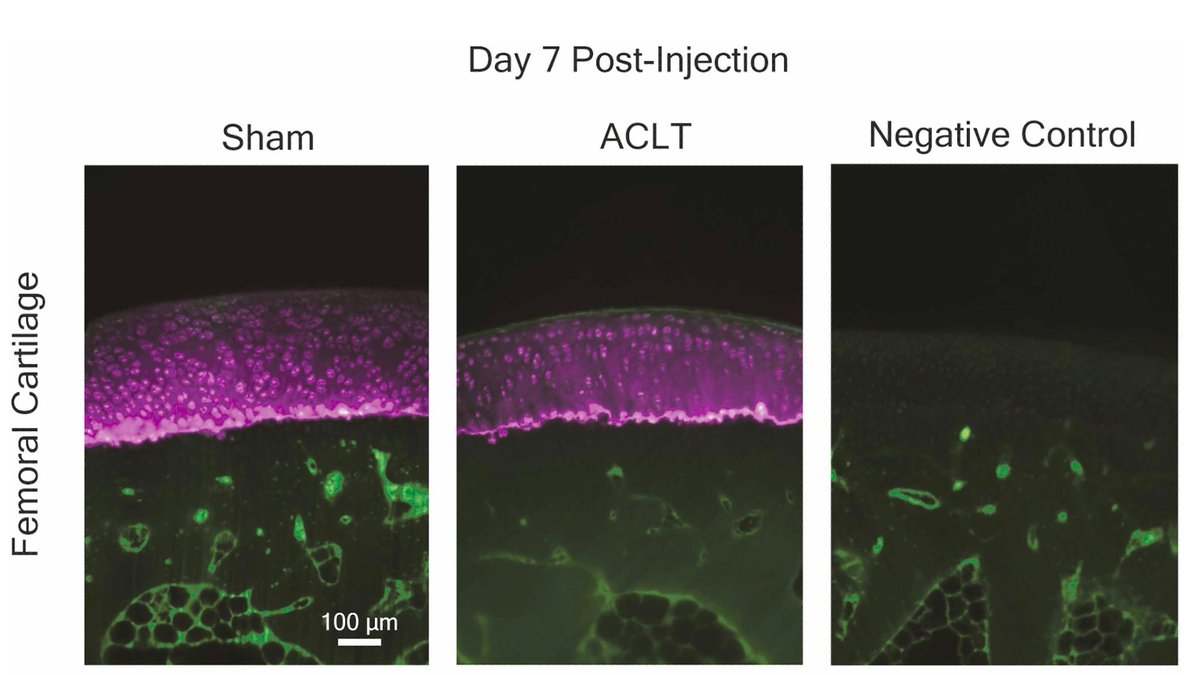
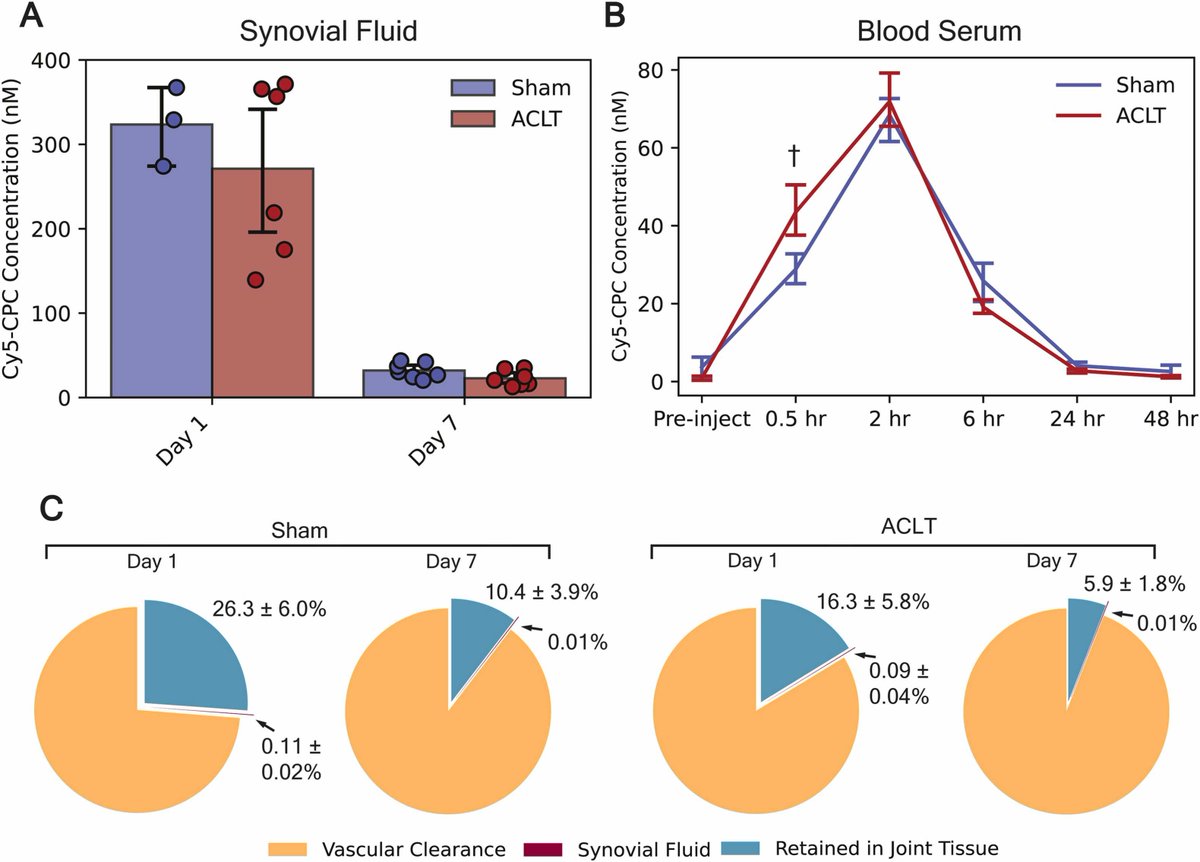
We are excited to share new work led by @Boyer_TL now published in @OACJournal on evaluating Cationic Peptide Carriers for drug delivery of DMOADs in an animal model of post-traumatic osteoarthritis. Free Access: https://t.co/vlyPxpvIzA
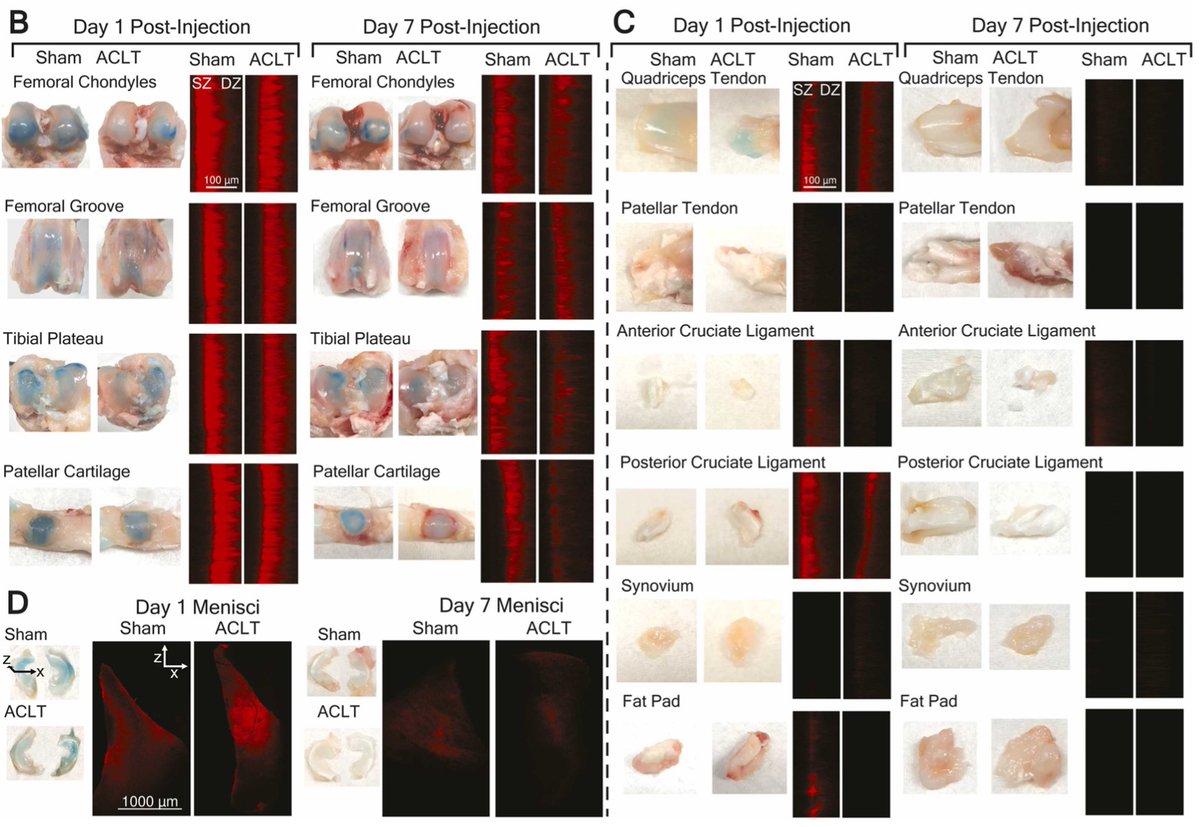
In collaboration with Dr. Ryan Porter at UAMS, we demonstrate Cationic Peptide Carriers (CPCs) target the deep layers of rabbit knee cartilage, even in inflamed joints, and can be utilized to substantially improve intra-joint retention of DMOADs.