𝟐𝟖 𝐌𝐚𝐲 — 𝐀 𝐃𝐚𝐫𝐤 𝐖𝐨𝐮𝐧𝐝 𝐢𝐧 𝐁𝐚𝐥𝐨𝐜𝐡 𝐇𝐢𝐬𝐭𝐨𝐫𝐲
𝑭𝒐𝒓 𝒕𝒉𝒆 𝒔𝒕𝒂𝒕𝒆, 28 𝑴𝒂𝒚 𝒊𝒔 𝒄𝒆𝒍𝒆𝒃𝒓𝒂𝒕𝒆𝒅 𝒂𝒔 𝒂 𝒔𝒚𝒎𝒃𝒐𝒍 𝒐𝒇 𝒑𝒐𝒘𝒆𝒓 𝒂𝒏𝒅 𝒎𝒊𝒍𝒊𝒕𝒂𝒓𝒚 𝒂𝒄𝒉𝒊𝒆𝒗𝒆𝒎𝒆𝒏𝒕.
𝑭𝒐𝒓 𝒕𝒉𝒆 𝑩𝒂𝒍𝒐𝒄𝒉 𝒏𝒂𝒕𝒊𝒐𝒏, 𝒊𝒕 𝒓𝒆𝒎𝒂𝒊𝒏𝒔 𝒂 𝒑𝒂𝒊𝒏𝒇𝒖𝒍 𝒓𝒆𝒎𝒊𝒏𝒅𝒆𝒓 𝒐𝒇 𝒔𝒖𝒇𝒇𝒆𝒓𝒊𝒏𝒈, 𝒅𝒊𝒔𝒑𝒐𝒔𝒔𝒆𝒔𝒔𝒊𝒐𝒏𝒂𝒏𝒅 𝒉𝒊𝒔𝒕𝒐𝒓𝒊𝒄𝒂𝒍 𝒊𝒏𝒋𝒖𝒔𝒕𝒊𝒄𝒆.
The nuclear explosions carried out in the mountains of Chaghi in 1998 did not merely shake the earth, they permanently altered the lives of generations. The surrounding regions of Raaskoh were left to endure radiation, disease, environmental destruction, economic collapse and collective trauma. While the world witnessed a display of nuclear capability, the indigenous Baloch population was neither protected nor considered worthy of basic human safeguards.
The land of the Baloch has repeatedly been used for strategic and military purposes by the colonizers, while the lives, rights and existence of the indigenous population continue to be sacrificed in the name of state interests. From exploitation of natural resources to militarization and enforced displacement, Balochistan has long been treated as a territory to control rather than a homeland inhabited by a nation with its own identity, history and political aspirations.
Today the people of Chaghi continue to suffer the consequences of those nuclear explosions. Cases of cancer, leukemia, genetic disorders, respiratory diseases, blindness, infertility, thyroid complications and other life threatening illnesses have become increasingly common in the region. Alongside the humanitarian crisis, fertile lands turned barren, water resources were contaminated and traditional livelihoods were destroyed, pushing entire communities into poverty and neglect.
For the Baloch nation, the tragedy of 28 May is not merely an environmental disaster, it is deeply political. It symbolizes the systematic disregard for Baloch lives and reflects a broader structure of oppression imposed upon Balochistan. The continued exploitation of Baloch land without the consent, welfare or protection of its people is viewed by many Baloch as part of the ongoing process of Baloch genocide, where a nation is gradually erased politically, socially, environmentally and demographically.
Youm-E-Aasrok stands as a collective reminder that the wounds of Chaghi are still alive. It is a call for historical truth, environmental justice, medical support for the affected population and accountability for the irreversible destruction inflicted upon Baloch land and people.
This day reminds us that our grief is collective and our silence only strengthens oppression. Chaghi is not an isolated tragedy, it is part of the broader suffering endured by the Baloch people for decades. Unity, political awareness and national solidarity are essential for defending our history, identity, land and future generations.
The humanitarian consequences of nuclear militarization cannot be ignored when marginalized populations are forced to bear its burden. We urge international human rights bodies, environmental organizations and democratic institutions to acknowledge the long term impact of the Chaghi nuclear explosions and raise their voices for justice, truth and accountability.
28 May is not a day of celebration for the Baloch nation. It is a dark wound that continues to burn across the mountains of Chaghi and in the collective memory of the Baloch people.
𝐂𝐞𝐧𝐭𝐫𝐚𝐥 𝐒𝐩𝐨𝐤𝐞𝐬𝐩𝐞𝐫𝐬𝐨𝐧 𝐁𝐚𝐥𝐨𝐜𝐡 𝐖𝐨𝐦𝐞𝐧 𝐅𝐨𝐫𝐮𝐦
Habiba Peerjan, a resident of Nazarabad Tump and currently based in Karachi, was forcibly disappeared by security forces on 25 May 2026 after a raid at her home in Baldia Town, during which she was taken to an undisclosed location. This marks her second enforced disappearance, as she was previously detained in May 2022 and released after several days.
The repeated targeting of Baloch women through enforced disappearances highlights a deeply troubling system of repression and collective punishment. It has created an atmosphere of fear and instability, leaving families in prolonged uncertainty without access to information, legal remedy or accountability. The psychological impact on affected families is severe with prolonged trauma, anxiety, depression and other long term mental health consequences becoming increasingly common.
The Baloch Women Forum has strongly condemned the enforced disappearance of Habiba Peerjan and described it as part of an ongoing strategy of intimidation against Baloch women. It has demanded her immediate and unconditional release, calling for an end to enforced disappearances and urging human rights organizations to take urgent notice of the escalating violations in Balochistan.
#SaveBalochWomen
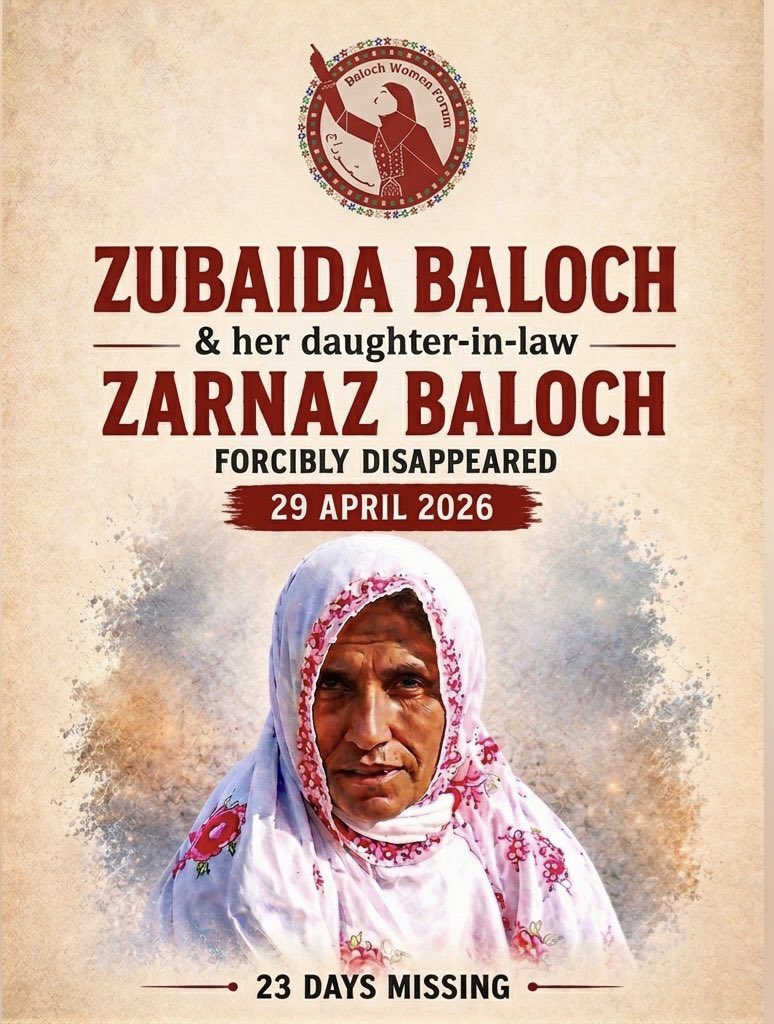
Zubaida Baloch and her daughter in law Zarnaz were forcibly abducted by security forces on 29 April 2026 from Tejaban Kech.Since then, no information has been made public about their whereabouts or legal status, leaving their family in prolonged anguish and unanswered questions.
This incident follows the killing of Daulat, husband of Zarnaz, on 18 February 2026 in an incident involving state backed death squads.The repeated targeting of this family highlights a continuing reality in which abduction of Baloch women is being normalized within the prevailing security framework raising serious concerns of collective punishment directed at civilian families in Balochistan. Urgent disclosure of their whereabouts and accountability for those responsible is demanded.
The growing institutional acceptance of enforced disappearances of Baloch women signals a deterioration in rule of law standards and weakening of civilian protection mechanisms. It further indicates the use of coercive state practices amounting to family based reprisals, where entire households are subjected to intimidation and deprivation of liberty, deepening political repression and eroding fundamental rights guarantees.
#SaveBalochWomen
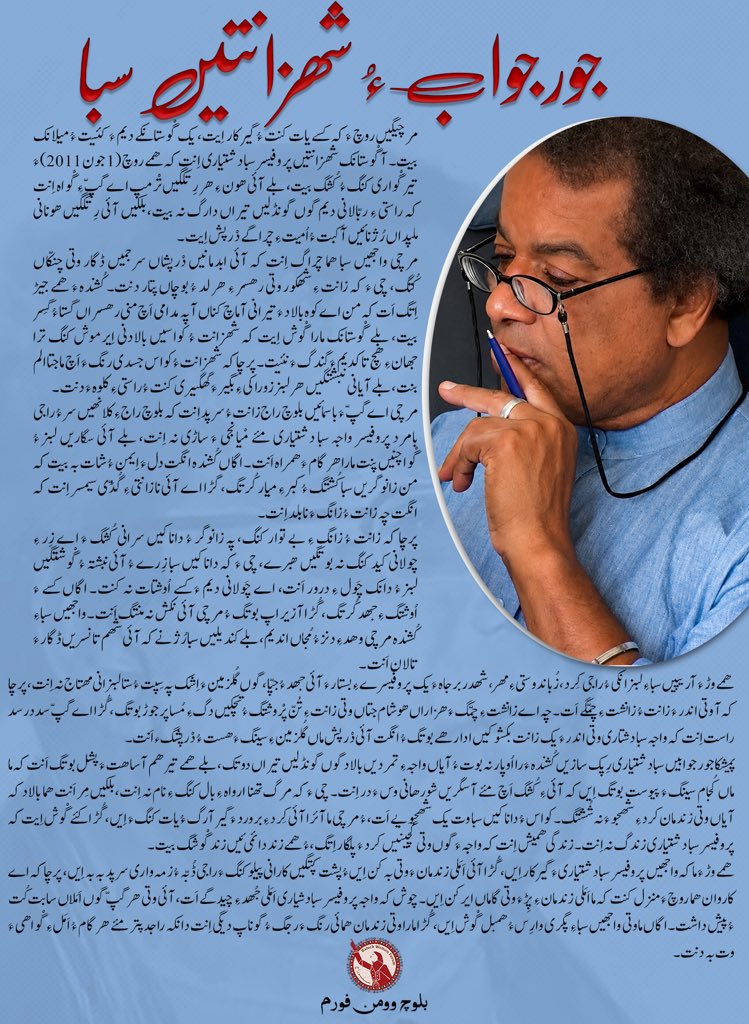
Senior officials from the University of Gwadar reportedly went missing while traveling on official duty from Gwadar to Quetta. Available reports state that Vice Chancellor Dr. Abdul Razzaq Sabir, Pro-Vice Chancellor Syed Manzoor Ahmed, Dr. Irshad Buledi and their driver Hatum were traveling through the Khad Kocha area of Mastung district when contact was lost. The situation has prompted concern among their families and the academic community.The matter has drawn attention to broader concerns particularly those affecting individuals engaged in academic and public service roles. We demand their immediate and safe recovery.
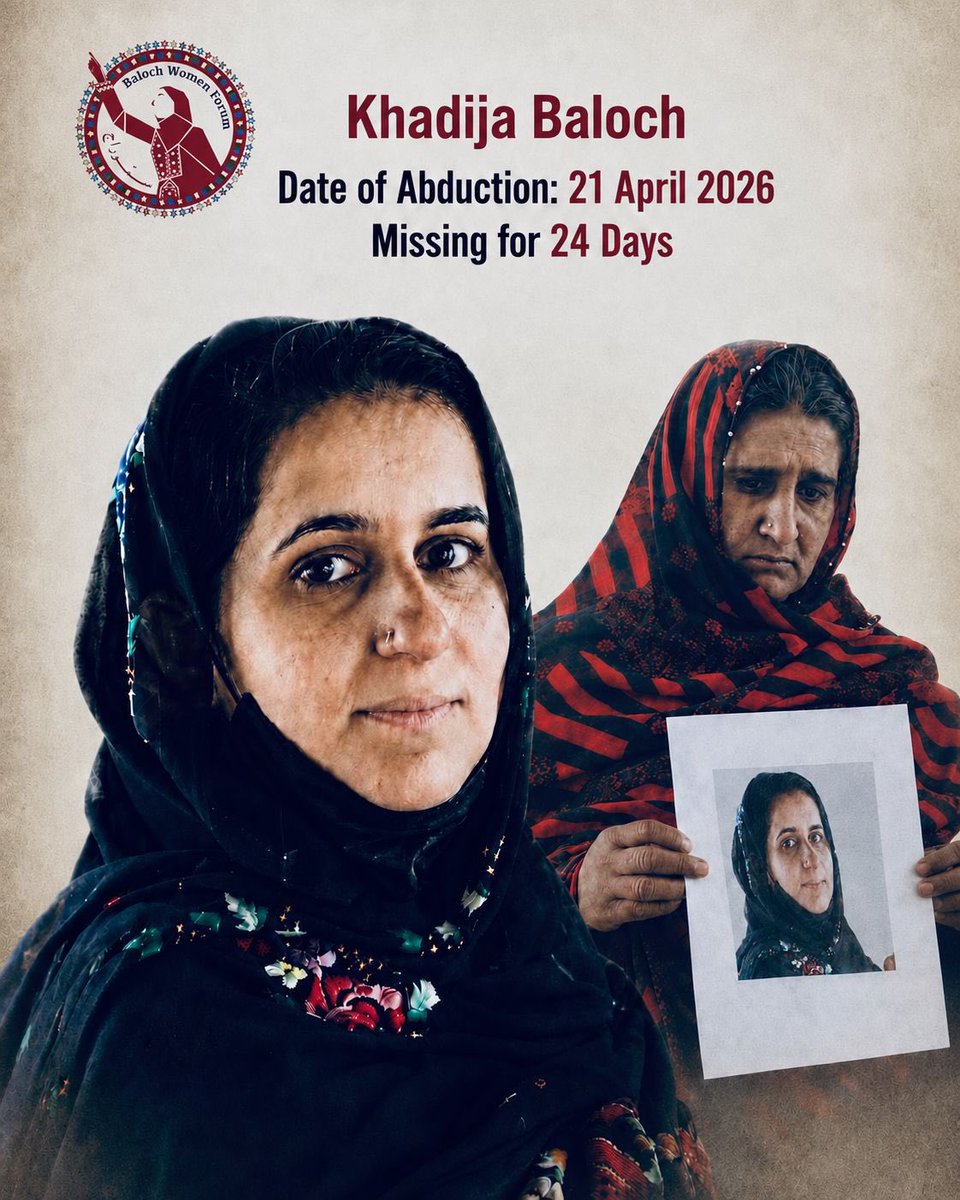
For the past 24 days, Khadija Baloch’s family has been living through unbearable pain and uncertainty. Since her abduction on 21 April 2026, her loved ones have remained on the roads raising their voices and demanding her safe release. Despite their continuous protests and appeals, they still await answers regarding her safe release.The continued absence of any official action regarding Khadija Baloch’s case has intensified the suffering of her family, leaving them in a constant state of fear and anxiety. Her family continues to demand justice and insists that Khadija Baloch must be safely released immediately or produced before a court of law in accordance with legal and human rights obligations.
#ReleaseKhadijaBaloch
#SaveBalochWomen
Reports emerging from Kuntani Gwadar describe a deeply troubling situation in which firing by security forces particularly the Coast Guard on Baloch labourers has resulted in dozens martyred and several others seriously injured. The incident has further intensified growing concerns over escalating tensions and heavy militarization along the coastal region of Balochistan where civilian life is increasingly shaped by insecurity, fear and restricted mobility. The tragedy deepened further as there was reportedly not even a single ambulance available to rescue the wounded, forcing local people to carry injured victims on their shoulders and in private vehicles in desperate attempts to save lives. Gwadar is widely promoted as a mega development hub and a symbol of economic progress and strategic investment. However, on the ground,the reality for many Baloch people is very different. Despite the narratives of growth and prosperity, indigenous people continue to face severe hardship including enforced disappearances, extrajudicial killings and increasing restrictions on movement and livelihood.
We cannot afford any more loss of Baloch lives. We cannot remain silent in the face of continued violence, insecurity and recurring reports of serious human rights violations in Balochistan. We raise our voice on every platform to highlight this suffering and demand urgent attention to the situation on the ground. We urge international human rights bodies to closely monitor the situation and ensure that credible, independent investigations are conducted and that accountability is established in accordance with international law. The protection of civilian life and dignity must remain the highest priority.
#StopBalochGenocide