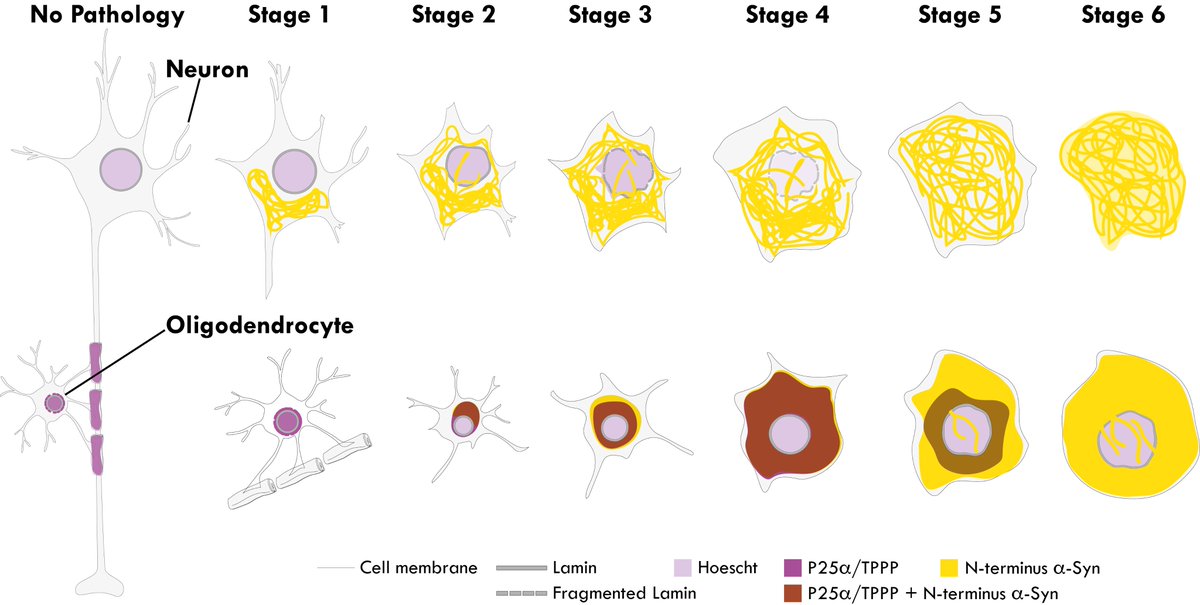
Wiseman et al. report that the rapid neurodegeneration observed in MSA is driven by toxic α-synuclein fibrils invading neuronal nuclei, leading to cell death. They propose redefining MSA as a neuronal nuclear and oligodendroglial α-synucleinopathy. https://t.co/3gtOb4ts88
Did you know that the SWDBB relies solely on charitable donations to fund our activities? We have a new Crowdfunding page: https://t.co/78HgJrhgS4 please do share it if you able to.
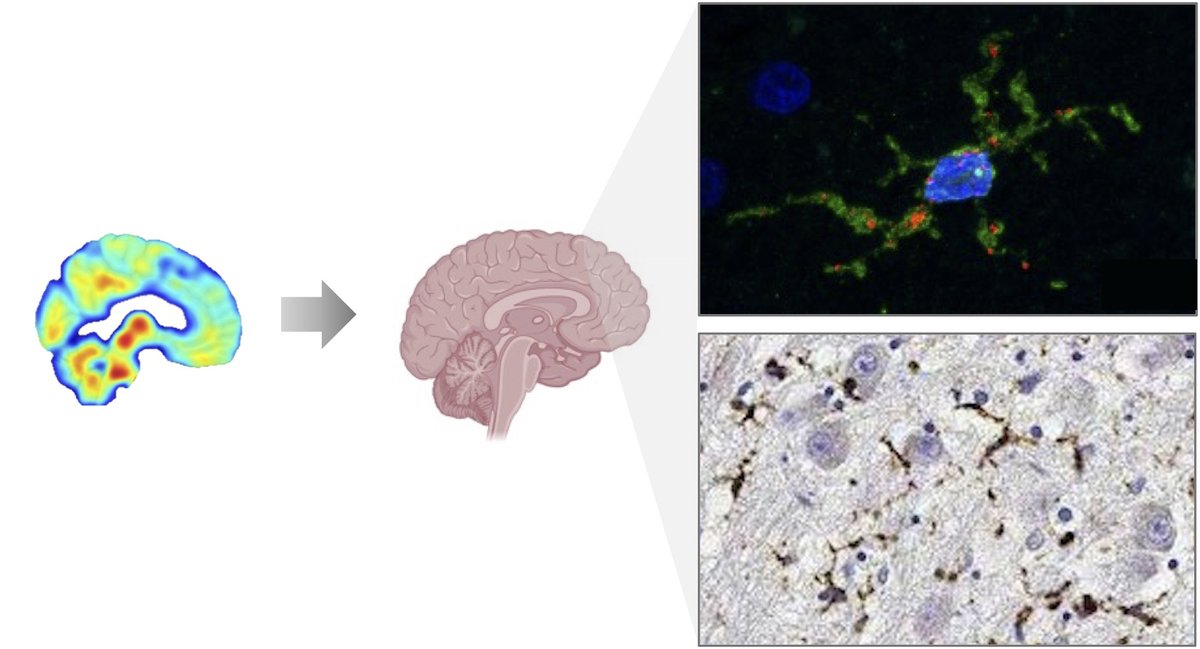
TSPO PET is used to measure inflammation in dementia, but its cellular basis is unclear. Using PET imaging and post-mortem brain tissue, Wijesinghe et al. show that microglia are the key immune cells driving TSPO PET signal changes. https://t.co/hDtbE5NjZr
@ProfRobHoward A timely letter. Amyloid-removal pseudo-atrophy is an interesting suggestion but, as you say, doesn’t account for observed degree of atrophy. Indeed, amyloid-beta is not the only constituent of these plaques. Further post-mortem neuropathological studies are clearly needed.
@alehasnaat_@PolitlcsUK Suicide was decriminalised in 1961 by the Suicide Act 1961. So, I guess it is “allowed in the U.K. now” but that’s not anything to do with the Assisted Dying Bill.
Delighted to share our work, out today in @MDJ_Journal ! We highlight alpha-synuclein SAA positivity in PSP and CBS patient CSF samples. This may represent Lewy body co-pathology which can impact on clinical course (1/2)
@PSPAssociation@MDC_IoN_UCL
https://t.co/6hqrKSRI3w
Professor Gillian Bates FRS is awarded the Royal Society's Ferrier Medal for her work in understanding the molecular basis of Huntington’s disease and consistently producing highly impactful findings which have moulded the course of this field. #RSMedals https://t.co/eS4hhzMY6C