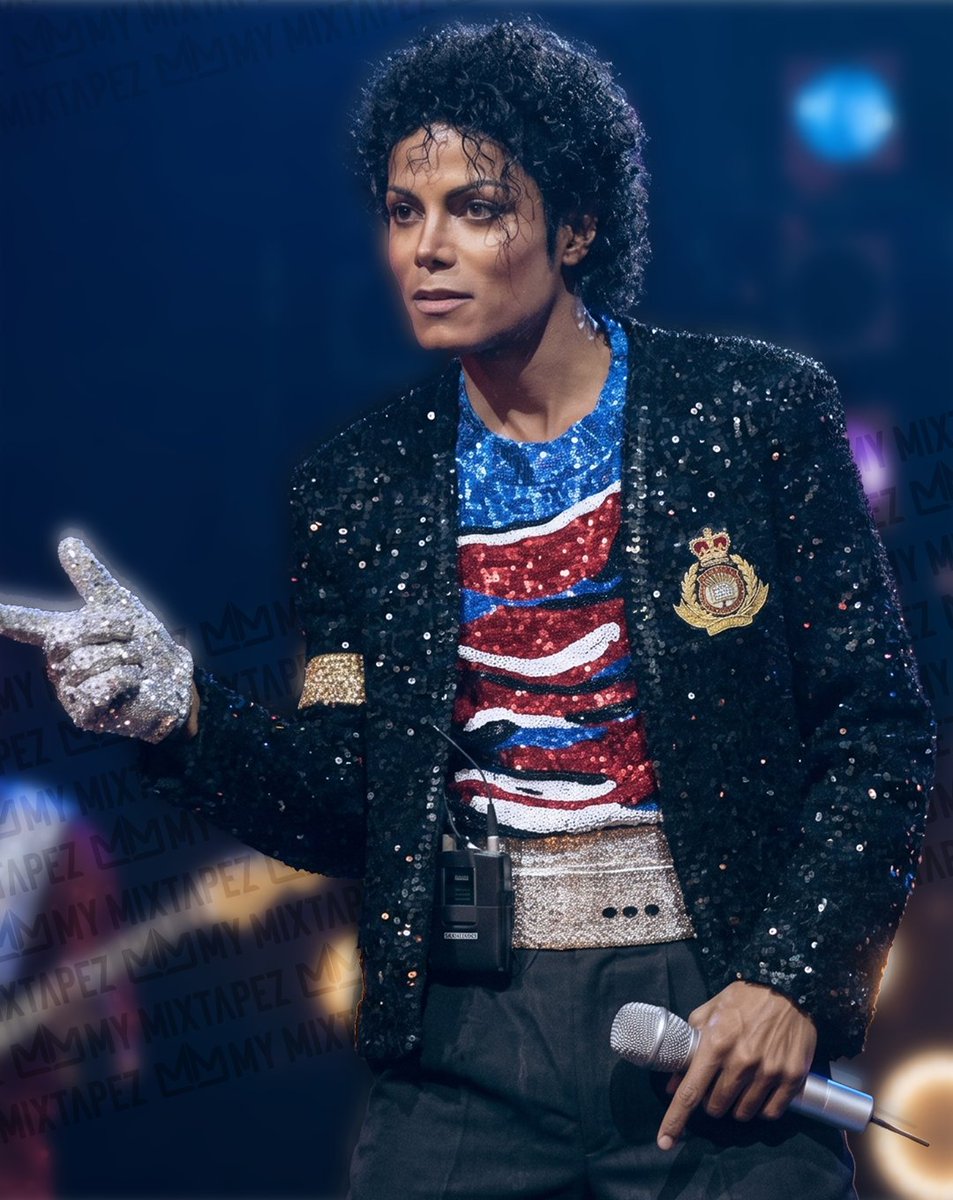
MICHAEL has crossed $851M worldwide, including a #1 debut in Russia.
With Japan opening in two weeks, the film is expected to push toward $1B and become the highest-grossing biopic ever.
AFRICAN STREAM: DEPLATFORMED BUT NOT DEMORALISED!
It’s tough to accept that we had to shut down over baseless accusations by the U.S. government. But instead of bowing out in silence, the team chose to resist, just as our ancestors often did, through dance.
You can deplatform us. You can smear us.
But you can’t stop us dancing.
To all our supporters: thank you. You made African Stream what it was—the most meaningful thing any of us has ever been part of.
Peace out, with love and resistance. ✊🏿🖤💃🏾🕺🏿
Recently, an internet trend has emerged, with people creating their versions of Mount Rushmore. However, one version stands out as particularly significant: a pan-African Mount Rushmore.
Our choices for the pan-African Mount Rushmore are Ghana's founding leader and renowned pan-Africanist, Kwame Nkrumah (1909-1972); the revolutionary late Burkinabe leader, Thomas Sankara (1949-1987); and Congolese pan-African icon and independence leader, Patrice Lumumba (1925-1961).
Africa has produced many illustrious daughters and sons who dedicated their lives to advancing the pan-African cause, and it was, therefore, no easy task to choose the three finalists. Nkrumah has earned his spot for not only leading the dismantling of the colonial stranglehold on his homeland but also for assisting other countries that were still fighting for their independence. Additionally, he played a key role in efforts to unite Africans under the banner of pan-Africanism. He was the chief architect of the Organisation of African Unity, which he believed could be used as a tool to unite Africans.
Sankara is renowned for his efforts to rid his homeland of any traces of French imperialism. He renamed the country from Upper Volta to Burkina Faso, meaning ''land of upright people.' He also championed self-reliance, rejecting foreign loans.
For his part, Lumumba was the engine in the Congolese people's struggle against brutal Belgian colonialism. After independence, he made moves towards nationalising the country's natural resources. His name continues to serve as an inspiration for African people in our fight against imperialism.
Do you agree with our three? If you agree with our selection, who would you add as your fourth?
Side Note: We are aware that Mount Rushmore is located on land that belongs to the Lakota Sioux people, and its creation is deeply controversial for several reasons.
Also, we considered the idea of featuring Winnie Mandela. The only reason she wasn't included on our list was that she wasn't a head of state. Will she make yours?
"They offered me $5 million to shoot Ibrahim Traoré from behind specifically when he bends to pray to Allah. They even promised my family and me citizenship in their country. They called it 'an offer I couldn’t refuse.' To them, money matters more than humanity.
But I asked myself. Is $5 million worth carrying a guilty conscience to my grave? Will that money make me a king in a foreign land, or a fool mocked by their sons and daughters? I’d rather live as a lion in the wild than as a dog in their city."
~ Ibrahim Traoré 's guard
THEIR ‘AID’ JUST A FRACTION OF THEIR LOOT!
The West loots Africa at night and during the day gives us backsources a fraction of the swag, dressed up as aid. That’s the view expressed by Arikana Chihombori-Quao, the African Union’s former envoy to the US, in this 2018 clip.
Her words certainly ring true amid the growing clamour of complaints about neocolonialism across the continent, particularly in francophone West Africa.
Post-independence, France was afforded many privileges that enriched the nation but kept its ex-colonies poor. Paris secured the right-of-first-refusal on the extraction and sale of their natural resources. In practice, this meant their minerals were being sold to France at knock-down prices. Attempts at breaking free from this stranglehold were thwarted through French-sponsored political coups or assassinations, ensuring the European nation's interests remained protected in resource-rich West Africa.
Additionally, African nations in the CFA Franc Zone are required to keep at least 50% of their reserves in France - for the sake of 'currency stability.’
Without all this, the European country could not remain the world power it is today. The writing’s on the wall for the neocolonial era, and that’s angered President Emmanuel Macron, who recently called Africans ‘ungrateful’ after the severing of the questionable military cooperation agreements and the expulsion of French troops from Burkina Faso, Mali, Niger and, most recently, Chad.
It’s time Africa’s gardens fed Africans, not ex-colonisers.
“I am America. I am the part you won't recognize. But get used to me. Black, confident, cocky, my name, not yours, my religion, not yours; my goals, my own, get used to me.” ― Muhammad Ali🥊
#muhammadali#legend#icon
JEFFERY SACHS: WE ARE WHAT'S WRONG WITH AFRICA
What is wrong with the DRC? In this clip (from the UN Food Systems Pre-Summit in 2021), US economist Jeffery Sachs breaks it down, challenging Western nations to look in the mirror. In a powerful rebuttal of the popular framing of narratives around the economic and political struggles of Africa, Sachs calls for accountability from the West. He notes that the crisis in the Democratic Republic of Congo today is directly tied to centuries of Western imperialism, exploitation and political interference.
The public policy analyst gives a historical account of the DRC’s decades-long exploitation to illustrate Western dishonesty. He points to Belgium's brutal occupation of the Congo, which killed more than 10-million people, and the Belgian/British/US-led assassination of the Central African nation’s first democratically elected leader, Patrice Lumumba (1925-61).
Sachs further notes how neo-colonialism operates today in the DRC, where Western companies unethically extract resources while the population remains impoverished and is denied its fundamental rights, recognised under the Universal Declaration of Human Rights adopted by the United Nations in 1948.
Imperialist powers may have stopped enslaving and colonising Africans, but they still plunder the continent’s resources, assassinate its incorruptible leaders and fuel wars that stiffle growth. Today’s renewed cycle of war in the Congo is yet another chapter in the long history of neo-colonialism and imperialism.
Questions of internal governance miss the point. The real question should be: what is wrong with the West?
HOW IMF SPARKED KENYA'S BIGGEST PROTEST IN YEARS
In our end-of-year review, William Sakawa takes us through the Kenyan protests against William Ruto's government.
The June-July protests in Kenya traced back to reforms the International Monetary Fund (IMF) pushed. In January, the IMF advised the Kenyan government to raise taxes, openly admitting that such measures would likely incite social unrest but urging the government to push ahead regardless. Pressured by the need to raise $2.7 billion for the fiscal year, President William Ruto proposed a Finance Bill introducing taxes on essential goods such as bread, diapers and sanitary products and increasing the cost of medical equipment. These measures disproportionately affected the most vulnerable, fuelling widespread anger.
Kenya's severe corruption problem exacerbates public frustration. Former President Uhuru Kenyatta estimated the country loses some KES 2 billion (around $15.5 million) daily to corruption, while the country's anti-corruption chief put it at a third of Kenya's budget.
Meanwhile, debt repayment consumes seven out of every ten shillings collected in taxes, yet much of this borrowed money ends up in offshore accounts rather than benefiting the public. Kenyans' anger is not just about taxes but also the misuse of funds and unfulfilled promises that have left citizens to shoulder the burden of corruption and mismanagement.
AFRICAN STREAM'S CEO SITS DOWN WITH HIS FATHER TO DISCUSS SUDAN'S WAR
In Episode 17 of African Stream’s ‘Pan-African Attitude’ podcast, Editor-in-Chief Ahmed Kaballo sat down with his father, Sidgi Kaballo, who is an economist, academic and Central Committee member of Sudan's Communist Party, to discuss the proxy war in Sudan.
In this insightful interview, Sidgi Kaballo, who spent seven months inside Sudan from the onset of the war, walked us through his two-fold experience. He relayed his experience as a civilian witnessing the war first-hand, including his encounters with the United Arab Emirates-backed Rapid Support Forces paramilitary group that ransacked his home, stole his car and injured his arm. The second perspective Kaballo provided is that of an intellectual and political analyst who understands the root causes of the war, explaining who is backing both sides, and why neither warring party is the 'good guy.'
Find more African anti-imperialist videos like this by following us on Bluesky, Patreon, Rumble, Telegram and X.