🧬 "Will you fall off an aging cliff at 30?"
Forget the scary ads. In humans, only two aging cliffs have hard molecular data — and neither is 30.
Stanford tracked 108 people and found aging jumps at ~44 (cardiovascular/metabolic) and ~60 (immune). Women get one extra: ovarian aging accelerates around 37–38. (Shen et al., Nature Aging 2024)
Feel wrecked at 30? Two things pull it forward: chronic load (stress, sleep debt, genetics) and acute hits (COVID, surgery, childbirth). The good news — the acute kind is largely reversible (Harvard, Gladyshev lab): biological age spikes, then recovers over months.
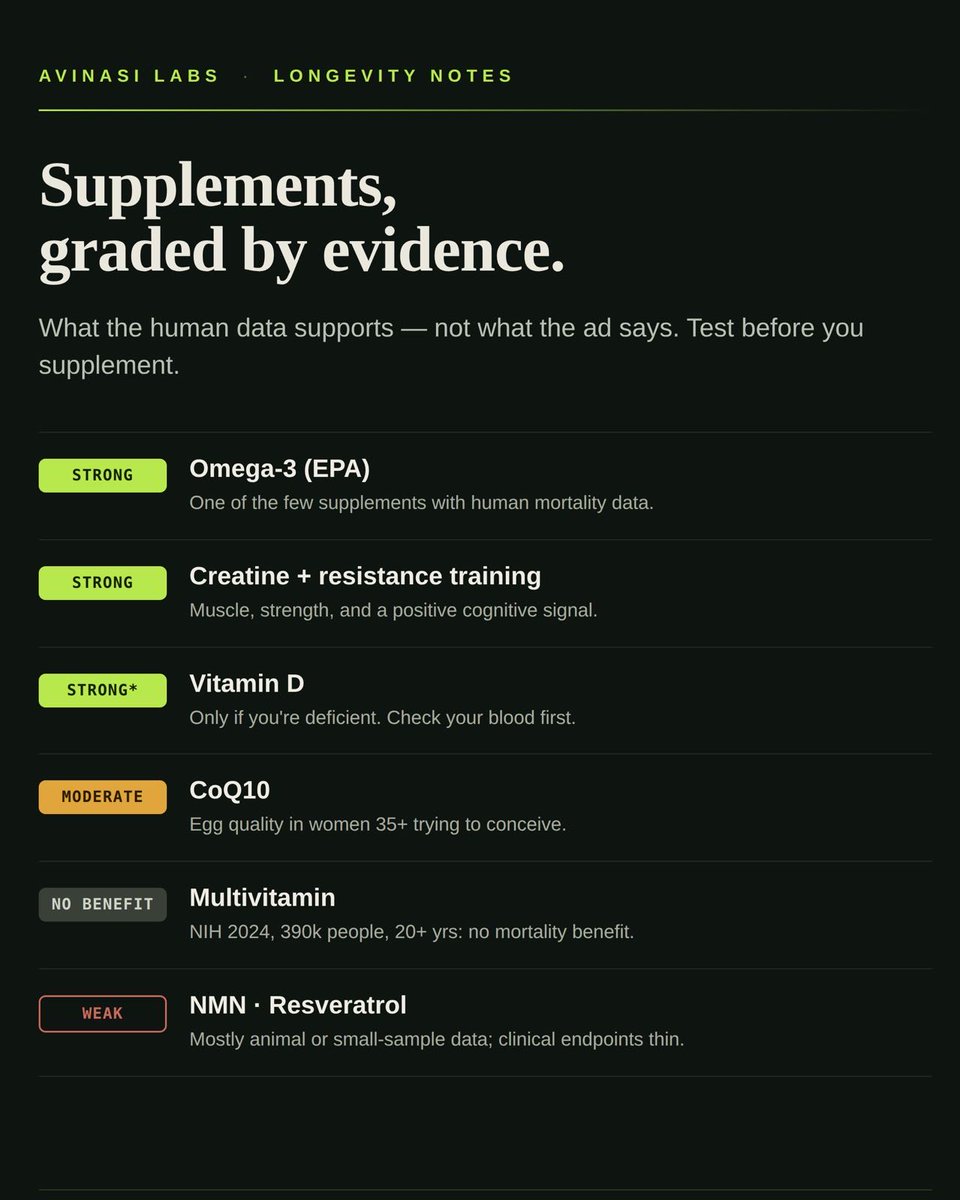
What helps: prevention is the cheapest intervention, and supplement only what you're actually low on.
✅ Omega-3 & creatine + training,
✅ vitamin D if deficient,
❌ multivitamins (NIH 2024, 390k people: zero mortality benefit),
❌ NMN/resveratrol (weak data).
Brand doesn't matter. Knowing what to take, and when, does. #Longevity #Healthspan #BiologicalAge #WomensHealth #AgingScience
Higher meat intake was associated with less cognitive decline and lower dementia risk in APOE e4 carriers, a group at higher risk of Alzheimer's disease and dementia.
Those who ate ~2 servings of meat per day had a better 10-year cognitive trajectory and a 55% lower dementia risk compared to people eating less than a half a serving per day.
That pattern wasn't seen in the non-APOE e4 carriers and was NOT observed for processed meat. Unprocessed red meat alone was also linked to lower dementia risk in APOE e4 carriers.
My take is not “everyone should eat more meat.”
But a few servings per day of unprocessed meat (as observed in this study) is perfectly healthy for most people.
The breakfast debate is framed as winner-take-all. Skip it and you'll overeat and gain. Or skip it and you'll finally lose weight. The evidence supports neither. On weight, breakfast and skipping come out even, and each carries one real advantage the other doesn't.
Weight first, since that's what people are really asking. A 2019 BMJ review pooled 13 randomized trials: no evidence breakfast drives weight loss, none that skipping causes gain. Skippers ate a bit more later but only partway, so total intake came out lower, about 260 kcal/day. Newer meta-analyses replicate it. If your lever is total calories, skipping has a genuine edge.
But that's not the whole picture. Eating in the morning measurably improves how you handle glucose all day, the second-meal effect. In a randomized trial in type 2 diabetes, skipping breakfast raised blood sugar and blunted insulin after both lunch and dinner vs the same meals on a day that started with breakfast. The first meal primes the system. Clearest in type 2 diabetes, but the physiology is general.
So it's a tradeoff, not a verdict. Normal glucose and your goal is keeping intake down? Skipping is defensible, and it doesn't backfire into overeating. Care about daytime glucose control, which matters in type 2 diabetes and prediabetes? Breakfast has a real edge. For most people, total intake and food quality matter more than timing either way.
The question isn't whether breakfast is good or bad. It's which of these two real effects matters more for your body, your glucose, and how hungry you actually are in the morning.
Probiotics measurably reduced rumination, a loop of recurring negative thoughts, in a 4 week RCT.
Even more evidence that a healthy microbiome could help prevent and treat depression.
This is a big deal. Omega-3s reduce aggressive behavior across randomized controlled trials.
A meta-analysis of 29 studies and nearly 4,000 participants found that omega-3 supplementation reduced aggressive behavior by up to 28%. The benefit was broadly consistent across children and adults, males and females, community and clinical samples, and across different doses and treatment durations. It also helped with both reactive/impulsive and proactive/planned aggression.
Mechanistically, this makes sense. Omega-3s are deeply involved in brain cell membranes, neurotransmission, neuroinflammation, cerebral blood flow, and gene regulation. DHA is especially enriched in the prefrontal cortex (an area critical for impulse control, emotion regulation, and executive function).
The authors even concluded that there is now “sufficient evidence” to begin implementing omega-3 supplementation to reduce aggression in the community, the clinic, or the criminal justice system.
That’s a remarkable statement for a nutritional intervention and a reminder that omega-3s influence brain health and may shape behavior in meaningful ways.
Can AI predict biological age? @avinasilabs is building the foundation model to answer that, starting with reproductive aging. Oocyte-level biology, clinical treatment, and outcome data in one platform.
Watch their pitch:
https://t.co/m1L1UgajzH
🧬 The decisions you make between 44–60 govern the next 30 years.
This is the perimenopause cliff — estrogen drops, and bone, heart, and brain shift simultaneously. Most women aren't told the window exists until it's already closing.
⏱️ The HRT golden window opens ~5 years before your final period and closes ~10 years after. Start within it: cardiovascular, bone, and dementia risk drop 30–50%. Miss it — and the cardiovascular protection is essentially gone.
📊 Three systems failing quietly at the same time:
· Bone density drops 2–3%/yr post-menopause
· CVD risk rises 2–4× after estrogen withdrawal
· Women account for 65% of Alzheimer's cases
This isn't a lifestyle choice. It's a closing biological window — Avinasi Labs × Bara
#Perimenopause #WomensHealth #HRT #LongevityMedicine #MenopauseAwareness #BaraHealth #HeartHealth
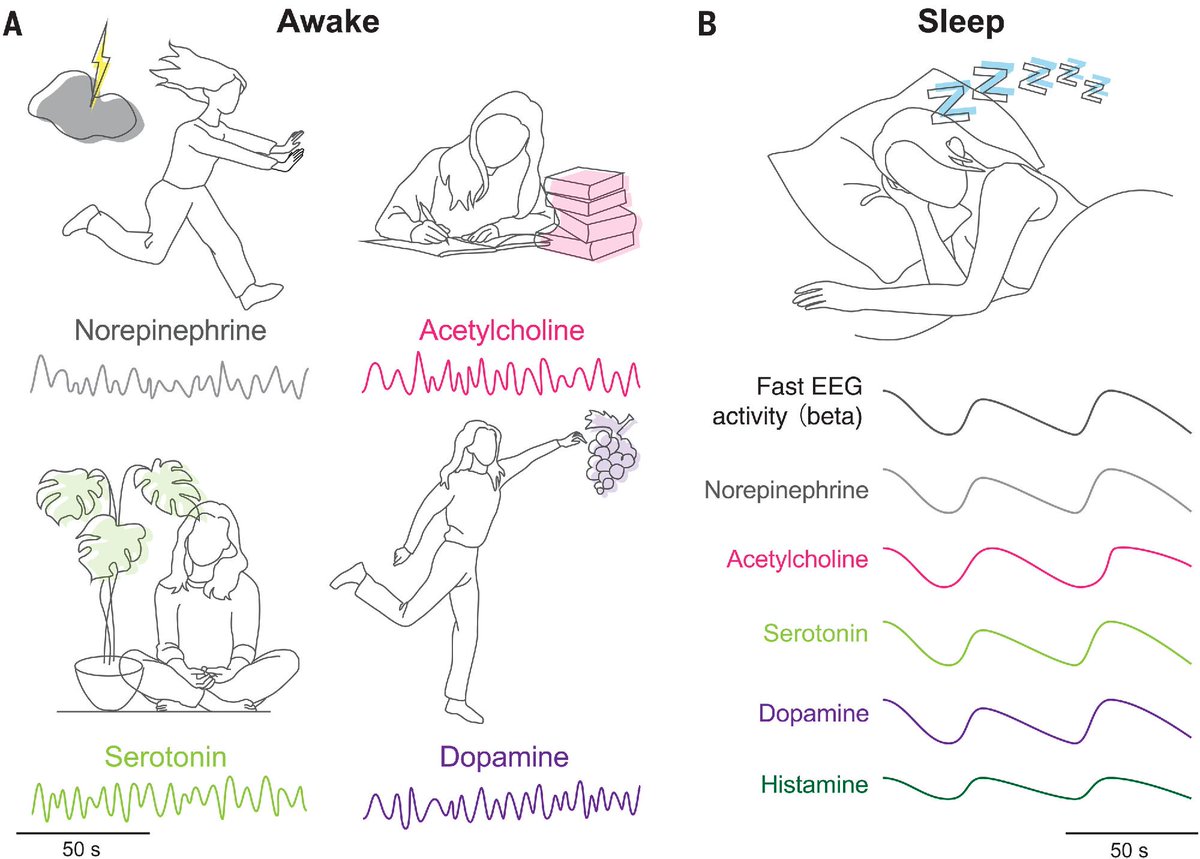
Recent studies have revealed the synchronization of neuromodulators including norepinephrine, serotonin, acetylcholine, dopamine, and histamine during sleep.
A new #ScienceReview explores what potential role the synchronization of these oscillations may play in health. https://t.co/fcDdHm1SDP
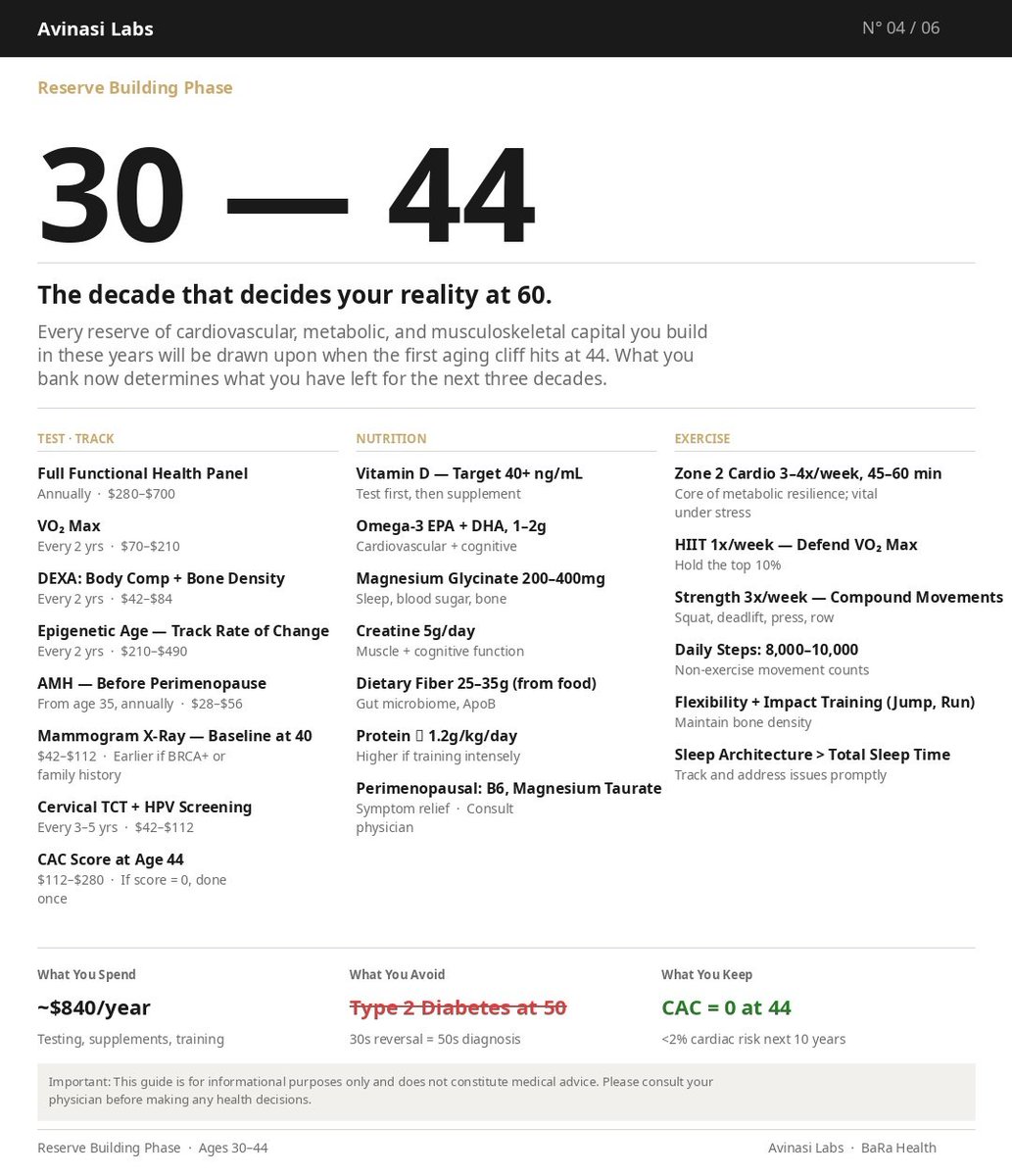
🧬 The decade that decides your reality at 60.
Most people in their 30s are busy building careers, raising kids, chasing deadlines. Meanwhile, their biology is quietly running a countdown clock. Here's what no one tells you: The aging cliff doesn't hit at 60. It hits at 44. And everything you do — or don't do — between 30 and 44 determines how hard that fall is.
🏦Think of your body like a reserve account.
Every decade, you make deposits and withdrawals.
In your 30s, your cardiovascular system, metabolic efficiency, and musculoskeletal strength are still at peak plasticity — meaning they respond to training, nutrition, and testing better than at any other stage of life.
By 44, the first structural changes in heart tissue, insulin sensitivity, and bone density begin to lock in.
What you build before then is what you spend for the next 30 years.
🔬 TEST & TRACK — What you must measure.
Most annual physicals are designed to catch disease, not optimize health. Here's what elite longevity medicine actually tracks in the 30–44 window:
① Full Functional Health Panel — Annually ($280–$700)Not just cholesterol and blood glucose. This includes ApoB, Lp(a), fasting insulin, hsCRP, homocysteine, full thyroid panel, sex hormones, and micronutrient levels.
② VO₂ Max — Every 2 years ($70–$210)The single strongest predictor of all-cause mortality. A low VO₂ Max in your 30s predicts cardiovascular events decades later. Train it now. Test it to know where you stand.
③ DEXA Scan: Body Comp + Bone Density — Every 2 years ($42–$84)Visceral fat — not your weight on the scale — is what drives metabolic disease. DEXA also catches early bone density loss before it becomes a fracture risk.
④ Epigenetic Age Test — Every 2 years ($210–$490)Your biological age and your chronological age are not the same. Epigenetic clocks measure the rate of cellular aging. Tracking change over time tells you whether your interventions are actually working.
⑤ AMH — From age 35, annually ($28–$56)For women: Anti-Müllerian Hormone reflects ovarian reserve. A leading indicator for perimenopause onset — often years before symptoms appear. Knowing early changes everything.
⑥ CAC Score at age 44 ($112–$280)Coronary Artery Calcium score. If it reads zero, your 10-year cardiac risk is under 2% — and you're done, no repeat needed. If not zero, you have actionable data to intervene before events, not after.
🥗 NUTRITION — The non-negotiables.
Forget diet trends. Here's what the evidence says for this decade specifically:
Vitamin D → Target: 40+ ng/mLOver 40% of adults are deficient. Low Vitamin D is linked to immune dysfunction, depression, bone loss, and elevated cancer risk. Test first, then supplement to target.
Omega-3 EPA + DHA → 1–2g dailyCardiovascular and cognitive protection. Anti-inflammatory at the cellular level. One of the most evidence-backed supplements in existence. Most people don't get nearly enough from food alone.
Magnesium Glycinate → 200–400mgInvolved in over 300 enzymatic reactions. Supports sleep quality, blood sugar regulation, and bone mineralization. Glycinate form has the best absorption and least GI side effects.
Creatine → 5g/dayNot just for athletes. Creatine supports muscle maintenance, cognitive function, and cellular energy production. Particularly important as you enter your 40s and muscle loss begins to accelerate.
Dietary Fiber → 25–35g from foodDirectly feeds the gut microbiome. Lowers ApoB. Reduces colorectal cancer risk. Most adults consume less than half the recommended amount.
Protein → ≥1.2g per kg of bodyweightMuscle protein synthesis begins to decline in your mid-30s. Higher protein intake directly counteracts sarcopenia. If you're training intensely, go higher.
🏋️ EXERCISE — The protocol that actually matters.
More is not always better. Specific stimulus matters.
Zone 2 Cardio — 3–4x per week, 45–60 minThe core of metabolic resilience. Zone 2 means you can hold a conversation, but only barely. It builds mitochondrial density, improves fat oxidation, and is the training mode most protective against cardiovascular disease. This is not casual walking. It's sustained, intentional low-intensity effort.
HIIT — 1x per weekOne high-intensity session per week is enough to defend your VO₂ Max ceiling. More than that without a base of Zone 2 is counterproductive.
Strength Training — 3x per week, compound movementsSquat, deadlift, press, row. These movements build the largest muscle groups simultaneously and produce the highest hormonal response. Muscle mass is the primary buffer against metabolic disease and frailty in later decades.
Daily Steps — 8,000–10,000Non-exercise movement matters independently of structured workouts. Sedentary time between gym sessions still damages metabolic health. Walk. Take the stairs. Stand while you work.
Sleep Architecture — quality over total hoursDeep sleep is when growth hormone is released, cellular repair occurs, and memory consolidates. Track it. Address disruptions early. Poor sleep architecture accelerates every aging pathway simultaneously.
📊 THE MATH.~$840/year for testing, supplements, and training.That's less than $70/month.
In exchange:
✅ Avoiding Type 2 Diabetes at 50 (30s reversal = 50s diagnosis — the cost of waiting is a lifetime of medication and lost quality of life)
✅ CAC = 0 at 44 (less than 2% cardiac risk over the next 10 years)
✅ Functional independence at 70, 80, and beyond
⏳The mistake most people make:
Waiting until something goes wrong.
By the time Type 2 Diabetes is diagnosed, insulin resistance has typically been building for 10–15 years.
By the time a cardiac event occurs, arterial changes have been accumulating for decades.
By the time osteoporosis is diagnosed, significant bone mass has already been lost.
The biological processes that cause these conditions are silent, slow, and highly reversible — but only within specific windows.
👩 A note for women specifically.
Perimenopause doesn't start at menopause. For many women, hormonal fluctuations begin in the mid-to-late 30s — often misattributed to stress, burnout, or anxiety.
Tracking AMH annually from 35 gives you a real-time window into ovarian reserve changes.
Adding B6 and Magnesium Taurate for symptom relief during perimenopause is evidence-supported — but always consult your physician for hormonal decisions.
📈 The compounding effect.
Every intervention compounds.
Zone 2 cardio improves mitochondrial density → which improves insulin sensitivity → which reduces visceral fat → which lowers ApoB and hsCRP → which protects arterial walls → which lowers CAC score.
Protein + strength training preserves muscle → which maintains resting metabolic rate → which prevents fat accumulation → which reduces inflammation → which slows epigenetic aging.
These aren't parallel tracks. They're an interconnected system. Pull one lever and the whole network benefits.
🚗What this is NOT. This is not biohacking. This is not optimization for optimization's sake. This is not expensive, inaccessible, or extreme.
This is basic structural maintenance for a biological system that will outlive your youth. Your car gets serviced every 10,000 miles. Your HVAC gets inspected every year. Your teeth get cleaned every 6 months. Your body — the only one you will ever have — deserves at minimum the same logic.
✅ Start here. This week.
If you're 30–44 and you haven't done this yet:
Book a full functional health panel. Not a standard annual physical — a comprehensive metabolic and cardiovascular panel. Calculate your protein intake for one day. Are you hitting 1.2g per kg of bodyweight? Most people are at 0.6–0.8g.
Add 3 Zone 2 sessions this week. 45 minutes. Low intensity. Conversational pace. Order a Vitamin D test. It's $30. You almost certainly need it. Schedule a DEXA scan. Know your visceral fat. Know your bone density.
💡You will be 60 one day.
The question isn't whether time passes. It's whether you show up to that decade with reserves — or arrive already overdrawn. The biology is not complicated. The commitment is. Start now.