#Storytelling isn’t a transmission; it’s a shared loop of consciousness. It begins as a mirror reflecting who we are and ends as a window to who we might become. The story stays the same—it’s the reader who changes.
🔗https://t.co/5AknJbzCSg
#NarrativeTheory#WritingCommunity
What can a mediocre story teach you? How to disengage your audience with Narrative Decay. Learn how to get them to “Pay Attention” with a currency of curiosity and #neuroscience. More here: https://t.co/W71spEeuNj.
#Storytelling#WritingTips#ScriptChat#WritingCommunity
The story is written on the page, but it comes to life in the reader's mind. In between is a dynamic field from intent to reception. #TheRoom shows how #Dissonance still drives engagement despite a broken field. More here: https://t.co/AZCzwMH54U #writingtip#neuroscience
@BMSBashirudeen As for which impacts audiences more, it's dependent on a lot of factors, including preference. However, there are some horror stories that don't follow Aristotle's ideal of catharsis/closure. Leaving dissonance within the audience often results in the story lingering/haunting.
@BMSBashirudeen I've taken Farce and Horror, and much of it is the same structure; the difference is audience reception. The same beat in horror instills fear, whereas farce instills absurdity. The key is perception: what the characters believe to be happening vs. reality (dramatic irony).
@BMSBashirudeen Yes! The Babadook actually has the same structure as The Haunting of Hill House & countless others. Comedy is ripe, too (think Tootsie). Ideally, there's a balance of both external and internal, which gets into the neuroscience of story.
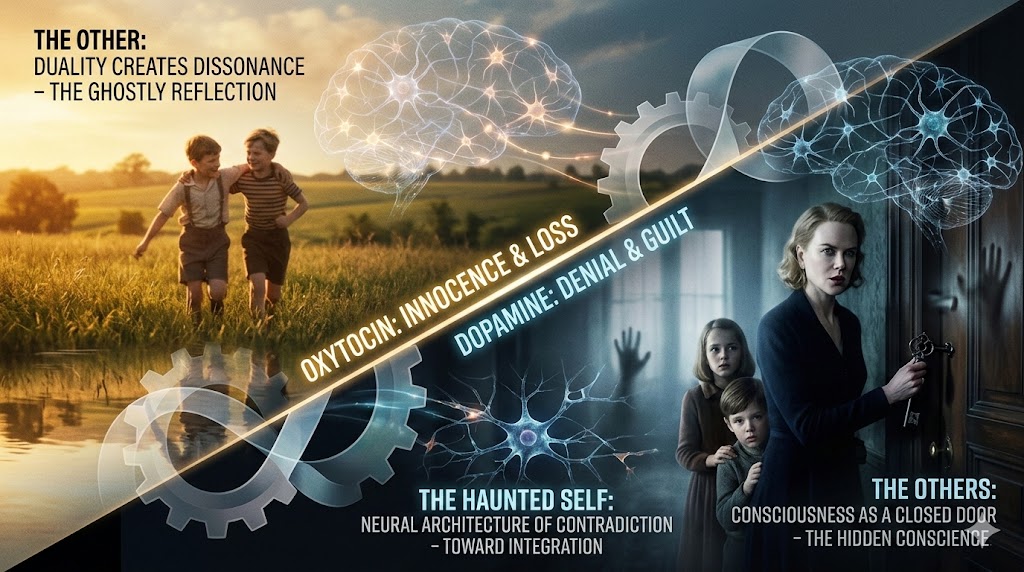
1972's #TheOther & 2002's #TheOthers explore split schemas, where the mind sustains two competing self-models simultaneously. The audience, co-authoring the experience, is forced to inhabit both, which creates #dissonance. 🔗➡️ https://t.co/IgfxH2AuvS