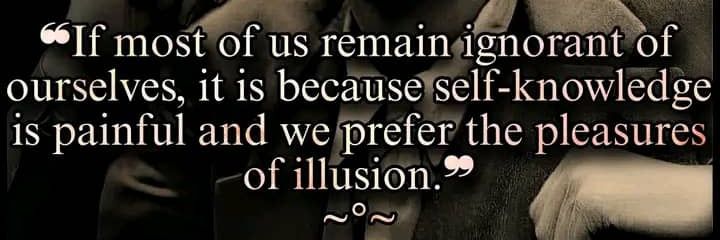
Tolstoy was right. Everyone wants to change the world but no one thinks of changing himself. The only revolution that has ever mattered is the quiet unglamorous war waged inside a man's own chest where no one can see him lose or win.
"Handling it"
Just like "Busy-ness vs Productivity";
At the end of the day, it all comes down to objectively reflecting on one self to ensure things are actually on the right track rather than just the false sense of progression.
Dear Men,
Sit with the silence today.
Selah
Nobody teaches men how to grieve. So they learn to distract instead.
Work harder. Drink more. Go to the gym obsessively. Start a new project. Find someone new before the last wound has closed.
These aren't coping mechanisms. They're postponements. The grief doesn't dissolve in the activity. It waits. And men who've been stuffing it for decades carry it in their bodies long after they've forgotten what they're carrying.
The anger that comes out of nowhere. The emotional unavailability they can't explain. The numbness they mistake for strength.
Most men aren't cold. They're full. There was never a place to put it down, so they kept moving and called it handling it.
When you determine your own life and future, rather than allowing them to be determined by the unpredictable winds of change, you feel happier, healthier, and more powerful in everything you do.
If someone calls you unprofitable, it shouldn’t always offend you. Sometimes it should challenge you to become better.
When I started trading, many people called me unprofitable too. I never saw it as an insult. At that stage of my journey, the results weren’t there yet, so instead of arguing, I went back to work.
I studied harder, stayed consistent and kept improving quietly.
Today, the story is different.
That’s why I always say not every negative statement needs an emotional reaction. Some comments are meant to ignite something in you. The worst thing you can do is spend your time trying to defend yourself instead of developing yourself.
In trading and in life, narratives change when results arrive.
Sometimes you don’t need to talk more.
You just need to become undeniable.
The most dangerous bias in your head has a name.
Most people have never heard it.
But it is silently shaping every decision you make — who you trust, what you believe, what you are willing to change your mind about.
It has been doing this your entire life.
And it gets stronger the smarter you are.
A thread.
One practice. Starting today.
Find one belief you hold confidently.
Then spend fifteen minutes reading the strongest case against it.
Not to change your mind necessarily.
To find out whether your belief survives contact with its opposition.
If it does, you now hold it more intelligently.
If it does not — you just saved yourself from an expensive mistake.
Either way you win.
The only losing move is never looking.
Follow for more on how the mind actually works.
Some people are exhausted not from doing too much.
From giving too much to people who take without noticing.
They do not complain.
They adjust.
Give a little less here. Protect a little more there.
Until the people around them assume they need nothing.
Because they have never said otherwise.
If this is you — the problem is not that nobody cares.
It is that you have become so good at managing alone that caring looks unnecessary from the outside.
You trained them by not asking.
You are allowed to ask.
One person. Today.
The most expensive thing most people own is an opinion nobody asked for.
Volunteering your view on someone's relationship is often unwelcome.
Correcting someone in public when they are wrong costs them nothing.
Offering unsolicited advice to someone who has not indicated they want to change.
Every time you do this, you spend social capital you may not have earned yet.
And the strange thing about social capital is that it works exactly like financial capital.
Spent slowly and deliberately, it compounds.
Spent carelessly on things that feel satisfying in the moment, it depletes faster than it was built.
The most influential people in any circle are rarely the most vocal ones.
They speak precisely. Rarely. At the right moment.
And when they do speak, people lean in — because scarcity has trained the room to pay attention.
Your opinion is only as valuable as the discipline with which you wield it.
Speak less.
Be heard more.
Those are not the same instructions delivered twice.
They are the same instruction delivered in the right order.
I know a man who has not missed a daily walk in six years.
No programme. No app. No coach.
Just 30 minutes. Every day. Without exception.
I asked him once what made him start.
He said his doctor told him at 44 that his blood pressure was dangerous and his stress levels were going to kill him before 60 if nothing changed.
He did not join a gym. He did not overhaul his diet overnight.
He just walked.
Six years later, his blood pressure is normal. He has lost 23 kilograms. He sleeps through the night for the first time in a decade.
But the thing he talks about most is not the physical change.
He says: "My mind became quiet for the first time. I had 30 minutes every day where nothing was required of me except to move forward."
Seneca wrote that we suffer more in imagination than in reality.
The walk did not fix his body first.
It fixed the imagination that was killing him.
Start stupidly small.
Stay embarrassingly consistent.
That is the whole formula.
The best view of the game is probably from the stands. But that's not where the action is. And so you have to decide, do you want a nice view or do you want to be in the thick of it and playing the game?
I watched a man negotiate a salary increase of 40% in a single conversation.
He did not threaten to leave.
He did not make demands.
He walked in with three things: a document showing his measurable impact over 18 months, a clear number, and the calm of someone who had already decided what he would do if the answer was no.
The manager said yes within ten minutes.
Afterwards I asked him what he would have done if they had said no.
He said, "Left. I had two other conversations already started."
"But the strange thing is, when you genuinely don't need the yes, they almost always say yes."
Most people negotiate from desperation.
He negotiated from preparation.
The outcome was never in doubt because the alternative was never in doubt.
Prepare the exit before you enter the room.
The walkaway is the negotiation.