Three key trends I am increasingly excited about...
1: Our industry has started caring much more about the security and reliability of the infrastructure, standards and oracles/dependencies that it is built on top of. This shift in focus towards security is already massively benefiting Chainlink because it is built with security and reliability in mind from the start e.g. 16 nodes vs 1 of 1 or 2 of 2 (which is actually often just a 1 of 1 in disguise). This focus on reliability and security makes a better system for everyone in the DeFi/TradFi industry to transact with less risk and also leads to more overall Chainlink adoption over time. The way Chainlink became the leading data oracle is through security and reliability, I think that will happen across all categories where Chainlink deploys services for the same reasons.
We are now clearly seeing this dynamic take place in cross-chain interoperability, with many large users migrating onto CCIP after conducting deeper security reviews of bridging providers, more and more of which are now being published, some telling quotes below:
https://t.co/7ANpmqIlPn
Kraken chose Chainlink CCIP because it offers enterprise-grade infrastructure with strict security & risk management requirements, including:
• ISO 27001 and SOC 2 Type 2 certifications
• Secure by default architecture
• 16 independent nodes
• Native rate limits, and more.
https://t.co/hPnqT7CFcT and https://t.co/QHXnyjO2fp
The analysis covers how Chainlink CCIP delivers strong decentralization, native safeguards, and issuer control as default protocol-level guarantees, which insulates wstETH from a number of attack vectors behind the Kelp / LayerZero exploit.
https://t.co/AObyg1Nunx
Chainlink CCIP has emerged as the standard in cross-chain infrastructure, providing an enterprise-grade framework to secure high-value assets
With over $4Billion migrated in just a few weeks and more on the way, I am clearly seeing the industry's clear preference for security and reliability being a key trend leading to accelerated adoption of Chainlink and CCIP.
2: Chainlink has always continued to build and added many of its best features during down markets, when there is less noise to distract top teams from building. Because Chainlink already has clear product market fit, being able to focus on building the future is a powerful accelerant for future progress and is actually what I and many of the people building Chainlink are here for.
I am very excited about both the use case specific features e.g. collateral management and the increasing number of reusable primitives e.g. verifiable confidential compute in CRE, which are now actively being built, refined and launched with top users. In my experience, during the down market lulls is when the best things get built, and I am truly thrilled to see Chainlink being built to better serve its existing users and entirely new users.
3: The RWA, TradFi Tokenization and Digital Assets industry has now decoupled from crypto prices as a determining factor of its success and is a rapidly growing market of its own. Great news for the technologies, standards and infrastructures that can serve this new and growing demand, of which Chainlink is at the very top of the list. By having the relevant certifications; https://t.co/PlGDKLrJDi, being the historically most secure/reliable option with the largest amount of value enabled and being able to compose multiple key primitives (Data + Interoperability + Identity/compliance + verifiable off-chain orchestration) into full end-to-end solutions like no other platform can, puts the Chainlink platform/ecosystem in a unique place to be adopted by this new and growing market.
This is now becoming increasingly clear in practice through Chainlink's adoption in various parts of the capital markets; from collateral management with some of the most recent examples being...
DTCC using CRE and Data for their production plans; https://t.co/IiXXFfUwJu + https://t.co/sHe6QvquYR
Data providers like SGX using DataLink for key data; https://t.co/P7uPeOzliY
Top asset managers like State Street; https://t.co/Jh08KBnCvN and Fidelity International; https://t.co/06noNUEbEt, being powered by Chainlink on the backend.
The above are just a small number of recent examples, with many more being worked on all across the TradFi ecosystem, from payments, to tokenized equities, to tokenized funds; all of these on-chain finance use cases need multiple Chainlink components working together.
I can't wait for the next stage, where the leading DeFi applications and the top TradFi institutions start interoperating through their use of shared on-chain standards, interoperability connections and data/identity oracles, all of which are being provided by Chainlink, together with existing infrastructures. Solving each of these market's individual problems is already exciting, but helping them merge into the new global financial system is something that I and many others in our ecosystem have been working towards for a while.
If the above sounds like something worth spending many late nights on, and you can see the future I am talking about, this is the best time to join a top team like Chainlink Labs... if you're the best of the best, excited about the future of the blockchain industry, DeFi, TradFi and building the future of the new global financial system, we are excited to work together with you: https://t.co/zhTgEzBUm0.
AI agents are driving an explosion in onchain transactions.
With @Coinbase’s x402 & Chainlink, AI agents can autonomously pay for Chainlink Runtime Environment (CRE) workflows, unlocking a massive new AI-powered onchain economy.
LLM hallucinations are a massive roadblock to enterprise adoption of AI.
Swift, UBS, Euroclear, & 20+ major organizations advanced a solution to the $58B+ annual corporate actions problem by leveraging Chainlink to reduce AI hallucination risk.
LINK everything.
JUST IN: The U.S. @SECGov and @CFTC issue a joint interpretation officially classifying the LINK token as a digital commodity.
We congratulate the SEC and CFTC on this landmark milestone that provides a clear legal framework for the institutional adoption of digital assets.
Excited to join this great group of leaders from our industry on the CFTC Innovation Advisory Committee. I am looking forward to doing everything I can to help provide feedback on the key role of oracles as critical infrastructure for the reliable operation of markets, as well provide whatever insight I can on how the Cryptocurrency, DeFi and RWA industry can evolve successfully in the US as its primary global hub.
@ChairmanSelig it has always been a pleasure speaking with you during your time at the SEC, I was thrilled to hear of your appointment to this new role and I am very excited about how you and this committee can work together to the benefit of both our industry and the US economy. Thank you again for forming this committee.
Cycles are a normal part of the crypto industry, what is important is what those cycles reveal about how far the industry has progressed and what next stage/trends of adoption/value creation will go on to define the industry.
So far this cycle reveals two key things for me:
Firstly, there have been no large risk management failures leading to large institutional failures or widespread systemic risks. In the previous cycle you had FTX and multiple lenders cleaned out through large price drops, this time around I am pleasantly surprised to see none of that or at least none of it at any system wide scale. If the crypto industry and its systems are able to successfully weather large drawdowns in price and liquidity issues then it is a more reliable place to put both retail/client capital and institutional capital. This time has been much better managed than last time.
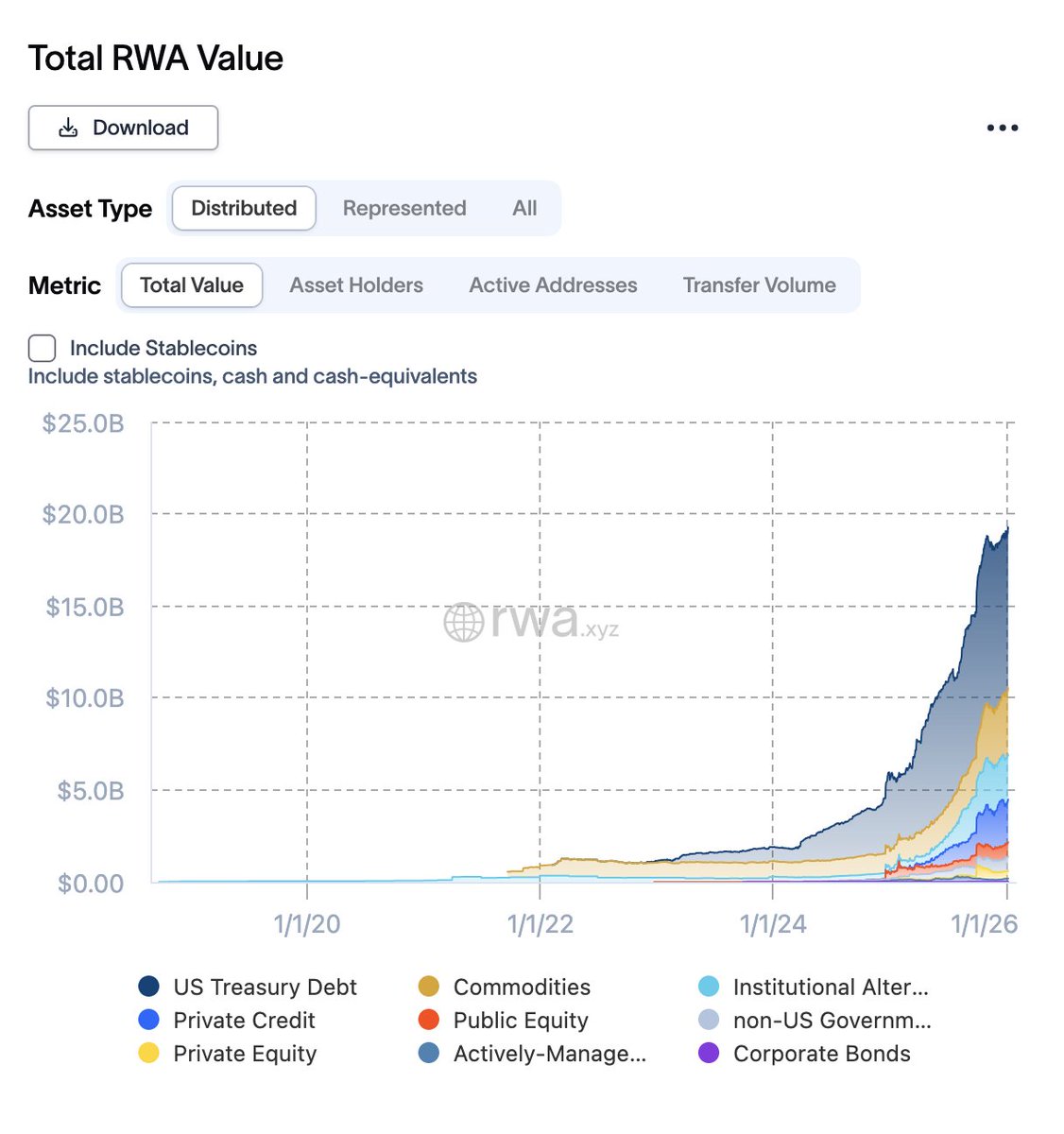
Secondly, real world asset migration on-chain continues to accelerate regardless of Bitcoin/Cryptocurrency prices, signaling that having real world assets on-chain is not tightly coupled to crpytocurrency prices but provides its own unique value that can grow irrespective of market pricing of Bitcoin or other crypto assets. We have seen RWA issuance continue to grow and we've seen leading on-chain perp markets rival tradfi perp markets for very traditional commodities like silver, especially in periods when trading in permissioned traditional markets became harder or more risky vs trading in on-chain permissionless markets. As more and more RWA data goes on-chain to make perps work correctly for more asset types and as more on-chain value is generated as RWAs themselves, I expect these dynamics to only increase regardless of crypto prices.
These are both very positive signals for the assumptions I have been making about three key trends I am expecting to work together to reshape our industry in the next stage of its growth into mainstream adoption.
Firstly, on-chain perps about real world assets and tokenization of the assets on-chain has unique and durable long-term value which is growing regardless of any other dynamics. It is the value of 24/7/365 markets, on-chain collateral management and on-chain data.
Secondly, institutional adoption of our industry will be driven by the fundamental/technology value it provides, accelerated by access to permissionless/always on markets in DeFi, which will grow massively as a result.
Thirdly, the infrastructure that will make RWAs possible will be experiencing much more demand as more of the real world finds itself on-chain. As more RWAs have to go on-chain as perps via on-chan data or tokenization itself and as those RWAs are increasingly complex in how they need to work on-chain, more systems will need to interface with chains to enable those RWAs.
The first two trends are inevitable market forces that are now accelerating regardless of cryptocurrency prices, that is the real insight I see from this part of the cycle. The third trend is where Chainlink is providing the key global standards/protocols/infrastructure that is needed for providing the data, connectivity and orchestration that accelerates the first two trends.
Data is what allows most RWAs to exist on-chain at all. Market data for on-chain perps e.g. on-chain silver markets, Proof of Reserves for Stablecoins, NAV for Tokenized Funds to operate on-chain and many other examples touching every category of RWAs. Chainlink is the largest provider of data to the leading blockchains by far and is successfully servicing the vast majority of DeFi for all their data needs with 70%+ market share. Our new launches with leading institutional data providers like S&P, ICE and many others put Chainlink in a similar position in the growing institutional RWA world.
Connectivity to both other chains and existing backend/accounting/risk management systems is key for liquidity. The ability to connect to the other chains as a system of record/source of liquidity and to the existing centralized systems of record/sources of liquidity are key for scaling RWA adoption globally. Chainlink is the leading provider of these capabilities to institutions and has been chosen by the leading security teams in Web3 to be their official bridging provider due to a superior reliability/security track record. Chainlink is also the only system that successfully pulls TradFi payments into on-chain transactions across multiple chains, integrating existing sources of liquidity and new sources of liquidity into one interoperability layer.
Orchestration is the process of coordinating multiple systems into one workflow/transaction that defines the core value an application is providing to its users. Coordinating between multiple chains, multiple off-chain systems, multiple market data sources and now multiple AIs is a key function that some system needs to play for the more advanced RWAs to function properly. The Chainlink Runtime Environment seems to be the only environment in which you can currently run a workflow that can coordinate all of these key systems into a single application, already in use by enterprises and with advanced integrations into many key systems. Orchestration has an additional critical component of creating privacy, which there are now new and exciting solutions for being built on CRE. More to come on truly useful privacy as a key feature of CRE's orchestration.
If these trends continue I believe what I have been saying for years will happen; on-chain RWAs will surpass cryptocurrency in the total value in our industry and what our industry is about will fundamentally change. This shift will also lead to cryptocurrency's growth as an asset class that benefits from more capital on-chain, but RWAs is how all of this goes mainstream.
I have never been more excited about our industry's potential to become the way a better version of the global financial system works to benefit all of us.
Excited to see that being the most secure cross chain technology across DeFi and TradFi is attractive to top technical teams who do deep diligence and security review.
I also think that being able to provide real reliability for a bridge during cloud outages like AWS, while other bridging systems go down for extended time periods, is a large advantage when being considered by highly technical teams that want high uptime/reliable systems.
I personally feel that all the security and reliability work that was put into CCIP is starting to pay off, which feels very familiar from when Chainlink was chosen to power the top DeFi and TradFi systems with the most secure and reliable data. I think the consistent security and reliability properties of Chainlink will continue to make the choice of top teams and institutions in our industry.
Tokenization is accelerating — and @chainlink is one of the key technologies making it possible.
Zach Pandl @lowbeta joined @CNBC to discuss the role Chainlink plays as traditional assets migrate on-chain.
If you still think @Chainlink is “just an oracle,”
look again. 👀
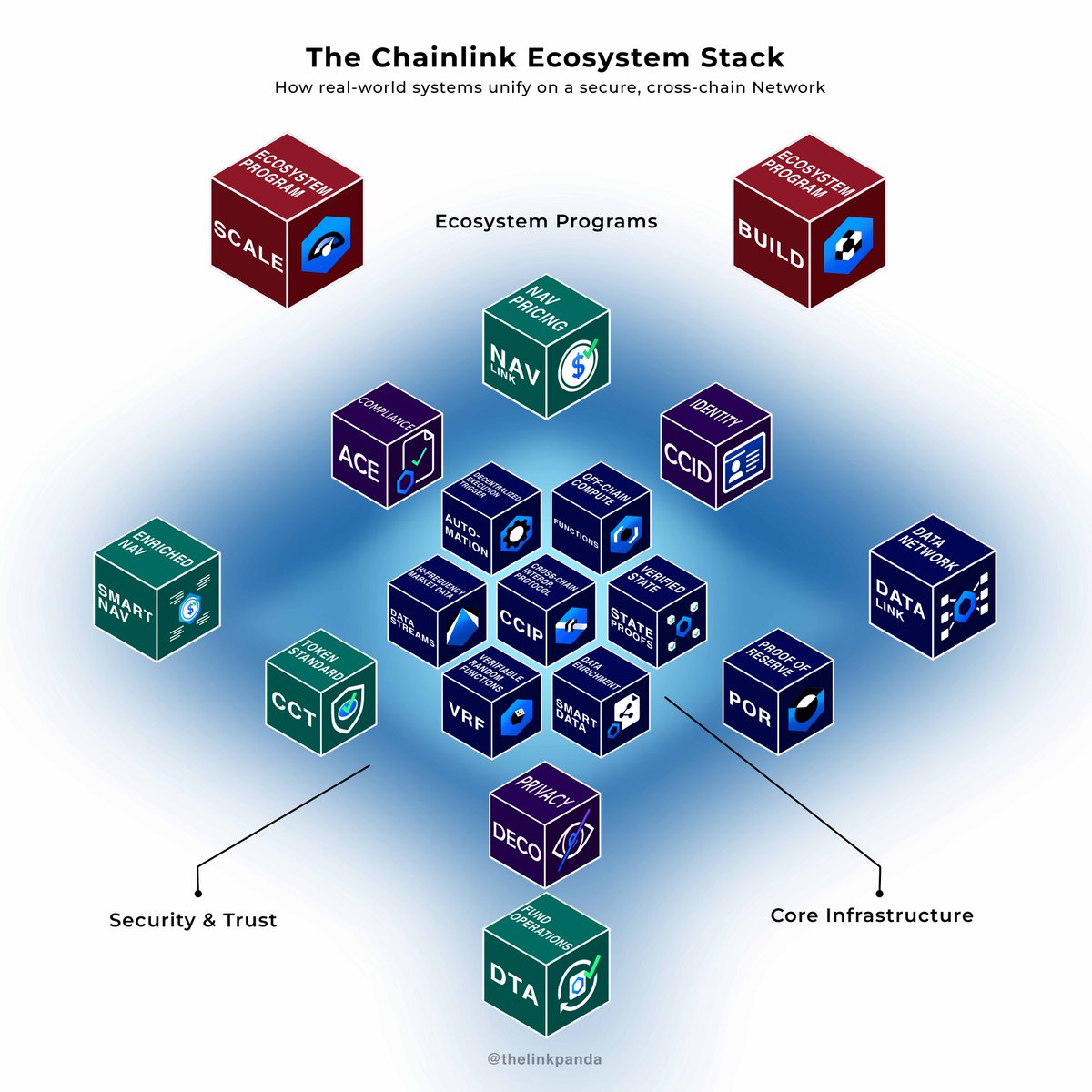
This is the full Chainlink ecosystem stack.
Identity, compliance, payments, messaging, privacy, proof systems, token standards...
All secured by the same network.
This is the trust layer that every chain,
every institution, every asset will rely on.
Welcome to the Chainlink economy.
Everything is becoming Chainlinked.
$LINK
We are excited to see @chainlink integrate an x402 endpoint into the Chainlink Runtime Environment.
This adds a native programmable payment path so developers and AI agents can pay and invoke CRE workflows directly onchain. 🧵
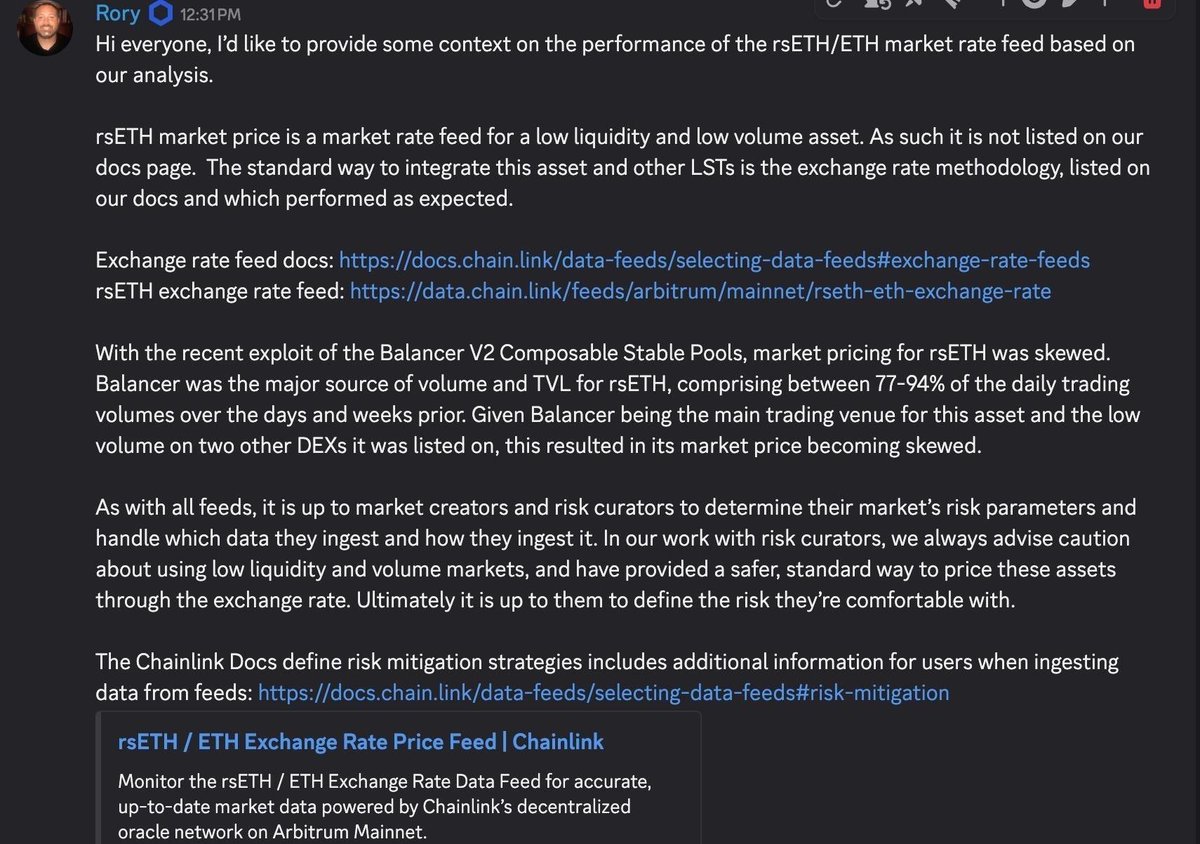
Moonwell was using a delisted market rate feed for a low liqudity and low volume asset, rsETH. It's not even listed on the Chainlink docs page.
The proper implementation would have been to use the exchange rate which is both:
A) Actually listed on the docs page (https://t.co/QFUjNrqBSM)
B) Had absolutely zero issues
See Rory's post here from Discord, which goes into more details about the Balancer exploit that had an effect on the volumes of the delisted market rate feed, and a reminder about standard best practices to not use delisted, low volume, low liquidity feeds in your DeFi protocols.
We’re excited to announce that @Tradeweb has collaborated with Chainlink to publish its U.S. Treasury data onchain for the first time via DataLink.
https://t.co/JNEeoJQEjF
As one of the world’s leading electronic marketplaces used by institutional investors, Tradeweb offers over 50 products in more than 85 countries across the globe, with an average daily volume of $2.4 trillion. More than 3,000 clients connect to Tradeweb to form a global network of the world’s largest banks, asset managers, hedge funds, insurance companies, wealth managers, and retail clients.
DataLink is now making Tradeweb's FTSE U.S. Treasury Benchmark Closing Prices available to 2,000+ onchain applications across 60+ public & private blockchains in the Chainlink ecosystem, driving a new wave of tokenization by established institutions and onchain innovators alike.
“Tokenization represents one of the fastest-growing opportunities in our markets today, and our collaboration with Chainlink is a significant step forward in modernizing traditional financial markets through blockchain applications. By making our Tradeweb FTSE U.S. Treasury Benchmark Closing Prices available onchain, we aim to unlock new opportunities for innovation and 24/7 access across the global financial ecosystem.” — Chris Bruner, Chief Product Officer at Tradeweb
As an institutional-grade data publishing service, DataLink leverages Chainlink infrastructure to enable providers to seamlessly distribute and commercialize their data onchain, while retaining full control and eliminating the need to build and maintain blockchain infrastructure.
Ultimately, DataLink brings foundational institutional use cases to the blockchain economy while enabling onchain applications to launch new assets and markets faster.