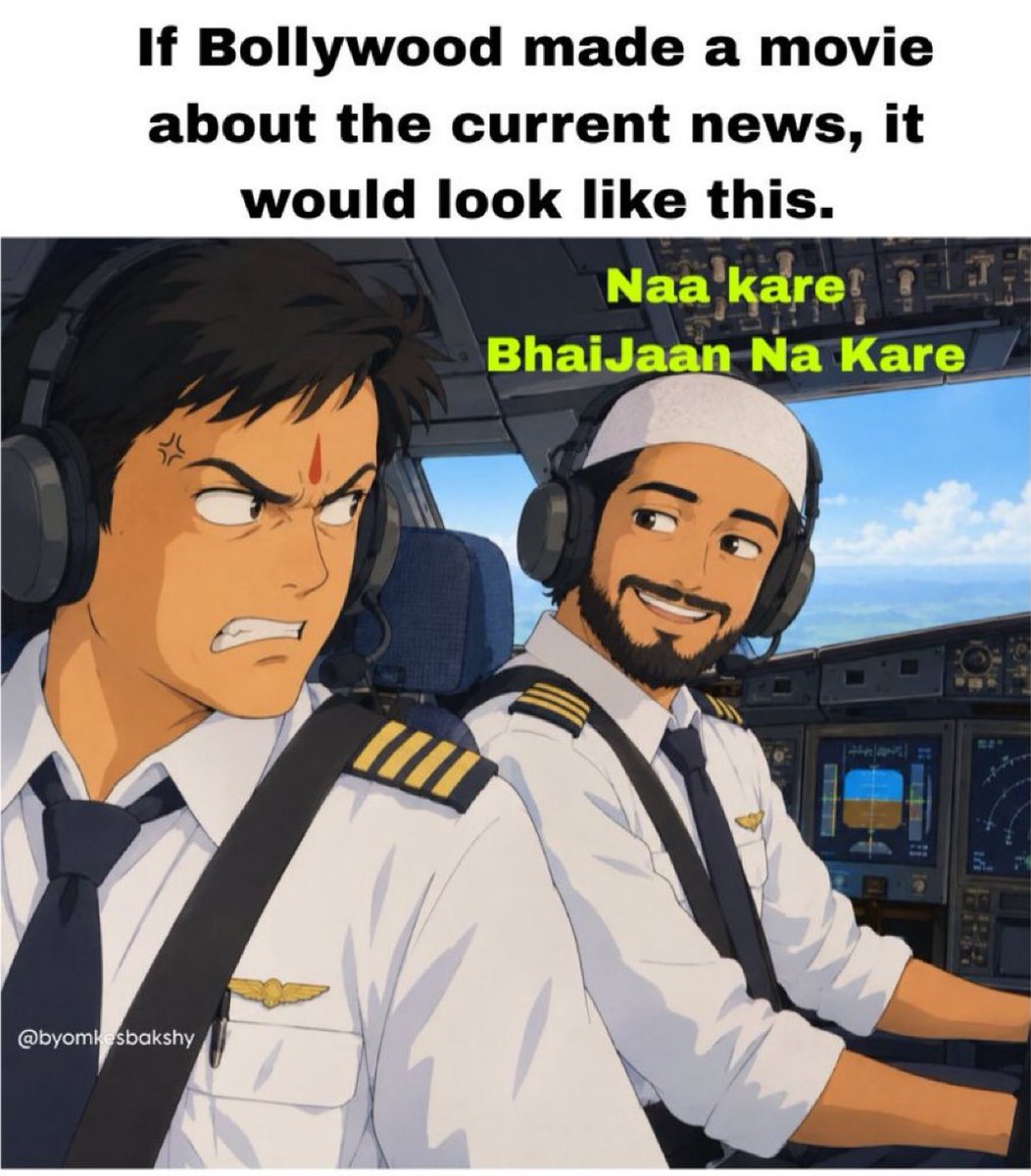
VIDEO | Mumbai: Prof. Dr Pankaj Natu of Welingkar Institute from where Captain Smit Machchhar completed his management studies, says, "Captain Smith had done a management programme with us in 2006–07, after his graduation. After that, he went on to pursue his flying course and so on. I spoke to his professors and learned that he was a very energetic student, with the typical enthusiasm of a Mumbaikar. His grades were also good; he received an A grade. When I checked those records, I was very happy to know that."
(Full video available on PTI Videos - https://t.co/bIyFWTeOLF)
#Mumbai #SmitMachchhar
🎓 SAMVAAD 2026 marked the beginning of a new chapter for the MMS Batch 2026–28 at WeSchool.
Across four days, students engaged through conversations, collaborative activities, sustainability-led learning and cultural experiences.
Here are the highlights! 🚀
#WeSchool#MMS2026
🎓 A new journey begins at WeSchool!
SAMVAAD welcomed the MMS Batch 2026–28 with inspiring conversations, leadership interactions, sustainability-led learning and cultural experiences.
Here’s to a new cohort ready to learn, lead and grow! 🚀
#WeSchool#MMS2026
For decades before 2014, the world practically mocked every Prime Minister's foreign trip as 'vanity' or 'photo-op'.
But Look at the last 24 months and try, honestly, to call this theatre.
In a world of tariffs, wars and broken supply chains, Prime Minister Narendra Modi is not collecting photographs. He is building leverage. Leverage over energy, minerals, missiles, markets, technology and of course free trade agreements.
The record speaks for itself.
May 2026, UAE: a brief stop, massive yield. Strategic petroleum collaboration with ADNOC, including potential storage of up to 30 million barrels in India. A long-term LPG track for homes and industry. A Strategic Defence Partnership framework covering manufacturing, training, maritime security and cyber. A ship-repair cluster at Vadinar. Around $5 billion in announced investment into Indian infrastructure and finance.
That is energy security when West Asia is on fire and sea lanes can become pressure points overnight.
February 2026, Israel: sixteen agreements. An agricultural research and innovation centre on Indian soil. Deeper defence and technology cooperation. Cyber. R&D. Cultural and digital ties. An FTA pushed onto a faster track.
That meant technology and capability coming back to Indian farmers, Indian industry and Indian defence.
June 2026, France: the Innovation Roadmap 2030. A series of agreements across innovation, defence, space and technology. An economic-security dialogue. A mechanism aimed at doubling trade.
July 2026, Indonesia: fourteen agreements and new initiatives. BrahMos cooperation—a serious step forward for Indian defence exports. Critical minerals and rare earths. Maritime security. Space. Steel. Healthcare.
And, crucially, an attempt to reduce Chinese dominance over the materials that will decide the future of batteries, electronics and weapons.
Australia: civil nuclear arrangements opening the door to uranium supply, a Maritime Security Collaboration Roadmap, defence agreements and a growing trade relationship. New Zealand added another maritime track.
These are not souvenirs from foreign visits.
They are part of the road map for a more secure, more resilient and more self-reliant Viksit Bharat. Atmanirbhar Bharat.
Today, The New York Times published an article headlined: “Modi Is Hedging Against Trump, One Deal at a Time.”
Its central point is simple: Modi has used each foreign visit to push India’s interests in security, trade and energy.
The India-US trade talks launched in February 2025 under President Trump were expected to produce haste and concession. Duties piled up, at one point heading towards 50 percent, including a penalty linked to Russian oil.
The expectation in some capitals was simple: India would fold.
India did not FOLD.
It refused a rushed, one-sided bargain. It held its ground on reciprocal access, domestic industry and agriculture.
It bought time.
And then used that time.
While talks dragged on, Delhi built alternatives: Gulf energy security, Israeli defence technology and agricultural innovation, French industrial and technology partnerships, Indonesian minerals and missile exports, Australian uranium and maritime cooperation.
That is how a continental economy stops negotiating from weakness.
Even after the February 2026 interim move towards an 18 percent reciprocal rate, Indian negotiators continued to hold out for terms that did not sacrifice agriculture or leave India permanently worse off than its competitors.
Even news media, whose first instinct is to criticise PM Modi, started to understand the value of his initiatives. Reuters described an increasingly confident India drawing strength from new partnerships. The Wall Street Journal wrote that New Delhi’s deal-making with middle powers had strengthened its hand with Washington.
That is the point.
You do not gain respect at a difficult negotiating table by talking about old friendships.
You gain it by showing that you have choices.
Beyond the international coverage of Modi and Trump, reporting on tariffs, tensions and the unfinished trade bargain, something else is happening:
India is no longer waiting for others to solve its problems.
It is securing supply chains, energy, minerals, defence partnerships and markets first and then negotiating.
That is why India can deal with America without surrendering its interests and deal with China without being intimidated.
The world does not hand out influence.
You have to build it.
And 2026 is a brutal year in which to do so.
Energy routes are under threat. Great powers are openly transactional. China remains ambitious. America is demanding.
In that environment, speeches do not keep the lights on. Statements do not fill strategic reserves.
What does?
A Prime Minister who treats every foreign visit as work.
Modi’s personal standing with world leaders is not branding. It has strategic value for India.
It gives India access, trust and room to manoeuvre.
And the growing confidence in India abroad is not charity. It comes from agreements signed, supply chains opened, capabilities built, markets expanded and promises delivered.
This is interest-first statecraft. Relentless.
History will not remember who mocked whose boarding pass.
It will ask a harder question:
When the world became unstable, who came home with oil, minerals, missiles, technology, markets and greater bargaining power?
That work is underway.
It is unfinished.
And it is exactly the work required to secure India’s interests and India’s rightful place in a world that respects countries which have options.
https://t.co/oGx2LeBeEh
IIM Rohtak Director Dheeraj Sharma analyzed Bollywood movies from 1960 to 2010, and according to his report:
- 58% of corrupt politicians had Brahmin surnames.
- 62% of corrupt businessmen had Vaishya surnames.
- 88% of Sikhs were portrayed as laughable characters.
- 74% of Muslims were portrayed as strongly religious and honest.
- 78% of promiscuous women had Christian names.
Pakistan was featured in 20 movies, of which 18 portrayed Pakistanis as welcoming, courteous, open-minded, and courageous, even though this was far removed from reality.
However, Bollywood portrayed India's internal affairs, its society, judicial system, and various castes and religions in an extremely stereotypical and biased manner.
70% of the freedom fighters executed by the British were Brahmins.
They sacrificed their lives for the country. But what exactly did their sacrifice achieve?
Today their children and grandchildren are discriminated against by the Government. They are labelled as "oppressors" and systematically barred from education and jobs.
Is this how a country should honor those who gave up their lives for her?
Source: The plight of Brahmins by renowned historian Meenakshi Jain @IndicMeenakshi
(PS: I have not independently verified the numbers)
A thread on Muslim Conversion of Countries across the globe- The curse
🔱 Middle East
•They entered Persia as refugees. It became Iran.
•They entered Mesopotamia as conquerors. It became Iraq.
•They entered Byzantine Syria as invaders. It became Syria.
•They entered ISRAEL as refugees . It became Islamic Holy Land.
•They entered Arabia as tribes. It became the Islamic heartland.
•They entered Anatolia as migrants. It became Turkey.
•They entered Yemen as traders. It became 100% Muslim.
🚨Did you know 👉 “ Chanakya Series ”
TV serial Stopped from DD during Congress Era !!
🔴 “ Chanakya Series ” was Prematurely ended because of intense Pressure on DD from Marxist "Academics" who accused it of promoting Saffron Nationalism !!
🔴And asked Chanakya Series Producer to Remove the “ Bhagwa Flag ”from the Series
🔴 And additionally asked him not to Proceed with the Series as No Knowledge/Education was needed !!
He was told to 👉 Make Entertainment !!!
🔴 Make sure that More ppl watch the Series. Its Powerful Message Needs to Reach More ppl !!
BY ALL MEANS DEFEND FILMS LIKE SATLUJ. SCREEN IT. BUT DON'T HIDE FROM THE FACT THAT IT REWRITES HISTORY TO PAINT THE INDIAN STATE UNFAIRLY AS A BLACK SHEEP. IT IS A POLITICAL PROJECT. ADMIT IT.
The filmmakers say Satluj is educational. It purports to tell the story of a rights activist who was abducted and killed by security forces for seeking justice for victims of extrajudicial killings. Yes, they happened and they shouldn't have. But in its retelling the film is being faulted for not showing the "whole truth". Education cannot be based on half-truths. There's another side.
1. Pakistan's ISI propped up Khalistani terrorist groups with training, sanctuary and logistical support. This was a transnational movement to balkanise India. The film needs to present this unapologetically.
2. Innocent men were co-opted and coerced by Khalistani terror organisations in the name of religion to pick up arms for an invented cause. Many became perpetrators of extraordinary brutality. They strode into village homes committing wanton murders and extortion, intimidating entire communities. In other words, they adopted means that are deemed blasphemous in Sikhism.
3. The film should have also depicted how Pakistan-sponsored Khalistani terrorists targeted thousands of innocent families for their loyalty to the idea of India. Sikh policemen, village defence volunteers, public servants, journalists and ordinary citizens were marked for death because they stood by the Indian Union.
4. The film could have also belaboured the murderous zeal that prompted the blowing up of trains, planes, cinema halls and restaurants. The bombing of Air India Flight 182, which killed 329 people, remains one of the deadliest acts of aviation terrorism in history. No cause can justify such extrajudicial means.
5. The film should have also focussed on how security forces led by KPS Gill not only defeated the insurgency but also secured the surrender and rehabilitation of large numbers of Sikh youth willing to lay down arms.
6. What about the sacrifices made by families of security personnel who were heinously "punished" by Khalistani terror groups simply for standing in solidarity with the Indian Union?
7. No retelling of history can be complete without also focussing on the xenophobic zealotry of Khalistani terrorists who singled out hundreds, if not thousands, of Hindus simply because of their identity.
• The 1983 Dhilwan bus massacre (6 killed)
• The 1987 Lalru bus massacre (38 Hindu passengers killed)
• The 1987 Fatehabad bus killings (34 killed)
• The 1991 Punjab train massacres, in which 125 Hindu passengers were killed.
1. Watching Satluj you'd never know that Jarnail Singh Bhindranwale continues to be revered as a martyr by sections of the Sikh community and that his portrait hangs within the precincts of the Akal Takht, the highest temporal seat of Sikh authority. Why? In homage to what?
This isn't an argument against making Satluj. But remember just as every victim deserves to be remembered, every truth alao deserves to be told.
His name is Karsanbhai Patel.
He was a government chemist on a small salary. In the little room behind his house, after work, he mixed a yellow washing powder by hand. With it, he would take on one of the biggest companies in the world. And he would win.
He was born in 1945 into a farming family in Gujarat. He studied chemistry and took a modest job as a laboratory technician in a government department.
In those days, washing powder in India was a luxury. The market was ruled by the multinational giant Hindustan Lever, whose detergent, Surf, cost around 13 rupees a kilo.
For most Indian families that was far too much. Clean clothes felt like something only the rich could afford.
Karsanbhai had an idea. In his backyard he made his own detergent that worked just as well but cost only 3 rupees a kilo. He named it Nirma, after his young daughter, Nirupama.
Every morning, on his way to the office, he cycled from house to house selling handmade packets of Nirma. Fifteen, maybe twenty packets a day. One man, on a bicycle, against a company that sold across the world.
It worked. Word spread from street to street. A good detergent at a fraction of the price was reaching homes that had never been able to buy one before.
Within a few years he quit his job. Within a decade, Nirma had overtaken the giant to become the largest selling detergent in the country.
The chemist who began in his backyard became one of the richest men in India.
He did not beat the giant with money, because he had none. He beat it by remembering the people the giant had forgotten.
Movies like Satluj won't show you this.
They won't show you that on this day, 7th July 1987, Hindu passengers travelling towards Rishikesh being lined up and massacred by Khalistani Commando Force (KCF) terrorists simply because they were Hindus.
They won't show you that within 24 hours, more than 72 innocent Hindus were s1aughtered in coordinated bus attacks
But don't be surprised if one day they make a film portraying "Kulwinder Singh Mahi" the mastermind of the Lalru massacre as nothing more than a "victim of an extrajudicial klling"
Bollywood Khans Spitting at Female Actors
- by Guru Prasad
Imagine topping the university with a Gold medal, and also managing to get the dream job at the most sought after company. And finally, when you join the company, the CEO whom you had been admiring since your college days, welcomes you by throwing dirt at you, and you are being asked to accept it "because that's how the industry is". Sounds crazy? Well, that's what Bollywood industry dominated by the Khans is all about.
Let me go to the context now. During the 90s, when Aishwarya Rai had made every Indian proud by winning the most coveted Miss World crown, and eventually decided to act in Bollywood, the Khans took that as an oportunity to show their upmanship, by treating her as a mere object. One of the best examples is from the song called Apun Bola of Josh movie (You can find that song in YouTube).
The movie, directed by Mansoor Khan, with Shahrukh Khan as lead actor, came up with a scene in which SRK arrogantly spits water on Aishwarya Rai's face. Being a young fresher in the industry, Aishwarya Rai probably took it sportingly, but SRK being an established actor by then, could have refused to enact such a scene where a woman (and that too someone who had made Indians proud by winning the crown at the international stage) had to face such disgusting act of being spat on the face on screen which would be watched by a billion people!
Probably, that was the Bollywood Khan gang's way of nurturing their ego, even at the cost of enslaving women and treating everyone as secondary objects. Contrast that with the other industries like Kannada film industry where Dr Rajkumar used to actually bow down respectfully to his female co-stars before shooting a scene. But surprisingly, millions of youngsters were so hypnotised with the Khan gang that the arrogant actors were further uplifted to higher pedestals and revered as great role models! That's how the Khans literally deteriorated an entire industry to suit their whims and fancies, and in the process, managed to subtly brainwash millions of young Indians.
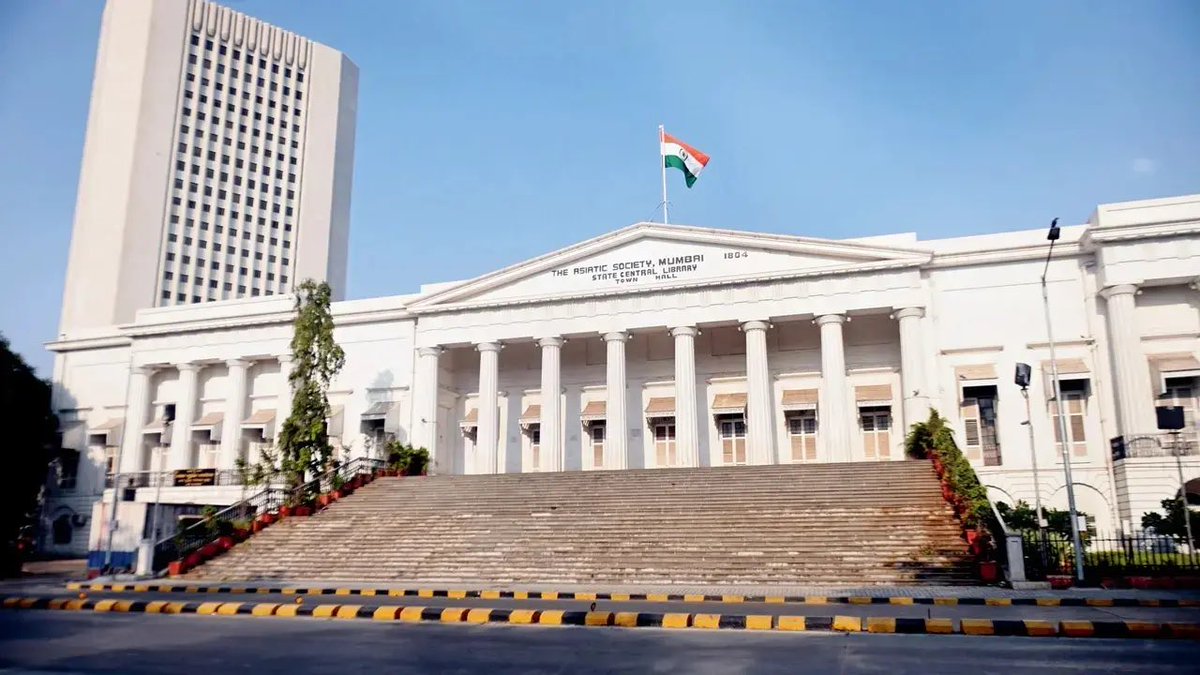
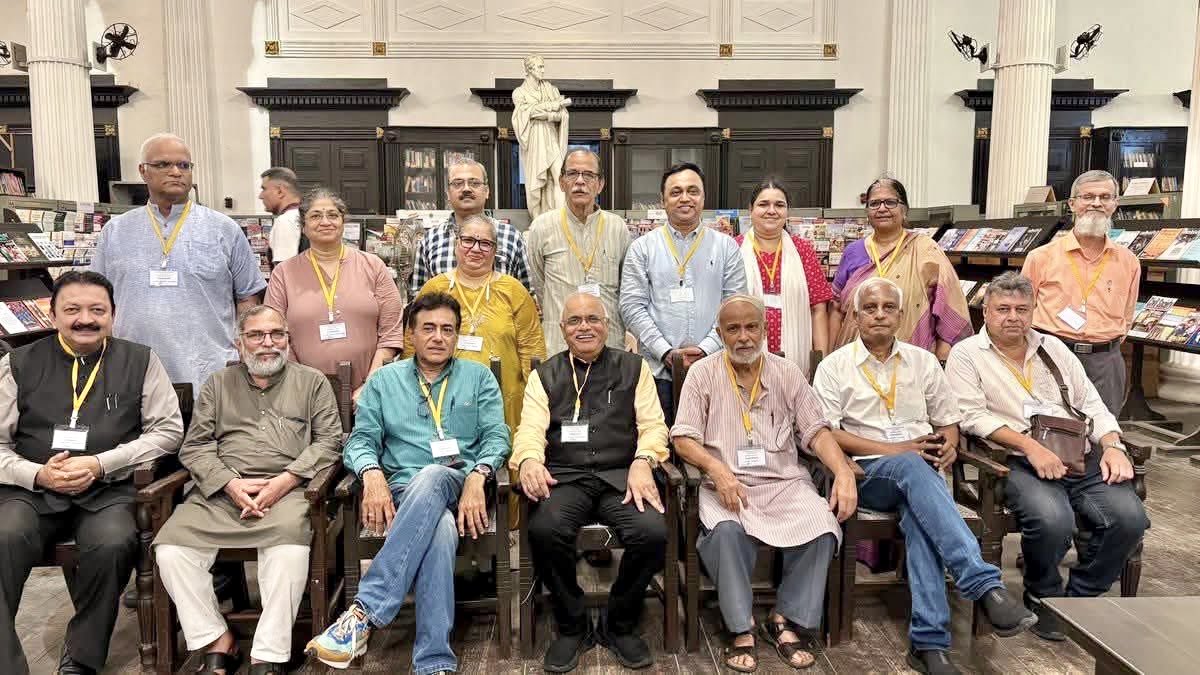
Heartiest congratulations to Ex MP Dr. Vinay Sahasrabuddhe ji on being elected as the President of the Asiatic Society of Mumbai !
Many congratulations to all office bearers who got elected along with him and created this history!
Wishing everyone a successful tenure.
I am confident that this esteemed institution, which has been serving the field of research for nearly 200 years, will reach even greater heights under the leadership of this new team.
एशियाटिक सोसायटी ऑफ मुंबईच्या निवडणुकीत अध्यक्षपदी विजयी झाल्याबद्दल माजी खासदार डॉ. विनयजी सहस्त्रबुद्धे यांचे मनःपूर्वक अभिनंदन !
त्यांच्यासोबत निवडून आलेल्या इतरही पदाधिकाऱ्यांचे हार्दिक अभिनंदन आणि सर्वांना भावी वाटचालीसाठी अनेकानेक शुभेच्छा!
सुमारे 200 वर्ष संशोधनाच्या क्षेत्रात कार्यरत या संस्थेला ही नवीन चमू आणखी नव्या उंचीवर नेईल, हा विश्वास आहे.
@Vinay1011@AsiaticSocMum
I have come around to a similar view. With all knowledge freely available on tap - college is not needed for lecture based learning. Ambitious 18 year olds should get to work and do the degree on the side (a few fields may still need in-person full time but they will be exceptions).
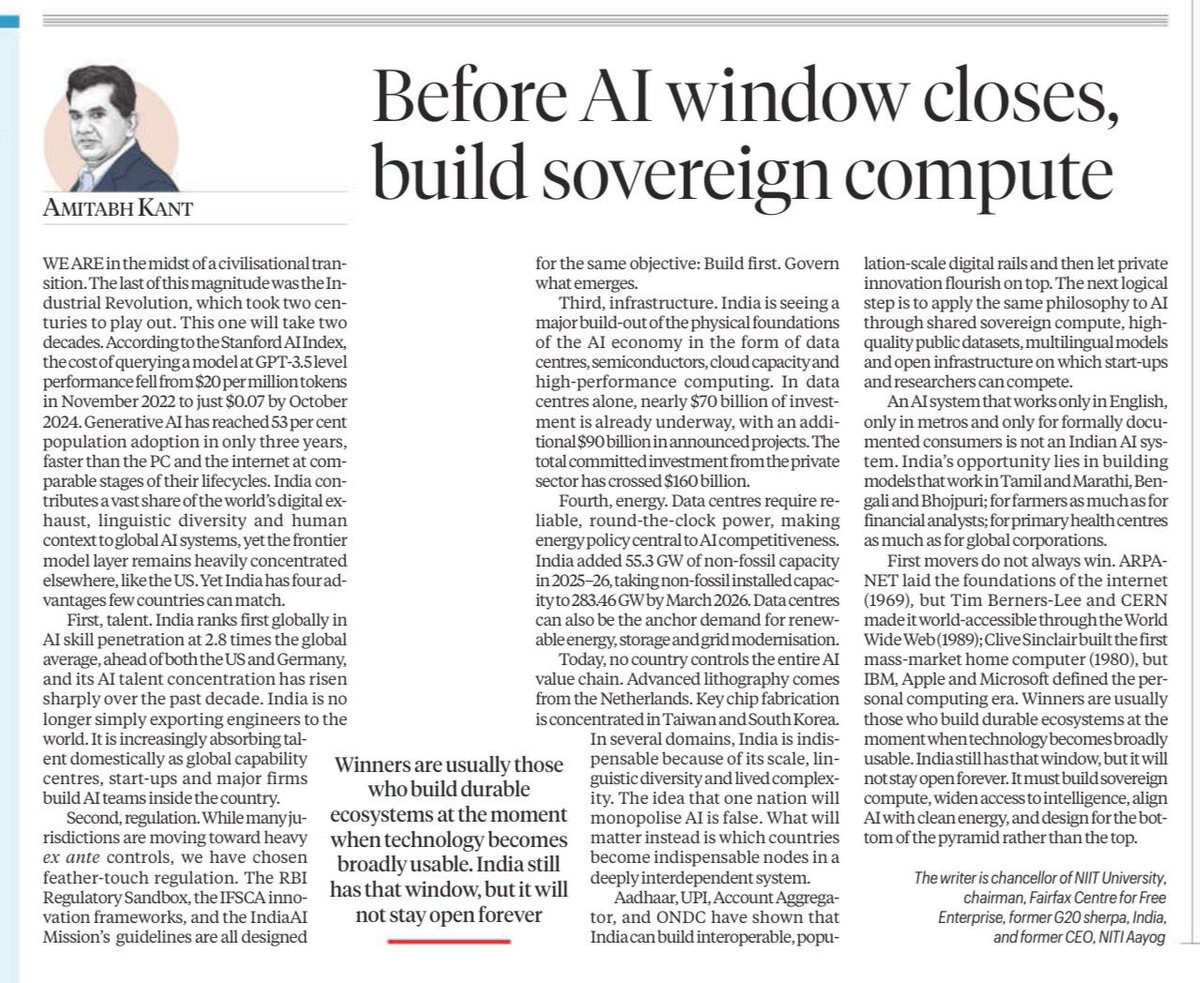
We are in the midst of a civilisation transition. In the AI age, India must do more than build capacity. It must build sovereign compute, widen access to intelligence, align AI with clean energy, and design for the bottom of the pyramid rather than the top. It must also integrate AI into credit, agriculture, health and public services, so that the technology moves from demonstration to deployment at population scale.
If India gets this right, it will not be a peripheral player in the AI age. It can be one of the countries that defines it.
My article in today’s @IndianExpress
#AI
#ArtificialIntelligence