Help BHC raise $500,000 by Dec. 31. Give to Built for This to help us expand care for people with ME/CFS and Long COVID, launch new research, and equip more clinicians to care for patients in their own communities. 💙
Donate → https://t.co/GDN1f26ZIM
@business 4/ Than you to journalist @jwgale for the care he took in writing this piece. Read the full story free through Nov. 12: https://t.co/0XijSIYkPR
1/ We’re thrilled: @business has published a feature on Dr. Lucinda Bateman’s career and how Long COVID is transforming ME/CFS research. A moving, accurate piece about her sister Shauna, for whom our Center is named, and our work teaching other clinicians.
https://t.co/FqnsHeupJ0
Join us in celebrating Lucinda Bateman, MD! 💙
BHC’s founder will receive the Governor’s Career Humanitarian Leadership Award at Utah Philanthropy Day on Nov. 12, honoring her lifelong service.
https://t.co/URsG9WuWj6
Share your congratulations below!
You deserve informed care. We’re working to bring #MECFS expertise to more clinicians.
Dr. Lucinda Bateman co-authored a new CME activity through @MedscapeCME, another step in that work.
Explore and share: https://t.co/vzKo9qUj0y
What keeps us building?
BHC Executive Director Tahlia Ruschioni shares how her experiences as a family member, caregiver, and person living with Long COVID shape her commitment to expanding access to care.
Flipbook: https://t.co/7veE7iVty7
Scrolling: https://t.co/EPe9Lzu9rQ
What does it mean to put patients at the heart of care? BHC Executive Director Tahlia Ruschioni joined Visible’s podcast to discuss lived experience, clinician education, and improving care for ME/CFS, Long COVID, and related illnesses.
Listen: https://t.co/JwL5G9GAsN
Thank you to @thesicktimes for exploring the “October slide” in ME/CFS and Long COVID, featuring insights from occupational therapist Amy Mooney, BHC nurse practitioner Jennifer Bell, and people sharing their lived experiences.
Changing seasons affect many people with Long COVID, myalgic encephalomyelitis, and other chronic illnesses, but not all in the same way. Research has a long way to go before it can explain the phenomenon. https://t.co/GsPRcYbu1i
Join “Coffee” with a Clinician: Assessment & Management of Cognitive Impairment.
Explore cognitive symptoms and practical strategies.
Wednesday, October 14 | 10:00 am MDT
Register: https://t.co/Sl31siln5A
If Zoom reaches capacity, watch live on our YouTube channel.
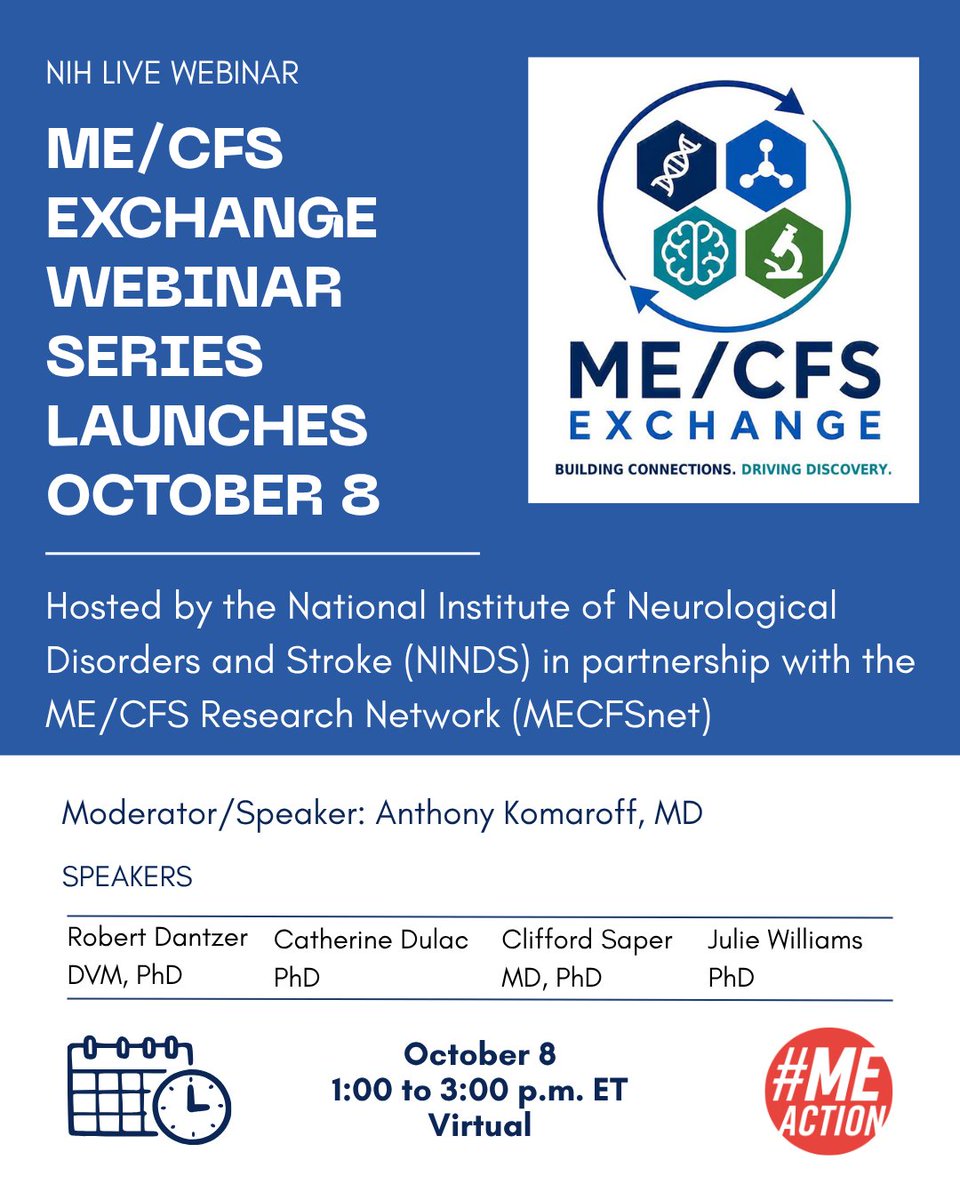
The ME/CFS Exchange Webinar Series launches Thursday- Oct. 8th!
First in the series will focus on post-acute infection symptoms.
1 pm to 3 pm ET via Zoom.
Registration required: https://t.co/YqAILqJu7v
Hosted by NINDS in partnership with MECFSnet.
#NIH#PwME#MECFS
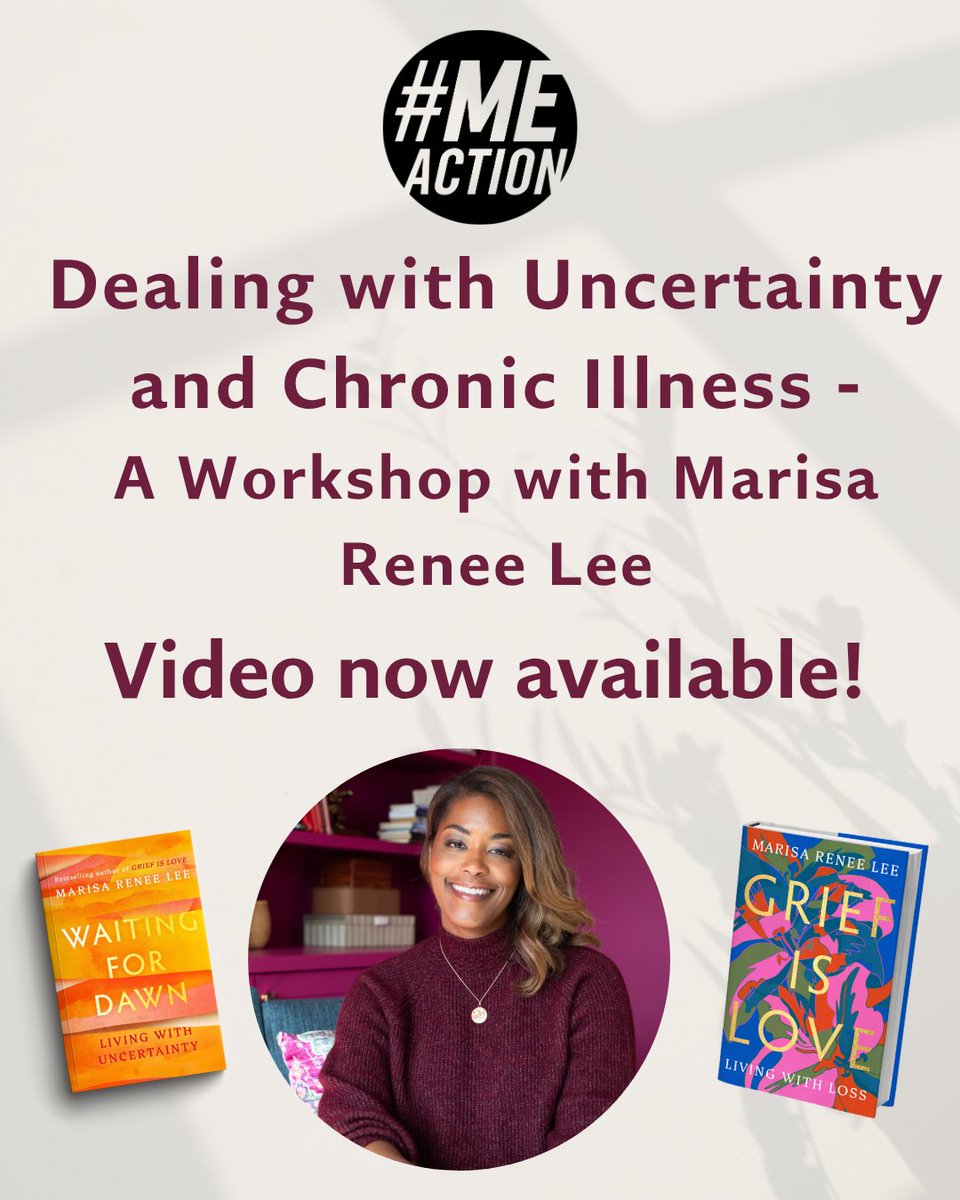
Dealing with Uncertainty and Chronic Illness -A Workshop with Marisa Renee Lee is now available to watch! https://t.co/tCdSBLIFQA
We had a meaningful time coming together as a community. Huge thanks to @MarisaReneeLee (author or Grief is Love & Waiting for Dawn) for leading us!
Preventing PEM often means looking beyond exertion alone.
In this clip, @LBatemanMD from @BatemanHorne discusses approaches that may support baseline function, including improving restorative sleep and using fluids strategically before upright activity. She explains why identifying and managing individual contributors, such as orthostatic intolerance, mast cell activation, immune dysfunction, and recurrent viral reactivation, may help reduce crashes. She also shares how targeted treatments, including antivirals and immunoglobulin, may be considered for select patients based on their individual clinical picture.
Join Dr. David Putrino, Dr. Lucinda Bateman, Dr. Jennifer Curtin, and moderator Charlie McCone for the full How to Manage and Treat Post-Exertional Malaise (PEM) webinar.
Watch the full webinar recording on our YouTube channel: https://t.co/S3EQeKCZSI
Lucinda Bateman, MD, will participate in the NIH discussion “The Brain Body Connection: The Autonomic Nervous System’s Role in Disease.”
Sept. 24 | 1:30–3 p.m. ET
Open to the public. Registration closes Sept. 9:
https://t.co/plv5rlrXxN
Could dextromethorphan help reduce the severity of PEM?
In this clip, Dr. Lucinda Bateman from the @BatemanHorne discusses how she has been experimenting with dextromethorphan as a tool for PEM, particularly before and immediately after activities that are likely to trigger a crash.
She also shares why she uses it conservatively, what she has observed in patients with Long COVID and ME/CFS, and the important limitations in what we currently know about longer-term use.
Join Dr. David Putrino, Dr. Lucinda Bateman, Dr. Jennifer Curtin, and moderator Charlie McCone for the full How to Manage and Treat Post-Exertional Malaise (PEM) webinar.
Watch the full webinar recording on our YouTube channel: https://t.co/eiMkTV5fmo
Always consult with your healthcare provider before starting any new supplement, over-the-counter medication, or treatment. Individual risks, potential interactions, and appropriate dosing should be discussed with and monitored by your clinician.
The BHC Clinical Care Guide is free to download; and also available in print on Amazon.
Access practical, evidence-informed guidance for ME/CFS, Long COVID and other infection-associated chronic conditions.
Download: https://t.co/wb9qiV4ISJ
Order: https://t.co/ESHemqq3tp
Join our next online support group: https://t.co/GQINe8UPPl
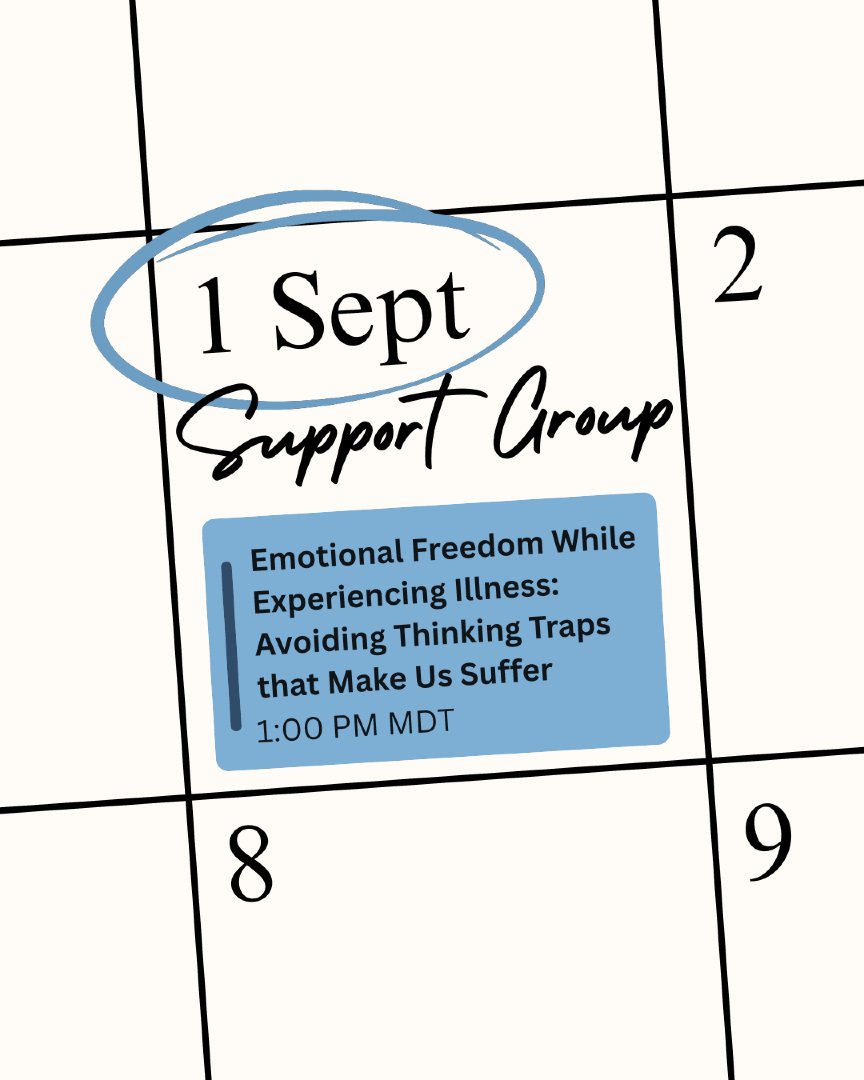
Emotional Freedom While Experiencing Illness: Avoiding Thinking Traps That Make Us Suffer
Explore thoughts that affect emotional pain and ways to find calm, hope, or peace.
Sept. 1 | 1 p.m. MDT
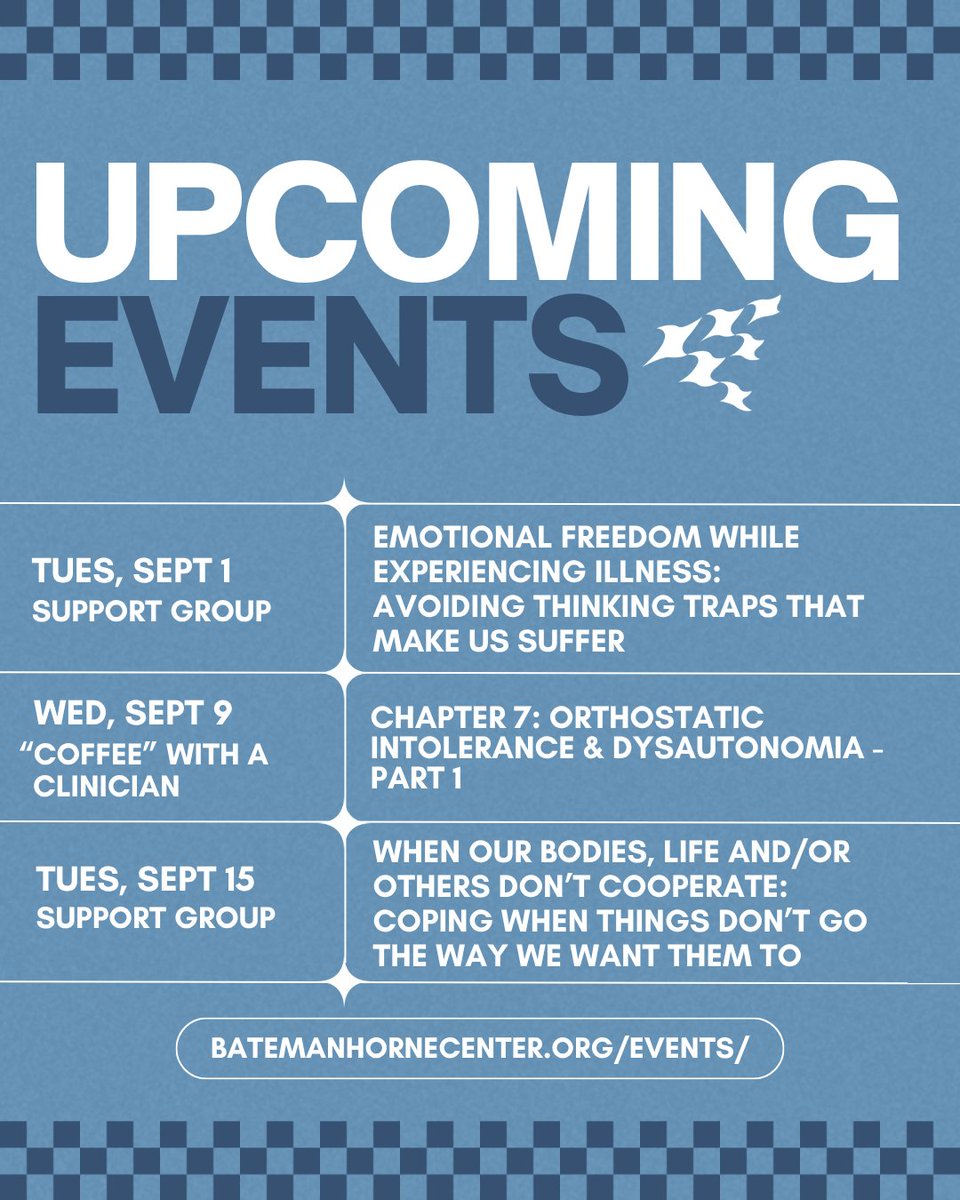
September online events at BHC:
Sept. 1, 1 p.m. MDT: Emotional Freedom While Experiencing Illness
Sept. 9, 10 a.m. MDT: “Coffee” with a Clinician: Assessment of OI & Dysautonomia
Sept. 15, 1 p.m. MDT: Coping When Things Don’t Go as Planned
Register: https://t.co/6uMf3RZngv