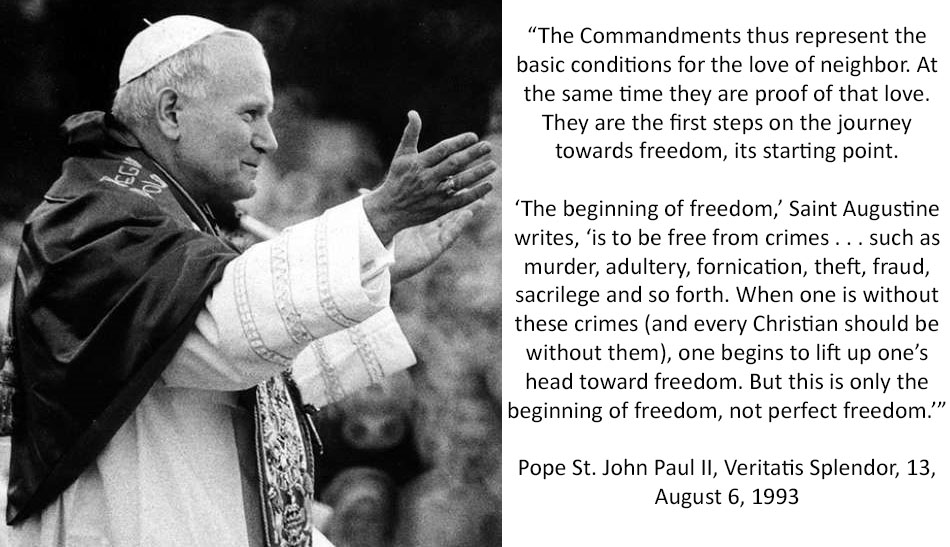
"Whoever has my commandments and observes them is the one who loves me. And whoever loves me will be loved by my Father" (Jesus of Nazareth, John 14:21).
Here are three compelling reasons to think the Book of Mormon is not a historical work:
1. Lack of archaeological confirmation
Most Bibles contain maps that describe where important biblical events took place. You can visit the ruins of cities described in the Bible. The same is not true for the Book of Mormon. The book itself contains no maps; moreover, there are no references to where the events it describes took place. None of the sites described in the Book of Mormon have ever been found, and even LDS scholars don’t agree on the general location of where the events in the book took place.
According to the National Geographic Society, “Archaeologists and other scholars have long probed the hemisphere’s past, and the society does not know of anything found so far that has substantiated the Book of Mormon.” (https://t.co/zeYOJ8I9R4)
Although it is possible that evidence for the events in the Book of Mormon lies deep underground waiting to be discovered, this lack of evidence does not bode well for the book’s claims to being historical.
2. The existence of anachronisms
The Book of Mormon describes many things that did not exist in the Americas during the time when the events in the Book of Mormon allegedly took place. These include animals (dogs, horses, cows, elephants), plants (barley and wheat), fabrics (silk), metals (steel and iron), and technologies (swords and chariots).
Although it is possible (in the barest sense of the term) that these items are waiting to be discovered by archaeologists or that these modern words refer to completely different things (such as when Europeans used the term “water horse” to describe a hippopotamus), it’s more likely that these anachronisms are evidence of Joseph Smith’s lack of knowledge about ancient America and more proof that the Book of Mormon is a work of fiction.
3. Evidence of plagiarism
Significant portions of the Book of Mormon consist of a word-for-word copy of the King James Version of the Bible. These include dozens of whole chapters from the prophet Isaiah as well as scores of verses from the New Testament. Especially troubling are passages like Moroni 7:44-47 that copy large portions of the New Testament but do not cite those passages.
Since the New Testament wasn’t available for the Nephites (the people whose history the Book of Mormon allegedly records) to copy and place in their own records, these passages most likely came from Smith’s recollection of the Bible.
For more, see @counseloftrent's video "5 Reasons to Doubt the Book of Mormon" (linked below)
@JoanOfArc287 The #1 reason Mormons are not Christians is Christianity is not polytheistic.
Mormons believe people can become gods. This is what they believe about the Father and Jesus.
There is only one God.
@dumbsushi@Cath_SteelMan "But I would not believe in the Gospel, had not the authority of the Catholic Church already moved me" (St. Augustine, Catechism of the Catholic Church, 119).
@5SolasMissy "By faith man completely submits his intellect and his will to God. With his whole being man gives his assent to God the revealer. Sacred Scripture call this human response to God, the author of revelation, 'the obedience of faith'" (Catechism of the Catholic Church, 143).
@HwsEleutheroi Anyone who wants to learn what the Christian Church believes, how we worship, how we live, and how we pray, can read the Catechism of the Catholic Church.
https://t.co/9JFkn1UNwc
In strictly theological terms, Catholics do not consider Mormons (Latter-day Saints) as Christians for these reasons:
Rejection of the Trinity: Catholicism affirms one God in three co-equal, co-eternal Persons (Nicene Creed). Mormonism teaches three separate gods (God the Father, Jesus, and Holy Ghost) united in purpose, not in substance (tritheism).
Different understanding of God: Catholics hold God as an eternal, immaterial Spirit who has always been God. Mormonism teaches God the Father has a physical body, was once a mortal man who progressed to godhood, and that humans can become gods.
Additional scriptures and revelation: Catholicism holds that public revelation ended with the apostles; Scripture and Sacred Tradition are sufficient. Mormonism adds the Book of Mormon, Doctrine and Covenants, and Pearl of Great Price as equal or superior scripture, plus ongoing prophetic revelation.
Fundamentally different Christology: Catholic teaching is that Jesus is the eternal, uncreated second Person of the Trinity. Mormonism views Jesus as the literal spirit-brother of all humans, a created being who became divine (similar to other gods in their cosmology).
Apostolic succession and authority: The Catholic Church traces its priesthood directly to the apostles through unbroken succession. Mormonism claims the original Church fell into total apostasy, requiring Joseph Smith’s restoration with new authority.
These are only a few of the differences which places Mormonism outside historic, orthodox Christianity as defined by the early Church councils. Bottom line: LDS theology is a radical departure from the fundamental tenets of what one holds as a Christian.
@ErickYbarra3 Why I'm not Catholic?
The #1 answer: Pride.
- I am in charge of Christianity.
- I know Jesus and his teachings better than the Church. I determine the doctrines of Christianity.
- I can restore Christianity to its early brilliance and bring humanity into union with God.
The Catholic Church encourages people to study the Bible. There are many excellent resources for people to read, study and learn the Scriptures.
The Bible is correctly understood within the People of God. The People of God preceded the written text.
The error that needs to be avoided is a person cannot read the Bible and create Christianity for himself. Christianity is a religion revealed, established and sustained by God. It does not originate from man's private understanding and study of the Bible.
There is a list of excellent resources for learning the Scriptures here:
https://t.co/kZhmkj2Aq2
@MrCasey62 “The Church is the Body of Christ, like Eve is the body of Adam. It’s his own flesh and blood” (Dr. Brant Pitre).
Jesus and his Church are one.
"Among them we must mention in the first place are infants hidden in the mother's womb. If the public magistrates not only do not defend them, but by their laws and ordinances betray them to death, let them remember that God is the Judge and Avenger of innocent blood which cried from earth to Heaven."
Pope Pius XI, Castii Connubii, 1930
Gospel of the Day (Matthew 5,1-12)
When Jesus saw the crowds, he went up the mountain, and after he had sat down, his disciples came to him.
He began to teach them, saying:
"Blessed are the poor in spirit, for theirs is the kingdom of heaven.
Blessed are they who mourn, for they will be comforted.
Blessed are the meek, for they will inherit the land.
Blessed are they who hunger and thirst for righteousness, for they will be satisfied.
Blessed are the merciful, for they will be shown mercy.
Blessed are the clean of heart, for they will see God.
Blessed are the peacemakers, for they will be called children of God.
Blessed are they who are persecuted for the sake of righteousness, for theirs is the kingdom of heaven.
Blessed are you when they insult you and persecute you and utter every kind of evil against you (falsely) because of me.
Rejoice and be glad, for your reward will be great in heaven."
https://t.co/yJRnPDsUk2
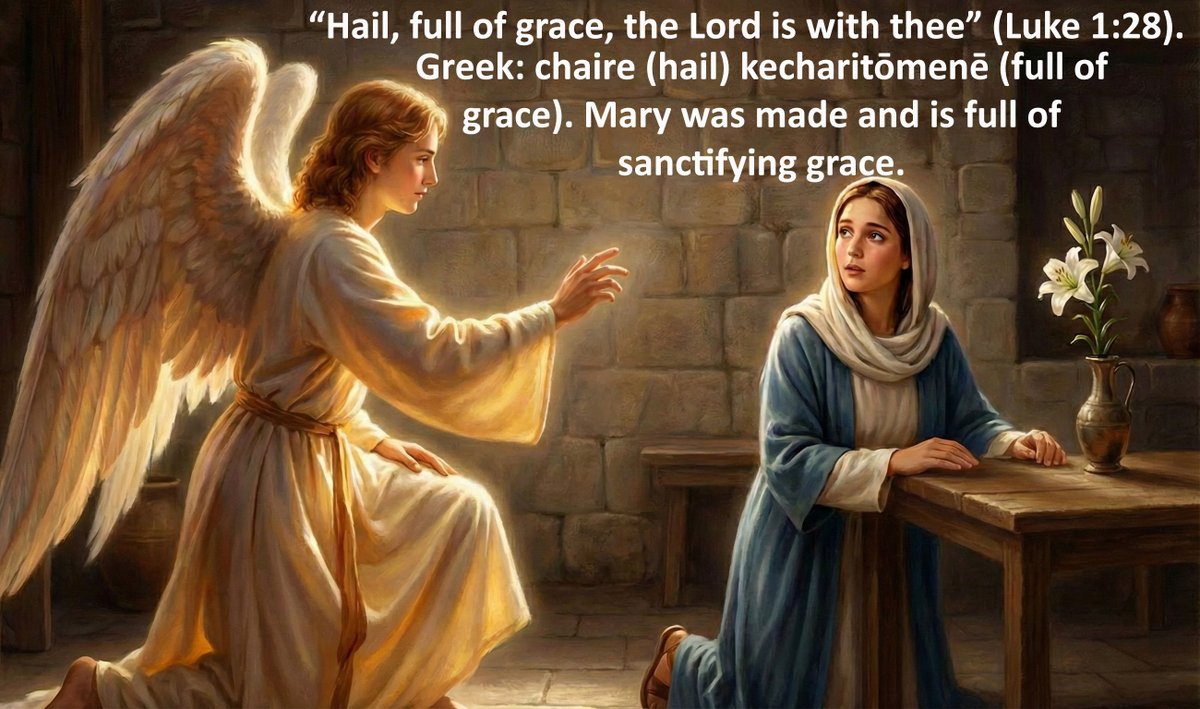
@JennyWakefiel12 Mary was saved by God's grace.
God made her "full of grace" at the moment of her conception.
Kecharitomene (κεχαριτωμενη): It is a perfect passive participle, meaning "you who have been perfectly and enduringly graced."