La economía es una ciencia social que estudia cómo los consumidores, los productores y las sociedades eligen entre los usos alternativos de los recursos escasos en el proceso de producción, intercambio y consumo de bienes y servicios.
Adam Smith (1776).
Escocia, R.U.
La democracia no se pone a prueba cuando ganas, sino cuando pierdes. Ahí es donde se ve si el poder está dispuesto a irse o si empieza a buscar pretextos para quedarse. Meter una causal tan abierta como “intervención extranjera” no es defender la soberanía: es abrir la puerta para que el resultado deje de depender solo del voto.
El problema no es Trump ni lo que pase afuera, eso siempre ha estado ahí, el problema es interno: cuando quien gobierna empieza a ajustar las reglas bajo las cuales aceptaría perder. Porque entonces ya no compites para ganar, compites sabiendo que siempre habrá una salida jurídica si el resultado no te favorece.
Así es como se erosiona una democracia sin tocar las urnas: no se cancela la elección, se vuelve negociable su resultado. Y en ese punto, el voto deja de ser suficiente. Ese es el verdadero riesgo.
La historia de México ha sido una lucha constante contra la adversidad. Desde la fundación de Tenochtitlán, pasando por la Conquista, la Independencia, las invasiones extranjeras, la Guerra de Reforma, el Imperio de Maximiliano, la Revolución Mexicana y décadas de autoritarismo, millones de mexicanos sacrificaron su vida para construir instituciones, libertades y un proyecto de nación. Nuestra historia está escrita con sangre, esfuerzo y sacrificio.
Sin embargo, después de dos siglos de construcción republicana, la pregunta es inevitable: ¿qué hicimos con ese legado?
Hoy vemos el debilitamiento de instituciones, la expansión de la pobreza, el deterioro de la educación, la crisis de seguridad y el avance del crimen organizado sobre amplias regiones del país. Lo más preocupante no es solamente lo que ocurre desde el poder, sino la indiferencia con la que muchos observan el deterioro nacional.
Las naciones no se pierden únicamente por culpa de sus gobernantes. También se pierden cuando sus ciudadanos renuncian a defenderlas. Cada generación recibe un país como herencia y tiene la obligación de entregarlo mejor de como lo recibió. La gran pregunta de nuestro tiempo es simple y brutal: cuando las futuras generaciones juzguen esta etapa de nuestra historia, ¿qué dirán de nosotros? ¿Que defendimos la República o que permanecimos en silencio, mientras se desmoronaba?
#morena #economia #politica #historia #mexico
Una nota obligada de leer The-NYT publica los 50 mejores restaurantes. México entre ellos.
México es un gran país, cultura y tradición.
https://t.co/GTj7McwvwG
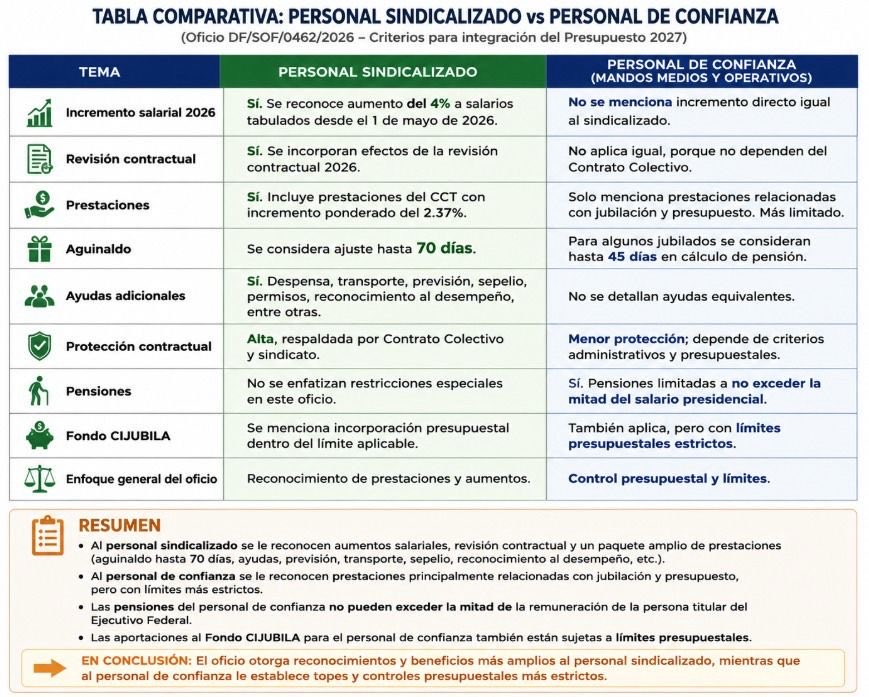
🔴 AL MOMENTO : Trabajadores de Confianza de CFE convocan a paros laborales, los están obligando a firmar un nuevo contrato donde les quitan prestaciones y percepciones ! El gobierno está en QUIEBRA ! Pronto habrá despidos !
Mexico's ruling party just rammed through a bill in Congress that could nullify any election (legislative, gubernatorial o presidential) if the government —or the electoral authority, which was independent until the governing MORENA regime coopted it and controls now— decides there was "foreign interference." Sounds reasonable? There’s not even a need to read the fine print. While this is one of the most egregious, alarming and retrograde pieces of legislation in Mexico's young democratic history, it’s also a tell-tale sign that electoral alarm bells are starting to ring within the governing party as the scandals of corruption of some of its leaders and politicians tainted with ties to drug traffickers and organized crime start to take a domestic and public opinion toll on governmental and party approval.
What counts as "foreign interference" under this law? Virtually anything. A statement by a US official or a policy decision by a foreign government. An editorial by a British newspaper, an investigative story by a US broadcaster or a report by a French weekly magazine. Coverage by international media of corruption, violence or human rights abuses in Mexico. A social media post by a foreign NGO or by a member of the US Congress, the European Parliament or a foreign leader. Even a trip by a Mexican governor or political party leader abroad, or a press conference by a Mexican politician or Mexican NGO with foreign correspondents accredited in Mexico. All of it —every single one— can now be used as grounds to claim there’s a foreign conspiracy to impact the electoral fortunes of MORENA and its movement and to void an election result. This bill becomes a blank check, and MORENA holds the pen.
And therein lies the rub: the body that decides whether "interference" occurred is no longer independent. MORENA's reforms and policies since 2018 have gutted Mexico's electoral institutions and robbed them of their autonomy. The electoral referees are now handpicked —directly or indirectly— by MORENA, in what is basically the return of a single-party hegemonic ruling system like in Mexico’s days of yore. More crucially, this law doesn't prevent foreign interference. It hands the government a veto over election outcomes it doesn't like, particularly as the country heads into next year’s midterm elections and a critical presidential election in 2030.
Think about what this means in practice: if the opposition wins an election in a state where the US Department of Justice —as it has done recently in Sinaloa— indicts a public official, or the US State Department yanks the visa of a Mexican official or a MORENA politician (as it has already done) or legislator, a UN body publishes a report on disappearances in the country, or a foreign paper runs a critical investigation on MORENA, the government can move to annul the result. Due process? Optional. And while there is no evidence whatsoever of “foreign interference” in any of Mexico’s modern-era elections, there’s one exception to that rule exception, one that also entails a huge paradox: Hugo Chavez’s financial (in bulk cash) support for Andrés Manuel López Obrador’s first presidential campaign in 2006.
This is the playbook you've seen before —in Hungary, in Venezuela, in Nicaragua. Dress up democratic backsliding in the language of sovereignty and anti-imperialism. Make legitimate external scrutiny or opinion illegal. Then use that law selectively, à la carte, when you need it. And finally top that off with a chauvinistic claims of sovereignty and of “foreign conspiracies of the right”, as the current and previous MORENA governments are so prone at asserting every time there’s an unfavorable or critical publication in international media outlets or a foreign government or politician stakes a critical or unfavorable stance regarding Mexican politics or foreign policy.
The US is the most obvious target here. Any comment from Washington, from any governmental actor or non-state actor —on rule of law, press freedom, migration, fentanyl, human rights, a level playing field for US businesses— can now be retroactively framed as electoral interference. This isn't about protecting Mexican democracy. It's a legal weapon pointed at the bilateral relationship itself.
But here's the gravest irony of all: the bill is willfully blind to the real interference plaguing recent Mexican elections. Not a foreign government. Not a US newspaper. It’s organized crime. Plain and simple. In the 2021 midterm elections, criminal organizations, particularly in Sinaloa and Tamaulipas, didn't just meddle — they handpicked candidates, intimidated or whipped voters, and in some cases effectively ran the ballot. That’s what has ultimately led to the US indictments against ten current and former public officials in Sinaloa, including the sitting governor, a federal senator and the mayor of the state’s capital city, Culiacán. At the end of the day, this what genuine electoral coercion and interference looks like. MORENA's bill has nothing to say about any of it. Because that threat doesn't serve the narrative. And in some cases, it may be rather too close to home.
Mexico deserves better. So does the democratic community that has stood by it. This bill must be challenged —in the courts, in the streets, and in the court of international opinion. Silence is not an option. Contrary to the famous mantra about Las Vegas, what happens in Mexico should not stay in Mexico.
Un desodorante (izquierda) lo compré en México y el otro (derecha) en Alemania. Existe una ligera diferencia en precio (más caro en Alemania €)
La diferencia en calidad es muy amplia entre uno y otro.
Siempre al Sur Global la cantidad más baja.
@JoseMarioMX@sanz_ismael Tengo 18 años dando clase en la Facultad de Economía | UADY
Y dentro de una charla, le pregunté a mis estudiantes ¿en el último año, cuántos libros de ciencia económica han comprado?
La respuesta fue: 0
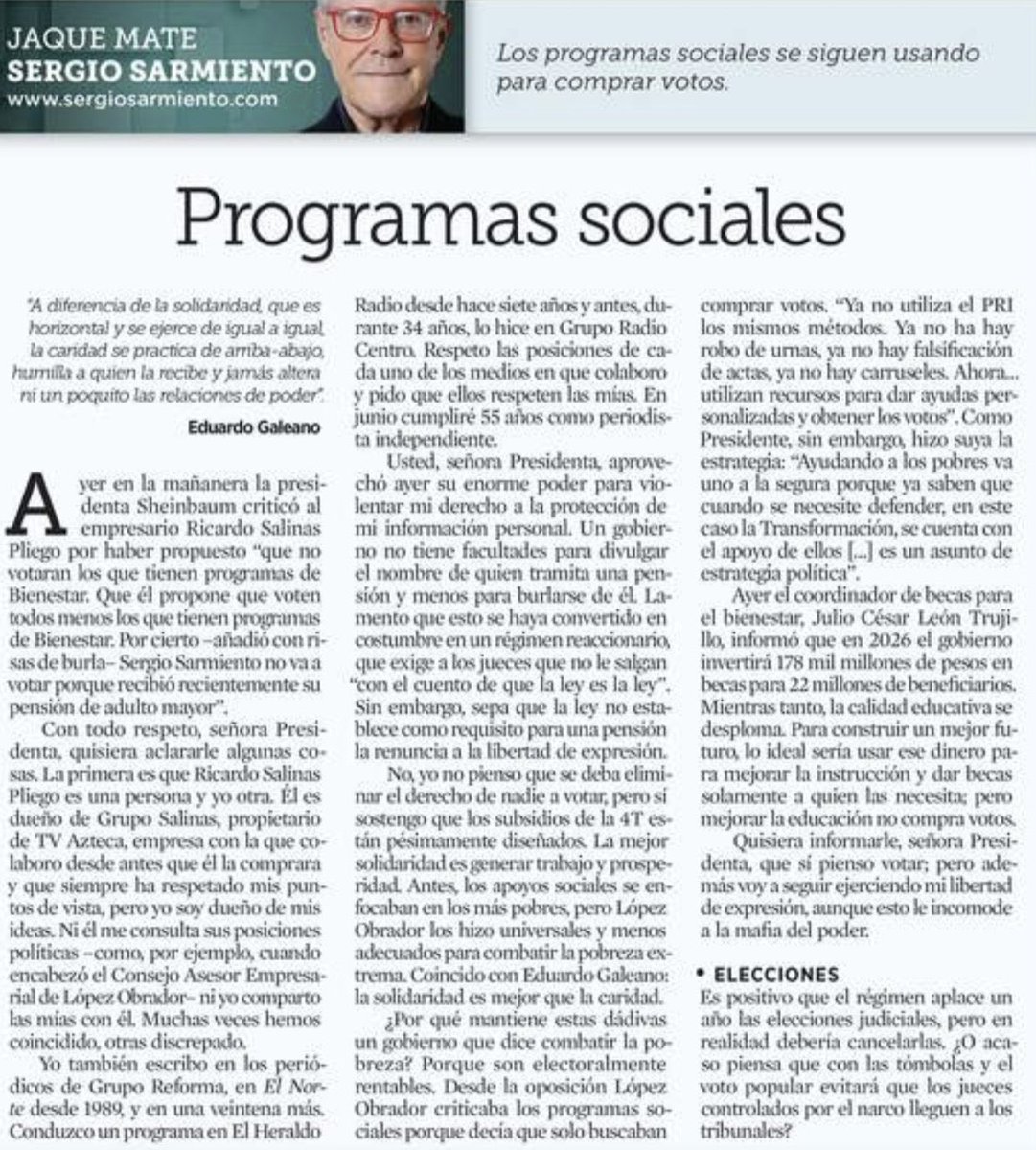
@SergioSarmiento Un gobierno no tiene facultades para divulgar el nombre de quien tramita una pensión y menos para burlarse de él. Lamento que esto se haya convertido en costumbre en un régimen reaccionario, que exige a los jueces que no le salgan "con el cuento de que la ley es la ley"
Lean
⬇️
In 2024, the population of common bird species in the EU decreased by 15.1% compared with 2000.
🐦⬛The populations of common farmland species dropped by 32.1%, while common forest species slowly started to recover since 2010.
Read more 👉https://t.co/pOkBftKOue
#IDB2026
Aus unserem Kiel Policy Brief – und den zugehörigen Daten von Holger Görg & Kolleg:innen – wurde ein spannender interaktiver Beitrag von @zeitonline. Für mehr als 400 Berufe zeigt die Analyse, wie stark KI einzelne Tätigkeiten verändert 👇.
Zum KPB 👉 https://t.co/CjcXRIL2OV