Hemos troceado las carreras universitarias para montar un negocio de másteres inútiles que solo sirven para vaciar la cartera de las familias. Permitidme reflexionar sobre la estafa de los grados Frankenstein y por qué hay que volver a las Licenciaturas generalistas. 🧵va...
A Norwegian neuroscientist spent 20 years proving that the act of writing by hand changes the human brain in ways typing physically cannot, and almost nobody outside her field has read the paper.
Her name is Audrey van der Meer.
She runs a brain research lab in Trondheim, and the paper that closed the argument was published in 2024 in a journal called Frontiers in Psychology. The finding is brutal enough that it should have changed every classroom on Earth.
The experiment was simple. She recruited 36 university students and put each one in a cap with 256 sensors pressed against their scalp to record brain activity. Words flashed on a screen one at a time.
Sometimes the students wrote the word by hand on a touchscreen using a digital pen, and sometimes they typed the same word on a keyboard. Every neural response was recorded for the full five seconds the word stayed on screen.
Then her team looked at the part of the data most researchers had ignored for years, which is how different parts of the brain were communicating with each other during the task.
When the students wrote by hand, the brain lit up everywhere at once.
The regions responsible for memory, sensory integration, and the encoding of new information were all firing together in a coordinated pattern that spread across the entire cortex. The whole network was awake and connected.
When the same students typed the same word, that pattern collapsed almost completely.
Most of the brain went quiet, and the connections between regions that had been alive seconds earlier were nowhere to be found on the EEG.
Same word, same brain, same person, and two completely different neurological events.
The reason turned out to be something nobody had really paid attention to before her work. Writing by hand is not one motion but a sequence of thousands of tiny micro-movements coordinated with your eyes in real time, where each letter is a different shape that requires the brain to solve a slightly different spatial problem.
Your fingers, wrist, vision, and the parts of your brain that track position in space are all working together to produce one letter, then the next, then the next.
Typing throws all of that away. Every key on a keyboard requires the exact same finger motion regardless of which letter you are pressing, which means the brain has almost nothing to integrate and almost no problem to solve.
Van der Meer said it plainly in her interviews.
Pressing the same key with the same finger over and over does not stimulate the brain in any meaningful way, and she pointed out something that should scare every parent who handed their kid an iPad.
Children who learn to read and write on tablets often cannot tell letters like b and d apart, because they have never physically felt with their bodies what it takes to actually produce those letters on a page.
A decade before her, two researchers at Princeton ran the same fight using a completely different method and ended up at the same answer. Pam Mueller and Daniel Oppenheimer tested 327 students across three experiments, where half took notes on laptops with the internet disabled and half took notes by hand, before testing everyone on what they actually understood from the lectures they had watched.
The handwriting group won by a wide margin on every question that required real understanding rather than surface recall.
The reason was hiding in the transcripts of what the two groups had actually written down.
The laptop students typed almost word for word, capturing more total content but processing almost none of it as they went, while the handwriting students physically could not write fast enough to transcribe a lecture in real time, which forced them to listen carefully, decide what actually mattered, and put it in their own words on the page.
That single act of choosing what to keep was the learning itself, and the keyboard had quietly skipped the choosing and skipped the learning along with it.
Two studies. Two countries. Same answer.
Handwriting makes the brain work. Typing lets it coast.
Every note you have ever typed instead of written went into your brain through a thinner pipe. Every meeting, every book highlight, every idea you captured on your phone instead of on paper was processed at half depth.
You did not forget those things because your memory is bad. You forgot them because typing never woke the part of the brain that would have made them stick.
The fix is the thing your grandmother already knew.
Pick up a pen. Write the thing down. The slower road is the faster one.
Bon dia! La Colocasia gigantea és una planta de fullatge en forma de cor ❤️. Es coneix amb el nom d'orella d'elefant gegant perquè les fulles són enormes. De llarg poden fer entre 120-180 cm i d'amplada entre 90-150 cm.
📹 Candy Bu.
Corre el año 1796.
Una enfermedad brutal azota Europa: la viruela.
Mata a millones. Deforma rostros. Arrasa familias.
Pero un médico rural está a punto de hacer algo impensable que cambiará la #HistoriaMedicina para siempre...
🐄💉🧵⤵️
Proteomics data is more useful when you know where proteins function. This guide explains how subcellular localization analysis maps DEPs to compartments like the nucleus, mitochondria, ER, and membrane to support biological interpretation.
Read more: https://t.co/h9AU9Ewlrk
El 02/05/1519 falleció Leonardo Da Vinci, extraordinario pintor, ingeniero, arquitecto, … del Renacimiento Italiano, al que se considera uno de los más grandes genios de todos los tiempos https://t.co/RuhFGloSap
“I consider it an extremely dangerous doctrine, because the more likely we are to assume that the solution comes from the outside, the less likely we are to solve our problems ourselves.”
— Carl Sagan
Your regular friendly reminder: These four datasets all have the same mean, median, and variance. Moral of the story: Always visualize your data!
[Link below.]
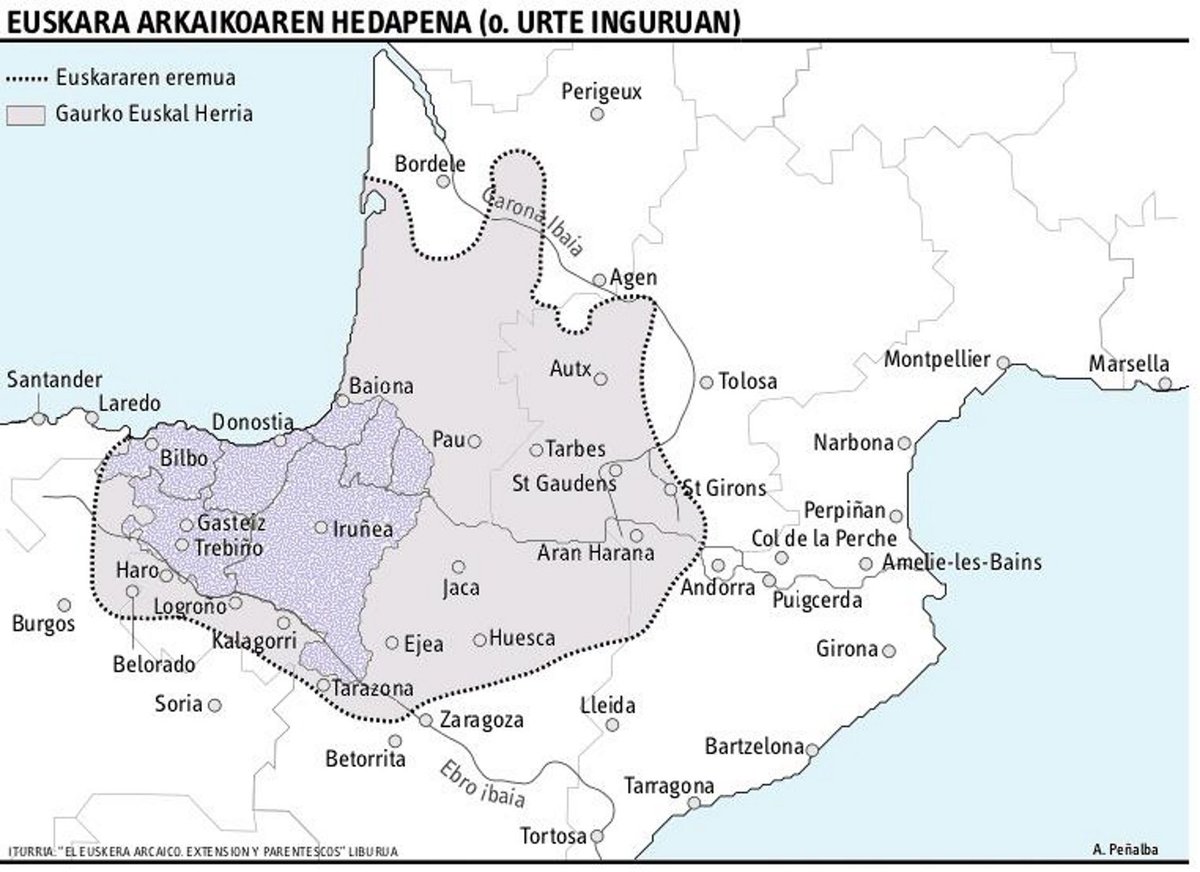
L’origen de la llengua basca (l’euskera) sovint s’explica envoltat de misteri, mites i teories exòtiques. Però la recerca lingüística actual és molt més clara del que sembla. Ens trobem davant d’un cas europeu extraordinari de continuïtat lingüística. El basc és una llengua preindoeuropea, que res té a veure amb el llatí, el cèltic i la resta de llengües indoeuropees d'Europa.
La teoria més acceptada avui no parla d’orígens llunyans, ni de cap relació amb les llengües ibèriques. El basc actual és hereu directe de les llengües aquitanes, parlades a l’antiguitat al sud-oest de la Gàl·lia i als Pirineus occidentals.
No tenim textos en aquità, ni relats, ni frases completes. Però sí que ens ha arribat una cosa clau: noms.
Noms de persones. Noms de divinitats. Noms de llocs.
I aquests noms parlen clar. La seva similitud o fins i tot equivalència amb el basc és innegable.
Per què el basc va sobreviure? El context el va protegir.
– Geografia muntanyosa.
– Romanització incompleta en algunes zones.
– Poblament rural i dispers.
– Forta transmissió oral dins la comunitat.
Mentre altres llengües antigues desapareixien, el basc es mantenia viu, parlat de pares a fills, sense interrupció.
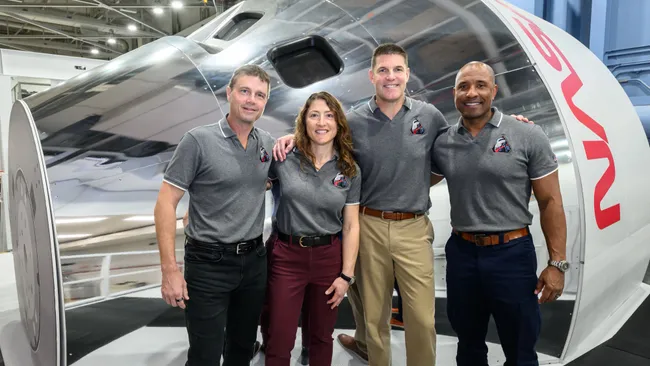
Els 4 tripulants de la missió Artemis II ja fa uns dies que es troben en estat de quarentena, a l'espera de l'enlairament històric que podria tenir lloc el 6 de febrer (altres dates possibles són el 7, 8, 10, 11).
Per primer cop des de 1972, humans faran un tomb a la Lluna, en una missió que durarà uns 10 dies.
Crèdit: NASA/Robert Markowitz.
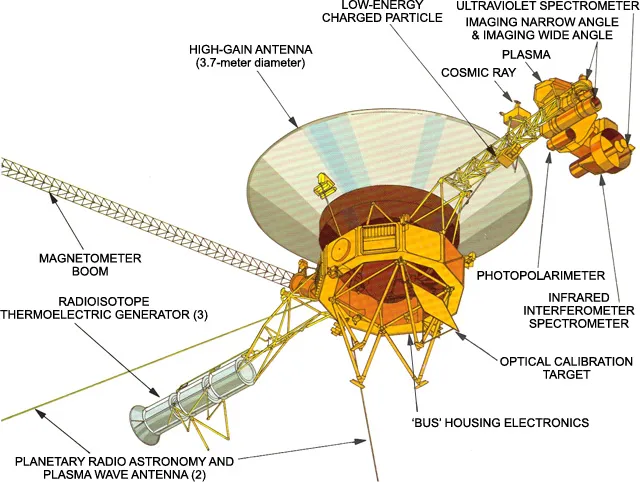
La Voyager 1, la nau més llunyana, es troba a més de 25.600 milions de km de distància. Els senyals de ràdio triguen 23 hores i 44 minuts entre la nau i la Terra. Dels 10 instruments, 3 continuen actius després de 48 anys de missió, i 5 més han estat desactivats progressivament per tal d'estalviar energia.
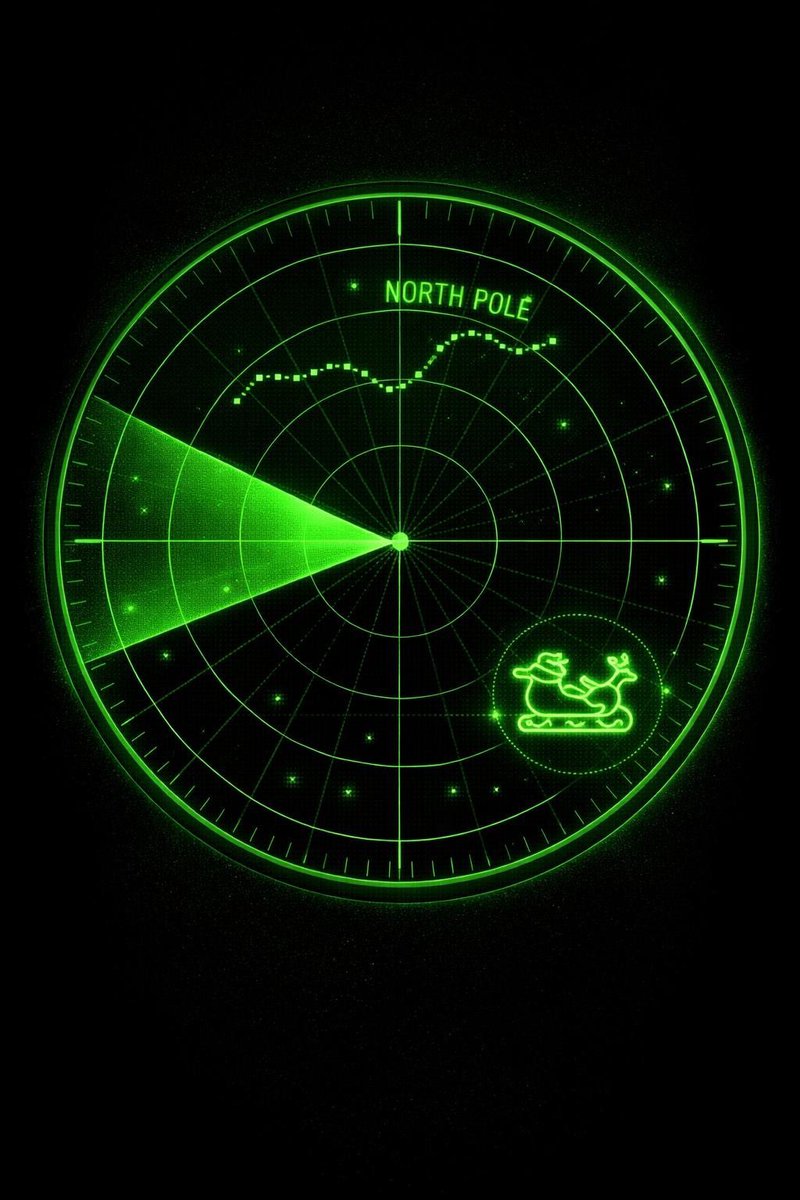
INCIDENT: We are currently monitoring an unidentified flying sleigh entering NATO airspace. The track originates from the North Pole and is flying an erratic path🎅 No NATO jets have been scrambled.





![SteveStuWill's tweet photo. Your regular friendly reminder: These four datasets all have the same mean, median, and variance. Moral of the story: Always visualize your data!
[Link below.] https://t.co/xVYKoCECjq](https://pbs.twimg.com/media/G_nqerobAAEJlnv.jpg)