Every winter, millions of songbirds flee the northern cold for the olive groves of southern Spain. Robins, warblers, greenfinches: the birds Britain puts on Christmas cards. A great many are about to be processed. Here is how.
- Super-intensive olive farms now harvest at night, when the cool air keeps the oil's delicate aromas intact
- The harvesters work under banks of floodlights, which dazzle the roosting birds and pin them in the branches
- The birds do not flee. They sit there, blinded, and get hoovered straight into the machine along with the olives
- In Andalusia alone, researchers put the toll at around 2.6 million songbirds a year. Robins, warblers, greenfinches, wagtails
- Andalusia moved to curb the night shift. Portugal, Italy and France carry on, where nobody is rude enough to count
Olive oil sells itself as the wholesome fat, the Mediterranean secret the experts wave through without a flicker. The secret, it turns out, is a faint top note of British songbird, harvested fresh from the dark while it slept.
@SamaHoole@DConwayRead That’s daft. Fruit and vegetables don’t catch foot and mouth. Free range chickens will eat worms, slugs and snails given the opportunity. People who set these rules have no means of enforcing them either.
Met Office forecasts top temperature today of 90F. I’m glad I got the shopping yesterday while we had solid cloud cover. Dog walk done before 7. Fortunately our trees will supply plenty of shade and keep temperatures lower here.
I post pictures of Northern Maine wildlife in my forest.
If you like this kind of thing, please consider following and reposting so others can find this account. I don’t do this to get monetized. I just love wildlife.
Thank you.
@TracyMitch99561@SamaHoole Absolutely! I buy a few boxes every summer. Eat them uncooked. Supermarket tomatoes are tasteless compared to these ( though a few stores stock them)
In 1980, an entire species had one mother. Her name was Old Blue.
The Chatham Island black robin had been reduced to just 5 individuals, and Old Blue, identified by the blue band on her leg, was the only breeding female left alive. Introduced rats and cats had wiped the species from most of its range on the remote Chatham Islands, 500 miles east of New Zealand, and habitat loss had finished much of the damage.
By the time Don Merton and his New Zealand Wildlife Service team began intensive management, there was almost nothing left to save.
Merton realized that if Old Blue's eggs were removed and placed in the nests of Chatham Island tomtits, she would lay replacement clutches. The foster parents raised the first broods while Old Blue produced more eggs.
Against all odds, the population began to grow. Old Blue was last seen in December 1983. By then, she had produced enough descendants to give the species a future. Every Chatham Island black robin alive today traces its ancestry back to her.
Don Merton went on to apply similar techniques to endangered birds around the world before his death in 2011. The black robin remains one of conservation's most extraordinary success stories.
Old Blue never knew how close her species came to disappearing forever. But she lived long enough to ensure that it didn't.
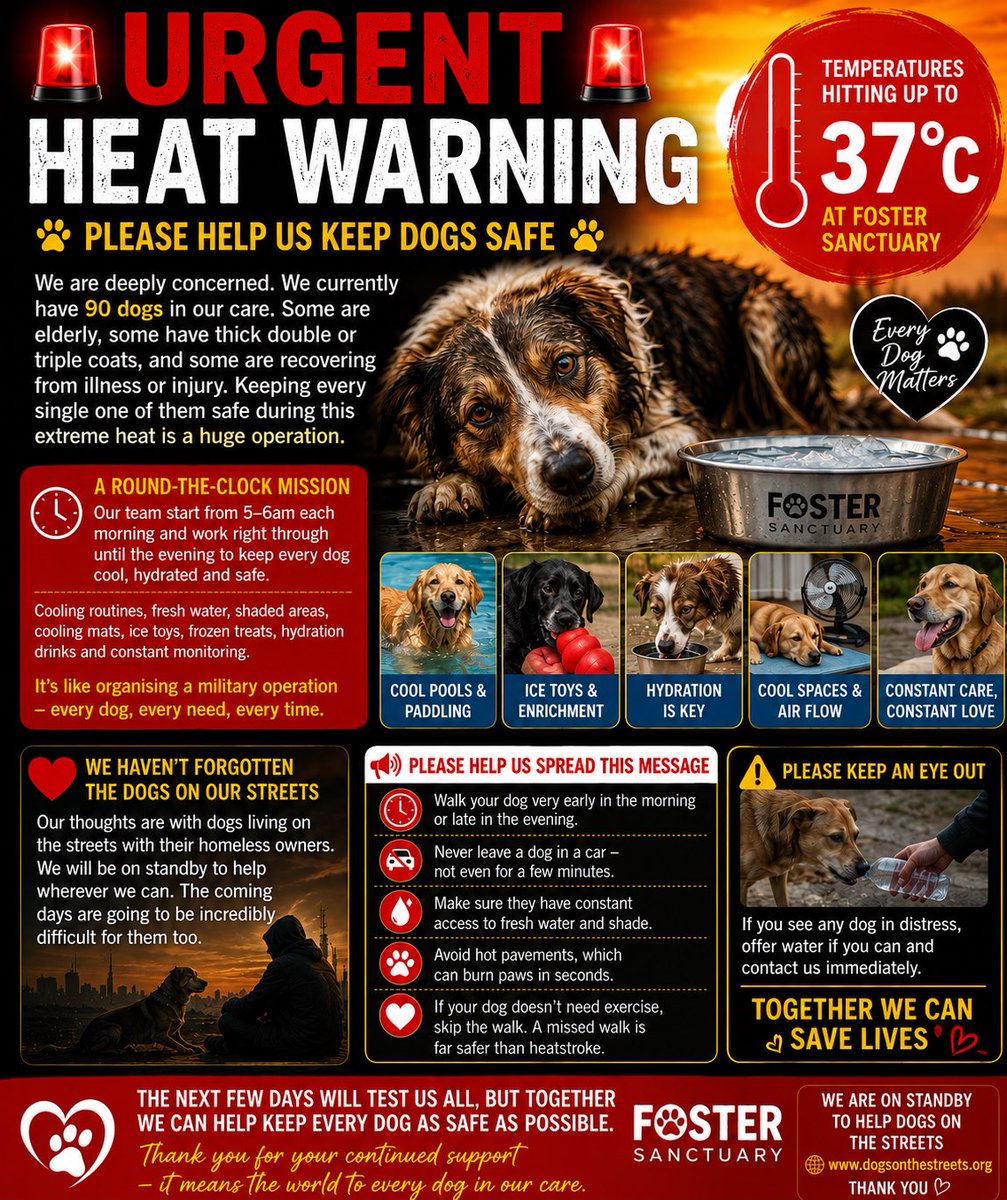
🚨 URGENT HEAT WARNING🚨
The forecast is now showing temperatures of up to 37°C, here at Foster Sanctuary we are deeply concerned.
We currently have 90 dogs in our care. Some are elderly, some have thick double or triple coats, and some are recovering from illness too
Keeping every single one of them safe during this extreme heat is a huge operation.
Our team will be starting work from 5–6am each morning and working right through until the evening to make sure every dog stays as cool, hydrated and comfortable as possible.
It's like organising a military operation, with cooling routines, fresh water, shaded areas, cooling mats, ice toys, frozen treats, hydration drinks and constant monitoring throughout the day.
We're also making sure our amazing staff are looked after, because these conditions are challenging for everyone.
Our thoughts are also with the dogs living on our streets alongside their homeless owners. As always, we will be on standby to help , but we know the coming days are going to be incredibly difficult.
Even in the temperatures we've experienced today, we've already seen dogs struggling. The next few days could become life-threatening for many.
🐾 Please help us spread this message: • Walk your dog very early in the morning or late in the evening. • Never leave a dog in a car, not even for a few minutes. • Make sure they have constant access to fresh water and shade. • Avoid hot pavements, which can burn paws in seconds. • If your dog doesn't need exercise, skip the walk. A missed walk is far safer than heatstroke.
Please keep an eye out for any dog that appears to be in distress and, if you can, offer water to dogs you may see with homeless owners.
These next few days will test us all, but together we can help keep every dog as safe as possible.
Thank you to everyone who continues to support Foster Sanctuary and the work we do. 🧡
https://t.co/EgvWWRToji
SENIOR DOGS NEEDING HOMES. South East London.
MAX IS AN ADORABLE CHIHUAHUA X JRT.
SADLY HIS OWNER HAS PASSED AWAY.
NOW BEING LOOKED AFTER BY A RELATIVE BUT DUE TO INCREASED WORKING HOURS MAX IS HOME ALONE FOR FAR TOO LONG.
MAX IS NOW FOR ADOPTION .
11 YRS.
ONLY 4 Kg.
HAS HAD REGULAR HEALTH CHECKS ..
NO ISSUES.
HE'S UPTO DATE WITH VACCINATIONS.
NEUTERED.
MICROCHIPPED.
MAX HAS BEEN EXTREMELY WELL LOOKED AFTER.
& LOVED .
IDEAL HOME WOULD BE WITH A RETIRED PERSON/ PERSONS.
HE LOVES TO SNUGGLE UPTO YOU.
ADORES HIS TOYS .
HE'S NOT REALLY INTO DOGS CATS OR CHILDEREN.
HOWEVER HE WILL TOLERATE ELDERLY DOGS THAT DON'T BOTHER WITH HIM..
MAX IS VERY MUCH A PERSON DOG .
HAPPY IN CAR BUT DOSN'T LIKE LONG JOURNEYS.
HOME CHECK WILL APPLY
https://t.co/LeL1WO3mwK
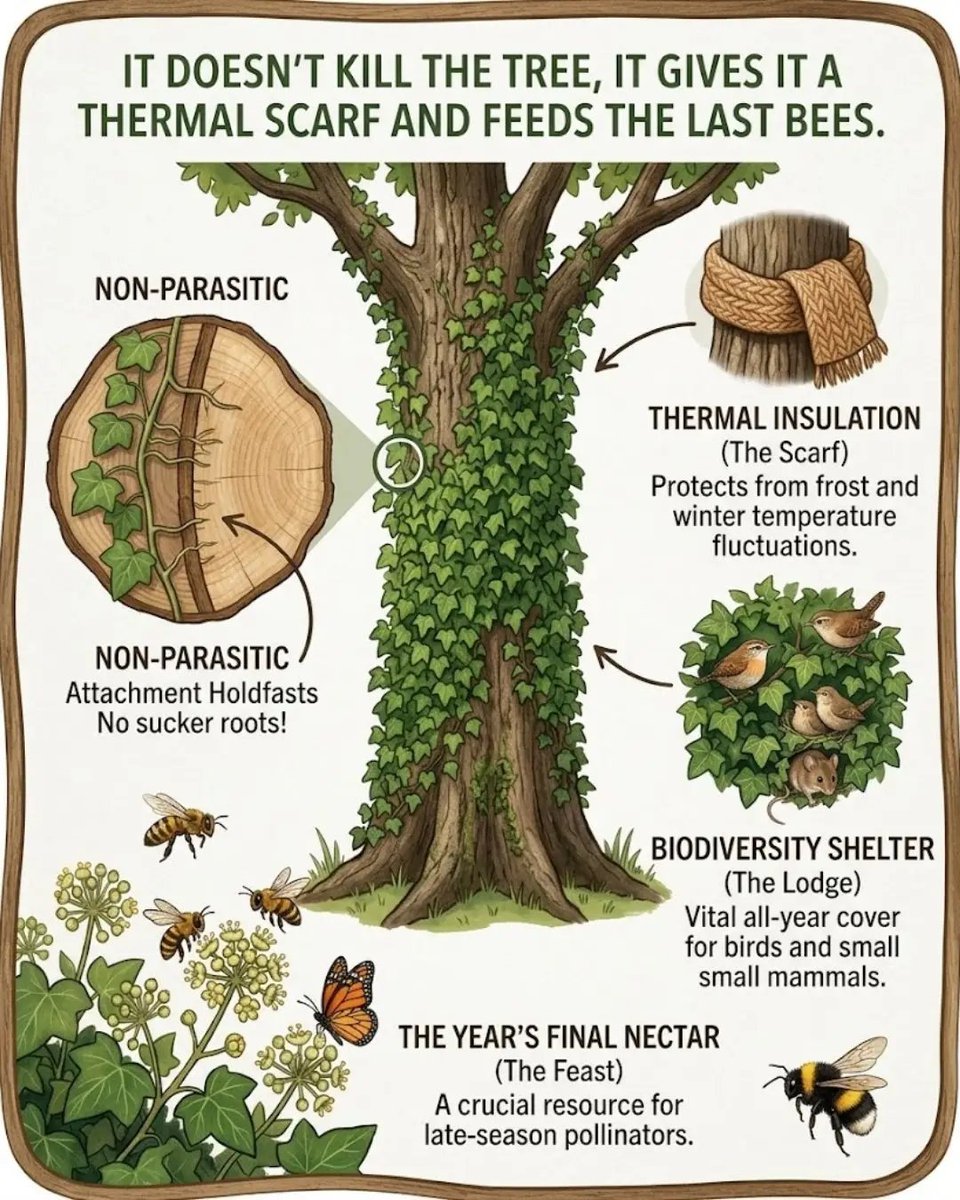
Why Ivy on Trees Is Often Misunderstood
English ivy is frequently blamed for harming trees, but the reality is more nuanced. Ivy is not a parasite. It does not penetrate a tree's vascular system, and it does not steal water or nutrients from the host tree.
A Separate Root System
Ivy roots remain in the soil and collect their own water and nutrients. The small structures that attach ivy to bark are holdfasts used for climbing, not feeding.
Important Wildlife Habitat
Mature ivy provides shelter throughout the year.
• Birds use dense ivy for nesting and protection.
• Small mammals find cover from predators.
• Insects use ivy as a winter refuge.
• Many species rely on ivy-covered trees when other shelter is scarce.
One of the Last Nectar Sources of the Year
Ivy flowers in late summer and autumn, a time when many flowering plants have already finished blooming.
Its flowers provide nectar and pollen for:
• Honey bees
• Bumblebees
• Hoverflies
• Butterflies
• Other late-season pollinators
This makes ivy an important food source before winter.
Protection From Weather Extremes
Dense ivy foliage can help moderate temperature fluctuations around a tree trunk. During cold periods, the vegetation layer may provide some protection from frost and sudden temperature changes. It can also reduce direct exposure to sun, wind, and heavy rain.
When Ivy Can Become a Problem
Although ivy is not a parasite, excessive growth can sometimes affect tree health.
Problems may occur when:
• Ivy completely covers the tree canopy and blocks light.
• Heavy growth increases wind resistance during storms.
• Weak, old, or already stressed trees carry large amounts of ivy.
• Regular tree inspections become difficult because the trunk is hidden.
Healthy mature trees often tolerate moderate ivy growth well, while declining trees may struggle under heavy infestations.
A Balanced Approach
Ivy is neither a tree killer nor a miracle plant. It is a native climbing plant that provides valuable habitat and food for wildlife. In many situations, careful management is preferable to complete removal, especially where biodiversity conservation is a priority.
Well-managed ivy can support pollinators, birds, and small mammals while coexisting with healthy trees for decades.
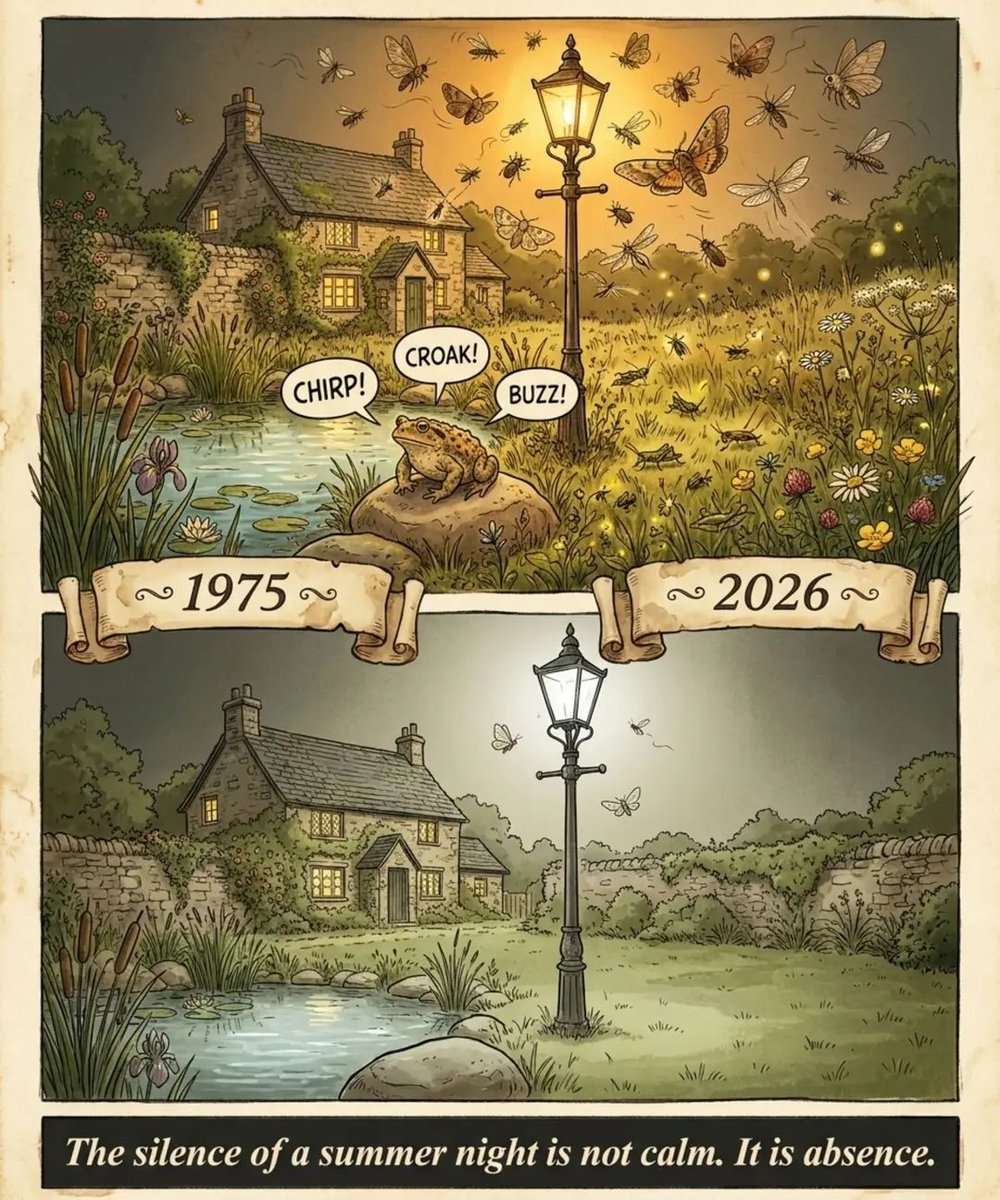
Do you remember summer nights when you could not sleep with the window open because of the noise?
Crickets in the long grass. Toads in the ditch. Moths battering against the lampshade. A symphony nobody had asked for and which everyone endured with a certain fond resignation.
That night still exists — but it is quieter every year. And fewer people remember what it sounded like. 🌿
What this silence measures:
Grasshoppers and crickets are direct indicators of meadow and grassland quality. Their decline follows the loss of uncut grass margins and rough ground at field edges. Several species once common across Britain have seen their range contract significantly over the last forty years — the field cricket is now one of the rarest insects in the country.
The common toad (Bufo bufo) — protected in the UK — was once the sound clock of May and June nights across the British countryside. Its deep, repetitive call from ponds and ditches measured the season. Road mortality and the loss of breeding ponds have reduced populations by around 68% since the 1980s.
Moths make up around 80% of British Lepidoptera species. They pollinate at night what bees pollinate by day. A traditional incandescent bulb attracted dozens in an hour in 1990. A white LED disrupts and disorients them.
What anyone can change this week:
Leave a strip of long grass unmown along a fence or boundary. Turn outdoor lights downward or switch to amber-toned LEDs. Leave a shallow water source at ground level — even a 40 cm dish.
The silent summer night is not a sign of a peaceful summer. It is a sign of an empty one. 🌱
#InsectDecline #GardenWildlife #NightPollinators #UKWildlife
@SamaHoole I’m glad to report that the fishmongers I went in with my mother back in the 50’s is still there in the same shop run by the same family. They go up to Billingsgate twice a week.
She hunts the midges from your garden every evening. She has just given birth in your roof. And if you seal that gap this weekend, her pup will die before it can fly. 🌿
The common pipistrelle (Pipistrellus pipistrellus) establishes its maternity colonies in roof spaces, behind fascia boards, under ridge tiles, and in wall crevices. She gives birth to a single pup each year, between late May and mid-July. The pup clings to its mother in the first weeks of life. It cannot move independently. You will not see her — she emerges around fifteen minutes after sunset and returns before dawn.
All bat species in the UK are protected under the Conservation of Habitats and Species Regulations 2017 and the Wildlife and Countryside Act 1981. It is a criminal offence to deliberately disturb a bat roost, block access to one, or carry out building work that affects a roost without first obtaining a European Protected Species licence. This applies even when no bats are present at the time of the work.
What every homeowner should do:
Postpone any roof, loft, or sealant work until October — the maternity period runs from May to August, and young bats do not fly until late August.
Leave small gaps under ridge tiles, behind fascia boards, and in masonry — these are roost access points, not defects to be filled.
Turn outdoor lights downward or use motion-sensing lights — light pollution disrupts their hunting corridors.
Before any building work, contact the Bat Conservation Trust (https://t.co/iNymVT5pqh) or your county bat group. They can advise on timings and whether a licence is needed.
She asks very little. Just that the sealant gun waits until autumn. 🌱
#Bats #CommonPipistrelle #WildlifeGardening #UKWildlife
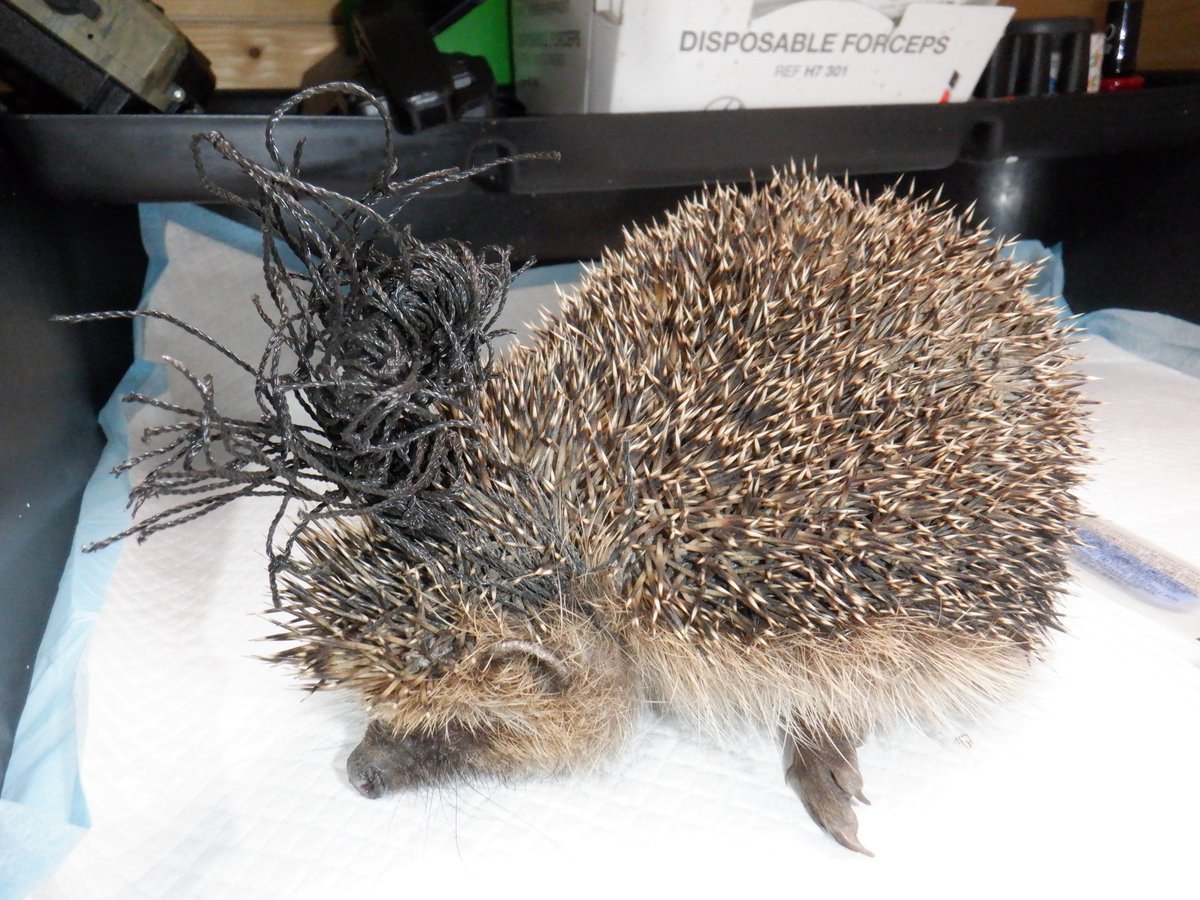
I have had 3 'trapped in netting' calls today, and it's only 9.30am.😰
Do you have any netting in your garden?
Pea and bean netting?
Fruit netting?
A football goal?
A tennis net?
Anti-heron pond netting?
Please go outside now and roll it up and tie it so that it is 30cms (1 foot) off the ground.
I spent a tense time yesterday afternoon cutting free yet another hedgehog who had become so entangled in some carelessly draped fruit netting that every movement shut off his air.
All he could do was hang there, keeping dead still, terrified of being predated alive by birds, slowly dying of suffocation and dehydration.
The owners were away, and if it wasn't for a pest control man they'd employed, coming to check the estate of this posh house, he would have had an unimaginably cruel, long slow death.
Please, I beg you, go and check your garden now.
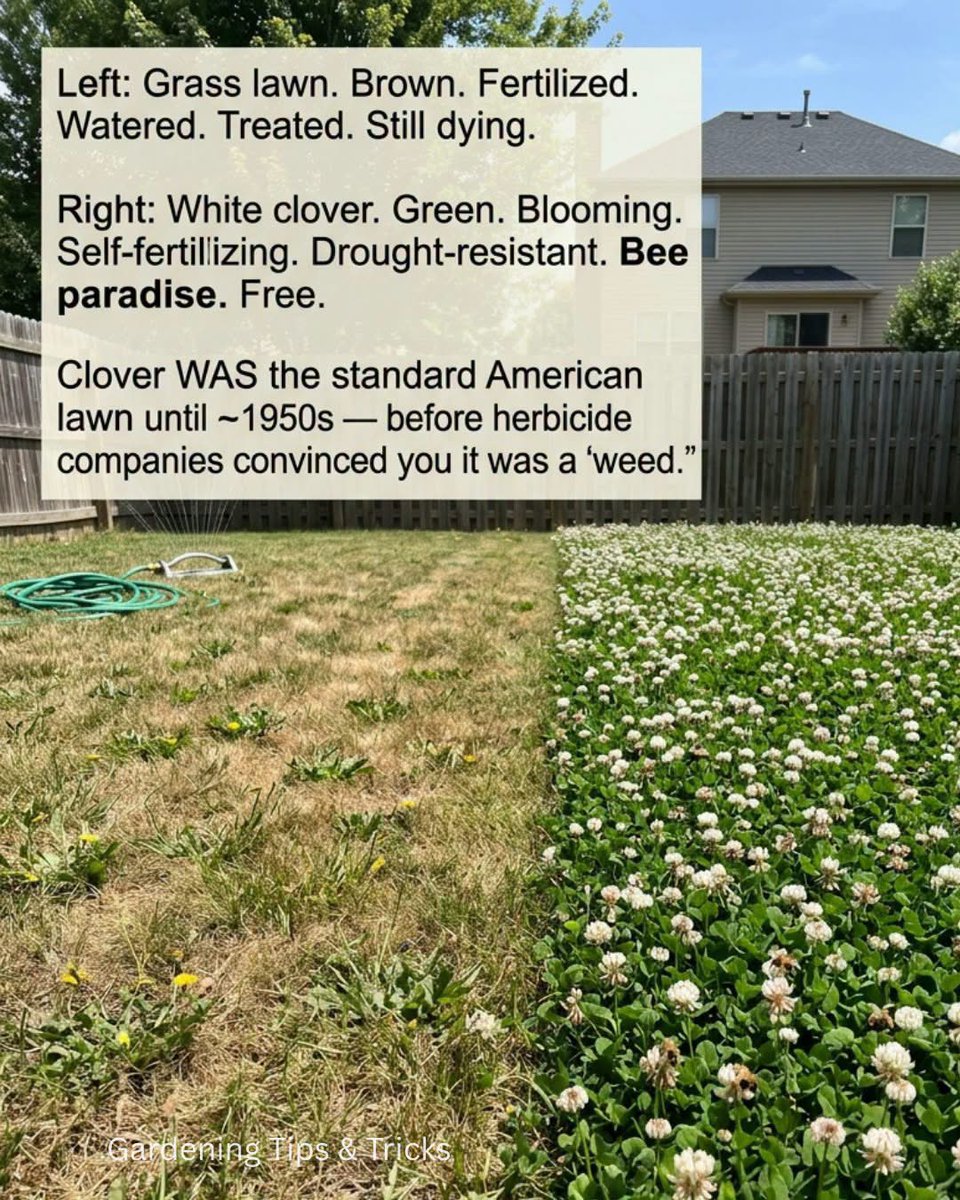
Before the 1950s, clover was a STANDARD component of American lawns.
Seed mixes included it on purpose.
Then broadleaf herbicides were invented.
They killed clover along with "weeds." So the chemical companies rebranded clover as a weed — to sell more herbicide.
That's it. That's the whole story.
Clover is not a weed. It's the future of your lawn.
White Dutch clover (Trifolium repens):
Self-fertilizing — fixes nitrogen from the air into the soil. No fertilizer needed. EVER.
…and it feeds the grass around it for free.
Drought-resistant — stays green when grass goes brown.
Bee paradise — constant blooms from May to frost.
Chokes out weeds — dense growth shades out weed seeds.
No mowing needed (stays 4-6 inches) — or mow monthly.
Soft underfoot — kids love it.
Costs $5-10 to overseed 1,000 sq ft.
How to add clover to your existing lawn:
Overseed in spring or fall.
Scatter seed (2 oz per 1,000 sq ft).
Water lightly for 2 weeks. Done.
Stop using broadleaf herbicides (they kill clover).
Stop fertilizing (clover makes its own).
Mow at 3-4 inches.
The lawn industry told you clover was a weed so they could sell you chemicals.
Take your lawn back.
Please retweet, what to do if you see a dog in a hot car...
Here’s the RSPCA step-by-step guide to help:
“In an emergency, it is best to dial 999 and report a dog in a hot car to police. The RSPCA may not be able to attend quickly enough and, with no powers of entry, would need police assistance at such an incident,” the RSPCA says. “You can call the RSPCA’s 24-hour emergency cruelty line on 0300 1234 999 for advice but, if a dog is in danger, dialling 999 should always be the first step.”
Check the animal – is he/she relaxed or distressed?
If the dog seems fairly content and isn’t in immediate danger then try to establish how long they have been unattended in the vehicle and note down the registration. Ask a member of staff to make a tannoy announcement to trace the owner but ask someone to stay with the dog and monitor them.
If the dog is in distress or displaying any sign of heatstroke – such as panting heavily, drooling excessively, is lethargic or uncoordinated, or collapsed and vomiting – call 999 immediately and request police.
If the situation becomes critical and police can’t attend, many people’s instinct is to break into the car to free the dog. Please be aware that, without proper justification, this could be classed as criminal damage.
Make sure you tell the police of your intentions and take photos or footage of the dog as well as names and numbers of witnesses. The law states that you have a lawful excuse to commit damage if you believe that the owner of the property that you damage would consent to the damage if they knew the circumstances.
Once removed from the car, move the dog to a shaded/cool area and douse him with cool water. Allow the dog to drink small amounts of cool water.
The dog should be seen by a vet as soon as possible.
More info
https://t.co/GHBErsud27
#dogs #Heatwave #dogsincars #adoptdontshop
There is a weedkiller sprayed across the American corn belt that turns male frogs female. Not weakens them. Turns them. Europe banned it twenty years ago. America set a safe limit and poured another glass.
- Atrazine is sprayed on roughly half the US corn crop
- At 0.1 parts per billion, thirty times below the "safe" tap-water limit, male frogs grow eggs. At the doses near real farms, three-quarters are chemically castrated
- Some turn fully female, mate with other males, and lay viable eggs. A full recall on the entire sex
- It is an endocrine disruptor, the polite term for a chemical that reroutes your hormones, and the most common contaminant in American tap water
- Europe saw this in 2004, decided it could never be cleaned up, and stopped
America saw the same data, invented a number it could call safe, and kept spraying. The official line: everything is fine, provided you are not a frog. Yet.