The rest of life is lifeless breath,
A quiet drift toward quiet death.
But the life that waits — raw,
untamed —
Requires a soul unmasked, unnamed.
To truly live, you must defy,
And risk it all just to be why.
For years, digital identity has been built around one question:
"Is there a real human behind this account?"
AI is changing what identity needs to solve.
As AI agents begin managing assets, executing transactions, and acting on behalf of people and organizations, a new question emerges:
Who is accountable when an AI agent acts?
Proof of personhood is only part of the equation.
In an agentic economy, accountability may become the foundation of trust.
That's where I believe the conversation around digital identity is heading.
concordium:native
@Concordium
Could you lend me your interest for today?
I seem to have misplaced mine somewhere between
yesterday’s thoughts and tomorrow’s worries.
Just for a moment… let me borrow yours, until I find my way back to my own.
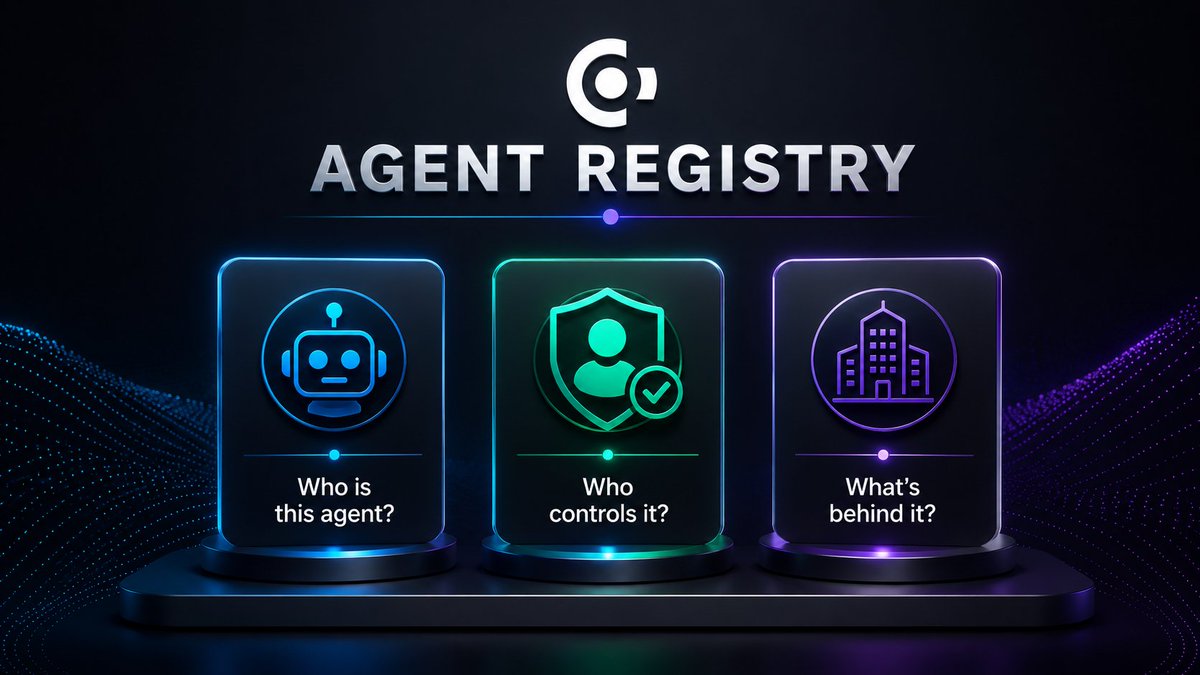
Before an AI agent moves value, makes decisions, or acts on your behalf, there is a fundamental trust problem most systems ignore.
Not what the agent can do.
But what the agent actually is.
Who created it.
Who controls it.
And what identity is behind its actions.
Without answers to these questions, AI agents become powerful but unaccountable systems, capable of operating faster than our ability to verify them.
This is where the @Concordium Agent Registry becomes important.
It introduces a verifiable layer of identity for AI agents, ensuring that every agent interacting in a system can be traced back to a responsible entity, while still preserving privacy through cryptographic design.
So instead of blindly trusting agent behavior, we can now verify: not just what the agent is doing, but who stands behind it.
That shift is what turns AI from opaque automation into accountable infrastructure.
concordium:native
Been going through @prlnet again and trying to connect the full system.
From what I understand, the core shift is PoUW turning #AI computation into part of consensus instead of just using random hashing.
That alone changes the structure of PoW.
pearl-2:native
Owning gold is one thing.
Putting gold to work is another.
With $GGBR, @goldfishggbr is bringing real gold on-chain, making it tradable, usable in DeFi, and accessible beyond the vault.
Utility is the next chapter for gold.
🧩 Innovation Doesn't Happen in Isolation
One of the biggest lessons I've learned from following the crypto industry is that no great ecosystem is built by a single team. The projects that make a lasting impact are the ones that bring together developers, infrastructure providers, liquidity, partners, and an active community around a shared vision.
That's one of the reasons why I keep paying attention to @injective.
It's easy to focus on individual announcements, but when you step back, a much bigger picture starts to appear. Every new integration, developer tool, financial application, AI initiative, institutional collaboration, or ecosystem partnership adds another piece to the foundation. None of these developments change everything overnight, but together they create an environment where builders have more opportunities to launch products that people actually want to use.
To me, that's what separates a growing ecosystem from one that's simply chasing headlines. Real innovation isn't about releasing one impressive feature and hoping it changes the industry. It's about creating the conditions where hundreds of teams can continue building, experimenting, and improving on each other's work.
I think Injective understands that long term success depends on much more than technology alone. Strong infrastructure attracts developers. Developers create applications. Applications bring users. Users attract liquidity. Liquidity encourages even more innovation. It's a cycle where every part strengthens the next.
That's why I don't see Injective as just another blockchain. I see it as an ecosystem that continues to grow because it's focused on connecting the people, tools, and infrastructure needed to build the future of onchain finance. In the long run, collaboration will always create more value than building in isolation.
🔗 Official Links:
Website: https://t.co/PtfPiEoqhi
X:@injective
Discord: https://t.co/15lPDRbQx0
😉Three more projects in the @LitecoinVM ecosystem
1️⃣Prepare your wallet:
1️⃣Go to the website 👉 https://t.co/ThFJQsPaJL, connect the wallet and add the LitVM LiteForge network
2️⃣Go to the faucet 👉 https://t.co/gdtkGWJ9o9 and request test #zkLTC
1️⃣Create tokens on @0xnothing_net:
✅ Go to the website 👉 https://t.co/7LjTEyCWha and connect the EVM wallet
✅ Fill in all fields and create your token
2️⃣We interact with @quizonchain:
✅Go to the website 👉 https://t.co/NqYe0ZJvRl and connect the EVM wallet
✅ In the right corner, change the network to LitVM LiteForge
✅ Click “Start Quiz” and answer 5 questions
✅ After passing the quiz, we minute the points
✅ Having collected 100 points, we will be able to mint the “Master NFT badge”
ℹ️ Important clarifications:
✅ If you answered a small number of quizzes (1-2), you can click “Play Again” and take the survey again
✅ If you crumple your points, they will be counted towards the overall score, but the next quiz will only be taken after an hour
3️⃣ Interact with @litagentapp:
✅ Go to the website 👉 https://t.co/9afpumFrBV and connect the EVM wallet
✅ Click “Launch LitAgent” and create teams
✅ You can see an example of commands in the first window that appears with tips
✅ For example, you can create a command with just 1 message so that the AI automatically sends one transaction to the LitVM LiteForge network every day
The more I think about demand, the more I wonder if technology creates it at all.
Problems usually exist long before solutions arrive.
Businesses already want efficiency.
Developers already want better tools.
Organizations already want better outcomes.
Maybe applications don't create demand.
Maybe they reveal it.
They make existing needs visible by turning possibility into practicality.
If that's true, the challenge may not be creating demand.
It may be helping people recognize that a solution finally exists @quipnetwork
Me: it’s Sunday, let’s rest 😌
Also me: but wait… who is accountable for that AI agent? 👀🔐
Real question for Sunday:
what matters more in AI… intelligence or
accountability? 😭
concordium:native
Maybe I should try to be like an every normal person….
Perhaps I will stop arguing with the chart…
or maybe the chart will stop talking to me…
Now I can’t tell if I’m losing touch with reality…
or finally seeing it too clearly.
or maybe this won’t be a maybe.
Governance only works when people participate.
The 2026 Governance Committee Elections are now open.
This is your opportunity to help shape the conversations, decisions, and direction of the ecosystem moving forward.
🗳️ Cast your vote:
https://t.co/9XatlBcB2I
Voting guide:
https://t.co/GsqFTKX9Et
concordium:native
Most conversations around #AI focus on what agents can do.
A more interesting question is:
How do we make their actions trustworthy?
Capability without trust doesn't scale.
That's why the architecture behind an agent matters just as much as the intelligence inside it.
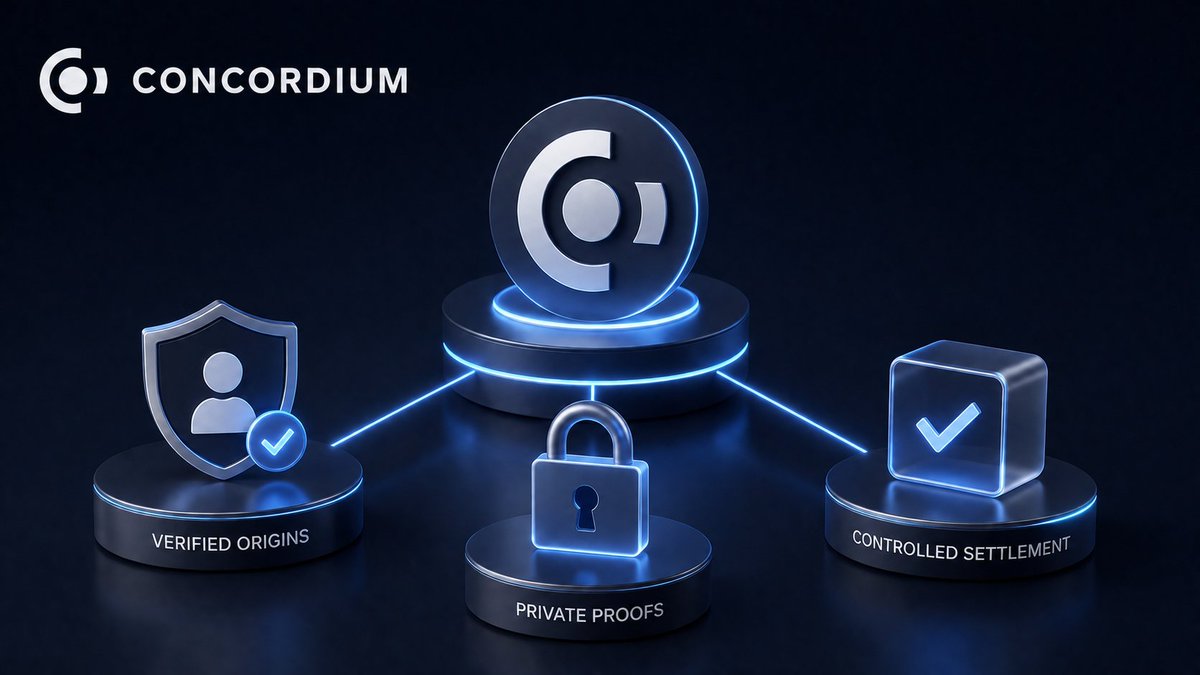
One framework that stood out to me breaks this into three connected layers:
Verified Origins.
Every agent is linked to a verified human identity, creating a clear line of accountability from action back to authorization.
Private Proofs.
Identity can be verified without exposing personal data, allowing trust and privacy to coexist instead of compete.
Controlled Settlement.
Once an agent acts, transactions can be executed in a way that is fast, auditable, and governed by protocol rather than assumption.
What I find interesting isn't any single component.
It's how the three reinforce one another.
Identity creates accountability.
Privacy enables participation.
Settlement creates confidence that actions can be relied upon.
Viewed together, they form more than an AI stack.
They form a trust architecture.
As autonomous systems become increasingly capable, the differentiator may no longer be intelligence alone.
It may be whether others can trust them enough to let them operate.
Because the future of AI isn't only about building smarter agents.
It's about building agents the world can confidently interact with.
We spend a lot of time asking what AI can do.
Maybe the more important question is:
Who stands behind what it does?
Capability is easy to scale.
Accountability is harder.
An AI agent can generate content, execute tasks, and interact with millions of people.
But without identity, privacy, and trust, we're left with the same problem:
More intelligence.
More uncertainty.
That's why the future of AI may depend on more than better models.
It may depend on building the missing layers that make autonomous systems accountable participants rather than anonymous actors.
Because the goal isn't just AI that works.
It's AI that can be trusted.
concordium:native
The more AI agents become capable of acting on our behalf, the more interesting another question becomes:
How do we create accountability without sacrificing privacy?
Historically, many systems have approached trust by collecting more information.
More data.
More documents.
More disclosure.
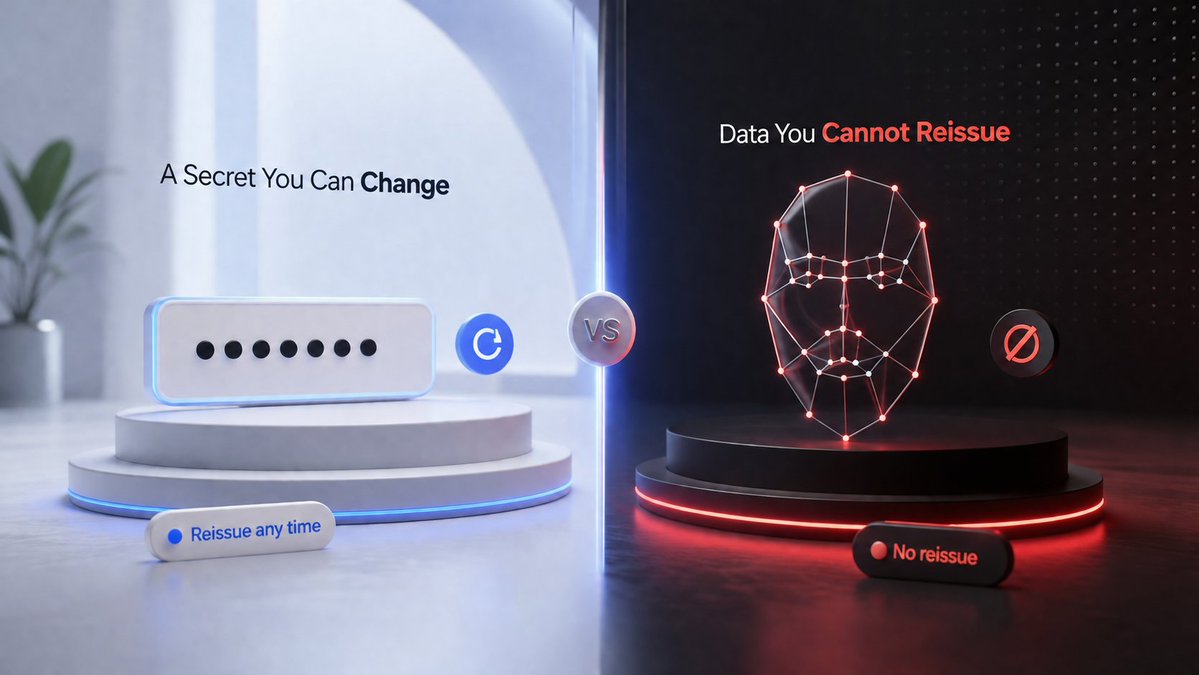
But what if trust doesn't require sharing more personal information?
What if it requires better ways of proving what's already true?
That's why cryptographic proofs are such an interesting idea.
They shift the focus from revealing information to verifying it.
From exposing identity to proving accountability.
As AI agents become participants in digital economies, that distinction may become increasingly important.
Because the future may not depend on choosing between privacy and accountability.
It may depend on building systems that can support both.
concordium:native #Concordium
Everyone talks about adoption.
More users.
More capital.
More AI.
I think we're skipping a step.
Trust isn't the result of adoption.
It's the infrastructure that makes adoption possible.
Scale without trust only scales uncertainty.
The real question isn't when Web3 reaches mass adoption.
It's whether we're building systems people can trust enough to adopt.
concordium:native
Would you trust an AI agent with your money if nobody could tell you who controls it?
That's where the conversation gets interesting.
As agents become participants in the digital economy, trust can't rely on assumptions.
The @Concordium Agent Registry provides a way to verify who is behind an agent, who controls it, and how accountability is established, all while preserving user privacy.
Smarter AI is great.
Accountable AI is better.
$CCD #Concordium