9 months in today, with one central principle driving my role as Online Safety Minister:
The British public, British values, driving technology, not the other way around.
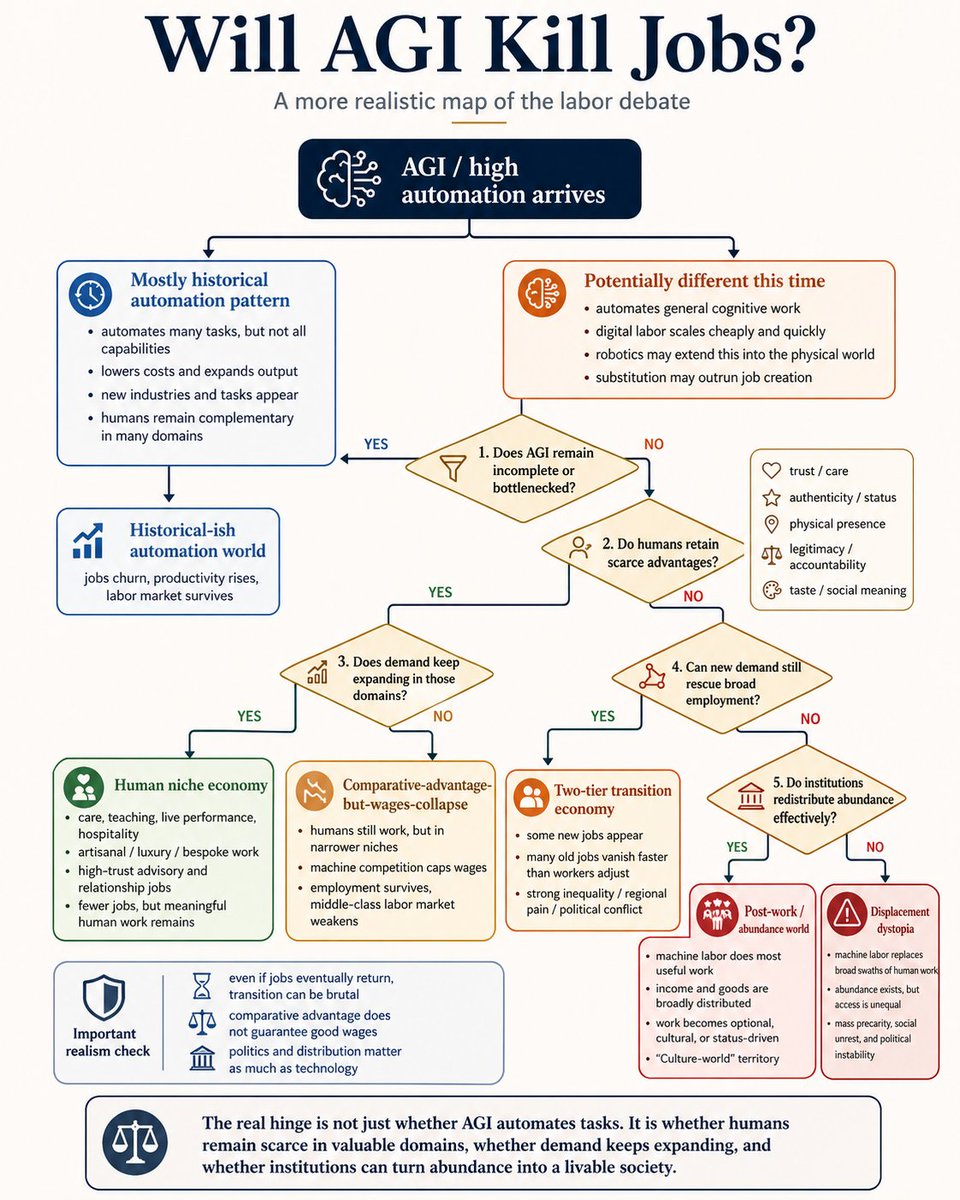
@StefanW@tylercowen@FortuneMagazine Hasnt this been the problem all along? Didn’t we had the communist revolution because of the changes in the job market that the Industrial Revolution caused?
Today, we share a breakthrough on the planar unit distance problem, a famous open question first posed by Paul Erdős in 1946.
For nearly 80 years, mathematicians believed the best possible solutions looked roughly like square grids.
An OpenAI model has now disproved that belief, discovering an entirely new family of constructions that performs better.
This marks the first time AI has autonomously solved a prominent open problem central to a field of mathematics.
You invested $100K via a 3-layer Anthropic SPV at $380B valuation.
Third layer takes 15% management/set up fees and no carry
Second layer takes 10/20
First layer takes 10/20
So your real investment is 100*0.85*0.9*0.9=$68.85K. Given nobody scammed anyone in the matryoshka
An exit at $1.4T IPO gets you a MOIC of ~2.8x after dilution. That’s $192K on the first layer.
The first layer takes 20% carry, you have $167K left
The second layer takes 20% carry ($36.4k), you have $130.6k left
So you have made a $30K return on a $100K investment in a year.
So layered SPV investment got you a 68% Anthropic exposure. Buying Google stock gets you 14% and Amazon - 18%. AND a multiple on all the money Anthropic spends on compute (most of their money). AND exposure to a money-printing business with a strong AI component that rivals Anthropic. AND no scam risk. While the 32% lost in SPV fees just fund someone’s coke habit in Miami.
Same $100K put in AMZN and GOOG over the same time period would also get you the 30% return. You’re welcome.
The largest documentation of 🇮🇹 Italy’s #decline: 460 slides with technical economic indicators (and more) on Italy from the 1970s to today, compared with other industrialized countries.
When did the problems begin? Are you sure to know?
All charts are here: https://t.co/6RNm2hJYrq
Full documentation on https://t.co/Vjg3f2Cj86.
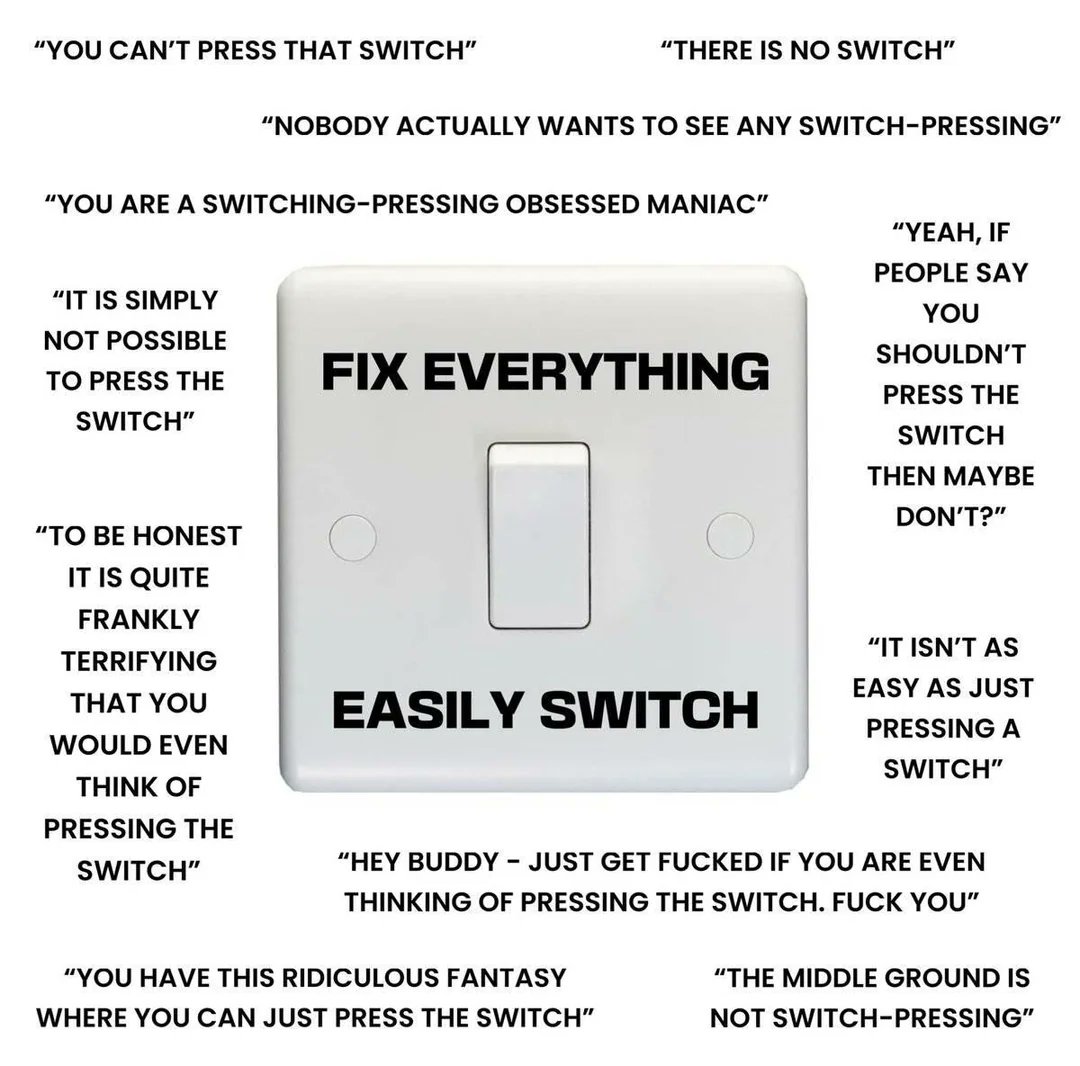
Asked Claude:
'There's a meme called the "fix everything easily switch". What policies do you think are the best candidates for being a real fix everything switch in the US? Give me your top ten, your confidence, your reasoning, and why a given policy has not been implemented.'
Space launch was a clear case where there was a large difference in efficiency between what was possible and what was done in practice before SpaceX. A large part of that was due to everything being locked in to what (just barely) already worked, with huge risk aversion. WIth national prestige or a half billion dollar geosync satellite on the line, speculative engineering ideas that might result in a public debacle were not welcome.
When failure is not an option, success can stay very expensive. You need to experiment to improve, and that fundamentally means being comfortable with failure. If you know it is going to work, it isn’t an experiment.
I have long believed that nuclear power today is in precisely the same state as space launch two decades ago, but the even more pressing question now is if semiconductor fabrication might also be.
On the one hand, Moore’s Law has been a sequence of heroic miracles of technology at the wafer fabrication level, grinding out hundreds of compounding small improvements.
On the other hand, fabs are “too big to fail”, and there are elements of extreme conservatism at play. Intel’s “Copy exactly!” fab development exemplifies that mindset – instead of every new building being an opportunity to explore and optimize processes, it was deemed more valuable to just replicate.
While each individual machine may be straining against physical limits of technology, it is possible that the systems orchestrating them all together could be far from optimal.
The explore / exploit axis is fundamental to all decision making, but human risk avoidance probably biases away from optimal exploration.
Palestinians think that Israel might one day be obliterated; Frenchmen that Alsace-Lorraine may be retaken; Irishmen think that 26 and 6 can make 32; all of that is evil, regardless of the justice of the original claim. To get peace, they have to give up. They have to surrender.
Trump has extended the ceasefire. Iran has seized two ships in the Strait of Hormuz. So are we looking at more diplomacy – or more war?
1. Probably some of both. The fight has moved from the air and land to the sea. It’s no longer a matter of drones versus interceptors but rather blockade versus blockade. An economic war, focused on the Strait of Hormuz.
2. Blockading Iranian ports and denying oil revenue to the IRGC is, for the U.S., far better than the President’s oft-invoked threats to bomb power plants and bridges. It’s hard to parse who is in charge of what in Tehran, but IRGC hardliners clearly have significant sway right now. And it’s a decent bet that they care more about their own access to resources than the suffering of their people. It’s telling that Tehran’s chief demand right now is an end to the blockade.
3. The problem is that Iran has leverage too, and knows it. Its grip on the world’s economic jugular produces pain everywhere, especially in Asia. Tehran bets that it can endure the pain of a blockade longer than the world can. That may or may not be right.
4. As it turns out, Iranian control over the Strait is more useful for Tehran than its nuclear program. It generates immediate leverage, can be dialed up and down, and takes little military resources to effectuate. Where the nuclear program generated potential threats, controlling the strait produces actual ones, and with economic results in hours.
5. That lesson won’t go unnoticed elsewhere. Does Beijing conclude that it can best generate leverage in a Taiwan crisis by blockading its exports of semiconductors? At a minimum, the old notion of key geographic choke points – the Strait of Hormuz, the Bab-el-Mandeb, the Strait of Malacca – will get a new look by military planners everywhere.
6. Lesser noticed right now are the UK and French efforts to assemble a coalition that keeps the Strait open after an enduring ceasefire. This is a key element in the ultimate solution here. The U.S. – and the world – cannot simply leave an Iranian sword of Damocles hanging over the waterway. For all the President’s complaints about U.S. allies, they are mobilizing to play a vital role.
7. Beyond reopening the Strait, the U.S. will necessarily focus on Iranian enrichment and the uranium stockpile. The VP had it right in shifting the discussion from Iran’s purported right to enrich to whether Tehran is actually enriching. The latter matters most.
8. Getting a permanent deal with Iran that addresses all U.S. concerns is impossible. Critics of the JCPOA long said that a better deal was always possible, if the U.S. had only pressured more, or negotiated harder, or been smarter and tougher. Now’s the time to show it. Yet count on Iran to remain intransigent on key issues, even after its leadership has been killed, its defense industrial base destroyed, and its country ravaged.
9. The U.S. must weigh the war’s global consequences, beyond the economic. Running down missile and interceptor stocks, for instance, and focusing military resources on the Middle East, means less for Asia and Europe. Russia and China will have an enduring interest in keeping it that way, including by helping Iran recover.
10. Completely lost at this point is how it all started: the Iranian regime, just months ago, killing thousands of protestors who wished nothing more than a better, freer life for themselves and their families. Help, it turns out, wasn’t exactly on the way. And, at least in the near term, the Iranian people will be the biggest losers in this fight.