Birds lay eggs in a diverse array of colors, patterns, sizes, and shapes.
After looking at nearly 50,000 eggs from more than 1400 bird species, researchers in Science found that egg shape is related to flight ability.
Learn more on #WorldEggDay: https://t.co/EW257sRK21
Toyota’s walking wheelchair uses mechanical legs instead of wheels to navigate stairs and rough terrain.
Robotics at its best, turning engineering into independence, helping people move through a world that isn’t the same for everyone
We have 216 signatures for the Epstein Files Transparency Act II discharge petition, but we need 218.
Two democrats who were out sick have pledged to sign, but any two republicans could sign the petition NOW.
Will your Representative sign? Here are the 4 Republicans who signed:
An experimental vaccine aimed at preventing the return of glioblastoma, one of the deadliest types of brain cancer, shows promise in patients 65 and under, according to clinical trial results. https://t.co/17GnVx7ilC
An invasion of immune cells from skull bone marrow triggers inflammation that drives cognitive and mood decline with age in adults with chronic #TBI, shows work that also identifies fenofibrate as a promising therapy in a pilot trial. @ScienceTM https://t.co/zhTfR1aBG0
For twenty winters, the only mail that got across the Sierra Nevada was carried by one man on a pair of homemade skis.
The United States government never paid him a dollar for it.
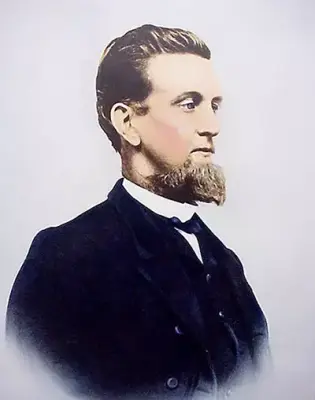
His name was Jon Torsteinson-Rue. He was born in Telemark, Norway, in 1827, came to America at ten, and ended up farming in California. Americans called him John Thompson.
The problem he solved was this. From roughly November to April, the Sierra closed. The settlements over on the Nevada side, in the Carson Valley, were completely cut off from California for five months a year. No mail, no newspapers, no medicine, no word about anything happening anywhere.
In 1856 Thompson read about it and realized that where he came from, this would not have been considered a problem. Norwegians had been crossing deep snow on skis for centuries. Almost nobody in America had ever seen a pair.
So he carved himself some out of oak, working from childhood memory. They were close to ten feet long and weighed twenty five pounds. He used one long pole held in both hands for balance and braking rather than a pair.
In January 1856 he made his first crossing, from Placerville, California to Genoa, Nevada. About ninety miles over the range. Three days going east, two coming back, with fifty to a hundred pounds of mail on his back.
He kept doing it for twenty years.
He carried no blanket, no tent and no gun. When he had to sleep out he built a fire on a flat rock and lay down on pine boughs. He navigated by the stars and by the shape of the country, and he said he was never lost, including in blizzards.
He hauled more than letters. Medicine, newspaper type, supplies, whatever anybody needed. He carried out the first silver ore taken from the Comstock Lode.
In late December of 1856 he came across a man named James Sisson alone in a cabin south of Lake Tahoe. Sisson had been snowbound for twelve days with both legs frozen solid and nothing to eat but raw flour. Thompson built him a fire, cut and stacked wood, skied to Genoa, and came back with six men and a sled.
Then the doctors said they would have to amputate and there was no chloroform anywhere in the valley.
So Thompson crossed the Sierra to Sacramento and crossed back with it. Sisson lived.
He had been told he would be paid a dollar a letter. He was almost never paid anything at all. He had no formal contract with the Post Office Department, and that was the technicality they kept returning to.
In 1869 the Nevada legislature formally petitioned the federal government to pay him about six thousand dollars for work he had already done. Nothing came of it.
So in 1872 he decided to go to Washington and ask Congress himself.
On the way out, his train got stuck in snowdrifts. He got off and walked through the snow to Cheyenne, Wyoming.
He sat in Washington for six weeks waiting on a congressional committee to decide, ran out of money, and went home.
He was never paid. He died on May 15, 1876, at forty nine, of appendicitis that turned into pneumonia, at his ranch in Diamond Valley.
He is buried in Genoa, Nevada, under a headstone with a pair of crossed skis carved into it.
He brought skiing to the American West, carried the mail over a mountain range for twenty winters, and was paid for none of it.