So… your friend has Parkinson’s.
Harrison Ford and Michael J. Fox share advice on how best to be there for someone with Parkinson’s, from navigating changes in handwriting to staying connected and helping counter social isolation.
Learn more about how you can help find a cure for Parkinson’s on our website. https://t.co/BjmqHcfk51
1 of every 4 automobiles sold globally in 2025 was an electric vehicle (EV), and analysts with Bloomberg predict over the next decade, that number will more than double.
China currently makes 75% of all EV's sold worldwide, the U.S. makes around 5%.
https://t.co/kgO3nK6Z8W
"The Trump administration, now Intel’s largest shareholder, has also taken a hands-on approach to the company... This type of state capitalism is unprecedented"
https://t.co/FgtHmgqU0s
The Wall Street Journal Editorial Board tears apart Trump’s tariffs in a blistering editorial:
“The President is right that his tariffs are at work—in destroying U.S. jobs and raising prices. The U.S. has lost some 75,000 manufacturing jobs since January 2025, including 25,900 in motor vehicle and parts production...
there’s no question his tariffs are raising costs for U.S. manufacturers.…Mr. Trump and his advisers claim that foreigners pay his border taxes, but the evidence shows that U.S. companies, workers and consumers are picking up most of the tab.
The Anderson Economic Group estimates that auto tariffs on Canada and Mexico alone added about $1,600 to the cost of each car made in the U.S. last year. While auto makers absorbed some of the Trump tariff costs, they also passed on a large share to customers…Call it the Trump tax.”
Maturing is realizing AJ Brown was just a mercenary who came here and had success.
He’s not a franchise legend, shouldn’t be in the Eagles’ Hall of Fame, or anything of the sort.
Expect to see this from more GOP candidates… Populist promises which will be paid for by eliminating “fraud and abuse.”
On the Dem side, you’ll see similar promises which will be paid for by “taxing billionaires.”
“All gas, no brakes.”
Most of the worst gerrymandering is not even in Democratic states—but this is getting out of hand.
Texas districts stretch 300 miles. Democrats are at least putting it to voters in California and Virginia.
When Trump calls, Republicans follow. If Florida pushes this forward, it is going to get messy, and Republicans will not win
Even as a libertarian, I acknowledge that two of the most life-saving (and cheapest) federal activities have been NIH medical research and fighting AIDS in Africa. Millions of lives saved at a tiny cost.
So of course those are the two activities that Trump successfully targets.
MrBeast: "If you knew what I knew, you could get 10 million subscribers in six months"
"Your videos suck. You think your videos are good, but they suck. They just do. And the sooner you learn how to make good, great videos that people actually want to watch, the sooner you'll get views."
MrBeast shares his early reality:
"When I was 14, I thought my videos were the best in the world. They weren't, they were terrible. To be successful, you kind of have to have a little bit of that ego where you think your content's great. But also, if you have sub-1,000 subscribers, there's a good probability your videos just suck. They just do."
He explains what to do about it:
"You need to make hundreds of videos. Improve something every time. And just get to the point where they don't suck. When you make good content, you'll blow up. It's not the algorithm. It's not anything. Most people who are in my position just made terrible videos, and that's okay. Because you've got to make a bunch of videos and improve over time to be great."
MrBeast uses an analogy:
"You don't just pick up a baseball and become an MLB-level athlete within a year. It takes many, many, many years. YouTube's kind of the same way."
On analysis paralysis:
"A lot of people get analysis paralysis. They'll sit there and plan their first video for three months. If you have zero videos on your channel, your first video is not gonna get views. Period. Your first 10 are not gonna get views. I can very confidently say that. So stop sitting there and thinking for months and months on end. Just get to work and start uploading."
He gives the formula:
"All you need to do is make 100 videos and improve something every time. Do that, and then on your 101st video, we'll start talking. Maybe you can get some views. But your first 100 are gonna suck."
How to improve something each time:
"The second video: put more effort into the script. The third one: learn a new editing trick. The fourth one: figure out a way to have better inflections in your voice. The fifth one: study a new thumbnail tip and implement it. The sixth one: figure out a new title. There's infinite ways. The coloring, the frame rate, the editing, the filming, the production, the jokes, the pacing, every little thing can be improved. There's literally no such thing as a perfect video."
On the algorithm:
"What YouTube wants is for people to click on a video and watch it. That's what it is at its core. By studying the algorithm, you'll learn that you're more studying human psychology. What do humans want to watch?"
MrBeast shares a simple reframe:
"Anytime you say the word 'algorithm,' just replace it with 'audience' and it works perfectly. 'The algorithm didn't like that video?' No, the audience didn't like that video. Literally, that's it. If people are clicking and watching, it gets promoted more. The algorithm just reflects what the people want."
On titles:
"Short, simple, and just so freaking interesting that you have to click. If someone reads it, are they like, do they have to watch it? Is it just so intrinsically interesting that it's gonna haunt them if they don't click?"
He adds nuance:
"Keep it below 50 characters. Above 50 characters, on certain devices it goes dot, dot, dot, and that's the worst thing because then people don't even know what they're clicking on."
MrBeast shares the extremity principle:
"The more extreme the opinion, typically the higher the click-through rate. 'Fiji water sucks', that'd do fine. But 'Fiji water is the worst water I've ever drank in my life', way more extreme, would do way better. But then you have to deliver. The more extreme you are, the more extreme you have to be in the video."
On the first 5 seconds:
"Before you film a video, what is the thumbnail? What is the title? Then what's the first 5 seconds? Then what's the first 30 seconds?"
He explains why autoplay changed everything:
"On YouTube now, videos automatically play. So many people don't even see the thumbnail because it autoplays so quickly. The thumbnail is irrelevant for them. I have to visually convince you to click on the video in the first 5 seconds. Before, the hook was important because you had to convince people to watch. Now you have to convince people to click and watch at the same time, with the first 5 seconds."
On matching expectations:
"Your title and thumbnail set expectations. At the very beginning of the video, to minimize drop-off, you want to assure them that those expectations are being met. If you click on a video called 'Tether is a scam' and at the very beginning, he starts talking about literally anything else, you're like, 'Oh, this is BS. This isn't what I clicked on.' But if at the very start you go, 'Tether is a scam and I'm gonna teach you why,' then it's like, okay, you match the expectations. Then you want to exceed them."
He emphasizes the importance:
"The thing people undervalue the most is literally the first 10 seconds of the video. That 15% difference in viewership between losing 35% of viewers in the first 30 seconds versus losing 20%, that really does make the difference between 2 million views and 10 million views. You just had a more strategic intro that hooked them."
On removing dull moments:
"You basically want to remove every dull moment. Find the 10 most critical people you know, make them watch the video, and just roast it. If I talk to a camera for 10 seconds without a cut, a lot of people will get bored. Having a B-cam and C-cam three seconds in, cutting to a different angle, now it's more interesting even though it's essentially the same thing."
On keeping viewers watching:
"Give them why they clicked. Tell them why they should watch. Then just stick on topic. That right there isn't even super complex, but I would already put you in the upper echelon of YouTube. A lot of people drag it out. It's like, 'I'm going to eat $100 ice cream, but first...' and then it's them birthday shopping for their mom. That's not why I came here."
On quality over quantity:
"It's much easier to get 5 million views on one video than 50,000 views on 100 videos. A lot of small YouTubers just post videos that aren't bad but aren't great, and none of them ever pop off, so they never get an audience. It might be better to upload half or a third or even a fifth of the videos, but make the videos you upload so freaking good that the algorithm has to promote it."
He warns against the consistency trap:
"When you set a consistent schedule and you're constantly having to upload videos that aren't as good as you'd like because you gotta hit 'Oh, this Monday I said I'd upload', that's a dangerous trap. The viewers notice the quality isn't as good and it makes them less likely to watch. I think it hurts your longevity."
On the real metric that matters:
"A big thing that everyone underestimates, what was your experience with your last video? If people loved the last video of yours that they watched, they're more likely to watch your next one. When people watch your video, you don't want them to go, 'Okay, that was good, but that's enough of you for the day.' What you want is them to go, 'Holy crap, that was crazy! Oh my god, what's that?' and they watch 10 videos. That's how you get high view counts. People watch 10 videos, not one."
On thumbnails:
"You want it to be simple. When they're scrolling, you want them to instantly understand what you're conveying and feel some type of emotion. Make it so interesting, or spike their curiosity so much, that if they don't click it, they'll wonder before they go to bed what happened?"
He gives an example:
"If you uploaded 'I rode a skateboard with 1,000 other people on it', and people are falling off the side, it's about to go off a big ramp if you don't click that, you're gonna be so curious. Later in the day, when you're daydreaming, you'll think, 'What happened to those 1,000 people on that skateboard?' That's the mindset you should have when making thumbnails."
On knowledge being the only barrier:
"It's all knowledge. It really is. I could start a new channel tomorrow without using my face or my voice, without ever promoting it, and in six months have 20 million subscribers. I just could. It's purely knowledge. If you knew what I knew, you could get 10 million subscribers no matter where you are right now within six months."
He addresses the skeptics:
"90% of the people watching don't agree with that. Everyone has excuses. 'Nah, YouTube just doesn't work like that, Jimmy.' But I mentor a lot of people. I see it all the time. It is possible. It is simply knowledge. The second you accept that it is knowledge and you start your journey of learning figuring out what makes a good video, what does my audience want, how can I elevate and then you take that knowledge and just assume 'I will never understand what the perfect video is' and every single day be devoted to learning and improving as much as possible there you go."
On money not being the barrier:
"There are tons of viral ideas that don't require money. It does not require money to go viral. One of my most-viewed videos was spending 24 hours in a desert, we just grabbed a tent and some stuff and went to the desert. It got 60-70 million views. People say, 'I could be MrBeast if I had money.' A, I didn't start off with money; I was poor, I had no money. It took me seven years just to buy a camera saving up from YouTube. And B, some of our most-viewed videos literally anyone can do."
On why no one will outwork him:
"No one's ever gonna do what I do better than me. It's just not humanly possible. I reinvest every penny I make. I work every hour I'm awake. I devote every atom in my brain to solving this. I hire the best people on the planet. I've been doing this for 14 years. And I think in decades, not years. I'm gonna be doing this for another 20-30 years. If I thought someone was doing better than me, I'd just start sleeping less so I could work even more."
But he doesn't recommend it:
"I don't have a life. I don't have work-life balance. My personality, my soul, my being is making the best videos possible. That is why I exist on this planet. And I don't recommend it. You should have work-life balance. You should not devote your entire life to this one thing. I have a mental breakdown every other week because I push myself so hard. I don't recommend it."
The only question that matters:
"Subscribers don't matter. Views don't matter. I mean, they do. But everything you want as a creator comes from making the best videos possible and thumbnails. The video part's the hard part. Ask: 'How can I make my videos better?' Do that every single day for years. And then you'll probably get views."
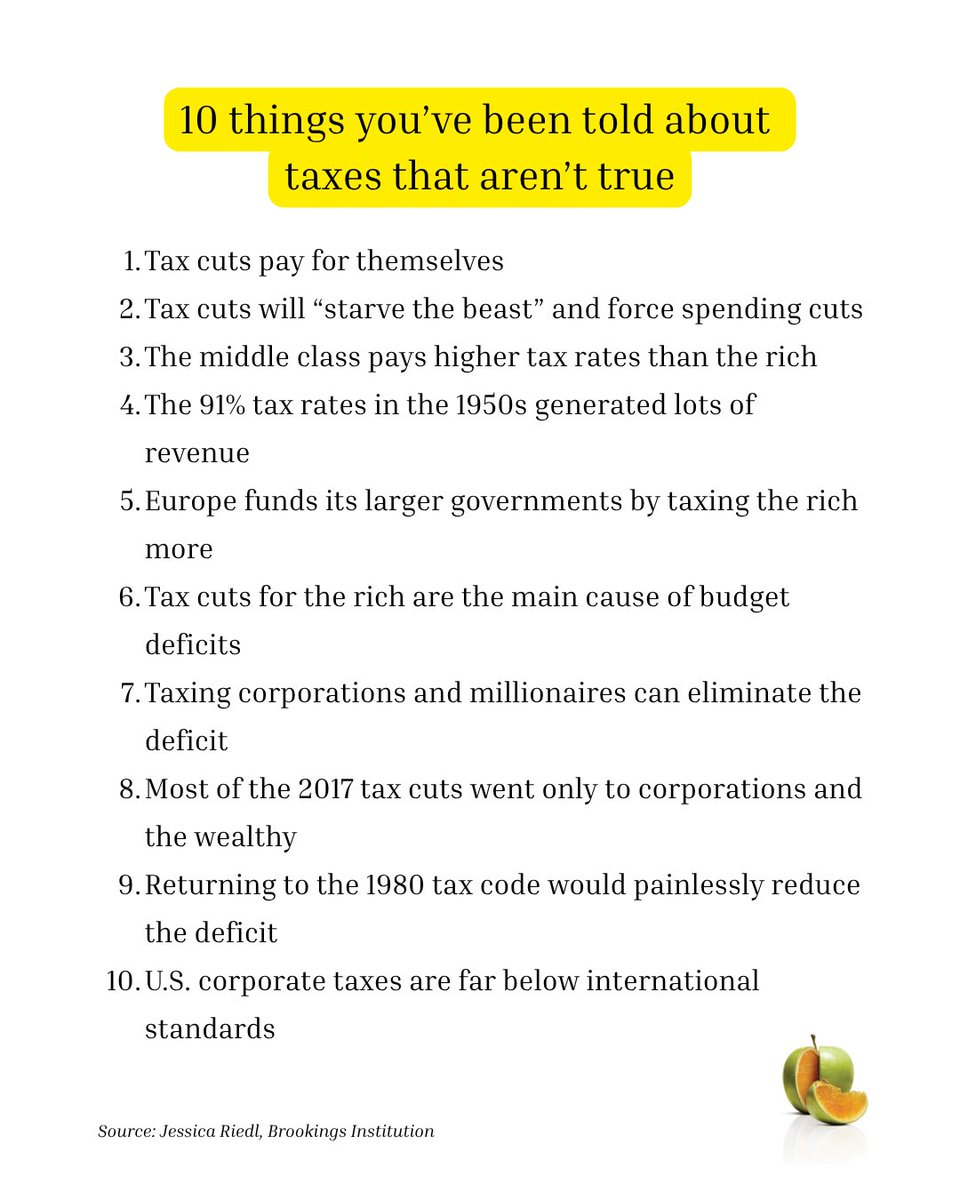
Tax day is nearly here and a lot of what we think we know about taxes … isn’t quite right.
In this episode, we break down 10 of the most common tax myths in the U.S., based on research by Jessica Riedl of the Brookings Institution.
And look at what the data actually shows.
Listen now wherever you get your podcasts.
https://t.co/MYS3dkTMJl
So far, President Trump has achieved few of his desired results in Iran, and the geopolitical costs are mounting.
Has any US military action ever racked up so many costs for so few gains?
My take:
“Why California gas costs more: Higher taxes, labor and business costs, combined with environmental programs, regulations, and the state's unique fuel blend, drive up baseline prices.”
Charlie Munger on how to succeed:
“It’s so simple: you spend less than you earn. Invest shrewdly. Avoid toxic people and toxic activities. Try to keep learning all your life. And do a lot of deferred gratification. If you do all those things, you are almost certain to succeed. And if you don’t, you’ll need a lot of luck. And you don’t want to need a lot of luck. You want to go into a game where you’re very likely to win without having any unusual luck.”
And, finally, a comparison of fiscal records of the past 4 presidents using identical methodology that focuses on bills and executive orders signed - rather than deficit changes driven by less-controllable economic & technical factors.
Here is what’s really going on with regard to the funding stalemate in Congress.
ICE agents shot and killed two U.S. citizens on the streets of Minneapolis.
Democrats then said: before we write you another check, agree to the same rules every police department in America already follows. Judicial warrants before entering homes. Visible ID. Body cameras. No raids at schools and hospitals.
We immediately pushed for votes to fund TSA, the Coast Guard, and FEMA.
Republicans blocked it.
We tried to fund FEMA alone.
Republicans blocked that too. Their position was to fund ICE with no strings attached, or shut the whole thing down.
So DHS shut down.
Then yesterday, the White House sent a letter admitting we were right. But they still won’t agree to judicial warrants or to take the masks off, which means agents can still break down your door without a judge’s approval and you still can’t see their faces when they do it.
We’ve been ready to fund your airport security since day one, not to mention Coast Guard, FEMA and the rest. Republicans chose to protect ICE from accountability instead.
#FundDHSFreezeICE