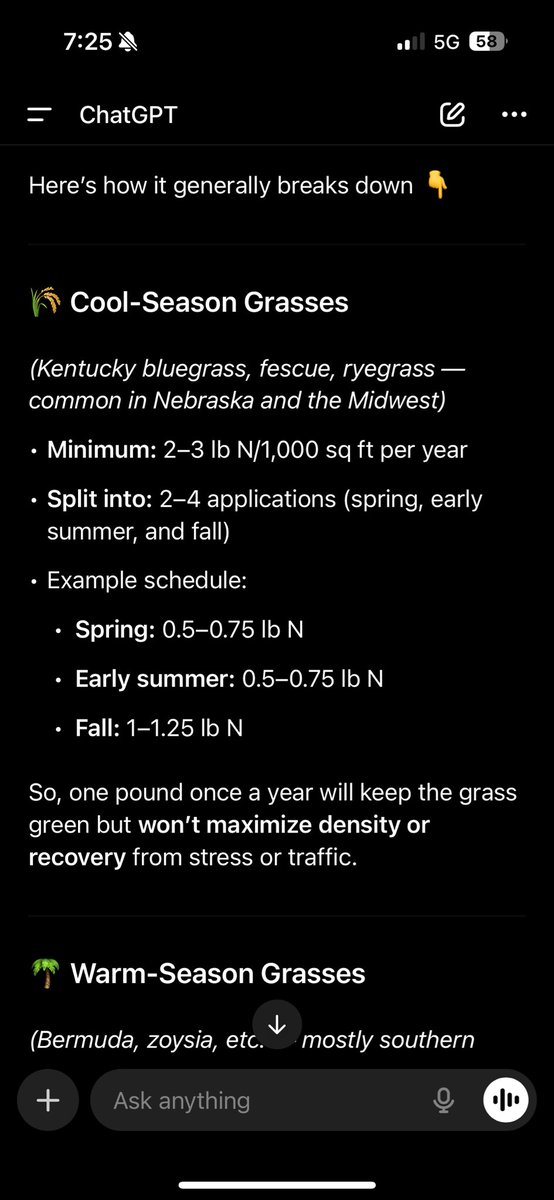
@LEAADFarms@DschaeferDaniel I’m with Cale on this one. 156#/a per 1# rec. So 312-468#/a applied over the top, fair amount in the spring where 1 spring rain takes it to the curb. Not to mention, for the average homeowner applied with an uncalibrated spreader and making a bag(s) empty. I think that’s his pt.
@5150Farms I’ve never been able to make that “calmer” setting work as advertised. 17-20 on chaffer, 12-15 sieve. Always max fan in corn. Rotor and concave look good for red cob depending on moisture
@Bkitch1Bodie Constructive criticism- I could replace biology with Ben’s special soil sauce and the post means the same. Without data there is no validity. I am a BW user and I actually believe your numbers.. I just don’t think you’re going to convince a soul using this angle.
@DDFalpha@LakefrontFuture This makes June look like doom and gloom. 21 and 22 were within 10 and 17c of their tops in June, 23 made its high in June. Plenty to be optimistic about. That said- statistically if we’re in the back half of June with no rally, you probably need to be selling anyways.
@blakealbers Received my order last night. This is going to make meal prep during planting so easy! From ordering to the product itself- top notch. Well done.
@Jaren_Schley Most of NE is probably guilty of this. We are, but the thought of fertigating every pass on every field is my worst nightmare. lol what’s the best strategy to address the irrigation water? Product?
@LouieDN Worked on plenty of 10k+ that were going strong yet. Actually preferred working on them, easy to get at everything. Keep the tracks centered and out of the mud. If you’re going to run over stalks build something that will lay the stalk over before the track hits.
@steeke7@Agronomy365 I would agree. We’re mainly irrigated so we can control that variable, but we’re finding bicarbs are presenting challenges we hadn’t realized before.
@steeke7 Since you asked- I compared our fall zone samples with @Agronomy365 to our last corn yield on a higher managed field. Zone 1 the highest producing, had the following values compared to zone 3-4. 20% better C:N, Vast was double, Weoc 15% higher, h3a K 25% higher. Coincidence?
@steeke7 That is something we are tracking now. This particular example was dryland vs irrigated, just wanted to make the point that year that the crop is not finished just because it pollinated and you have good kernel counts.
@steeke7 Over 100bu difference in those ears. But, to your point, this can happen in the same field under similar conditions with other stresses/limitations that give the same result.
@jasonpeter 100% agree. Teaching young men right out of the gate commitments don’t matter, grass is always greener, and jump ship when things get hard will not end well. What happens as they become husbands and fathers? F that up, and theres no amount of money that will fix it.
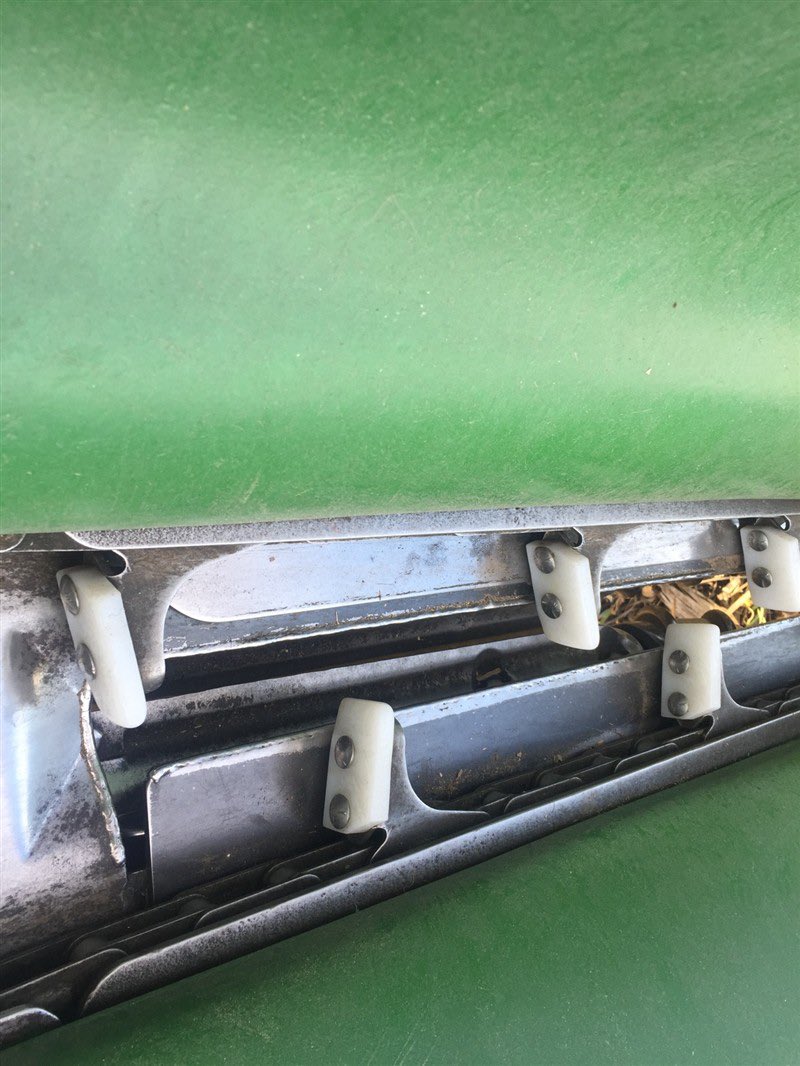
@MdMcLean1 Lundell makes poly paddles that bolt onto to the gathering chain lugs. All but cured the problem for us. Fought this in the afternoon for years and now we just replace the paddles before the season and get along great. Only run 2 paddles per chain but could run on all if needed.
@LeCroneFarms Lundell makes plastic paddles you can bolt onto the gathering chain lugs. We run 2 paddles per chain and it has drastically improved feeding in dry conditions. Something like $1.50 per paddle.
@Bkitch1Bodie@Bradley_McVey Fields we had in the program this year with K apps both H3A numbers are labeled- very high. Unfortunately hail damage is going to ruin our trial data
@Bkitch1Bodie@Bradley_McVey I would say our area is more comparable to you. A lot of 3% k, 18%mg. 300-400ppm k so we’re told we don’t need any. Soils are clay heavy and very tight.
@Bkitch1Bodie@Bradley_McVey Great info. Appreciate you sharing. Most around us (SC NE) have high soil K and are told K isn’t needed. Finding additional K is still a yield benefit and mostly fall applied. Interested in trying some different timings.