@GHadjia Thanks George, good read appreciate you making it free. If custom ASICs from Google, Meta and Amazon are designed to reduce Nvidia dependency, how confident are you that the CoWoS capacity allocation to Nvidia holds through the Rubin cycle? Any update on your thinking since Nov?
$META got warrants of $AMD for up to 160M shares at just $0.01 strike. This was part of its AI GPU deal (6GW).
At AMD share price of $420, theoretical value is ~$67.2B. ($420*160m)
Impressive when you take into account the META | AMD AI deal was to sell up to $60b worth of chips.
$META's $AMD vest in tranches: first after 1GW of GPUs shipped, then more as they scale to 6GW total. Each also needs escalating AMD stock hurdles (final at $600) + technical milestones. https://t.co/9oAPFNykRr
@BMSInvests Consistency launching balloons outside of Tuscan climate. But tbh their engineering has been very good, whenever problems have come up they have been able to redesign and redeploy.
From my perspective the market is mispricing the autonomous vehicle risk for Uber. AV is looking like a tailwind for them. The AV market is looking segmented with a number of players which uber have partnered with.
Uber is targeting commercial AV operation in 10+ cities by end 2026, Uber x Waymo partnership is strong and best in class, Nvidia’s recently launched open-source Alpamayo AV model accelerates development lead-times and broadens access to AV technology and Tesla FSD still under development; potential for future win-win partnerships remain.
Financially AV allows for large margin expansion, currently Uber’s take rate on passenger trips is approximately 27%. If AVs replace drivers at scale, the take rate could increase materially to over 50%.
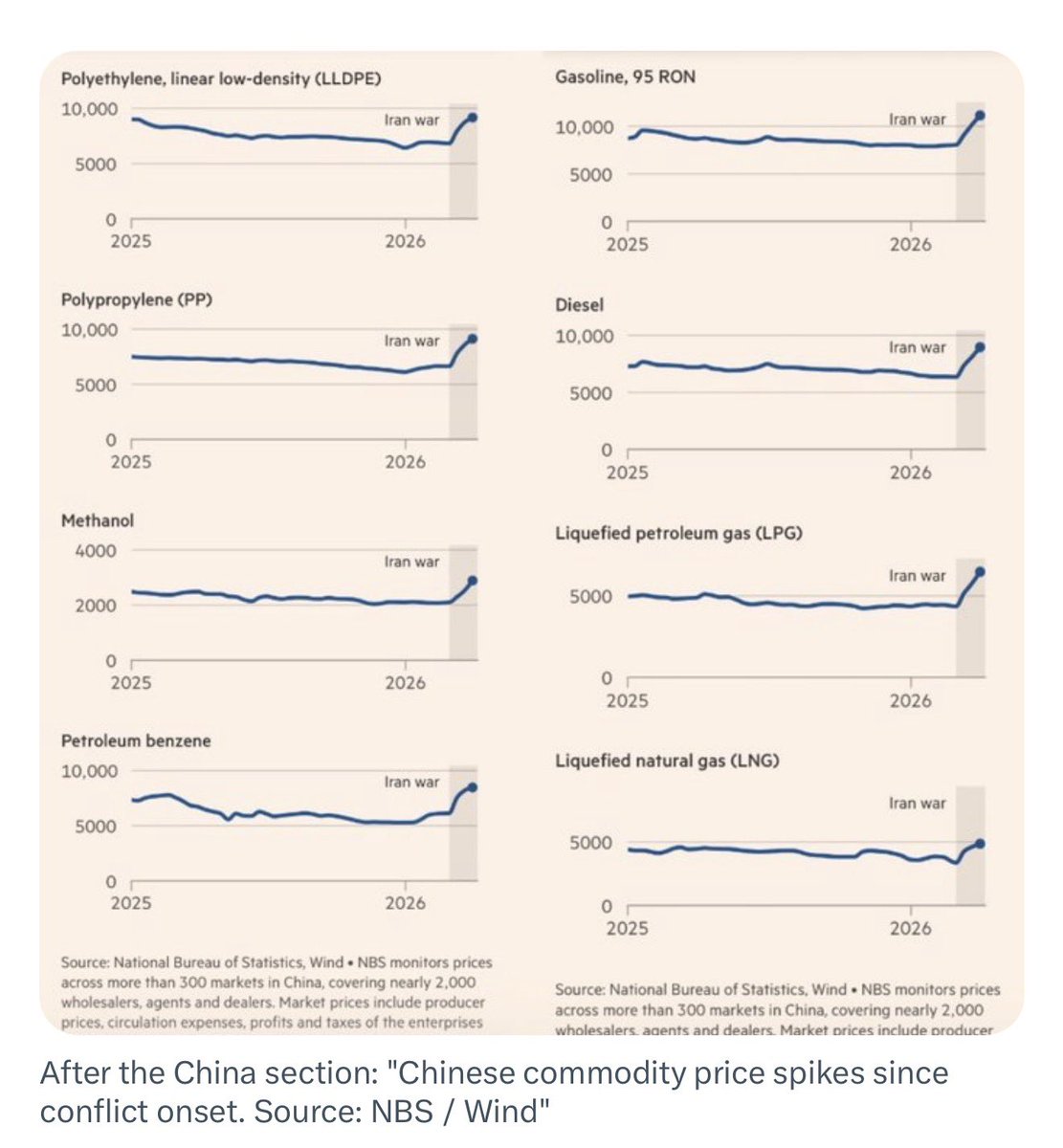
China might be feeling the pressure, supply chains across Chinese industries are under acute strain. Prices in China have doubled for some polyethylenes.
“Cameron Johnson, a senior partner at Shanghai supply chain consultancy Tidalwave Solutions, warned that the supply disruptions could be “worse” than during the Covid-19 pandemic.
He said that prices in China had doubled for some polyethylenes, disrupting the market for materials needed to make everything from plastic bags and bottles to clothing and toys. Prices for some carbon fibres, which rely on some feedstocks from the Middle East and are widely used across the auto and consumer goods industries, had risen 20 per cent, he added. “It’s all the raw inputs — particularly anything that might be imported or where there’s already tight supply,” Johnson said. “It’s scarcity, it’s supply tightness, it’s a lack of visibility when things will be turned back on.”
Before the start of the Iran war, China relied on the Middle East for about one-third of its oil and 25 per cent of its gas imports. The region is also a key source of methanol, polyethylene and sulphur, among other petrochemical and agricultural commodities.” https://t.co/hZsyBO3OGJ