If Mr. Saturday Night scores in game 6 vs Buffalo, we are giving away an official jersey!
Follow @thesickpodcasts, retweet and comment "SICK" to enter!
#thesickpodcast@TonyMarinaro
🚨HABS TICKET GIVEAWAY🚨
We are giving a pair of tickets to the Habs vs Senators game on March 11th in partnership with Betway Canada!
TO ENTER:
1. Follow @thesickpodcasts & @betwaycanada
2. RT this post
3. Comment SICK
Winner will be announced on March 9th.
#thesickpodcast
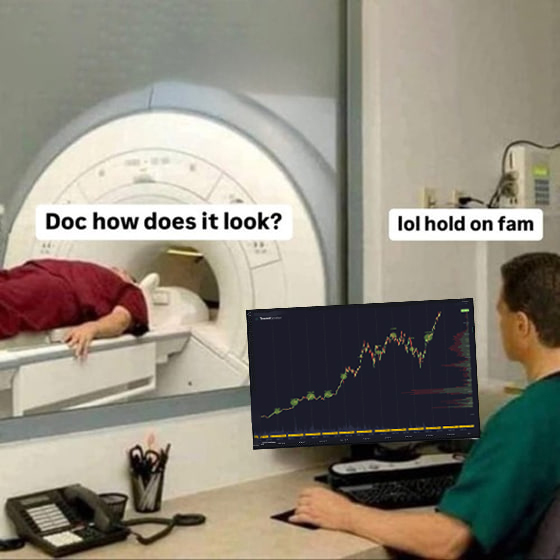
🚨 GIVEAWAY: Doctor says your charts need an MRI.
Like + repost by 12/21 at midnight for a chance to win:
🎁 1Y TrendSpider Advanced
🎁 1Y TrendSpider Enhanced
🎁 1Y TrendSpider Premium
🎁 1Q TrendSpider Premium
Holiday Sale is live, save up to 66% → https://t.co/yIGC6ujn8m
Tomorrow night, the #GoHabsGo play at 10:30PM ET. It will end at around 1:15AM ET.
SICK Army, you will decide if we have a post-game show tomorrow night.
If we get 115+ retweets, we will go LIVE after the game!
#thesickpodcast@TonyMarinaro
For those who don't know - from @grok; In professional hockey, "ATO" stands for **Amateur Tryout Agreement**. It’s a type of contract used in leagues like the NHL, AHL (American Hockey League), and ECHL (East Coast Hockey League) that allows amateur players—typically those coming from college, junior leagues, or other non-professional levels—to join a professional team on a temporary basis without immediately committing to a full professional contract.
Here’s how it works in context:
- **Purpose**: An ATO gives teams a chance to evaluate an amateur player’s skills in a professional setting, often at the end of a season when college or junior schedules conclude. It’s a low-risk way for teams to test talent and for players to gain experience or exposure.
- **Eligibility**: It’s designed for players who haven’t played professionally yet, such as college athletes who’ve completed their NCAA eligibility or junior league players transitioning to the pros.
- **Duration and Terms**: In the AHL, an ATO doesn’t have a strict game limit like a Professional Tryout (PTO), but it’s typically short-term, often lasting until the end of the current season or playoffs. In the NHL, ATOs are more restrictive—usually a one-day emergency deal with no pay for skaters, often used for goaltenders when injuries or emergencies arise.
- **Flexibility**: Players on an ATO retain their amateur status to some extent, meaning they can return to junior or college hockey if eligible, or they can sign a full professional contract (like an NHL Entry-Level Contract or AHL Standard Player Contract) if they impress.
For example, a college player might sign an ATO with an AHL team in March or April after their NCAA season ends, play a handful of games, and then potentially sign a pro deal for the next season. In the NHL, you might see an ATO used in rare cases, like when a team signs an emergency backup goaltender (EBUG) for a game due to injuries.
It’s distinct from a **PTO (Professional Tryout)**, which is for players with prior professional experience and has a 25-game limit in the AHL. The ATO is all about giving untested talent a shot without a long-term commitment.
No shade to @MarkRober.
This is a GREAT YouTube video.
But it's also RETARDED engineering!
And in this case, it's a DEADLY example of a real world mistake that is costing thousands of lives every year.
It also shows off @elonmusk's INCREDIBLE ability to think from first principles.
How?
Great question.
The problem here is that it is way too easy to create a weird, and frankly stupid, test and then make important engineering decision without ever asking if the test made any sense in the first place.
And it's a perfect example of how stupid 99.9% of engineers are, myself included.
The important question is, "what percentage of fatal traffic accidents are caused by heavy fog, hurricane level rains, or cartoon walls??
While fog is dangerous, the obvious answer is almost none.
The top three causes of road fatalities by far are speeding, drunk driving, and distracted driving.
So any driver assistance technology that is serious about reducing traffic deaths must be aimed squarely at these three problems.
And the technology that will save the most lives is the technology that will have the biggest impact on these three things the fastest.
When you stop and consider this fact, the idea that you would use a test like Mark's to decide which technology to build a self-driving system on top of becomes hilariously stupid.
And yet, it is exactly this type of logic that has imprisoned almost every other autonomous vehicle project besides @tesla.
It's a classic example of letting perfect become the enemy of the good.
And in this case, slowing down the good costs thousands of lives due to unnecessary traffic accidents every year. Not to mention all of the pain & suffering caused by non-fatal car crashes.
So while it's super easy to create a weird test of cherry picked scenarios where LiDAR looks like the clear winner, the real question which most fail to ask is, "which system would save the most lives in the real life?"
This is where Elon's genius shines through.
He understood many years ago that a cheaper solution would be able to scale much farther and much faster.
This scale matters!
Even if the camera based solution is only 80% as good at all of the things LiDAR can do, but it can get into way more cars, on way more roads, way faster, it would save WAY MORE lives.
In reality, the cameras are probably more like 95%+ as good as LiDAR for real world collision avoidance.
So while tests like these make for great entertainment on YouTube, don't ever trust an engineer who uses similar logic to justify why their imaginary self driving car project has to have 10,000 LiDARs.