With 52 new #Freemen and 28 #Liverymen admitted from 10 different countries in 2022/23, the Company's #goals could not be in better hands🎉 This growth is all thanks to the hard work of our amazing members and their commitment to #vision. #NobodyLeftBehind#BetterVisionForAll.
Elon Musk fired 6,500 employees at Twitter.
A little birdie told me it's down to:
- 2 designers
- 6 iOS developers
- 20 web developers
- Around 1,400 sales and operations people
How is it possible that we are still using this website?
Two words:
Parkinson's Law.
Have you ever wondered why seemingly simple tech companies have tens of thousands of employees?
Sometimes, it's because they have huge sales forces or tech support/operations people.
But often it's also due to Parkinson's Law.
Parkinson's law is like lighter fluid for bureaucracy.
It's a business tapeworm that slowly eats away at companies, making them less and less efficient and innovative over time.
Parkinson's Law is the idea that the work will generally expand to the amount of time, budget, and number of people allocated to it, and no matter how many people you allocate to it, those people will feel busy.
They'll feel busy because, due to the excess time/slack in the system, they'll start focusing on less and less important tasks.
Here's how it manifests on an individual level:
Let's say you have a report due in a week.
The report might only take you around five hours to finish if you really focus and work efficiently. However, because you know you have a week to complete it, you might find yourself spending a lot more time on it than you need to.
You'll be more prone to distractions, take longer breaks, or perhaps decide to add more details, tables, graphs, and so forth.
Essentially, the task becomes more complex and time-consuming purely because you have more time in which to do it.
And here's how it manifests across organizations:
Imagine a big tech company. A social media company with various departments. Each department has tasks that it must complete to contribute to the overall productivity of the company.
Now, suppose each department is given a budget and a set amount of time to complete its tasks for the year.
According to Parkinson's Law, each department will use its entire budget and the entire allotted time, even if the tasks could have been completed more efficiently.
This is because as resources and time increase, departments tend to become more complex and less efficient.
For example, a department might add more steps to its procedures, requiring more approvals and creating more paperwork, which slows down the process.
Or it might use the full budget on additional personnel or equipment that doesn't necessarily improve productivity.
The department might also use the full budget to justify the same or larger budget for the next year, since budgets in many organizations are often determined based on the previous year's spending.
This is a phenomenon known as "budget padding" or "spend it or lose it" mentality.
Inefficiencies can also develop in staff allocation. If a department expands, it might add managerial positions that aren't strictly necessary.
More employees are hired to manage, creating layers of bureaucracy that may not contribute to productivity and can even slow decision-making.
I have seen this occur over and over again in my career. The larger the team, the larger the budget, the longer the timeline, the less gets accomplished.
I'm very curious to see how many more tech companies come to this realization.
So often, good times + revenue growth = Parkinson's Law.
Enjoyed many excellent presentations at @ASCRStweets during the keratoconus session! Please see below links for details on Dr. Cynthia Matossian, & Dr. William Trattler's presentations.
https://t.co/DfIQeTIE4G
https://t.co/AoN6mrFWRy
#ascrs2023#keratoconus#genetictesting
"The problem is if we don't catch it early, and it progresses, that's where our patients really start to struggle from a quality of life standpoint," says Justin Schweitzer, OD, at the IKA Keratoconus Symposium.
Watch the full interview here: https://t.co/UcxWinWN6s
President and CEO of the International Keratoconus Academy Andrew Morgenstern shares some snippets about the live white paper development session and the patient Q&A at the inaugural IKA Keratoconus Symposium. #keratoconus#IKA
Watch here: https://t.co/cbsRfjgKmE
Our CSO, Susan (Siw) Daniels, was recently featured in @OphthoMag Power List 2023! Follow the link below to learn more about Siw's innovative work & join us in celebrating all the incredible ophthalmologists on this prestigious list!
https://t.co/OPh6wTUsHC
#TOPowerList2023
Excited to be at #YMDCLive in Austin, Texas! Thank you, @YoungMDConnect, for a wonderful event. We are having a blast with so many current and future leaders in Ophthalmology!
#Avellino#eyecare
It was a pleasure to attend and sponsor the American Glaucoma Society meeting this past weekend. It was great to connect with colleagues, friends and leaders, all with the common goal of revolutionizing #glaucoma care. Thank you to the AGS team for hosting such a special meeting!
Our team had an excellent time at AECOS (American-European Congress of Ophthalmic Surgery) Aspen meeting! It was exciting to hear about the latest #innovation in eye care. We appreciate the fantastic team that makes this meeting possible!
#AECOS2023
We are looking forward to the Glaucoma 360 New Horizons Forum tomorrow, where our very own Susan Daniels will be presenting on behalf of #Avellino on the topic of #Genetics & #Glaucoma. See you there!
Learn more & register at: https://t.co/3tNAA5QO1f
#Glaucoma360#innovation
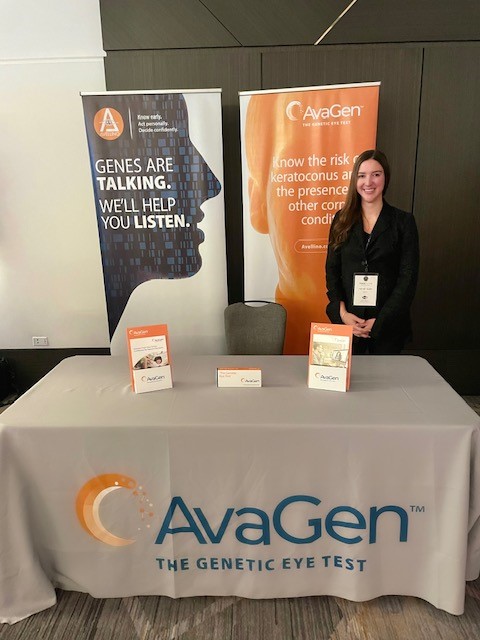
We are excited to sponsor and attend this year’s #HawaiianEyeMeeting! The Avellino Team is looking forward to connecting with friends and colleagues to learn more about the latest innovations in #eyecare. Be sure to stop by booth # 704!
#Avellino#genetictesting
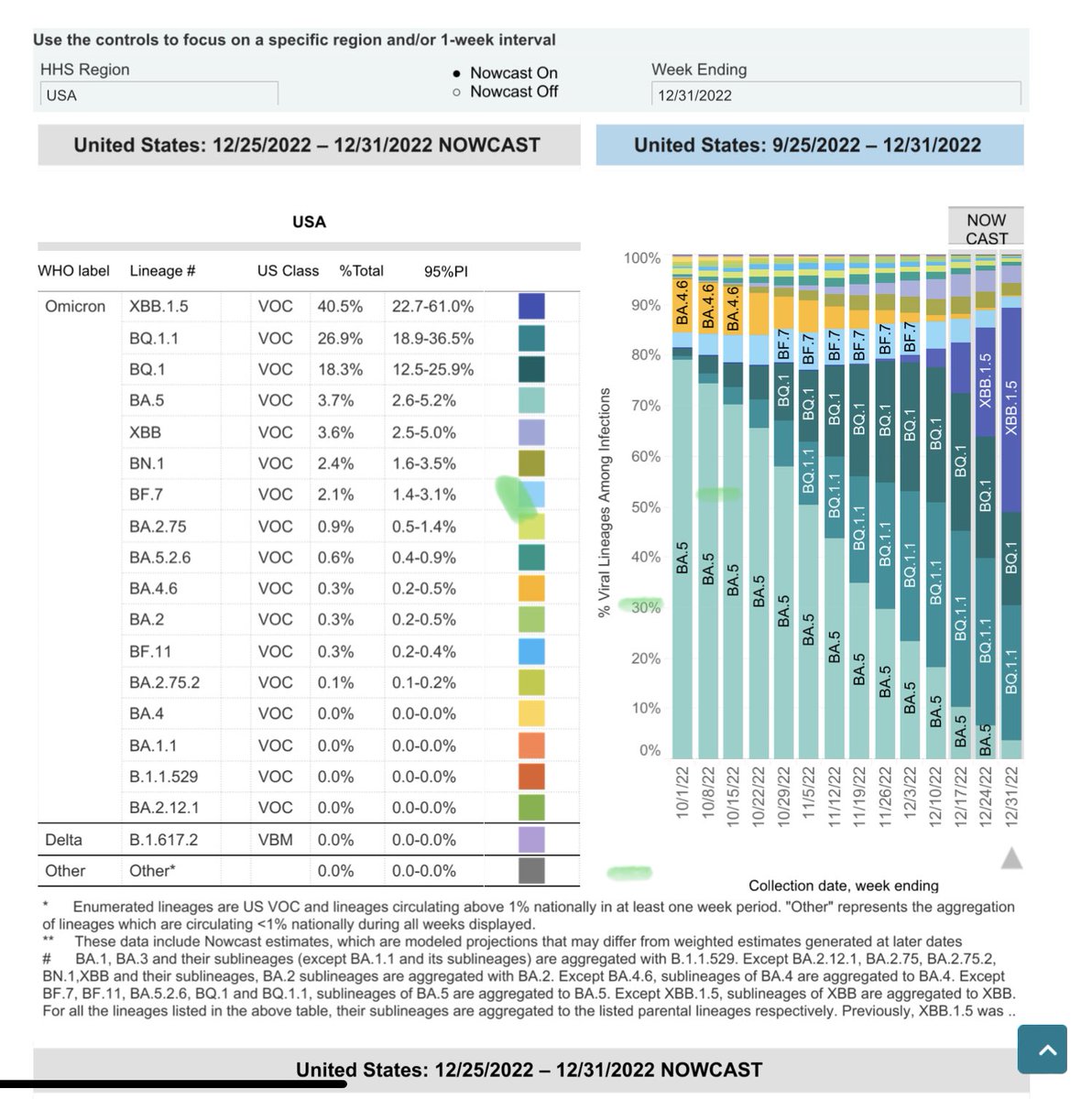
A functional @CDCgov would alert the public about the XBB.1.5 variant—which has already established dominance throughout the Northeast—and, with its big growth advantage over BQ.1.1, soon country-wide.