International Trade and Development, Regional Integration, Trade Governance. Thinking and Writing Trade Law and Trade Policy @TradeLawCentre and @dev_dispatch
Nairobi is projected to become Africa's largest megacity by 2050, with its population expected to reach 57 million, according to Africapolis, due to rapid urbanisation.
The city is set to overtake Cairo and Lagos to become the continent's most populous metropolitan area.
Kenya today officially dispatched the first of 20 containers of premium green coffee beans to Trieste Port,Italy opening a new chapter for Kenyan coffee in premium international markets.
The inaugural shipment by
@Sumseron_Coffee marked a significant milestone for Kenya in expanding its global trade footprint in Europe’s third-largest coffee consumer, with a market valued at approximately Sh500 billion.
Principal Secretary for Trade Regina Ombam joined her counterpart Principal Secretary for @Ushirika_Kenya@Patrickkilemi at @mitchellcottske during the official dispatch.
Speaking during the event, PS Ombam described the milestone as a testament to the resilience of Kenya’s coffee sector and the country’s unwavering commitment to producing high-quality products that meet international standards.
She reaffirmed the State Department’s commitment to expanding market access for Kenyan coffee through strategic trade engagements, including the Early Harvest Arrangement with China, while pursuing new export opportunities in Japan, Algeria, Kazakhstan and other key markets.
The PS further noted that Kenya is leveraging the African Continental Free Trade Area (AfCFTA) to unlock greater opportunities for coffee exports across the continent, as part of the government’s broader agenda to diversify export destinations and increase returns for farmers.
@lizwala is honoured to be the Chief Guest at the Vihiga County Champions Cup this Saturday, 18th July, at Kigama Grounds. My thanks to Kigama FC and the Organising Committee for championing youth talent and healthy lifestyles.
See you there as we cheer on our teams ⚽🏆
@lizwala is honoured to be the Chief Guest at the Vihiga County Champions Cup this Saturday, 18th July, at Kigama Grounds. My thanks to Kigama FC and the Organising Committee for championing youth talent and healthy lifestyles.
See you there as we cheer on our teams ⚽🏆
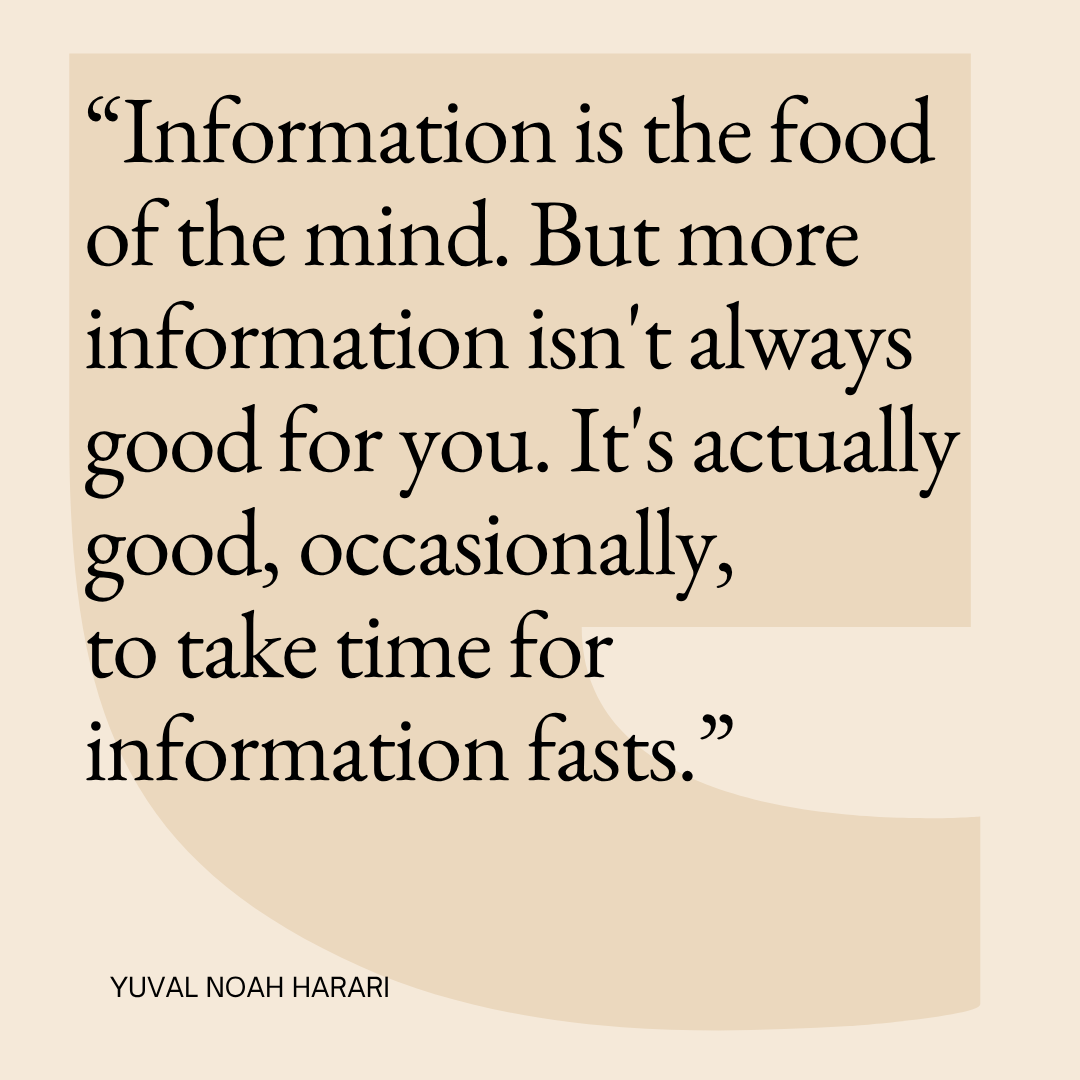
When we stop force-feeding our minds, we have the opportunity to digest and detoxify. We should also be careful about the quality of information we consume. A bad diet is bad for you in more ways than one.
Protect Dangote with his investments at all costs. Kenya must move forward. Kenyans are poorer because they are consuming more than they can manufacture. Kenya needs more factories, more industries and more production, not court orders.
People defend capitalism because they confuse it with commerce. They believe “capitalism” is when people start businesses and sell things.
If people understood that the thing they call capitalism and love so much is actually just commerce and that it’s not the same thing as capitalism, they would feel very different.
This is because a local baker selling bread, a mechanic fixing cars, or an artisan selling wares on a digital storefront is a sign of commerce in a market economy, which is simply a mechanism for exchanging goods and services based on supply and demand.
Needless to say, this has existed for thousands of years before capitalism was created.
As economic historian Fernand Braudel pointed out, commerce and capitalism are not only distinct; but historically, they have often operated at cross-purposes.
According to Braudel, ordinary commerce is competitive and transparent, while capitalism is anti-competitive and deliberately opaque, making it a zone of privilege held by a small elite who bend the rules in their favour.
Braudel further argues that commerce, or the market, is horizontal, transparent, and competitive and as old as civilization itself. It involves individuals or small groups trading goods, where barriers to entry are low, no single player dominates, and profit is a reward for fulfilling a specific need.
Capitalism, meanwhile, is a specific institutional arrangement that emerged relatively recently in human history, around the 16th to 17th centuries. It is NOT just people “trading stuff”. It is instead the legal and financial system where the means of production are privately owned, and the primary objective is the continuous, infinite accumulation of capital.
Because of this accumulation-obssessed nature of capitalism, when it scales up, it seeks to eliminate the free play of commerce to protect its investments. True market competition is risky for massive capital as it drives prices down and threatens profit margins.
Braudel contended that capitalism only begins where commerce ends. It is the zone of high finance and state collusion. Because it operates across vast distances such as the 17th-century spice trade, information takes months to travel, which creates a deliberate lack of transparency.
Braudel noted that the great capitalists of the early modern era in Madeira and Venice or the Dutch East India Company, never wanted to compete in a fair, transparent market because competition slices profit margins to the bone. Instead, they secured royal charters, exclusive trading rights, and naval protection. At the same time, the state granted them legal monopolies, effectively outlawing competition.
Therefore, capitalism naturally trends toward creating monopolies and securing state interventions like bailouts, subsidies, and regulatory capture to shield itself from the very market forces it claims to champion. In fact, the most important takeaway from Braudel’s analysis is that capitalism is NOT the natural evolution or the highest form of the free market, it is its dark shadow.
So, when our lizard overlords use “free market” and “capitalism” interchangeably, they’re deliberately hiding this distinction and using the moral legitimacy of the hard-working, transparent business owner to defend the structural privileges of the protected financial elite and its regulatory capture.
If ordinary people could comprehend these distinctions, many self-described “capitalists” would realise they are just pro-commerce, and actually anti-capitalist, because it would be clear that defending “capitalism” means defending the right of a small parasite class to bypass the market entirely.
The wildest part about POVERTY is how much time it steals. Waiting for buses. Calling assistance offices. Comparing grocery prices. Fighting insurance. Sitting at laundromats. Being poor is a second job nobody pays you for.
Africa's Leading Countries in Startup Funding in 2025
1. Kenya 🇰🇪 - $1.04 billion
2. South Africa 🇿🇦 -$720 million
3. Egypt 🇪🇬 - $600 million
4. Nigeria 🇳🇬 - $570 million
🇰🇪||💻 Nairobi is officially leading as Africa's tech hub.
Kenya raised $1.04 billion in startup funding in 2025, outperforming South Africa, Egypt, and Nigeria.
Startup Funding in 2025:
🥇 🇰🇪 Kenya: $1.04B
🥈 🇿🇦 South Africa: $720M
🥉 🇪🇬 Egypt: $600M
4️⃣ 🇳🇬 Nigeria: $570M
Kenya attracted 44% more startup funding than South Africa and nearly double the amount raised by Nigeria.
With Nairobi at the heart of this growth, the city continues to lead Africa in fintech, clean energy, AI, and technology investment, attracting innovators and investors from around the world.
kenyans are not just building startups they are building an economy the world believes in.
Aliko Dangote has revealed how he plans to finance his proposed $17 billion (about Sh2.2 trillion) oil refinery in Kenya.
Here's an explanation of how he plans to do it.
Save the thread below:
China, which is challenging the US for control of the global world order, has released it's first white paper on the principles of global governance it is willing to commit to
https://t.co/Ip3DHTsRLG
An interesting document - to say the least.
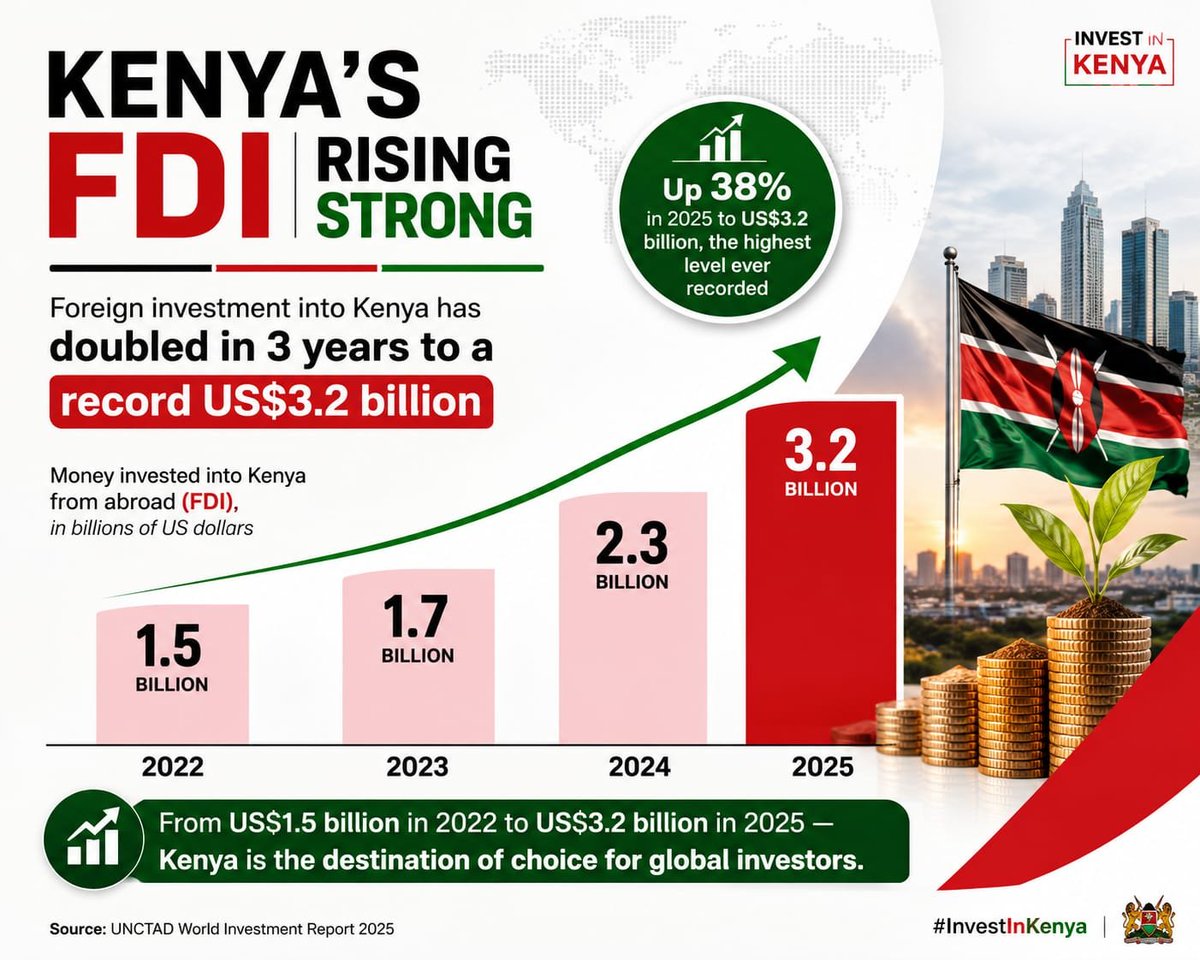
The latest United Nations Conference on Trade and Development's World Investment Report 2026 confirms what Kenyans are building: An economy the world believes in.
Foreign direct investment has more than doubled since 2022, rising from $1.5 billion to $3.2 billion in 2025, the highest FDI ever.
Meanwhile, our total stock of foreign investment now stands above $12 billion.
This is a clear vote of confidence in Kenya's future. The momentum is driven by our fastest-moving sectors: Development of clean geothermal energy and digital infrastructure, financial services, and manufacturing.
This very positive economic outlook is anchored by a stable shilling, a rallying stock market, and bold reforms, including our privatisation agenda, that is opening new doors for private capital.
Investor confidence in Kenya has never been higher. The best is yet to come.
Aid to sub-Saharan Africa is falling fast—and this time is different. Cuts are large, broad, and driven by donor decisions, not domestic conditions. For countries with limited fiscal space, there are no easy options. IMF analysis explains the trade-offs.
https://t.co/8WUovVFE38
Dangote Industries has revealed that its planned oil refinery for East Africa will be set up in Kenya and will have the capacity to refine 700,000 barrels of crude oil per day.
The announcement was made by Dangote Industries' Group Vice President for Oil and Gas, Devakumar Edwin, who said the Kenyan plant forms part of the company's Africa expansion strategy.
The proposed refinery, estimated to cost Ksh2.2 trillion, is expected to supply refined fuel to Kenya, Uganda, Tanzania, South Sudan and other East African markets, reducing the region's dependence on imported petroleum products.
The project was initially planned for Tanzania's Tanga Port, but Dangote shifted the investment to Kenya, citing better infrastructure, stronger market demand and more favourable maritime logistics.
The refinery is expected to be built in either Mombasa or Lamu, with the final location yet to be confirmed.