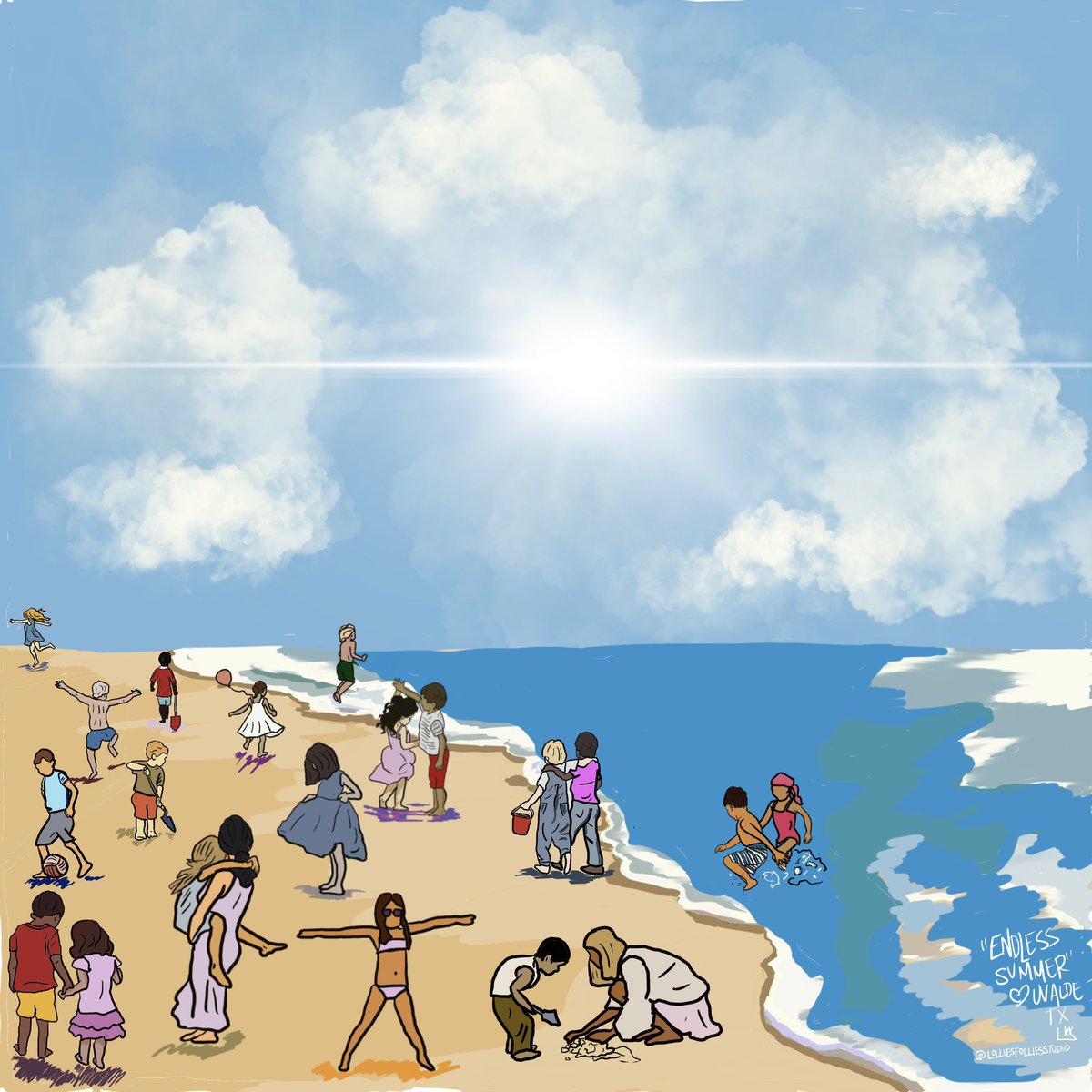
I found this on my iPad today - drawn exactly a year ago. I drew it after I left the Senate Committee on Education, feeling everything we all felt after hearing of #Uvalde - despair, hurt, hopelessness.
This was my hope for the angels who are no longer among us. #txlege
What if you had a governor who punished #txed by withholding critical funding increases and much-deserved teacher pay raises—while sitting on a $30 billion plus budget surplus—because #txlege wouldn’t give him a voucher plan to placate his national handlers?
In fact, you do.
This session, we prioritized maternal health to improve outcomes for pregnant women in Texas. Happy to announce that my bill, HB 852 the “MMMRC Composition” bill is on its way to the Governor’s desk to be signed into law! This legislation brings additional expertise to the Maternal Morality and Morbidity Review Committee to assist with data analysis and review of maternal mortality cases. The objective of my legislation is to have a positive impact on the lives of millions of Texas women across the state. Stay tuned for more important updates! #txlege #endmaternalmortality #MaternalCare #WomensHealth
The post office and general store in Luckenbach on May 22, 1971 ----- before it became "Luckenbach, Texas." No Waylon, no Willie, no "the boys," just a lonesome outpost a few miles from Fredericksburg. The previous year, a newspaper advertisement offering "town — pop. 3 — for sale" led actor Guich Koock and Hondo Crouch, a rancher and Texas folklorist, to buy Luckenbach for $30,000, partnering with a woman named Kathy Morgan. Hondo's wife, Shatzi, paid for the town, and Guich's wife, Patricia, worked as the bartender and bookkeeper. The women gave their husbands all the glory.
Hondo, of course, was a talented promoter. Jerry Jeff Walker recorded "Viva Terlingua!" there in 1973 but it wasn't until 1977 that the place became "Luckenbach, Texas," when the famous song was co-written by Chips Moman and Bobby Emmons who proposed it to Waylon because his "name's in it." At the time of the song's recording, neither the writers nor Waylon had ever been to Luckenbach. In his autobiography, Jennings wrote: "I knew it was a hit song, even though I didn't like it, and still don't."
And the rest, as they say, is history.
Image courtesy the hard-working folks at @TxHistComm . Please follow them here on Twitter as they're doing all they can to preserve our remarkable Texas story!
A while back I was at the intersection of Braker Lane and Lamar Boulevard in north Austin. It’s your standard suberban Austin scene: CVS pharmacy on one corner, Goodyear Tire Center on another, Penske truck rental place, Thai restaurant. But that particular intersection is anything but typical for me, filled as it is with echoes of youthful innocence and ghosts of long ago. It all slides indelibly into the past, into a Texas of myth and pure, sweet memory...
1979. The summer between my junior and senior years in high school. I was 17 years old, skinny as a rail and recently liberated, having acquired my first car.
I headed to Austin with my friend Aaron to spend a week with his older brother, Jerry, who was a senior at UT. Jerry had a roommate named Darcy, a beautiful, blond graduate student with a great smile, crackling wit, and knowing eyes. She was worldly and radiant and she’d go braless in the apartment and I’m pretty sure that I started sweating whenever she was around. And I was dumbstruck by the idea that Jerry was living with this woman in a purely platonic fashion and that it was treated so matter-of-factly, as were it a simple matter of course, the most natural thing in the world. I was smitten with Darcy, who was way out of my league but kind enough to pretend not to notice. And I fell in love with Austin, a magical place where such creatures abounded in a time of free love and so many other flavors of goodness.
Jerry was in summer school and one night he went to the library while Aaron and Darcy and I stayed at the apartment and drank beer. After awhile, Darcy said, “Let’s go to the Stallion and get some chicken fried steak.” So we drove over to North Lamar and pigged out and drank some beer there, too Mind you, the drinking age was 18 at the time and I was only 17 and I was just SURE the waiter was going to ask for some ID but this was Austin and it was that summer, that mystical summer when everything was safe and there were no terrorists and nothing was scary and we wore flip-flops everywhere and slept in late whenever we wanted to and crickets piled up at night beneath gas station lights.
When we were done eating, Darcy said, “I want to show you guys something.” So we climbed into her little VW Super Beetle and headed north on Lamar. It began to get kind of rural-looking by and by, especially after we got north of 183. Darcy said, “you know that this street, Lamar, used to be called the Dallas Highway? It’s true. Before they built I-35, Lamar was the highway that you had to take to get to Dallas.” A couple of minutes later she whipped into a dusty parking lot on the west side of the road —- exactly where that CVS pharmacy on the northwest corner of Braker and Lamar is, where I was a while back.
We got out. There was a full moon and I could see a long, whitewashed, wood frame building in front of us. Darcy started getting mystical, launching into doe-eyed Stevie Nicks mode. “Listen,” she said, “Can you hear it? Can you feel it?”
“Feel what?” I asked.
“Shhh …. listen close,” she said. “Can you feel the vibrations?”
We’d been listening to John Prine’s “Illegal Smile” on the 8 track in her VW as we’d been driving along and I was beginning to wonder if Darcy had secretly partaken of some things that Aaron and I had been unaware of. Because Darcy was all about the partaking.
“Darcy,” Aaron asked, “What the hell are you talking about?”
That’s when she pounded Aaron in the chest with the palms of her hands. “What am I talking about? I’m talking about Elvis, man! I’m talking about Hank Williams! I’m talking about Johnny Cash and Johnny Horton and ….”
“Johnny Horton?” I asked.
“You know, Johnny Horton,” she said, “he sang that song about the Battle of New Orleans.”
Then she broke into the chorus:
“We fired our guns and the British kept a-comin’
There wasn’t nigh as many as there was a while ago
We fired once more and they commenced to runnin’
Down the Mississippi to the Gulf of Mexico”
I remembered the song because my dad practically wore it out on our record player when I was a kid.
“Okay, so what about Johnny Horton?” I asked.
“Guys,” she said, “you are standing in front of the world famous Skyline club. They closed it down a year or two ago. The Uranium Savages played there on the last night of operations and then they shut her down. Anyway, this is the place where Elvis sang and where Johnny Cash sang and where all of the greats used to sing when they came to Austin.”
I stood and looked at the building in the moonlight. Maybe it was the beer, but I WAS beginning to hear, or feel, something. Then Darcy ---- preaching to the breeze now ---- said, “But this is the strangest thing about this building. It is the place where both Hank Williams and Johnny Horton performed their last concerts before dying. Hank played here at the end of 1952 and died in the backseat of a car less than two weeks later. And Johnny Horton played his last gig here, climbed into his car afterward, and was killed in an accident. So both Hank Williams and Johnny Horton played their very last shows right here, in this building. You should both kneel down and pay your respects on account of you’re in the presence of greatness!”
I admitted that it was a pretty strange coincidence that both Hank Williams and Johnny Horton had played their last shows in this building.
“But it gets even weirder than that,” Darcy said.
“Hank Williams was married to a woman named Billie Jean when he died. After he died, Billie Jean remarried ----- to Johnny Horton. She and Johnny were married at the time Johnny was killed in Milano. So not only did both Hank Williams and Johnny Horton play their last gigs in this building, but they were both married to the same woman when they died.”
I shuddered, beginning to feel kind of uncomfortable with the whole thing. I thought maybe she was making it all up. But I found out later that it was all true. Legends had played at that place and a few of them left it and never played again.
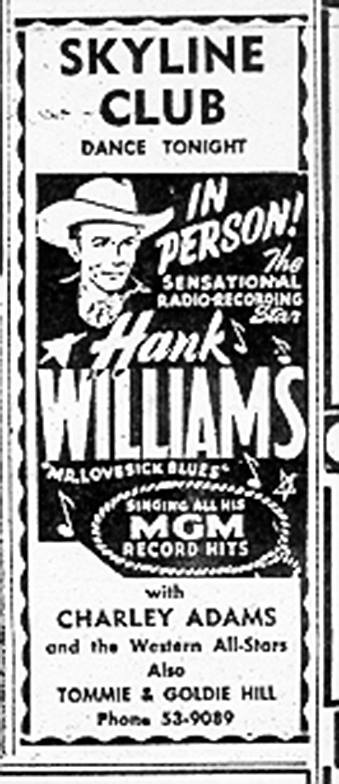
Hank Williams performed his last show at the Skyline Club on December 19th, 1952. Witnesses say that, in spite of his terrible health and drinking and drugging, he tore it up that night, playing for three hours. Less than two weeks later, on New Year’s Eve, he died while en route to a show in Canton, Ohio.
The first photo shows an advertisement for Hank's last show at the Skyline. The second photo is of Johnny Horton on the Lousiana Hayride show. The last photo is a sketch of the Skyline Club.
Every Easter I post this photo of San Antonio farmer Sam Smith celebrating rain after a prolonged drought on Easter Sunday, 1951. I do not apologize for it as it's my all-time favorite Texas photo. Taken by AP photographer Harvey Belgin, it was nominated for a Pulitzer.
Tennessee Republicans thought they could silence three House Reps just because they spoke out of turn to recognize Tennesseans demanding action on gun violence.
Today, they expelled two young Black men from office.
… and they handed them a national stage.
Let’s. Go. 🇺🇸
The Arcane Texas Fact of the Day:
In 1969, while staying at the Fort Worther Motel in Fort Worth, Waylon Jennings saw an advertisement in a newspaper promoting Tina Turner as a "good hearted woman loving two-timing men", a reference to Ike Turner. Waylon went to talk to Willie, who was in a middle of a poker game, about writing a song based on that phrase. Joining the game, he and Nelson expanded the lyrics as Willie's wife Connie Koepke wrote them down.
Waylon recorded the song for the first time as the title track of his 1972 album "Good Hearted Woman" and the accompanying single peaked at number three on the Billboard's Hot Country Singles. In 1975, Waylon remixed the song, adding vocals from Willie Nelson (and adding fake crowd noise to give it a live feel) for the album Wanted: The Outlaws!. The album cemented the pair's outlaw image and became country music's first platinum album. This remixed version of the song peaked at number one on Billboard's Hot Country Singles and at number 25 on the Billboard Hot 100. The song won the Single of the Year award in the 1976 Country Music Association Awards.
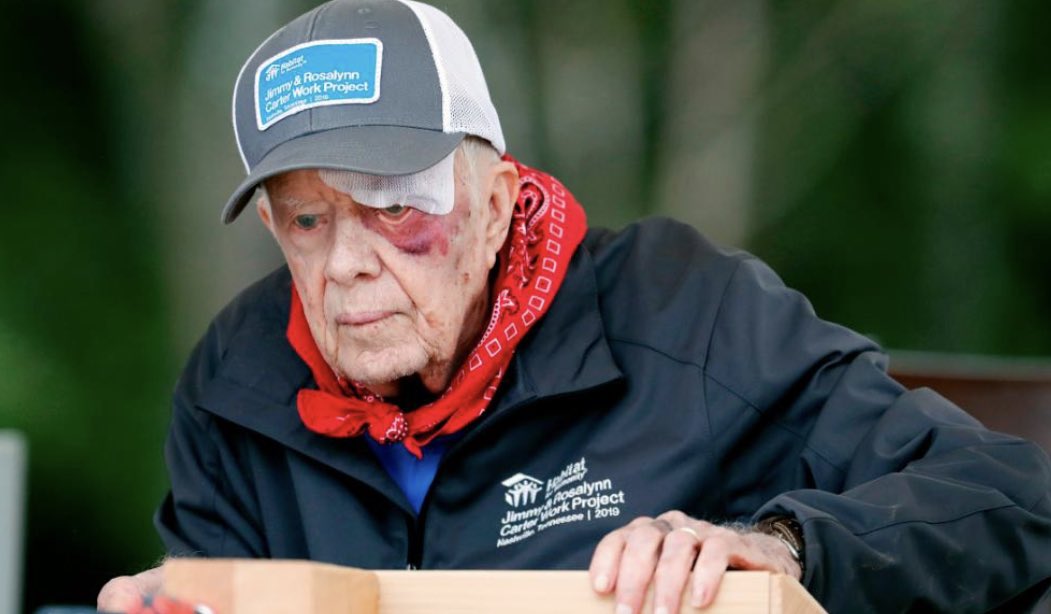
We've seen few humans this devoted and humble as Jimmy Carter.
Quietly continuing his mission,which was to do good.
If you must leave us go gently . Leave your heart and bravery so we might learn.
Thank you President Carter.
Jimmy.
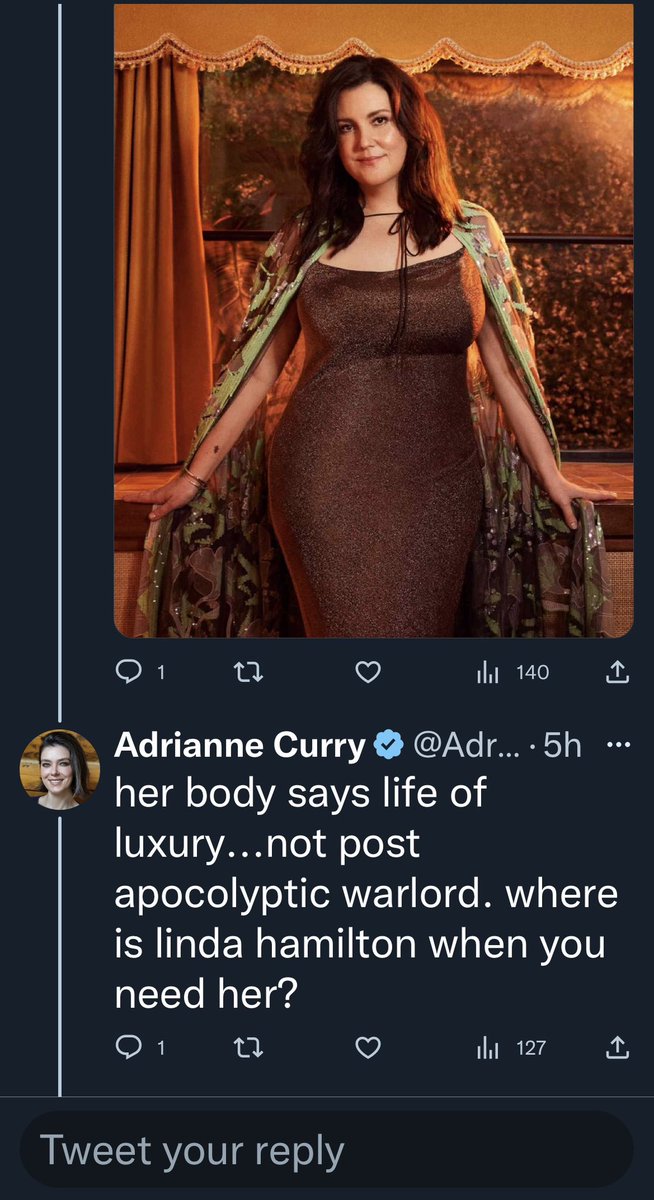
Firstly- this is a photo from my cover shoot for InStyle magazine, not a still from HBO’s The Last Of Us. And I’m playing a person who meticulously planned & executed an overthrow of FEDRA. I am supposed to be SMART, ma’am. I don’t need to be muscly. That’s what henchmen are for
In digging into this a bit, I see Texas is one of just a few states that has not submitted a plan, and therefore isn't yet in a position to take advantage of $50 million dollars, Family First funds, to help families and children. I hope DFPS is working on this. #txlege