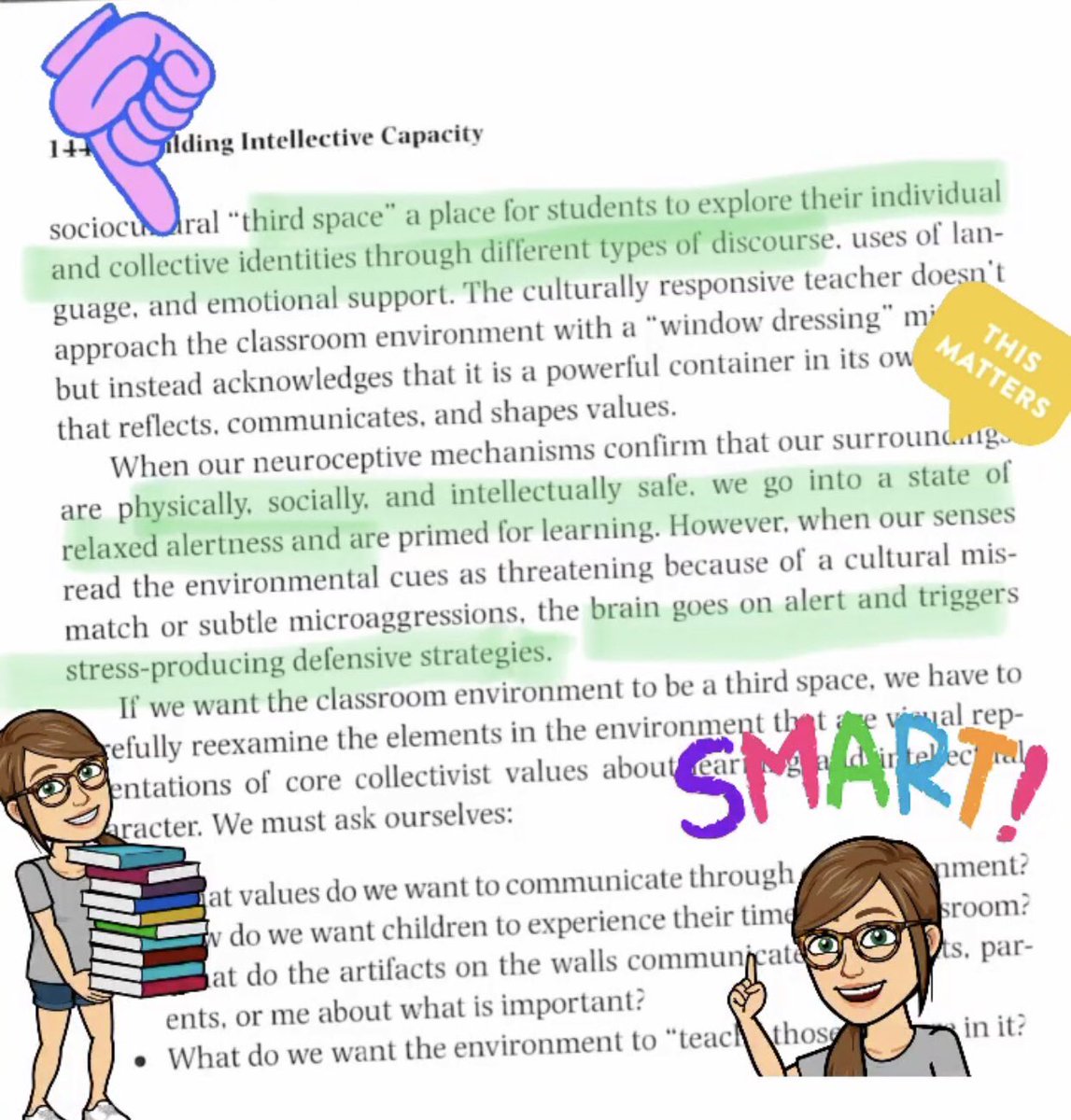
Chapter 9 of “Culturally Responsive Teaching and the Brain” mentions how important the environment is for students. We want our students to feel physically, socially, and intellectually safe, so they are ready to learn! #ElemSSMethods19#BookSnaps
In Chapter 9 of Culturally Responsive Teaching and the Brain, Zaretta Hammond discusses student voice. Let students be heard, have a voice, and be a voice. Listen to what they have to say. #ElemSSmethods19#Booksnaps
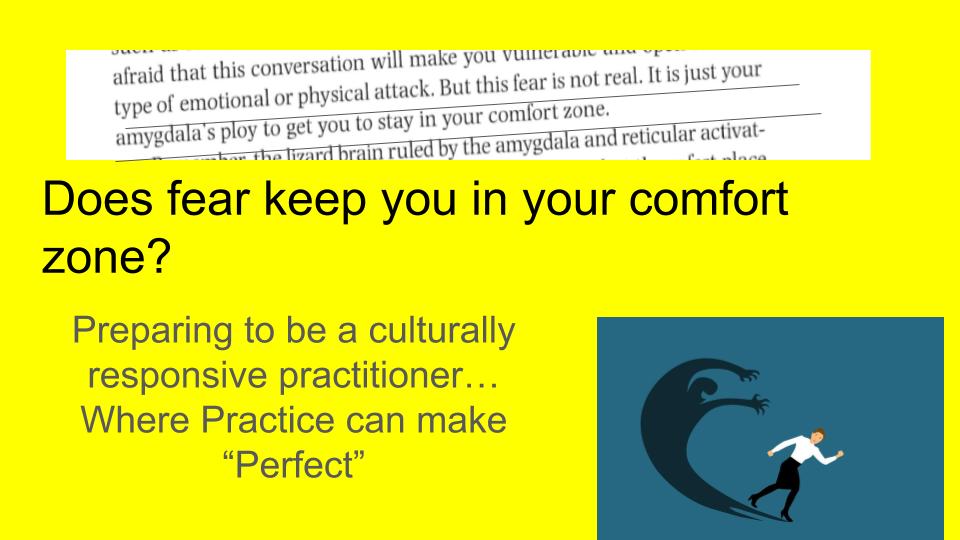
A good thought too is if you remain in your comfort zone, are you providing your students with your best potential. Don't be afraid to step outside your known box. #ElemSSMethods19
Building culturally responsible relationships only work if you have been responsible with connecting with your own culture. Do you have the courage to do what it takes? #mirror#Booksnaps#ElemSSMethods19
In Zaretta Hammond’s book, Culturally Responsive Teaching, chapter 4 introduces SODA. A great technique to calm emotions and avoid confrontation and misunderstandings. Should be taught to everyone! #booksnaps#ElemSSmethods19
Totally agree and think it is very important to remember your perspective of what is threatening, or about anything, is most likely different than someone else and take that into consideration. #ElemSSmethods19
Fight, flight, freeze or appease? Teachers who create warm environments can constantly create "an appeasing and pleasing" part of any students day. We care for our students and our students care for us. #BookSnaps#ElemSSmethods19