The Betley lab at Penn is focused on understanding how signaling between the body and the brain control our needs and behaviors and ultimately our health.
It is always insightful talking with Mark and we had a chance to talk about some of our newest research and also the trajectory that led to this research being possible.
The most fun hour of my week!
I had the privilege to join @MarkMattson’s podcast “BRAIN PONDERINGS” this week!
https://t.co/dTTKn3u6An
There are many insightful discussions with world leaders on this podcast – a treasure trove of information!
Excited to share a recent national geographic article on the brain and exercise that highlights our research! Super grateful to Bethany Brookshire for her enthusiastic, tireless, and thoughtful article.
https://t.co/vVEDSi5ryZ
@hubermanlab@Brady_H While the field suggests the VMH has intermingled neurons that are involved in rage and mating, some of our experiments suggest they might not be so clearly defined. Plus, anabolic steroids also have side effects of...rage and sex drive changes? Maybe brain doping is possible???
@Brady_H finding the unexpected is always remarkable. We are glad everyone is finding this fascinating. Next step...figure out if this can indeed be brain doping for exercise.
This study is already my candidate for “coolest scientific finding of the year.”
It finds that the brain—specifically a set of neurons in the ventromedial hypothalamus (VMH)—is a key intermediate for improvements in endurance capacity.
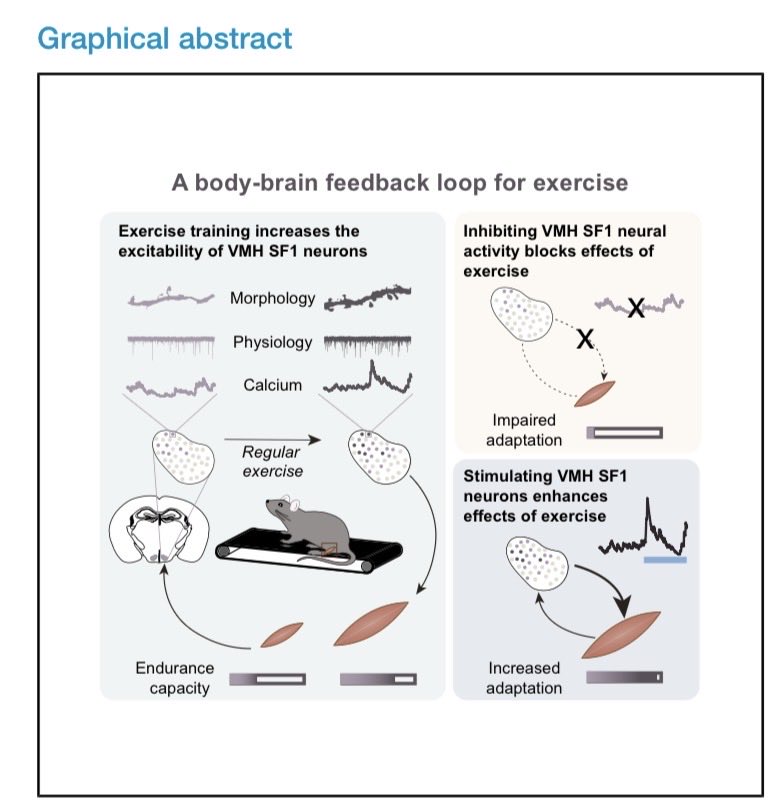
1. Exercise strengthens inputs to and increases the activity of these SF1 neurons in the VMH.
2. Activation of SF1 neurons following exercise is required to improve endurance.
3. Exogenous activation of SF1 neurons following exercise enhances endurance gains (while inhibition of them diminishes adaptations).
Read the full report 📄 https://t.co/n3XRsKXNPO
DOI: 10.1016/j.neuron.2025.12.033
Congrats to first authors Morgan Kindel & Ryan Post + all collaborators!
#Neuron#Neuroscience#Exercise
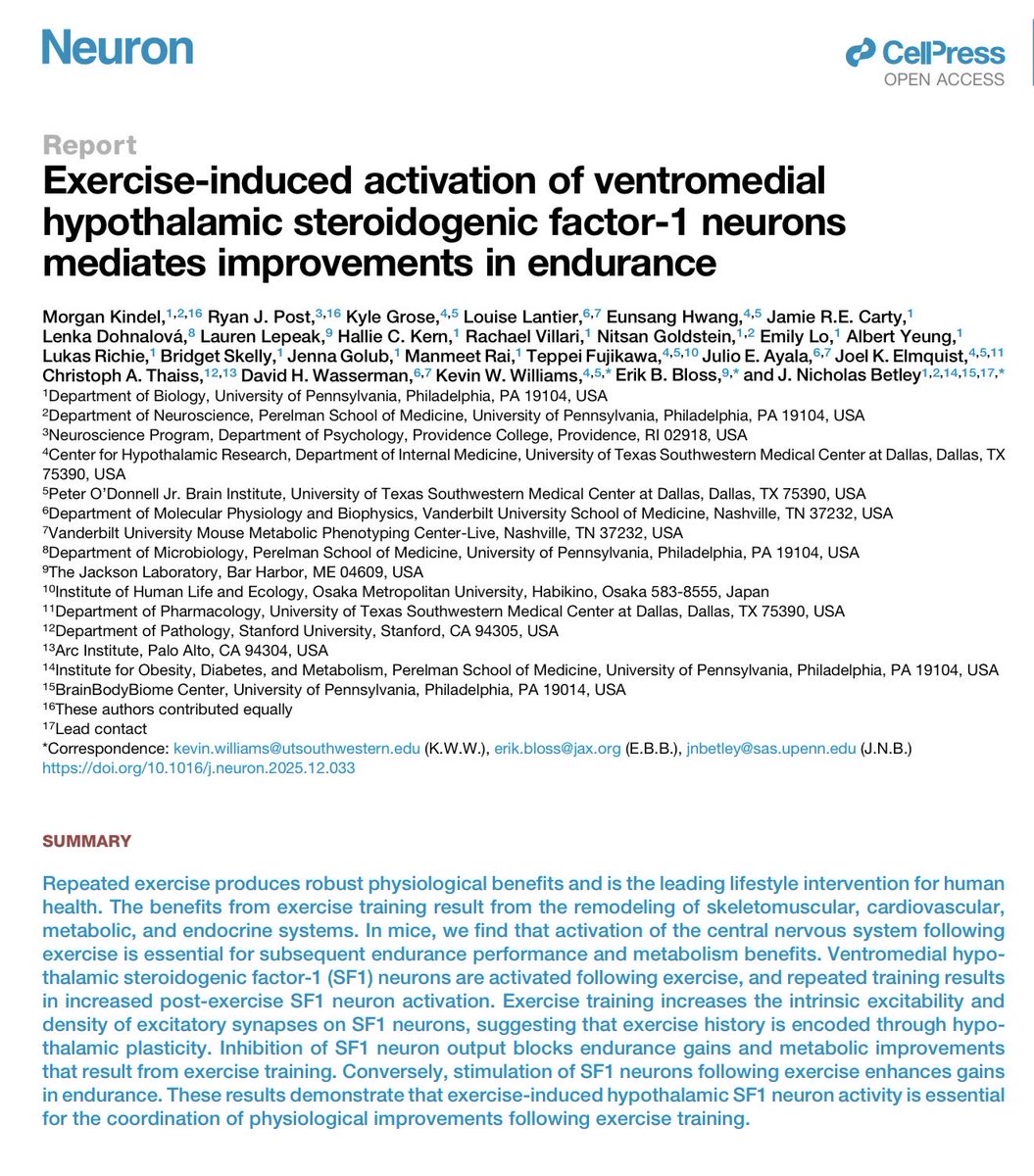
🧠🏃New in Neuron (open access): “Exercise-induced activation of VMH SF1 neurons mediates improvements in endurance”
Finally able to share what we learned about the brain & exercise 🧵
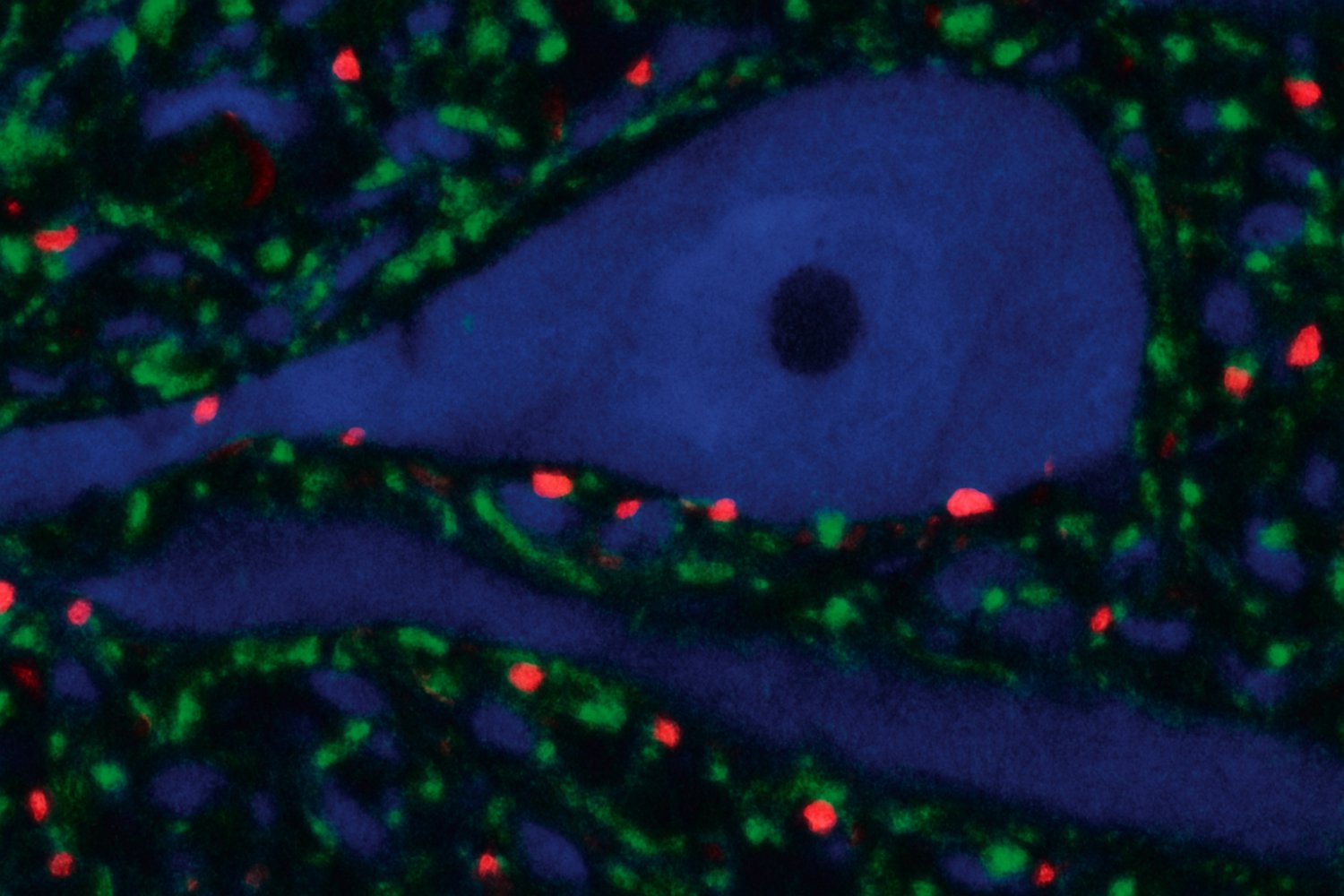
With repeated training, this VMH SF1 circuit strengthens (anatomically + physiologically).
This increase in post-exercise activity of SF1 neurons is required for endurance improvements.
Some regions of interest to our lab are highlighted. Tomorrow, we will be sharing with the world, some of what we have learned about how the hypothalamic activation effects metabolism and adaptation after exercise! Stay tuned…
We found a massive upregulation of neural activity (via Fos, indicated by more red) throughout the brain! In the video, you can see the brainwide changes observed in an exercised animal compared to a sedentary control.
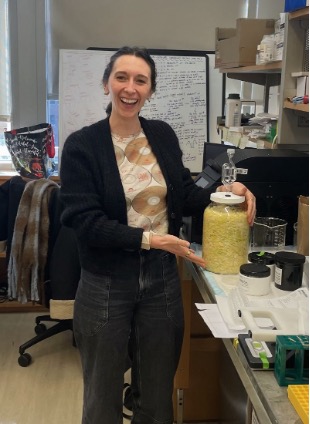
What’s brewing in the Betley Lab at UPenn? ☕️🧠 Thrilled to welcome Elisa Caffrey! Elisa studies fermented foods and the microbes/metabolites they produce—how do they shape our bodies and brains after we eat? Excited for this new frontier!
Always fun to collaborate with the Thaiss Lab and excited about what’s next. If you’re interested in how the gut rapidly sends health signals to the brain, read the review: https://t.co/Kb0pWzZFaJ #gutbrainaxis#interoception
The gut isn’t just digestion! It is a sensory organ that reports our internal state to the brain in real time. In our new Neuron review, we dive into “intestinal interoception”: how gut signals tune physiology + behavior.
Where this gets exciting: we outline steps toward “interoceptomimetics”, aka molecular interventions designed to stimulate the right body↔brain signaling and restore organismal balance.