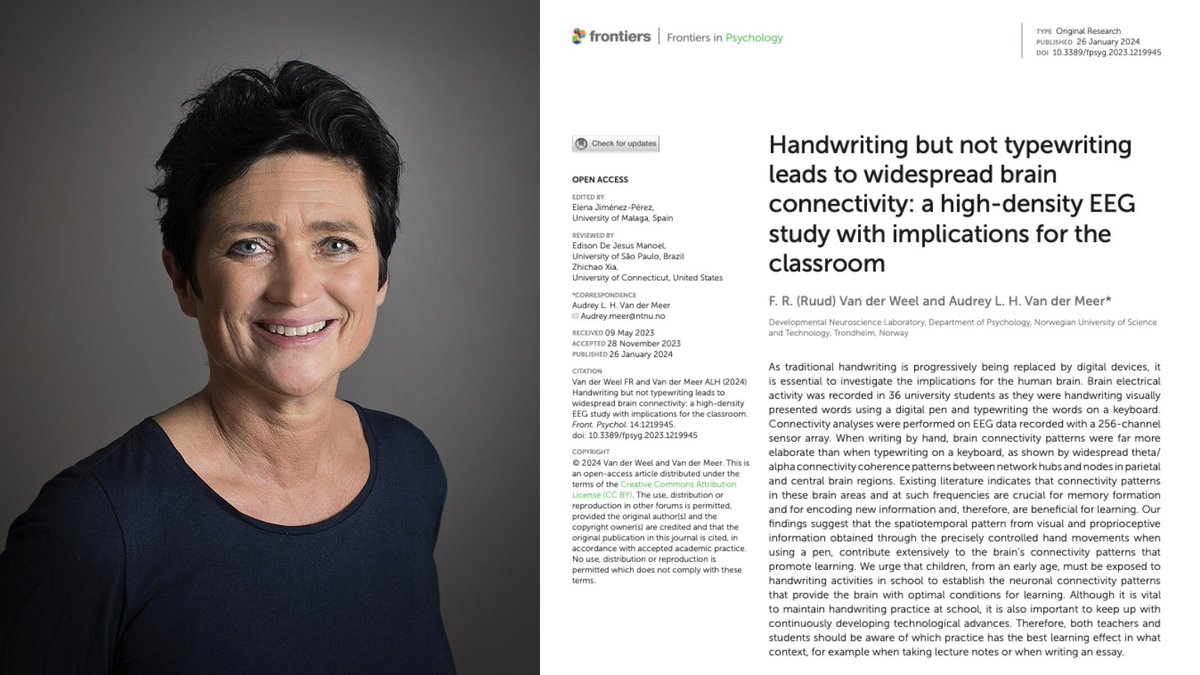
A Norwegian neuroscientist spent 20 years proving that the act of writing by hand changes the human brain in ways typing physically cannot, and almost nobody outside her field has read the paper.
Her name is Audrey van der Meer.
She runs a brain research lab in Trondheim, and the paper that closed the argument was published in 2024 in a journal called Frontiers in Psychology. The finding is brutal enough that it should have changed every classroom on Earth.
The experiment was simple. She recruited 36 university students and put each one in a cap with 256 sensors pressed against their scalp to record brain activity. Words flashed on a screen one at a time.
Sometimes the students wrote the word by hand on a touchscreen using a digital pen, and sometimes they typed the same word on a keyboard. Every neural response was recorded for the full five seconds the word stayed on screen.
Then her team looked at the part of the data most researchers had ignored for years, which is how different parts of the brain were communicating with each other during the task.
When the students wrote by hand, the brain lit up everywhere at once.
The regions responsible for memory, sensory integration, and the encoding of new information were all firing together in a coordinated pattern that spread across the entire cortex. The whole network was awake and connected.
When the same students typed the same word, that pattern collapsed almost completely.
Most of the brain went quiet, and the connections between regions that had been alive seconds earlier were nowhere to be found on the EEG.
Same word, same brain, same person, and two completely different neurological events.
The reason turned out to be something nobody had really paid attention to before her work. Writing by hand is not one motion but a sequence of thousands of tiny micro-movements coordinated with your eyes in real time, where each letter is a different shape that requires the brain to solve a slightly different spatial problem.
Your fingers, wrist, vision, and the parts of your brain that track position in space are all working together to produce one letter, then the next, then the next.
Typing throws all of that away. Every key on a keyboard requires the exact same finger motion regardless of which letter you are pressing, which means the brain has almost nothing to integrate and almost no problem to solve.
Van der Meer said it plainly in her interviews.
Pressing the same key with the same finger over and over does not stimulate the brain in any meaningful way, and she pointed out something that should scare every parent who handed their kid an iPad.
Children who learn to read and write on tablets often cannot tell letters like b and d apart, because they have never physically felt with their bodies what it takes to actually produce those letters on a page.
A decade before her, two researchers at Princeton ran the same fight using a completely different method and ended up at the same answer. Pam Mueller and Daniel Oppenheimer tested 327 students across three experiments, where half took notes on laptops with the internet disabled and half took notes by hand, before testing everyone on what they actually understood from the lectures they had watched.
The handwriting group won by a wide margin on every question that required real understanding rather than surface recall.
The reason was hiding in the transcripts of what the two groups had actually written down.
The laptop students typed almost word for word, capturing more total content but processing almost none of it as they went, while the handwriting students physically could not write fast enough to transcribe a lecture in real time, which forced them to listen carefully, decide what actually mattered, and put it in their own words on the page.
That single act of choosing what to keep was the learning itself, and the keyboard had quietly skipped the choosing and skipped the learning along with it.
Two studies. Two countries. Same answer.
Handwriting makes the brain work. Typing lets it coast.
Every note you have ever typed instead of written went into your brain through a thinner pipe. Every meeting, every book highlight, every idea you captured on your phone instead of on paper was processed at half depth.
You did not forget those things because your memory is bad. You forgot them because typing never woke the part of the brain that would have made them stick.
The fix is the thing your grandmother already knew.
Pick up a pen. Write the thing down. The slower road is the faster one.
Where does AI actually stand in neonatology right now?
Dr. Ryan McAdams guest hosts from #PAS2026 with the @NeoMindAI team—Dr. Ameena Husain, Dr. Kristyn Beam, Dr. Brynne Sullivan, and Dr. Zach Vesoulis—to recap their PAS pre-conference workshop, including a live predictive modeling “bake-off” using the Epic Cosmos database to predict late-onset sepsis in nearly 100,000 preterm infants.
🎧 Listen to the full episode here: https://t.co/CroM6xmpSn
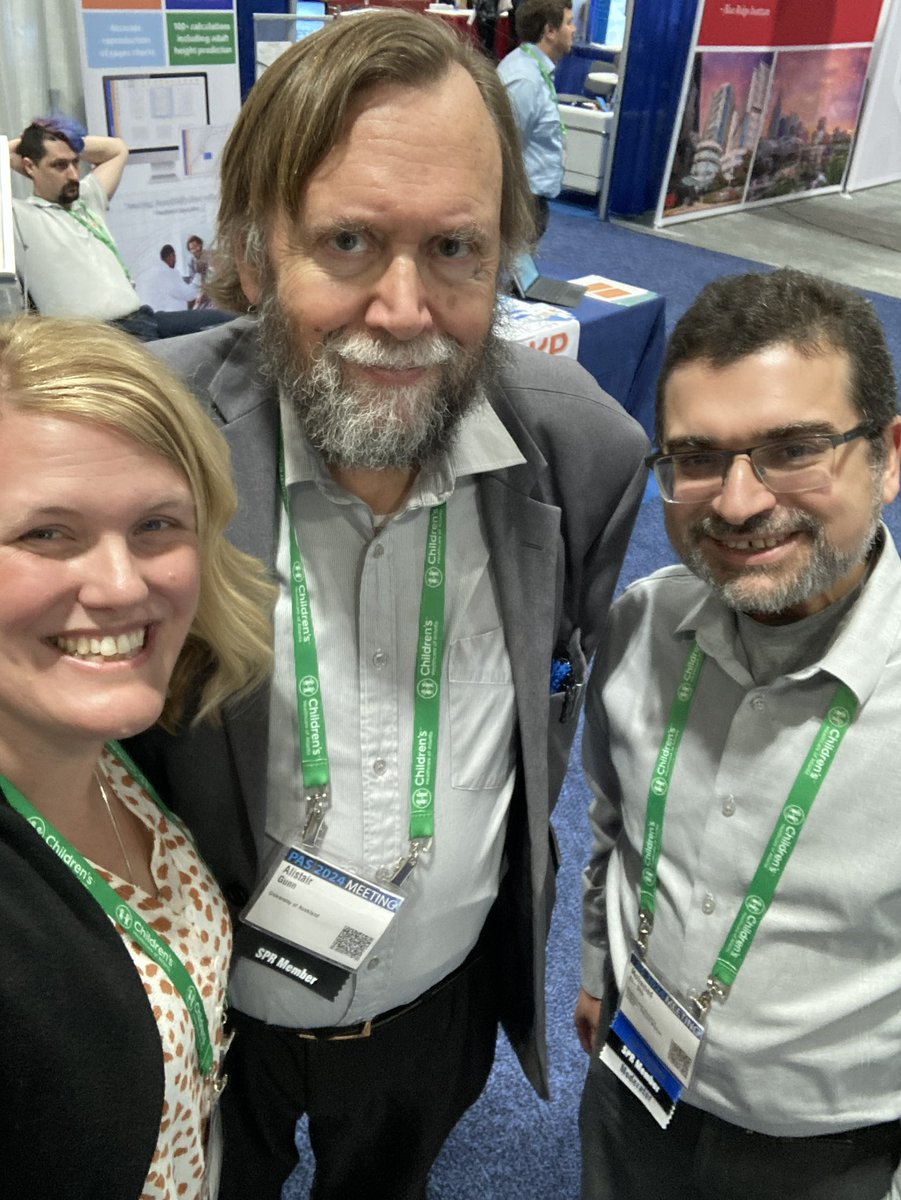
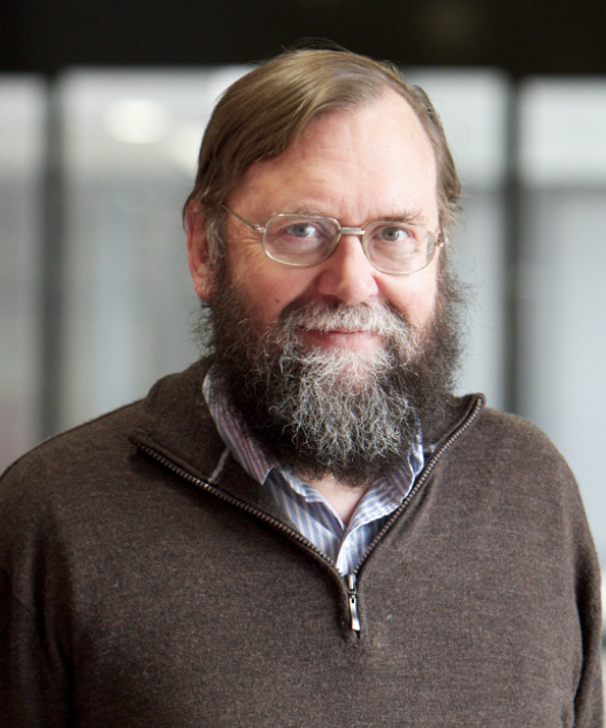
It is with profound sadness that the Newborn Brain Society shares the news of the sudden and untimely passing of Dr. Alistair Gunn, a remarkable physician-scientist, mentor, colleague, and friend to so many in our community.
Dr. Gunn, a proud New Zealander, was a preeminent leader in newborn brain care and an esteemed Fellow of the International Newborn Brain Society. His pioneering work in neuroprotection, most notably seminal studies on therapeutic hypothermia, has directly benefited thousands of infants and their families. Deeply committed to improving outcomes for newborns at risk of brain injury, he generously mentored colleagues worldwide and helped shape the foundations of our field, inspiring generations of clinicians and researchers. His contributions will have a lasting impact on how we understand, monitor, and protect the developing brain.
On behalf of the Newborn Brain Society, we extend our heartfelt condolences to his family, friends, colleagues, trainees, and all those whose lives and work were touched by him. His legacy will live on through the countless people he has mentored, the science that he has advanced, and the global community that he has helped to build. We will miss him deeply.
After 12 months of thoughtful consideration, authorship, and review, we are excited to release our Equity, Diversity, Inclusion, Belonging and Justice Position Statement.
https://t.co/41fm5TBYMn
Working with patient-families is in full focus in neonatology and neurology more than ever before.
🎙️🎙️🎙️How it’s done matters. 🎙️🎙️🎙️
Today, the @FccTaskforce published its EDIBJ statement & framework.
Dig in & use it:
https://t.co/nJtdaKHC3Z
Progress in cell therapies for neonatal conditions: Proceedings of the Third Neonatal Cell Therapies Symposium (2025)
https://t.co/yochKrDBWP
@DrAbdulRazak_MD@Neo_CellTherapy
President Donald #Trump wants to stop directing federal funds to the nation’s university centers on developmental #disabilities, multiple Individuals with Disabilities Education Act programs and much more. #SpecialEducation#funding https://t.co/qJsojQLhVB
The pipeline that drives discovery - new knowledge and treatments for diseases that affect us all - is collapsing in the United States.
New NIH funding opportunities are down 91% this fiscal year.
“I have to reschedule our meeting because my community is currently experiencing a(nother) mass shooting event. My neighbors and friends work and worship there. My kids are on lockdown.”
Land of the free.
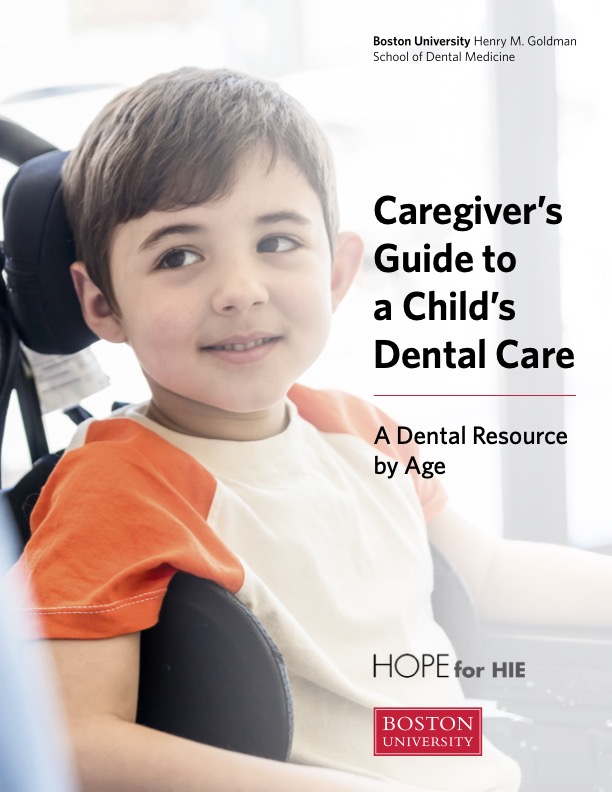
In honor of Children's Dental & Oral Health Month, we're sharing a new resource from a team at Boston University School of Dental Medicine lead by our Medical Advisory Board Member and HIE parent, Matt Mara, DMD, EdD.
Full resource on our blog:
🔗 https://t.co/D6XcamASPR
🔎 Explore our latest visual abstract, part of our monthly curated publications list!
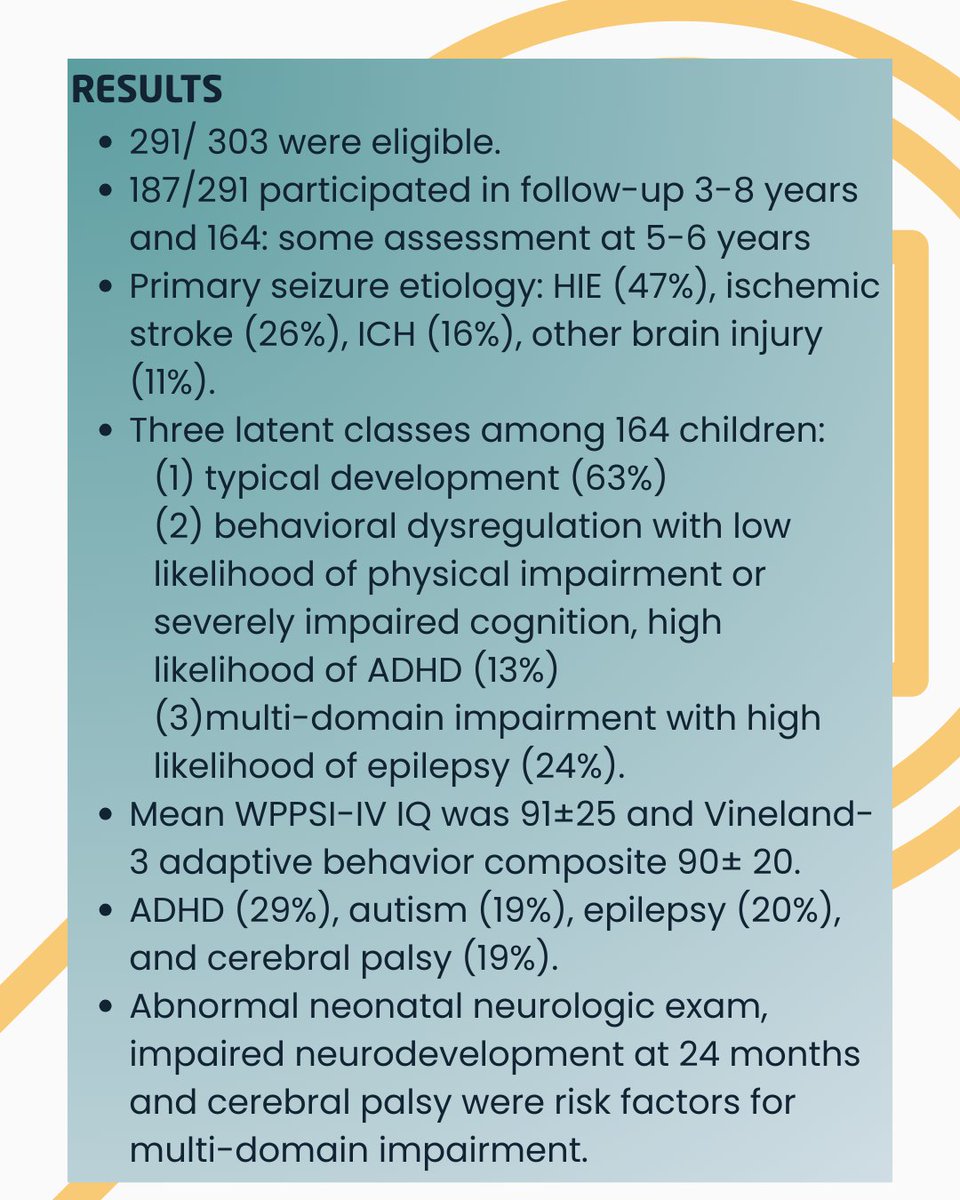
👶🧠 Profiles and Predictors of Neurodevelopmental Outcome at 5–6 Years in Children With a History of Acute Provoked Neonatal Seizures
Check out the full list of highlighted articles from January and recent months! 👉https://t.co/yqWCZvFXtq
#Neurodevelopment #PediatricResearch #NeonatalSeizures #BrainHealth #ChildHealth #MedicalResearch #NewbornBrain #VisualAbstract #ParentResources
8th grade ELA/science lesson combines this with Flowers for Algernon. Love when my kid references posters from @PASMeeting about the limitations of mouse studies and translation to humans.
What a week — from the FDA to Newborn Brain and back home. I can’t wait to see what’s next, but first I shall sleep for the next 7+ hours. Bon nuit!
🇮🇹✈️🇫🇷✈️🇺🇸✈️ #INBBC#ADEPT10 🧠🐻❄️🫂🩵☀️
NIH director admits after being grilled by @SenSanders: 1) The best way to stop the measles epidemic is to vaccinate your kids against measles. 2) no single vaccine causes autism. RFK Jr is wrong.
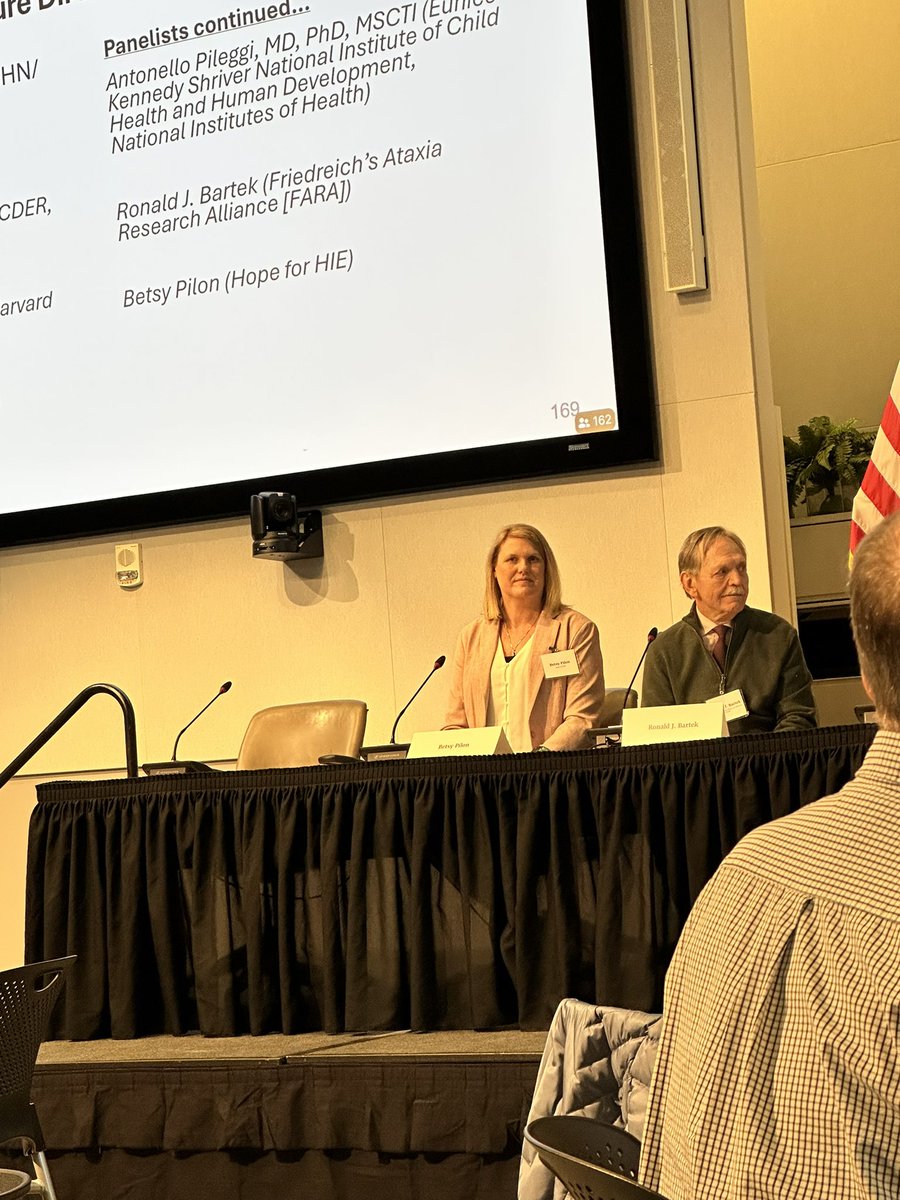
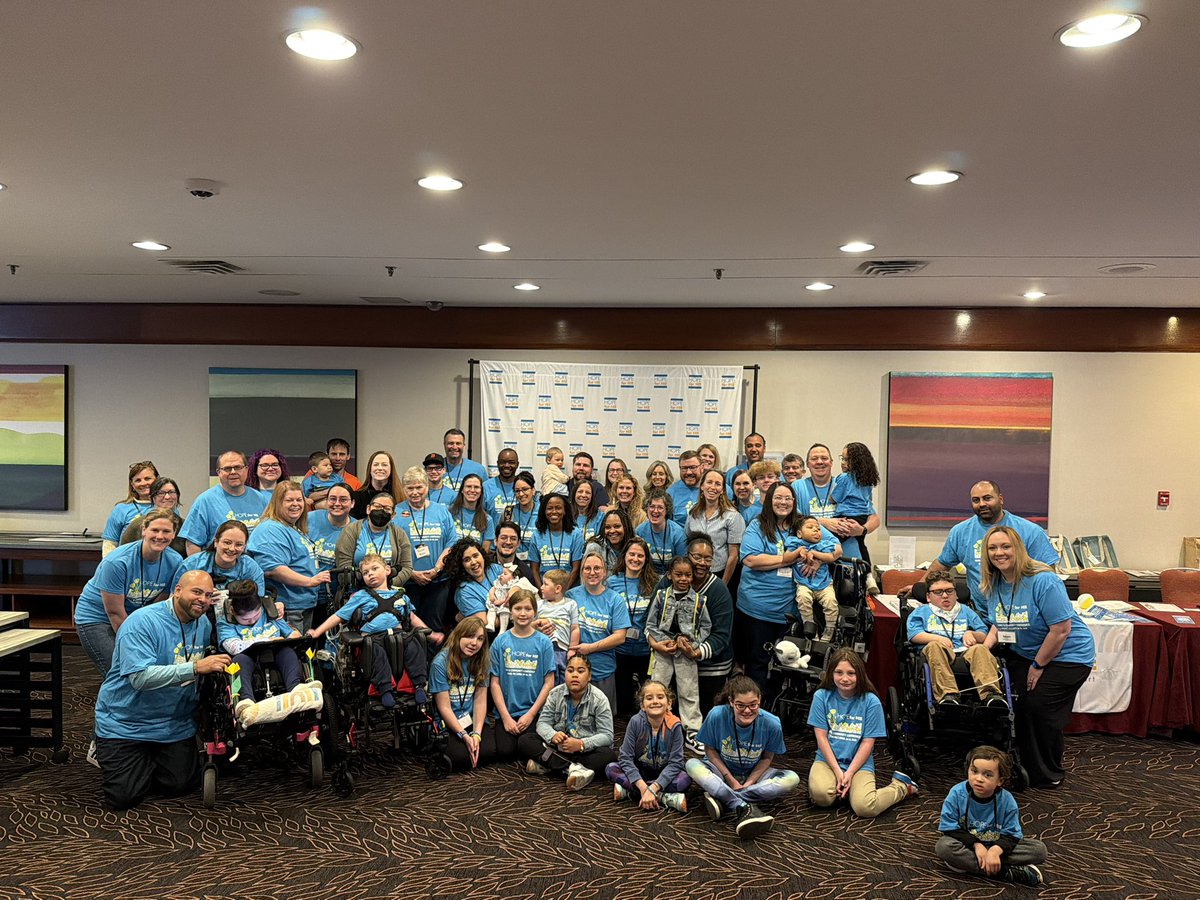
We are pleased to announce Hope for HIE has been approved for a funding award through the Eugene Washington PCORI Engagement Award Program, an initiative of the Patient-Centered Outcomes Research Institute (PCORI).
Read the full press release:
https://t.co/5AtJYPET82