The Abbey bells are ringing out to celebrate the birthday of HRH The Princess of Wales 🎈
Our bell ringers are ringing 344 changes of Erin Caters followed by 544 changes of Spliced Surprise Royal
Secret doors of a country house which has a medieval castle at its core.
This is Kentchurch Court in Herefordshire, home to the Scudamore family for almost 1000 years.
🚨BREAKING NEWS
Charlotte Griffith has now revealed that it was Prince Harry and Meghan Markle that leaked the news about the meeting at a cafe near Clarence House, with Tobyn Andrae.
Harry and Meghan are the LEAKS!!
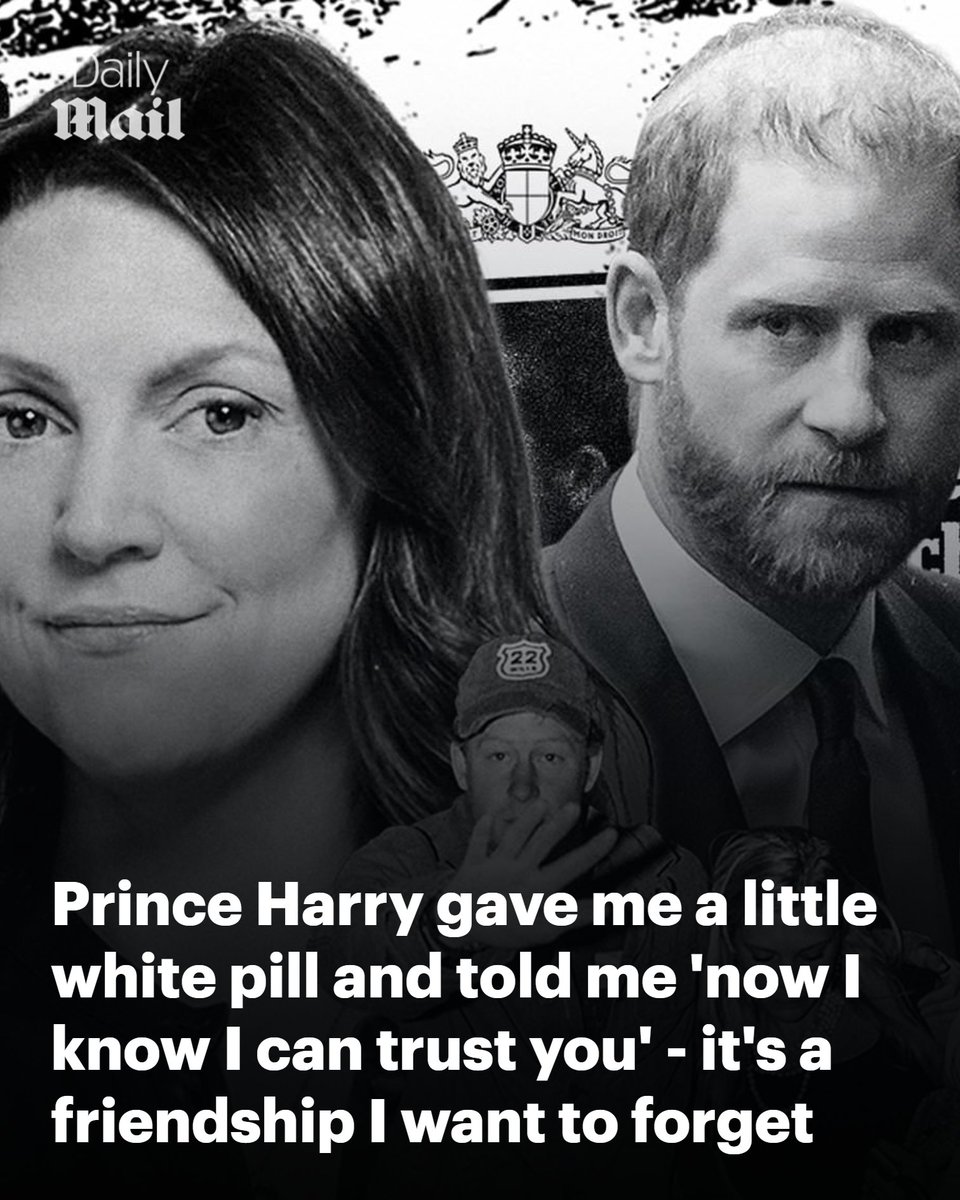
Prince Harry gave me a little white pill and told me 'now I know I can trust you' - it's a friendship I want to forget. Read more: https://t.co/PwBEbvgqEE
The Letter Scene in Persuasion (1995): When Constancy Is Recognized
The moment when Captain Frederick Wentworth leaves a letter for Anne Elliot is widely cherished as one of the most beautiful passages in the 1995 film adaptation of Jane Austen’s Persuasion.
On the surface, it is a very short scene.
There is no direct declaration of love.
No embrace. No tearful reunion.
Wentworth sits absorbed in writing what appears to be another matter, while Anne speaks quietly with Captain Harville nearby. When he chances to hear her calm words on the constancy of a woman’s heart, he accidentally drops the small pot of blotting sand. The film offers no explanation of what stirs within him. Yet that single, almost imperceptible gesture is enough for the viewer to sense that a long-held perception has been gently shaken. Shortly afterward, Wentworth writes a letter to Anne. After leaving the room, he returns on the pretext of retrieving a forgotten umbrella. With a quiet gesture he draws Anne’s attention to the letter resting on the table, then withdraws in silence. Anne opens it. At first only Wentworth’s voice is heard reading the words. Gradually Anne’s voice begins to blend with his.
The entire scene lasts only a few minutes, yet it has become one of the most deeply moving moments in any screen adaptation of Jane Austen’s novels.
What gives it such quiet power?
The answer lies in the way the film chooses to tell its story.
Rather than shaping the moment as a grand romantic climax, director Roger Michell allows everything to unfold remarkable restraint. The camera does not seek heightened expressions of feeling. The music offers no emotional guidance. Even the letter is not placed directly into Anne’s hands. Wentworth deliberately steps out of the frame, leaving her alone to meet the words. The film invites us to focus not on the meeting of two people, but on the truth that is slowly being revealed.
What truly changes, however, is not love itself.
For eight years Anne remained faithful to her love. Wentworth, too, has never found another attachment capable of taking her place, though he has more than once tried to persuade himself to move on. What has separated them is not an absence of feeling, but Wentworth’s mistaken view of Anne. He had believed she abandoned their love through inconstancy. Yet when he hears her speak with such quiet conviction of a woman’s steadfast heart, he suddenly sees that this virtue had never left her. What time has shown is not merely that Anne still loves him, but that she remains the woman he once loved.
For this reason the letter carries a meaning beyond any simple renewal of affection.
Many remember its most passionate lines: “You pierce my soul. I am half agony, half hope.” Yet the true heart of the letter lies in another affirmation: “I may have been unjust, weak and resentful, but never inconstant.” It is no coincidence that Wentworth places such weight on this word. The conversation he has just overheard between Anne and Captain Harville turns precisely on the question of constancy—the central theme of Persuasion. With these words Wentworth does more than confess his love; he acknowledges that he had misjudged Anne and affirms that he, like her, has never lost his own constancy. The letter does not create a new love. It bears witness to a truth that has always existed, though long hidden by misunderstanding.
The film conveys this deeper meaning with remarkable subtlety through its use of sound.
When Anne first opens the letter, only Wentworth’s voice is heard. The audience listens as he reads the opening lines: “I can listen no longer in silence…” and then, “You pierce my soul. I am half agony, half hope…” It remains the voice of one person giving expression to his private pain, hope, and love.
But when the letter reaches the words “I have loved none but you,” Anne’s voice begins, almost imperceptibly, to join his. The two voices continue together to the crucial affirmation: “I may have been unjust, weak and resentful, but never inconstant.”
This is no mere technical device for emotional effect. The film chooses the precise moment when the two voices unite. The blending of voices does not occur when Wentworth speaks of his suffering, but at the instant he declares his own constancy. From that point the words of the letter cease to belong to Wentworth alone. Anne may now speak them with equal truth, for they describe the reality of her life as well. After eight years of separation, what both recognize first is not simply that they still love one another, but that neither has ever ceased to be constant. It is upon this shared foundation that their love is able to return to its original harmony.
We often judge others not by the enduring qualities of their character, but by what we observe in a single passing moment. A misunderstanding, one decision, or an old wound may cast a shadow over an entire person. Only with the passage of sufficient time do we come to see that true virtues are not so easily altered as we once imagined. What changes is frequently not the person before us, but the manner in which we have learned to see them.
From the perspective of traditional culture, the scene reveals a still deeper truth about the nature of virtue itself. Constancy does not become precious because it is at last recognized by another. Its worth has always resided within it. Steadfastness is valuable not because it receives reward or recognition, but because it is an essential quality of a noble and upright character. Genuine maturity of soul lies not only in nurturing what is good, but also in refining our own vision until we are able to perceive and honor those virtues that have been present all along.
Perhaps this is why, more than two centuries after Jane Austen completed Persuasion, this brief letter scene continues to move viewers across generations. Beneath the words of a short letter lies something far greater than the reunion of two people who once loved. It is the moment in which a soul comes to understand that time may try our affections, yet it is also time that can bring to light the constancy that lies at their root. And when constancy is at last seen in its true light, love does not need to be created anew. It returns, quite simply, to what has always been true.
#OTD 1540, the marriage of Henry VIII and Anne of Cleves was annulled. Anne remained in England for the rest of her life, on good terms with the whole royal family, even attending Mary I’s coronation. She died in 1557 and is buried in Westminster Abbey. https://t.co/gZnVGA1N1r
Known as the “She-Wolf of France,” Queen Isabella did what few medieval women dared: she raised a mercenary army, invaded England, helped depose her husband, Edward II, and briefly ruled alongside her lover, Roger Mortimer. A formidable force in medieval politics.
Prince Harry and me: A small white pill, 'naughtiness' and why I wish I could erase our friendship from my memory. By CHARLOTTE GRIFFITHS https://t.co/aaJVjW4X0L
'From his pocket, he removed a small white pill. Then he held it up to my face, popped it on to my tongue, and said with a smile: "Now I know I can trust you!"' Prince Harry drugged a journalist like a mafia boss.
https://t.co/UnuncmzUoY
Today in 1807, Napoleon Bonaparte and Tsar Alexander I met on a raft in the middle of the Neman River and signed the first Treaty of Tilsit.
This ended hostilities between France and Russia in the War of the Fourth Coalition.
In 1663, King Louis XIV sent about 800 women to Quebec to marry settlers and help grow the colony. The plan succeeded, and today around 2/3 of French Canadians can trace their ancestry to these women.
A fascinating interview with BERTRAND RUSSELL from 1952 that has him talking about his Grandfather meeting Napoleon, and about life in Europe in the 1800’s.
A Royal Marriage for Sweden’s Future: Hedwig Elisabeth Charlotte and Charles XIII
#OTD July 7, 1774, Princess Hedwig Elisabeth Charlotte of Holstein-Gottorp married Duke Charles XIII of Sweden in a union carefully arranged to secure the future of the Swedish throne. The marriage was organized by King Gustav III of Sweden, who hoped his younger brother Charles could provide the heir that the monarchy desperately needed.
Gustav III’s own marriage had not produced a legitimate heir, and the king reportedly chose to rely on his brother to continue the royal line. Hedwig Elisabeth Charlotte, a princess from the House of Holstein-Gottorp, was selected as a suitable royal bride. Despite the political motives behind their marriage, she became a respected figure at court, remembered for her intelligence, wit, and detailed diaries that recorded Swedish royal life.
Although the couple never produced a surviving heir, Charles XIII later became King of Sweden in 1809. Their marriage remains a fascinating example of how royal unions were often shaped by politics, succession, and the struggle to preserve a dynasty.
#OnThisDay #OnThisDate #TodayInHistory #ThisDayInHistory #HistoryFacts #HistoricMoment #History #HistoricDay #OnThisDay #RoyalHistory #SwedishHistory #HedwigElisabethCharlotte #CharlesXIII #GustavIII