Beyond the Earth is an interdisciplinary ‘blue skies’ research & education foundation committed to supporting deep-time planetary stewardship beyond century XXI
Thought-experiment;
What crucial environmental records should we ideally now aim to preserve for the benefit of posterity to make informed decisions for their inherited world(s)? If ‘everything’ is not practical, what scientific materials are ‘essential’? https://t.co/fnUQ9aU9JO
@Ollie_Base@NathanpmYoung@nemocentric Happy to discuss further. Our archiving focus, aspirations for this material, and partnering institutes are also outlined in the 'After the Horizon' pages for more information. Our focus for the moment however is to actually put this library together. Legacy suggestions welcome!
@Ollie_Base@NathanpmYoung@nemocentric Security of information is of paramount importance, but the 'Companion Guide' is intended as a semiotics experiment as opposed to being the only home for this material. Presently, this project is the only consolidated effort to initially establish an index of enduring legacies
@Astro_Wright@chodenzi Here are the only [relatively detailed] promotional images I've found for the Akatsuki plates for comparison. Let me know if you can spot Hatsune Miku anywhere...
@AnnieHandmer@drspacejunk@fringetracker@SciencePetr@ChrisJohnsonEsq @spacedaporras Another fine fervert example of sensationalism and technology outpacing sapience, foresight and ethics in our bio-footprints. It is disheartening reading the 'about us' tab to see how biodiversity loss inspires people to recklessly spill DNA off world as acts of 'preservation'.
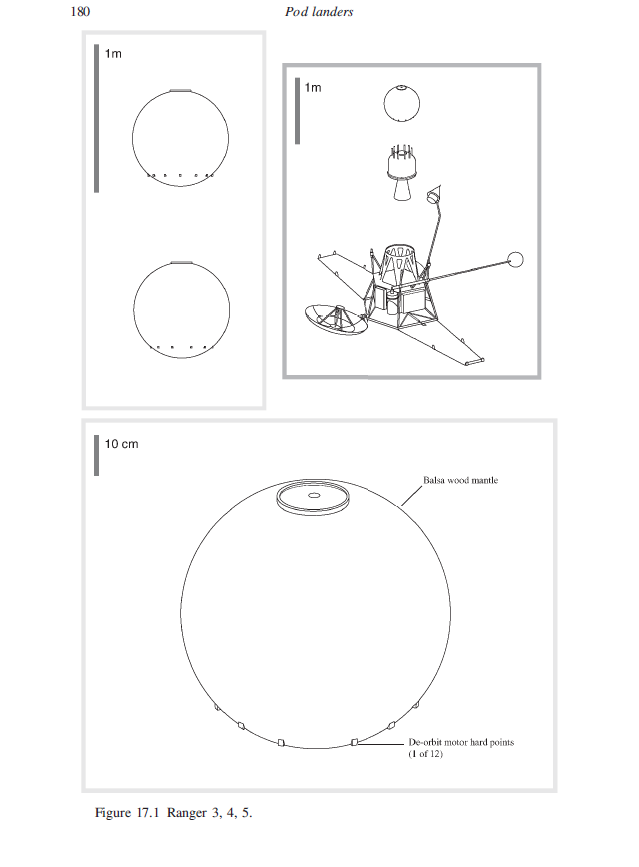
@drspacejunk@chris_bloke@MSSLSpaceLab The balsa wood 'Seismo capsules' were part of the Ranger 3, 4 & 5 seismometer experiment soft landing mechanism. Clearly none successfully returned data but R-4 technically made it to the surface. Diagrams are from publication; 'Planetary Landers and Entry Probes' by Andrew Ball.
The @ASimpleResponse to an Elemental Message signal is now 3 light-years away from Earth (about 28,362,764,866,464 km or 189593 AU) with an estimated arrival time to the North Star #Polaris of 2450CE. #ASimpleResponse
Follow @BeyondEarthFDN study for info on space-based messages.
THREAD: a reminder that low Earth orbit is already crowded & that the potential addition of tens of thousands of new satellites needs serious attention.


![BeyondEarthFDN's tweet photo. @Astro_Wright @chodenzi Here are the only [relatively detailed] promotional images I've found for the Akatsuki plates for comparison. Let me know if you can spot Hatsune Miku anywhere... https://t.co/XzjC2SH8Z0](https://pbs.twimg.com/media/E_ZCQKhWUAMjodV.jpg)
![BeyondEarthFDN's tweet photo. @Astro_Wright @chodenzi Here are the only [relatively detailed] promotional images I've found for the Akatsuki plates for comparison. Let me know if you can spot Hatsune Miku anywhere... https://t.co/XzjC2SH8Z0](https://pbs.twimg.com/media/E_ZCQKhWUAIIfFE.jpg)


![BeyondEarthFDN's tweet photo. @Astro_Wright @chodenzi Here are the only [relatively detailed] promotional images I've found for the Akatsuki plates for comparison. Let me know if you can spot Hatsune Miku anywhere... https://t.co/XzjC2SH8Z0](https://pbs.twimg.com/media/E_ZCQKkXoAAOV71.jpg)