Microsoft released their annual Future of Work report and this time around it’s not about remote work, it’s about AI. (slide numbers in brackets)
- Knowledge workers with ChatGPT are 37% faster, 40% higher quality but ~20% less accurate. Simple UX solutions to solve this are possible. (6)
- From a survey of enterprise users of Microsoft Copilot 365 (7):
- 73% agree that Copilot makes them faster.
- 85% said it would help them get to a good first draft faster.
- 72% agreed about spending less mental effort on mundane or repetitive tasks.
- Most early studies have found that new or low-skilled workers benefit the most from LLMs. Less skilled workers improved by 43% vs more skilled who improved by about 17%. (8)
- Assistant needs to be paired with provacators i.e. LLM-based tools that challenge assumptions, encourage evaluation, and offer counterarguments. (9)
- AI can help with breaking down simple commands into micro-moments and microtasks, improving overall quality and efficiency. (10)
- Analyzing and integrating AI-generated information may become more important than searching and creating information. Skills not directly related to content production (leading, social interactions, trust issues, or emotional awareness) may be more valuable. (11)
- Prompting is hard, but people are getting good at it. Fine-tuning/using LLMs to generate prompts is making it easier as well. Prompt templates are helpful for end users. (12-14)
- Highlighting errors/uncertainty percentages can help balance reliance on LLMs. Prompting can be complemented with co-audit tools to check LLM outputs. (17-18)
- Generative AI requires self-awareness and well-calibrated confidence. At the same time, it can help in getting there too. (19)
- Creative activities are a process and LLMs can help across different parts. (21) 69% of Bing Chat conversations are in domains oriented toward professional tasks. (22)
- A larger chunk of LLM-based searches is complex (36% of them) than traditional searches (13% are complex). (22)
- In a study of 69 students, the use of Codex improved their performance in learning Python, but it did not impact their manual code-modification abilities. (24)
- LLMs can rapidly analyze data from humans and generate synthetic data. That’ll change how social science research is done. (27)
- LLMs in meeting can solve different problems like equal participation (instant feedback) and better interactions (retrospective feedback) (28-29).
- AI can help in delegating management responsibilities, freeing execs to focus on team vision. (30)
- Modern office knowledge is in chats, not documents but applying AI over employee chats is tricky. (31-32)
- Approx. 80% of the US workforce could have at least 10% of their work tasks affected by GPTs. Around 19% of workers may have 50% of their tasks impacted. (38)
- “Innovation vs. automation” is often a better framework to use than “substitution vs. augmentation”. Augmentation can still mean job loss. It is important to try to track whether and where human labour is being used in innovative new ways. (39)
- Instead of “How will AI affect work?”, the question should be “How do we want AI to affect work?” (40)
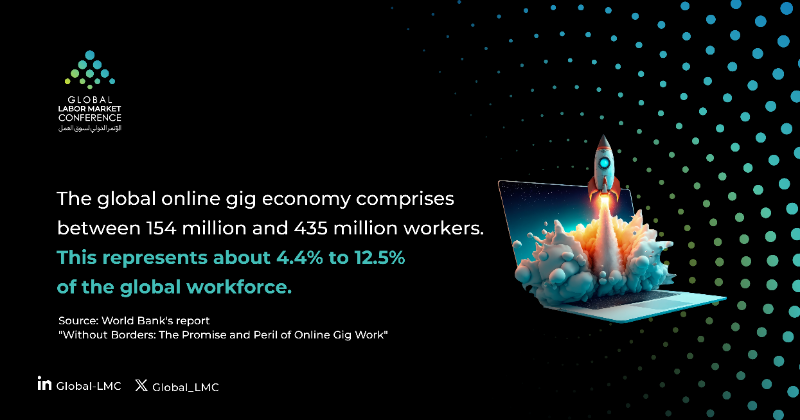
The global labor market is experiencing transformative changes, primarily driven by evolving economic trends and rapid technological innovations. A key development is the expansion of the gig economy.
🔴Inequalities in the world of work touch every life, every family.
🟡It's not just about jobs, it's about opportunities, fairness, and justice.
🟢Tackling the root causes it's a MUST.
#ThisWayToSocialJustice
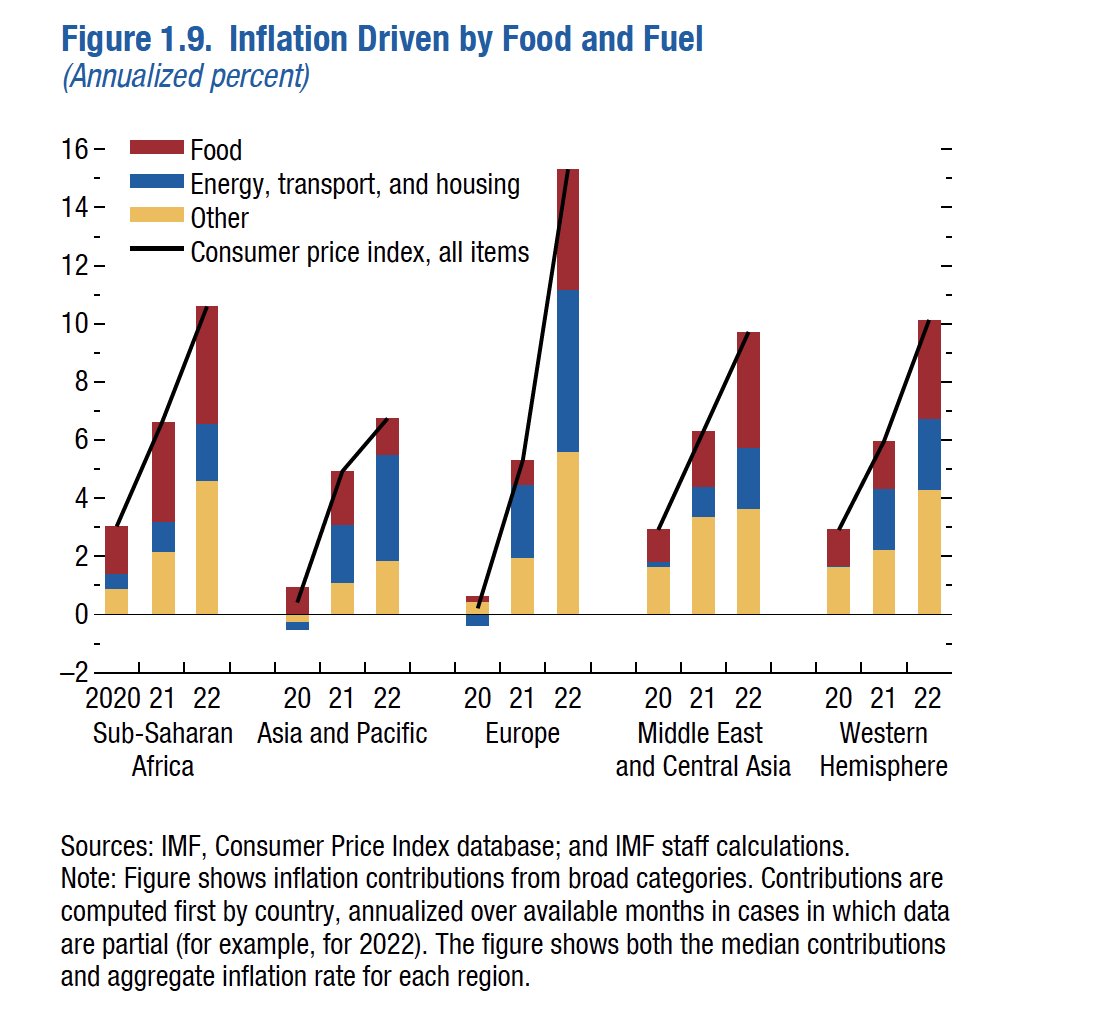
Inflation across the globe is mainly driven by energy and (energy-intensive) food prices. We are witnessing a monetary policy overreaction to a supply shock, as central banks are simultaneously hiking interest rates to dampen demand, which leads into global recession.
The obsession of the capitalist class with "innovation" sits awkwardly alongside their insistence that "there is no alternative".
We are allowed to imagine new gadgets but not a just economy.
@AnnOwens_ Thanks! Bianca Chigbu, PhD. Contract Industrial Relations lecturer. Research interests include sustainable education, labor markets, just-transitions, energy and society. I teach classical and modern sociology, labor relations, and research methods. https://t.co/dnpvzOuYNX
We must continue to invest in & fight for every girl’s right to a safe, inclusive, #QualityEducation – including girls growing up in emergencies & protracted crises.
Their #EducationCannotWait!
Learn more: https://t.co/2DEwaBFk8Y