Bweranyangi Girls School Alumni, HR Leader specialized in scaling teams and nurturing company culture | Talent Acquisition & Employee Experience | PHR Certified
“Your worship, I am an Iteso by tribe and we have not stolen as much as the Banyankole. I request to be granted bail and I have my sureties ready. The money I took is very little compared to what Amama Mbabazi took,” Chris Obore tells judge at anti corruption court
#KJNews
Blocking me won’t save you! Your fight to corruption is just coverup, AAA was becoming a threat to your family rule.
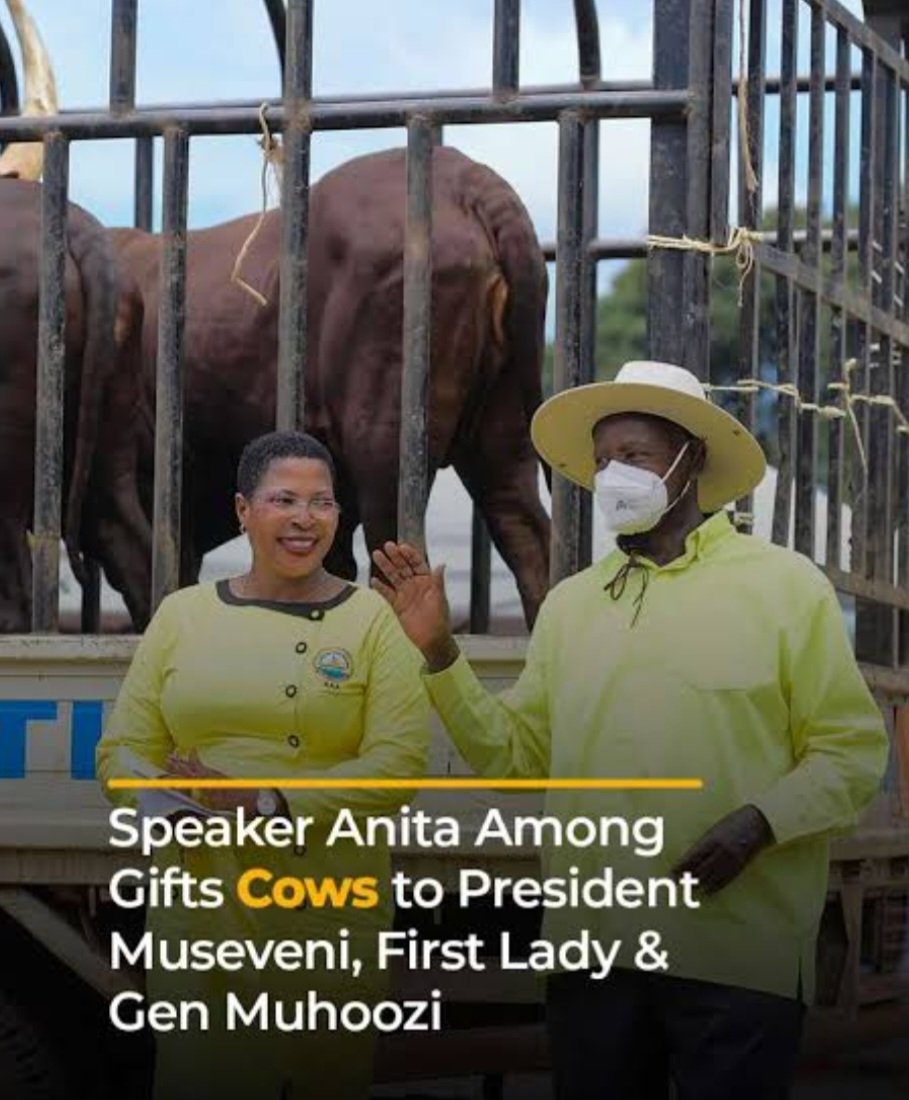
Let the entire @Parliament_Ug commission be fired to allow independent investigations, a mere punishing @AnitahAmong looks like more tribal war than a fight on corruption.
We may troll Among as she really deserves, but I don’t find it right to involve her innocent babies. They never made any choice of parents and don’t even know what’s going on. Please leave them out.
NSSF–Temangalo Land Scandal
Former Prime Minister Amama Mbabazi, then serving as Security Minister, came under fire after NSSF procured land that he jointly owned with businessman Amos Nzeyi. The 411 hectares were purchased for Shs11.2 billion.
Dr. Ezra Suruma, who was the Finance Minister supervising NSSF and also owned the now-defunct National Bank of Commerce where the money was invested, was also implicated in the saga.
A parliamentary probe report recommended action against Mbabazi and Suruma over an alleged conflict of interest. However, those recommendations were later quashed by the entire House, bringing the matter to a controversial close.
This is how taxpayers money was stolen.
SCHOOL FEES ARE NOT JUST A HOUSEHOLD BURDEN. THEY ARE AN ANTI-INDUSTRIAL TAX.
=======
One of the biggest monsters in Africa’s living room is school fees. Not corruption alone. Not laziness. Not lack of prayers. School fees. The African child is born, and before they can pronounce “multiplication,” the parent has already entered a lifelong financial boxing match with bursars, uniforms, development fees, PTA fees, projects fees, computer fees, tour fees, and the famous “bring a ream of paper” fees.
By the time this child grows, graduates at around 25 or 30, and begins to stabilize in work, they should be building wealth. They should be buying equipment, starting enterprises, investing, innovating, establishing industries, and becoming economically dangerous. But no. That is exactly when the school fees relay baton is handed to them. Now they must pay for nursery, primary, secondary, university, professional courses, and possibly their own master’s degree, so that the economy can continue pretending that certificates are development.
So the African adult spends the most productive years of life, from 30 to 60, financing education instead of financing enterprise and partnering with age-mates to start industries. And the damage does not stop at the bank account. When family income is swallowed by school fees, feeding suffers. Healthcare suffers. Rest suffers. Parenting suffers. Confidence suffers. Nutrition quietly moves from balanced meals to “let us first survive this term.”
This is where the matter becomes even more serious. A productive adult does not appear from nowhere. A productive adult was once a well-fed, well-nurtured, emotionally secure, and properly stimulated child. The worker who concentrates, innovates, leads, solves problems, builds companies, and carries a nation’s productivity was first a child whose body and brain were being built meal by meal, conversation by conversation, and care by care.
Poor feeding in early childhood is therefore not a small family inconvenience. It is a national productivity loss in slow motion. It affects growth, brain development, immunity, learning ability, concentration, confidence, and adult energy. So when we see stunting, malnutrition, poor learning outcomes, low confidence, and weak productivity, we should not only blame parents. We should ask what kind of economy forces parents to choose between school fees and proper food.
In many developed countries, quality public education gives families breathing space. Parents can use income to feed children well, expose them, mentor them, save, invest, and build businesses. Here, the African parent is working like a government subcontractor, privately financing the public promise that failed.
That is why school fees are not just an education problem. They are a nutrition problem, a health problem, a productivity problem, an industrialization problem, and a national development problem. A country cannot industrialize when its most ambitious families are permanently fundraising for the next school term.
Universal, high-quality public education is not charity. It is economic liberation. Because no nation becomes rich when parents spend their best years paying invoices instead of building industries.
The Wisdom Degree: Why I Really Did a PhD by Dr. Apollo Buregyeya is a book about knowledge, wisdom, Africa, and the deeper purpose of education beyond certificates. Visit @aristoc_booklex for a copy. You can also have your copy delivered by calling Irene on 0781 482230.
Yoweri Museveni, 81, has been sworn in for a seventh term as Uganda’s president after a January vote held amid an internet shutdown and a harsh crackdown on the opposition that forced main challenger Bobi Wine into hiding.
Honored to receive an Appreciation from the Federation of Uganda Employers (FUE) The Voice of Employers.
Grateful for the recognition and proud to contribute towards advancing the Employers’ Fraternity in Uganda.
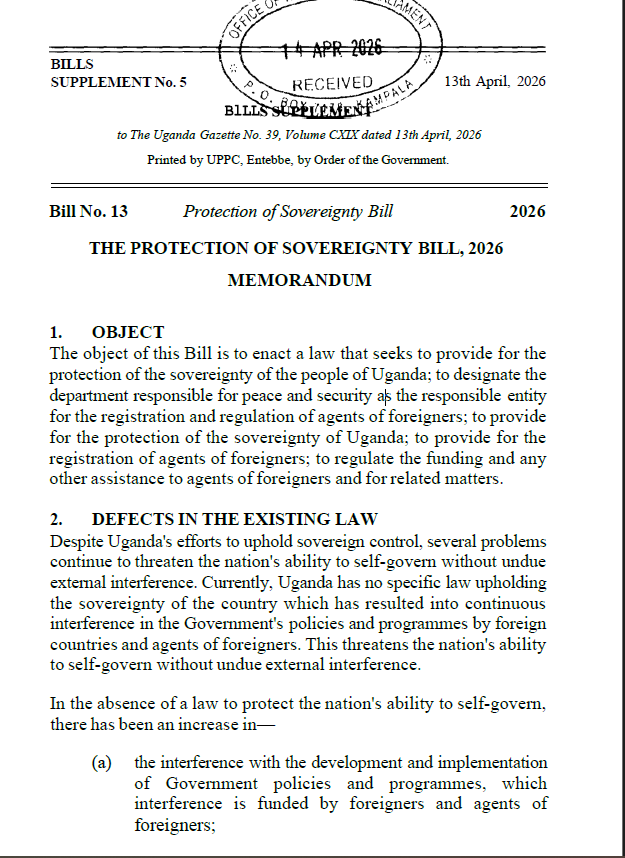
I finally got a copy of The Protection of Sovereignty Bill last evening, went through it and let me tell you, some people are in trouble....my take:
This Bill is being paraded as a shield for Uganda’s sovereignty and yet I thought we already have that in the Constitution. In reality it is a weapon aimed directly at the heart of our constitutional freedoms. It pretends to guard us against foreign interference but we are a poor country heavily dependent on foreign aid (government and private citizens). Its provisions are so sweeping, so vague, and so punitive that they would criminalise legitimate civil society, journalism, and even ordinary Ugandans who dare to engage with the wider world.
Clause after clause strips power from institutions and hands it to Cabinet and the Minister of Internal Affairs, concentrating unchecked discretion in the Executive. The definition of “agent of a foreigner” is so dangerously broad that it could ensnare NGOs delivering some service like Road Safety NGOs under @ROSACUg, health services, businesses trading internationally, or even citizens with relatives abroad.
The Bill dresses repression in the language of “economic sabotage” and “disruptive activities.” BUT criticism of government mismanagement is not sabotage it is holding it accountable. Cooperation with foreign partners in education, health, and development is not subversion, it is progress. By equating foreign support with treason, this Bill risks isolating Uganda from the very partnerships that have sustained our people.
Sovereignty is not preserved by silencing voices, strangling civil society, or threatening citizens with twenty-year prison sentences. Sovereignty is preserved when government is accountable, when institutions are independent, and when Ugandans are free to speak, organize, and participate without fear.
If passed in its current form, this Bill will not protect Uganda’s sovereignty but it will erode it. It will shrink freedoms, concentrate power, and undermine the democratic values that sovereignty is meant to defend.
It is not about not sovereignty, it is about suffocation.
COMPARATIVE TO OTHER COUNTRIES
Ethiopia: Charities and Societies Proclamation (2009)
Ethiopia introduced one of the most restrictive NGO laws on the continent in 2009. It barred organizations receiving more than 10% of their funding from foreign sources from engaging in human rights, advocacy, or governance work. The impact was devastating: civil society was crippled, international cooperation collapsed, and the country faced widespread condemnation. Recognizing that the law undermined democratic development, Ethiopia repealed it in 2019 and replaced it with a more liberal framework.
Kenya: NGO Coordination Act (1990, amended).
Kenya’s NGO Coordination Act requires registration of NGOs and disclosure of foreign funding. In 2013, draft amendments proposed capping foreign funding at 15%. This sparked strong public and international backlash, and the proposal was abandoned. The lesson from Kenya is transparency can be achieved without punitive restrictions, and civic space can be preserved by rejecting extreme measures.
Tanzania: NGO Act (2002, amended 2019)
Tanzania’s NGO Act mandates registration, government oversight of NGO activities, and reporting of foreign funding. Amendments in 2019 expanded state power, allowing authorities to deregister NGOs arbitrarily. In practice, this has been used selectively against critics of government. The Tanzanian example shows how over-regulation risks turning sovereignty laws into political weapons rather than genuine safeguards.
South Africa: Foreign Agents Registration Debate (2023)
South Africa has debated introducing a foreign agents registration law, modeled partly on the U.S. Foreign Agents Registration Act (FARA). The proposal would require disclosure of foreign-funded advocacy groups. Unlike Ethiopia or Tanzania, the debate has been framed around transparency rather than repression. The lesson here is that disclosure requirements, if narrowly tailored, can balance sovereignty with constitutional freedoms.
Nigeria: Foreign Contributions Regulation (proposed 2017)
Nigeria attempted to regulate foreign donations to NGOs and political groups in 2017. The proposal was heavily criticized as unconstitutional and was never fully enacted. Nigeria’s experience demonstrates that overreach not only undermines legitimacy but also invites legal challenges that weaken the credibility of such laws.
@Parliament_Ug
It means:
5yrs of economic struggles
5yrs of poor healthcare
5yrs of no emergency responses
5yrs of violence, brutality, dehumanization & injustice
5yrs of corruption, taking public resources
5yrs of driving thru potholes
5yrs of stupid power blackouts
5yrs of mocking the poor.
@UgandaEC Who doesn't Know that the EC fabricated everthing throughout the all election process.
Starting from the BVVK's to the final results shame on you
This is what happened in Mbarara Taxi Park: agents and other operators voted more than four times each, in full view of a police officer, while two observers stood over them to make sure Museveni was ticked. Election fraud in broad daylight.
#ProtestVote2026
"After billions of shillings are sunk into a campaign season, the idea that expensive biometric voter verification kits fail to work on Election Day and the casual way the government and EC respond to the fiasco is unacceptable."- @TimKalyegira https://t.co/qm0xC2PFcl
This video, recorded stealthily, shows how our Party, @NUP_Ug's Deputy President for Western Region, Mama Jolly Jacklyn Tukamushaba, was abducted and taken away by the military. They confiscated all materials she had on the eve of the election, including appointment letters for our polling agents and the funds she had to facilitate them. To date, her whereabouts remain unknown!
The Deputy President for Northern Uganda, Dr. Lina Zedriga was also abducted by the military, and her whereabouts remain unknown.
#FreeUgandaNow