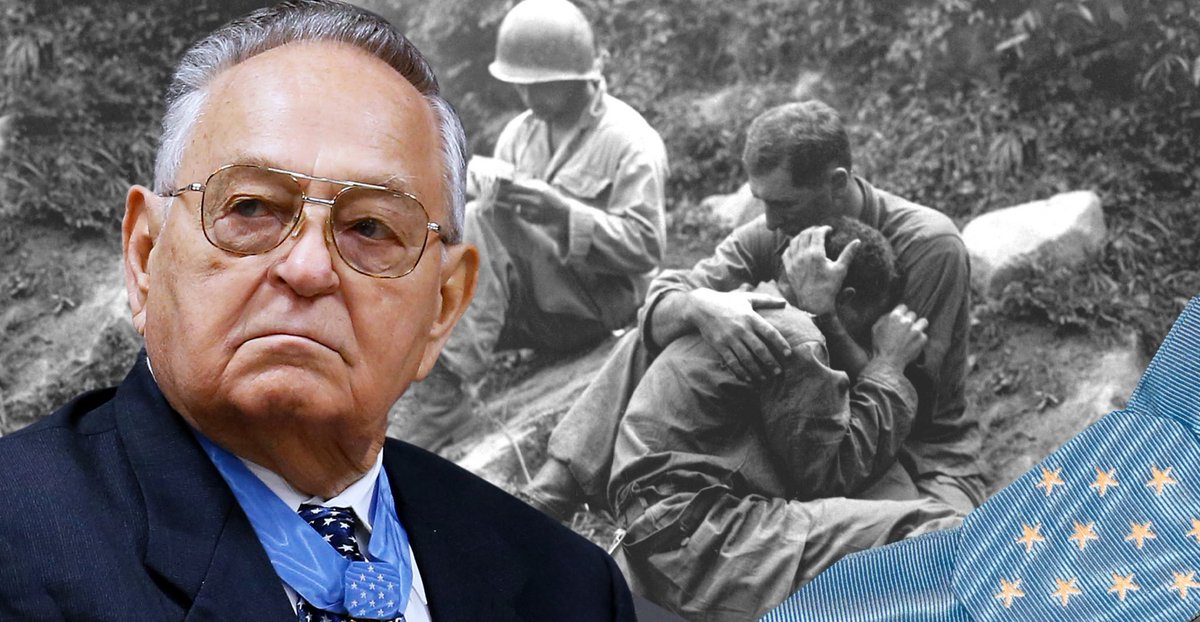
His little brother was killed in Korea. So Ronald Rosser signed up, asked to be sent to the exact place his brother died, and then went and fought like a man who had already made his peace with not coming home.
Rosser was an Ohio coal miner's son, the oldest of seventeen children. He had already done a hitch in the Army and was out, living a normal life, when word came that his younger brother Richard had been killed in the Korean War. Ronald walked back into a recruiting office, reenlisted, and specifically requested to be sent to Korea, to the same unit and area, so he could carry on where his brother left off. That tells you everything about the man before the battle even starts.
On January 12, 1952, near a place called Ponggilli, his company attacked a heavily fortified hill and got hit hard from two directions at once. The assault stalled out under murderous fire, men pinned and falling, the whole attack grinding to a halt on the slope. Rosser was a forward observer that day, the radio man, not even supposed to be leading a charge.
He handed his radio to his assistant and just went. Alone. Up the hill into the enemy positions with nothing but a carbine and a grenade.
He reached the first bunker and cleaned it out with a burst of fire. He kept going, into the enemy trench, working it by himself, shooting and throwing grenades. And then he ran out of ammunition. So he turned around, ran all the way back down through the enemy fire to friendly lines, grabbed more ammo and more grenades, and charged right back up the hill and into the trenches a second time.
He did it again. Ran dry, went back down under fire, reloaded, and came back up a third time to hurl grenades into the enemy positions. Three separate one man assaults up the same fortified hill. By the time it was over he had personally killed at least thirteen of the enemy, and on top of all that he helped carry wounded Americans back down off that hill to safety.
And here is the good part. Ronald Rosser lived. President Truman gave him the Medal of Honor in the Rose Garden in 1952. He came home to Ohio, the brother who went to war to honor his brother, and he lived into his nineties, one of the last of that generation of the one man army.
His little brother was killed in Korea. So Ronald Rosser signed up, asked to be sent to the exact place his brother died, and then went and fought like a man who had already made his peace with not coming home.
Rosser was an Ohio coal miner's son, the oldest of seventeen children. He had already done a hitch in the Army and was out, living a normal life, when word came that his younger brother Richard had been killed in the Korean War. Ronald walked back into a recruiting office, reenlisted, and specifically requested to be sent to Korea, to the same unit and area, so he could carry on where his brother left off. That tells you everything about the man before the battle even starts.
On January 12, 1952, near a place called Ponggilli, his company attacked a heavily fortified hill and got hit hard from two directions at once. The assault stalled out under murderous fire, men pinned and falling, the whole attack grinding to a halt on the slope. Rosser was a forward observer that day, the radio man, not even supposed to be leading a charge.
He handed his radio to his assistant and just went. Alone. Up the hill into the enemy positions with nothing but a carbine and a grenade.
He reached the first bunker and cleaned it out with a burst of fire. He kept going, into the enemy trench, working it by himself, shooting and throwing grenades. And then he ran out of ammunition. So he turned around, ran all the way back down through the enemy fire to friendly lines, grabbed more ammo and more grenades, and charged right back up the hill and into the trenches a second time.
He did it again. Ran dry, went back down under fire, reloaded, and came back up a third time to hurl grenades into the enemy positions. Three separate one man assaults up the same fortified hill. By the time it was over he had personally killed at least thirteen of the enemy, and on top of all that he helped carry wounded Americans back down off that hill to safety.
And here is the good part. Ronald Rosser lived. President Truman gave him the Medal of Honor in the Rose Garden in 1952. He came home to Ohio, the brother who went to war to honor his brother, and he lived into his nineties, one of the last of that generation of the one man army.
Mastiff trying to be helpful at fixing the sprinklers. During the once a week watering he really likes to get out there and get er done. He is 16 months old and weighs 160 pounds. I watch Axels weight closely as well as mine. For as big as he is he is pretty agile. Make sure you have some fun today.
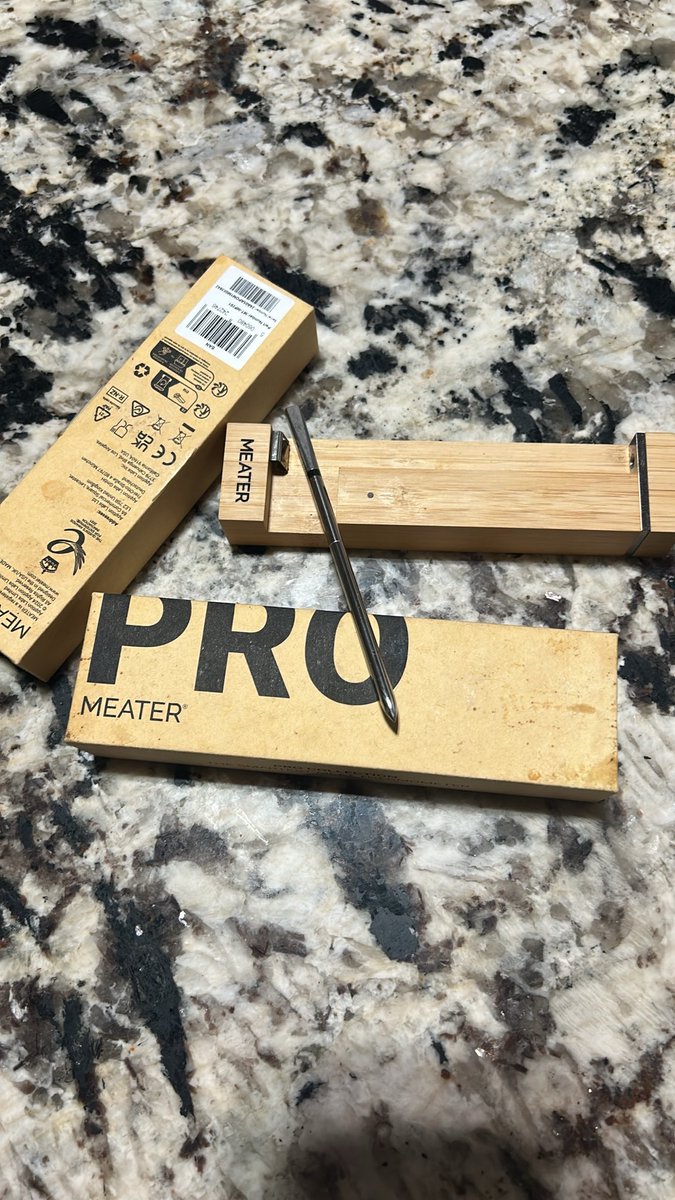
@Alice_MiaX Mostly I cook boneless skinless chicken in the dual oven Ninja. I found meat comes out wonderful when I use this thermometer. Before using this I tended to overcook items.
🚨 EVERYTHING THAT COULD GO WRONG FOR MARKETS WENT WRONG TODAY.
S&P 500 down -1.65%, wiping out $1.14 trillion.
Nasdaq down -2.60%, wiping out $1.11 trillion.
Gold down -3.38%, wiping out $1 trillion.
Silver down -6.9%, wiping out $280 billion.
Bitcoin down -6.31%, wiping out $80 billion.
In total $2.5 TRILLION wiped out in a single session. These were not isolated moves. Everything started breaking at the same time.
It started with the jobs report this morning.
The US economy added 172,000 jobs in May. Wall Street expected 88,000. That is almost double.
On any normal day, strong jobs is good news. But inflation is already at 3.8% and oil is sitting at $90. A labor market this strong tells the Fed it cannot cut interest rates and may actually need to raise them.
The probability of a rate hike this year went from 40% to 57% in a single day. That spooked every investor holding tech and growth stocks because higher rates mean those stocks are worth less today.
Then the AI trade started cracking.
Yesterday Broadcom reported record earnings: revenue up 48%, AI chip sales up 143% and the stock still crashed 12.6%. The reason was simple.
Broadcom did not raise its AI revenue targets for the year. Investors had expected it to. That single miss made people ask a question they had been avoiding for months: are we paying too much for AI stocks?
That question got louder today when a research firm called SemiAnalysis revealed that Nvidia's next-generation AI chips will need significantly less memory than everyone assumed, roughly half of what the market was pricing in.
Memory chips are what companies like SK Hynix and Samsung make. SK Hynix fell nearly 10% today. Samsung fell over 6%.
South Korea's entire stock market crashed 5.5% in a single session. Japan's semiconductor stocks did the same.
And then Anthropic added fuel to the fire by publishing a report warning that AI is getting close to the point where it can improve itself without human help and calling for a global pause in AI development.
Coming on the same day as the memory demand news and Broadcom's miss, it fed a single growing fear across the market: what if the AI boom is moving faster than the business models can keep up with?
Underneath all of this, there is a liquidity problem nobody is talking about.
SpaceX goes public next week at a $1.75 trillion valuation. Anthropic just filed to go public. OpenAI is next.
These three companies together are worth $4 to $5 trillion. Fund managers need cash to buy into these listings.
But cash levels are already at their lowest since early 2024. The only way to raise cash is to sell what they already own. That selling is happening right now.
The new Fed Chair Kevin Warsh will also hold his very first policy meeting in 11 days. He was appointed by Trump with the expectation of cutting rates.
He is now walking into a situation where inflation is high, oil is high, and the job market is running hot. Investors do not know what he will do.
When nobody knows what the most powerful central banker in the world will decide in less than two weeks, the safest move is to reduce risk today.
Everything that could go wrong, went wrong at the same time. A hot jobs report, a collapsing ceasefire, a crack in the AI trade, a trillion dollar liquidity drain, and a Fed meeting with no clear outcome.
Good information to know. Two weeks ago I lost 35 to 50% of my blood following surgery. My numbers almost perfectly follow these. Part of it is genetics and part lifelong diet and exercise.