Every interview @KafuiDey and @RevErskineGH dey do on their various platforms be worth watching chale. Them dey make real conversations wey dey bring out the story, passion and the real person behind the music.
Big up you guys chale!
The Quaque family should rather be paying reparations to the state.
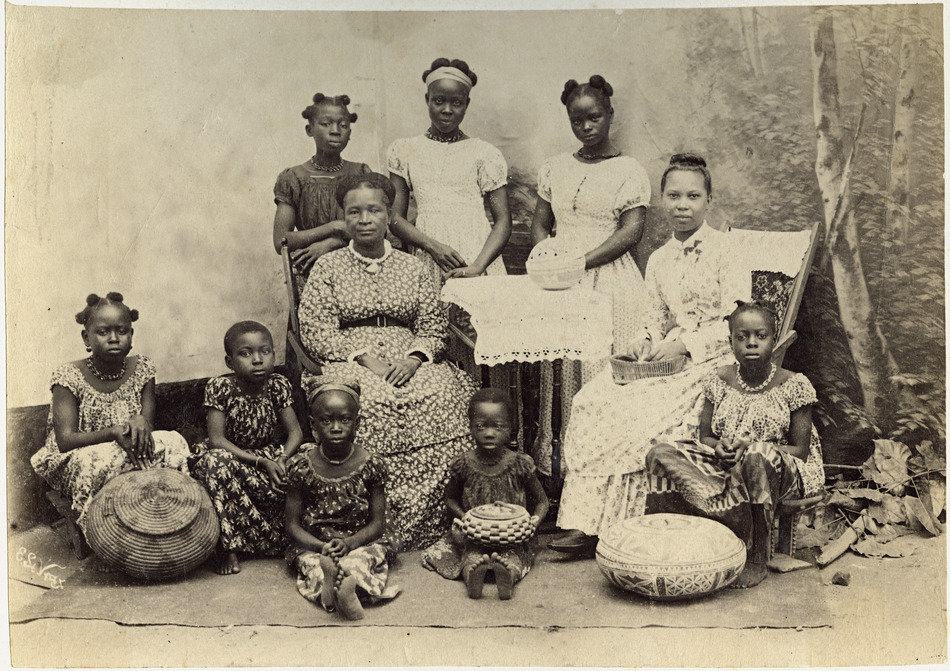
1. Philip Quaque’s father, Obirempong Cudjoe, was a caboceer.
2. If you didn't know, a caboceer was a big, strong & powerful African man whose job was to raid communities in the hinterlands, and capture free men, women & children for sale to Europeans as slaves.
3. This job became lucrative following the arrival of the Portuguese on the Gold Coast, continued under the Danes and the Dutch, and ended with the British.
4. Obirempong Cudjoe built a strong business relationship with the biggest slave trader of the 1750s in Anomabo, an Irishman named Richard Brew, who was governor of the Royal Africa Company (RAC) at the slave fort in Anomabo.
5. But for the enterprise in Gold Coast’s slave forts, which were the manger that served greener pastures to most British employees, Richard Brew, an unemployed drunkard back in Ireland, would have perished in poverty. Ironically, now we rather troop to their ends in search of greener pastures.
6. Together, Brew & Cudjoe profited from slavery. Part of those profits financed the education of Cudjoe's son, Philip Quaque, at Oxford. Quaque later became Africa's foremost Anglican priest and preacher at the slave forts. After returning from Oxford, however, he was alienated from his Fanti people, could no longer speak his mother tongue fluently, and began trading in slaves himself.
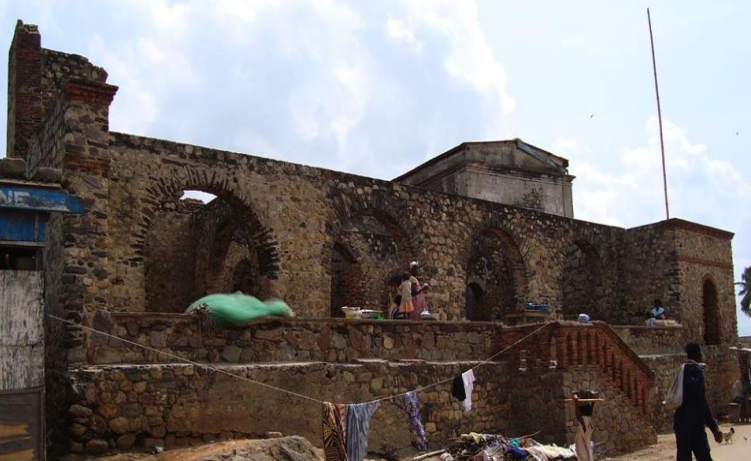
7. Richard Brew, on the other hand, undermined the RAC, made even greater profits, and built himself a fort named Castle Brew, which still stands in ruins at Anomabo.
8. To strengthen their relationship, Richard Brew's mulatto son from a caboceer's daughter, Henry Brew, married Quaque's sister, Abba Kayba. The Brew family in Ghana emerged from this union and developed into a large privileged lineage that persists to this day.
9. Kwesi Brew (poet, diplomat, & member of the first batch of students to attend Legon), his daughter Rama Brew (veteran actress), Marietta Brew (second female attorney-general & current chair of Legon Council), Amandzeba Nat Brew (celebrated musician), & hyphenated-and-allied Brews all descend from this lineage.
10. These descendants & their allied Quaque family should be among those held accountable for the ancestral debt.
11. They can begin by renaming the Quaque House at Adisadel College in memory of their enslaved victims, whose family names I would rather not mention to avoid stigmatization.
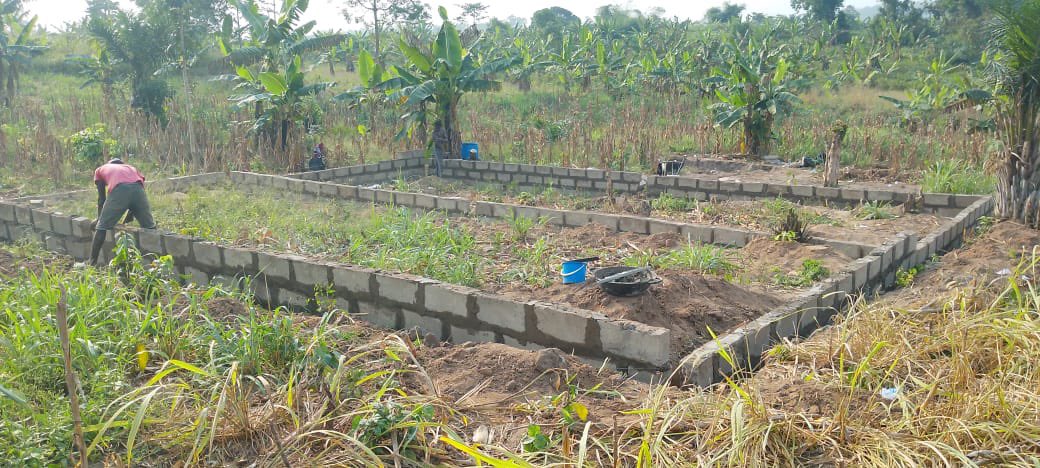
1. i used part of my stipend as a graduate student here in the U.S. to lay the foundation for a crop and livestock breeding and research center in Aboabo (ER, Ghana). this project reflects my vision to create sustainable agribusiness investments and employment opportunities for young people.
1a. i put together a trusted team of young professionals, including a lawyer, an accountant, an agriculturist, a project manager, and a personal assistant, to oversee this project.
2. i am currently experimenting with extracting high-quality organic oil and producing a clean, cosmetic-grade product from fruit waste. a hydraulic press machine has been custom-built in partnership with a local metal fabricator.
2a. we have conducted several trials, and so far, the critical barrier is that the process has only yielded juices and a black crude oil.
i reached out to a research center in ghana for help refining the black oil, but I was told they only support funded projects — and now I am stuck.
a REPOST to help me connect with experts in the following fields would be greatly appreciated:
1. food technology (oil extraction & refining)
2. chemical engineering (process optimization & extraction methods)
3. lipid chemistry / biochemistry (oil composition & purification)
working with my team at 3farmate has shaped my agri-engineering acumen and empowered me to initiate personal projects that develop solutions benefiting both communities and industries.
GOD BLESS MY HOMELAND, GHANA 🇬🇭
DEAR @X
MY NAME IS MARK NII OFORIQUAYE, AND I AM THE HEAD OF AGRIBUSINESS AT @3FARMATEBOTS.
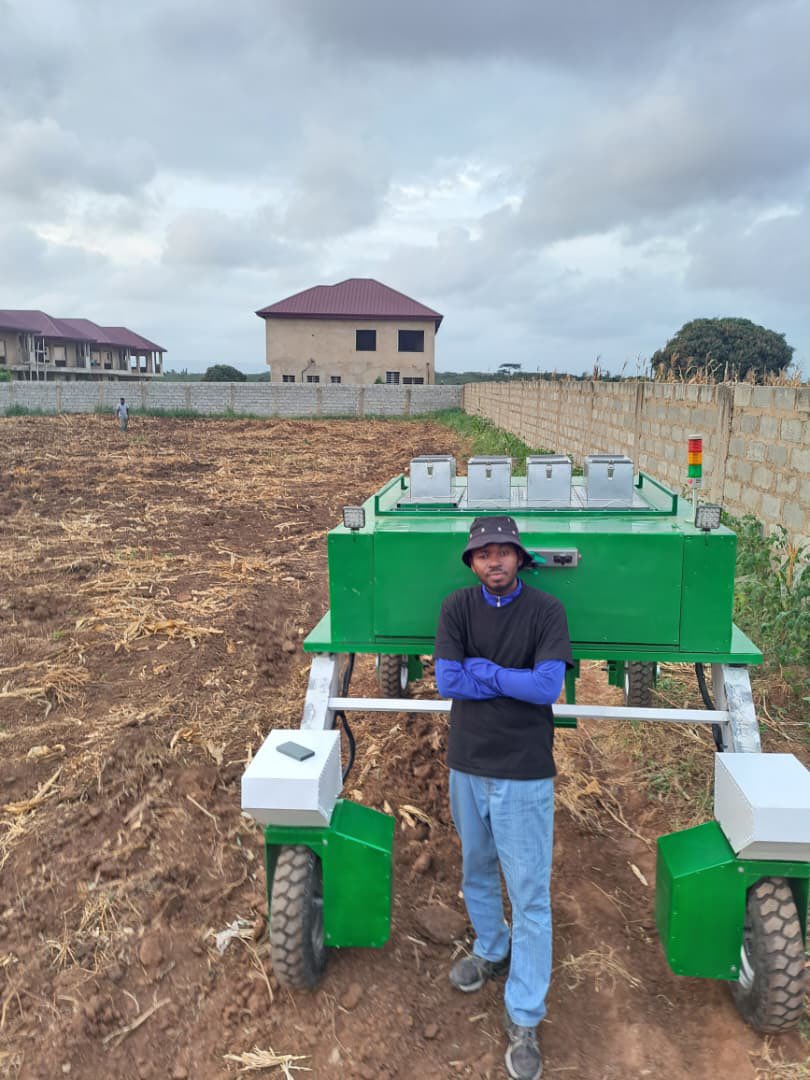
WE HAVE JUST LAUNCHED GHANA’S FIRST AUTONOMOUS AI-POWERED AGRIBOT (CHECK MY PINNED POST).
WE ARE BUILDING THE NEXT GENERATION OF MACHINES THAT WILL REVOLUTIONIZE FOOD PRODUCTION.
PART OF OUR VISION IS TO ESTABLISH REGIONAL FACTORIES THAT WILL EMPLOY SKILLED ENGINEERS TO MASS-PRODUCE AGRIBOTS AND OTHER WORLD-CLASS MECHANIZATION TECHNOLOGIES.
WE ARE TELLING THE AFRICAN STORY AND ADVANCING THE AFRICAN DREAM—ONE ROBOT AT A TIME, STARTING FROM GHANA, OUR MOTHERLAND.
IF YOU SEE THIS POST ON THE TIMELINE, KINDLY REPOST AND SHARE.
THE REINDUSTRIALIZATION OF AFRICA IS US.
LET’S GO VIRAL.
https://t.co/SXkmzBhVpJ
CC: @3FARMATEBOTS
agriculture changes forever starting today.
introducing FAMA, our gen 1 autonomous robot that plants seeds, fertilizes, and weeds farms. fully self-driving, no GPS.
we had no hardware background when we started. but we pulled through.
more robots for farming incoming 🚀
'yɛn kyerɛ obi ase': the beginning of perpetual corruption.
1. when britain finally decided to compensate british slaveholders who would lose their income after abolition, they asked all slaveholders to come forward and declare their slave estates. in return, inheritable slavery compensation certificates were issued to enable payments to be made.
2. these records are well documented and publicly available, listing the receiving parties: archbishops, members of royal families, banks, insurers, and others whose names still echo in our institutions.
3. yet when it was our people’s turn to give in to british abolition in ghana, many did not only resist; they fought abolitionists so fiercely that slavery continued here for another 67 years, ending only when ghana became an official british colony.
4. and when it eventually ended, we quietly closed the chapter on forebears who amassed wealth from slave trading and opposed efforts to stop it.
5. the public was barred from naming and pointing out the perpetrators whose descendants still live and flourish among us.
6. in their defence, 'yɛn kyerɛ obi ase': we do not uncover one’s familial roots. and so, it remains today. yɛn kyerɛ obi ase.
if you wish to support our work in uncovering, discovering, and telling the hidden tales of our historic past, do well to act.
subscribe: https://t.co/XtwS80FlXQ
support our publications: ¬https://t.co/1OovRcVFHk ¬https://t.co/Hk5LUTVNDZ