with a heavy heart I announce BikeBBQ's permanent closure. I have nothing but respect for our dedicated volunteer staff. The simple truth is that over the past few years we haven't been able to attract enough new folks to keep the lights on. COVID only made the problem worse.
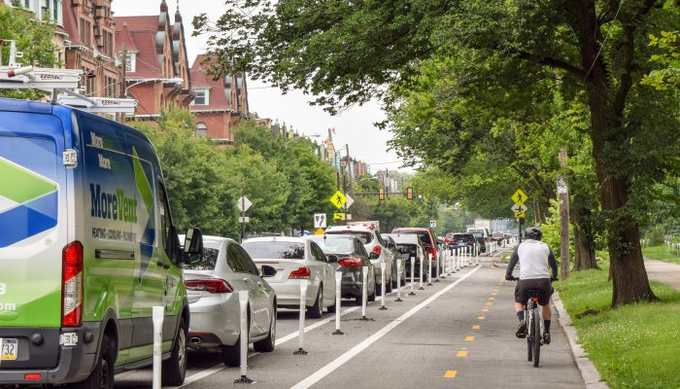
NYC rearranged tons of street space to make room for people to get around using bikes. What happened next?
Bike ridership boomed!
🥳 Every mile of protected bike lane added generates about 1,100 daily bike trips. Bike commuting tripled from 2007 to 2024.
🥳 15% to 20% of new bike trips replaced vehicle trips, creating a per-mile reduction of about 140,000 to 190,000 vehicle miles traveled every year.
🥳 Bike share continues to appeal to residents. 13% of all New Yorkers used a @CitiBikeNYC in 2022. In 2014, the first full year of service, 8.6 million rides. In 2024, 44.5 million rides.
🥳 Bike infrastructure creates 47% more jobs per $1 million spent than car projects, boosts local sales by 49%, and generates 3.6 times more expenditure per space converted from cars.
🥳 Protected lanes increase cycling probability by over 9%.
🥳 Every $1,300 invested yields health benefits equivalent to one additional year of life for residents.
🥳 Shifting trips to bikes cuts vehicle miles traveled reduced congestion, lowered carbon emissions, and improved air quality. @CitiBikeNYC alone reduced emissions by 1,800,000 pounds monthly. 🤯
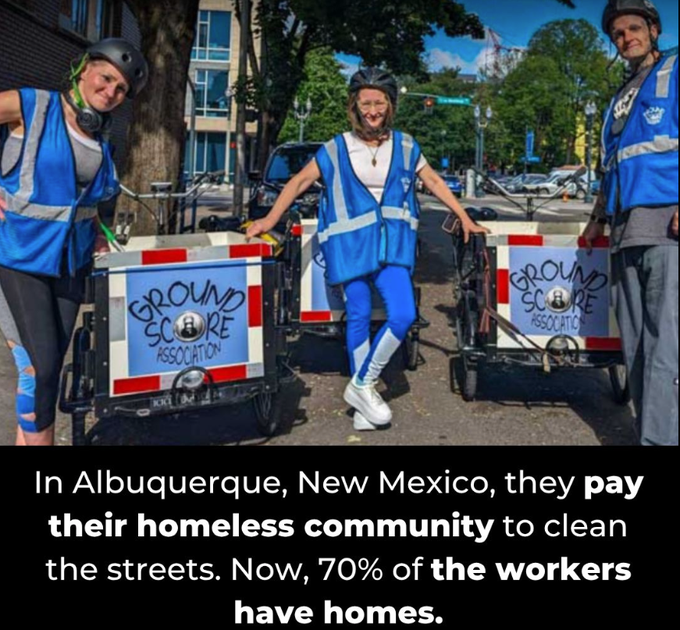
In a groundbreaking social initiative, Albuquerque, New Mexico launched a program that pays homeless individuals to clean streets, parks, and public areas.
The idea was simple — offers work, dignity, and purpose instead of punishment or pity.
The results were remarkable: over 70% of participants have now secured permanent housing or full-time employment, transforming their lives and communities alike. The city’s “There’s a Better Way” program proves that compassion-driven policies can be more effective than traditional welfare systems.
South Korea built a 32 km solar-covered bicycle highway with ~7,500 solar panels generating ~2.2 GWh of clean electricity annually, enough to power ~600 homes.
The South Korean solar bike highway is a glimpse of how infrastructure evolves during disruption.
Critics point to today's traffic noise and pollution, but those are largely artifacts of the fossil fuel era. As transport electrifies, tailpipe emissions disappear and road noise falls dramatically.
What remains is a bicycle corridor protected from traffic, shaded from the sun and rain, while generating clean electricity from the same footprint.
One asset. Multiple functions. More value.
That's not just a bike path. It's a preview of how smarter infrastructure gets built. #Bettrification
Así se percibe el contexto a medida que incrementa la velocidad al volante, por eso hay que reducir de forma efectiva el límite por debajo de 30 km/h. https://t.co/YE1zxoT3c5
Transport and urban planning have a gender problem, where the fields are 86% male in the US, 80% in Asia and 78% in the EU.
Despite this, women are driving some of the most consequential transformations happening in cities now.
Our latest in @planetizen: https://t.co/yKIRGniroI
Cities are finally realizing that human infrastructure can pull double duty to save the planet.
In Utrecht, Netherlands, over 300 bus stops have been completely transformed into "bee stops" featuring green roofs planted with native sedum wildflowers.
These miniature urban oases capture rainwater, absorb fine dust, cool down the pavement during heatwaves, and provide essential pit stops for endangered pollinators navigating the concrete city maze.
The best part? It's paid for entirely by the city's standard transit budget.
Around 60% of all car trips are below 5 miles.
Let's focus on offering viable alternatives for those ones. And give people the #freedom to choose the 'Best Tool for the Job' instead of being stuck with the worst.
(🎞️ by @BikeIsBestHQ)
For too long, it has been effectively legal to commit assault and murder as long as you use a car. Egregious, repeated offenses are insufficient to lose a license. We need to retake streets for people and prioritize human access, mobility, health, safety and life over vehicles.
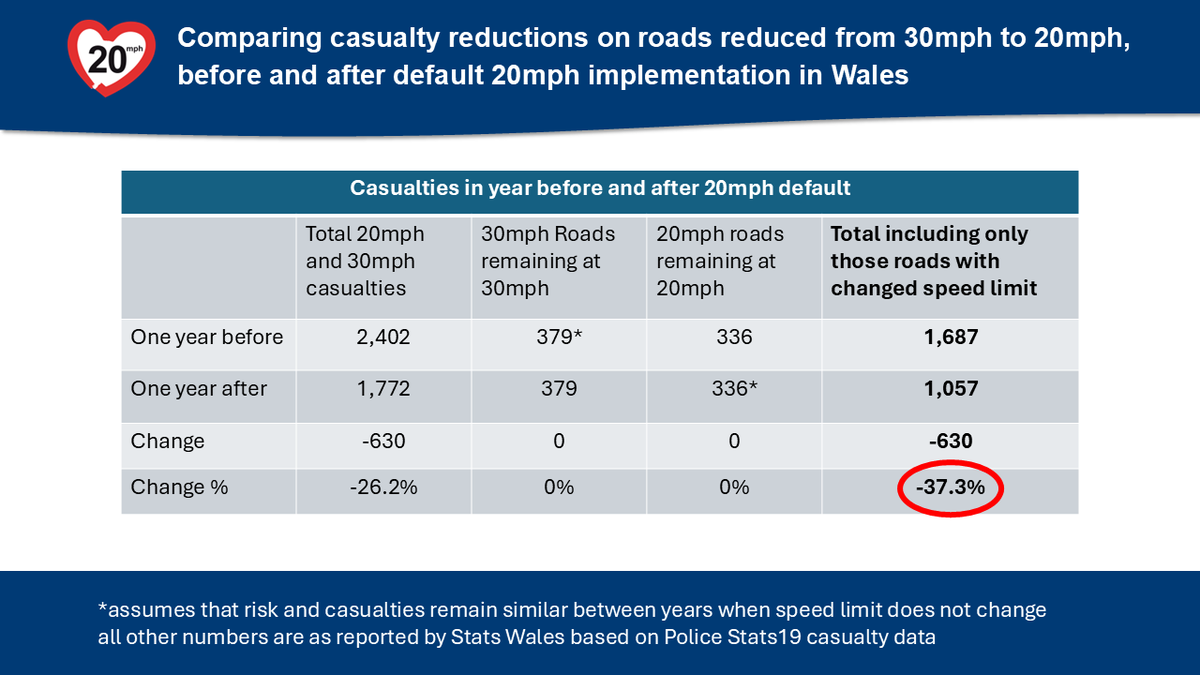
New analysis from the Welsh 20mph default shows that casualty reduction estimates when excluding roads that didn't change speed limit is -37%. Even allowing for a -5% long term trend this means a 32% reduction on roads changed from 30mph to 20mph. A powerful indicator that #20splenty and that just like in Wales and Scotland, 20mph must become the urban norm in England and Northern Ireland to meet any credible road safety strategy or Safe System approach.