@ErfinderRotwang@benonwine Don’t be silly, we remember men of all faiths who died, but as England is Christian country and the King head of the church of England, we use a Christian ceremony. Do NOT try and change our culture. You are disrespectful.
@Cllr_R_Adamson@benonwine Absolutely. The so called Archbishop of Canterbury should not allow this. It is not a question of not remembering men of all faiths who died but in Britain, we remember them with Christian services - being a Christian country.
@MrJordanKelly1@benonwine@65sneaky It is not a secular nation , it is a Christian Nation with head of state the King, head of Church of England. Like it or not, despite what people like you say or wish.
This is UNACCEPTABLE. 😡
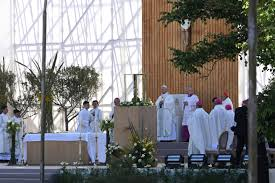
Remembrance Sunday in HARROW, at the town's war memorial, and an Islamic prayer is recited in Arabic.
Britain is a CHRISTIAN country.
Remembrance is rooted in Christian tradition, and the men we honour lie beneath Christian crosses.
This DISHONOURS and besmirches our fallen soldiers.
Disgusting. They deserve better, I can’t believe this was allowed. 🌺🇬🇧
Today is the day. David vs Goliath. Today we go to the High Court for our landmark judicial review against the Government. We have been shocked at the arguments being advanced by the Home Secretary in defence of its failure to implement key recommendations made by the Independent Inquiry into Child Sexual Abuse (IICSA). These arguments include, that The Maggie Oliver Foundation does not have standing to bring this challenge on behalf of children, that the Government is under no obligation to implement child protection measures, and that the public at large cannot rely upon promises made by the Prime Minister and Ministers that are made in Parliament.
The Government's legal defence raises fundamental questions about public trust, accountability and whether promises made to survivors following public inquiries mean anything at all.
At the centre of the judicial review are 20 key recommendations issued by the Independent Inquiry into Child Sexual Abuse (IICSA) proposed to better protect children across the UK from sexual abuse. These include properly collecting data relating to child abusers and victims of abuse and exploitation, ending the use of pain-inducing restraint techniques on children in custody and regulation of staff in children’s homes.
We are concerned that more effort and public money appears to be going into defending a challenge designed to ensure these critical improvements in child protection are made than into implementing them.
The simplest example of this is this – if the Government had implemented the first recommendation of the IICSA, there would have been no need for a further three-year, £65 million public Inquiry (The Statutory Independent Inquiry into Grooming Gangs).
WHO IS ALLOWED TO ASK THE QUESTION?
The Secretary of State is a challenging whether The Maggie Oliver Foundation and our founder and Chair, @MaggieOliverUK , have standing to bring the case at all.
This raises a deeply troubling question.
If organisations representing survivors and working every day with the consequences of child sexual abuse are not entitled to ask why promised child protection measures have not been implemented, who is?
The Government is trying to exclude from the debate the very people closest to the consequences of these failures.
For years survivors have been told to come forward. Speak up. Tell the truth. Many have done so at enormous personal cost, but now the Government says they, and those who represent them, cannot object to failures to protect children. Their voices must be silenced.
This challenge was never about politics. Governments of all stripes have let down children. It is astonishing that the Government's first argument in this judicial review is that victims can have no voice.
If organisations representing survivors, and survivors themselves, cannot ask why promised child protection measures have not been implemented, who can?
IF GOVERNMENT DOESN'T HAVE TO ACT, WHAT IS THE POINT?
A central plank to the Government's defence is that ministers are under no legal obligation to implement recommendations made by public inquiries.
If that is right, why spend hundreds of millions of pounds on public inquiries if Government is just going to ignore what they find? We genuinely struggle to understand how anyone can think that is acceptable.
Millions are spent, years of hearings are had, victims pour out their hearts, findings and recommendations are made, promises are made by Government and then broke – but when someone has the temerity to ask why those promises haven't been kept, the Government's response is we never had to keep our promises.
If that is right, the Government must be open about it, and explain to the public why they hold expensive public inquiries at all.
IICSA took seven years, heard from more than 7,000 survivors, cost more than £200 million and made twenty recommendations intended to protect children. But the Government now says, we have no obligation to fulfil its promises to implement recommendations to protect children.
CAN POLITICIANS DENY THEIR PROMISES MATTER?
We are also challenging the Government's position regarding promises made by the Prime Minister and ministers following publication of IICSA's recommendations.
Repeated assurances that action would be taken have been made by senior politicians across successive governments.
The Government's defence includes arguments relating to parliamentary privilege. In effect the Government say that The Foundation cannot rely upon ministerial promises made in Parliament, and that such promises cannot give rise to expectations about future action.
If the public cannot rely on promises made in Parliament, what can they rely on?
Survivors and the public hear ministers make promises.
They hear repeated assurances that lessons have been learned and change will follow.
They build their expectations around those promises.
Many survivors have spent years believing ministers when they said action was coming.
To now be told that those promises cannot be relied upon is not just a legal argument, it is a fundamental betrayal of the trust survivors (and children across the UK) were asked to place in the process.
Trust works both ways.
Survivors are asked to trust public inquiries with the most painful experiences of their lives.
Governments should not then be able to argue that survivors cannot rely on the promises they receive in return.
WHILE GOVERNMENT ARGUES, CHILDREN ARE STILL BEING ABUSED
Government figures show that approximately 2 million children have been sexually abused since IICSA published its recommendations in October 2022.
That astonishing number must not be lost amidst legal arguments and the Government’s technical defences. This case is about the protection of all British children.
What shocks us most is how much ingenuity and effort has gone into finding reasons not to act.
Imagine if half of the same energy had been invested in implementing child protection measures.
Imagine if the resources currently being spent defending this case had instead been spent protecting children.
How many children might already be safer?
While well paid Government lawyers argue, children are still being sexually abused.
That is the reality we cannot lose sight of.
This case was never about clever legal arguments.
It is about whether promises made to children and survivors mean anything at all.
The Maggie Oliver Foundation will not be silent on that question.
@SimisterLiz@andrewc44104127 I work in a library and it is the same - introduced self service check out books , cut the staff. Older people still come to the counter as they want to talk - part of library experience is chatting about books. Young people should be encouraged to do this but are not cos of SS
Dear Tesco, Asda, Sainsbury's, Lid, Aldi, Waitrose, Morrisons, and all other stores that have self checkout.
You are heading towards almost exclusively self-checkout now.
The lady checking receipts at the exit was stopping
everyone.
I didn't choose to participate in that nonsense, I had already
🛒 filled my cart
🛒 emptied my cart
🛒 scanned the items
🛒refilled my cart
and so I just skipped the exit line and left.
I heard her saying "umm - Excuse me " as I kept walking and raised the receipt above my head, leaving the store.
You can either trust me to do self-checkout, or you can put your cashiers back in place like it used to be.
I'm not interested in proving that I did your job for you.
• If you want me to be a cashier with no training then that's vour problem not mine.
• Keep employing young people and give them job opportunities.
YOU DON'T PAY ME TO SCAN MY OWN SHOPPING.
YOU DON'T GIVE ME STAFF DISCOUNT FOR WORKING FOR YOU.
Signed ....All of us
These are jobs that are needed to have for young and old
@Benchipichape Just like I remember it at my house.
Us six kids at a separate table from mum and dad and grandparents and 70s look! Won’t mention the huge arguments that one forgets about! Ah happy times!
“There are doors that you cannot open, but God can.”
Pope Leo XIV spoke with remarkable tenderness yesterday to one of the quietest and most painful experiences of Catholic parenthood: watching children who were raised in the faith gradually abandon it.
Speaking at the National Shrine of Our Lady of the Thirty-Three in Uruguay, he acknowledged the anguish of parents whose children no longer pray, attend Mass or seem interested in the faith they were given. For many Catholic families, this is not an abstract concern about secularisation or declining religious practice. It is an intensely personal sorrow, often accompanied by the fear that somewhere along the way they failed in their most important responsibility.
Yet Leo's response was neither condemnation nor a promise of some easy remedy. He urged parents to persevere in prayer, to continue loving and accompanying their children, and to resist the temptation to turn every encounter into an argument. There are limits to what even the most devoted parent can accomplish. Faith cannot simply be imposed, and love must learn to respect the freedom of those for whom it prays.
He also spoke directly to fathers, reminding them that children need to see what faith looks like when it is lived. A father who prays, receives the sacraments, honours his wife, acknowledges his mistakes and asks forgiveness communicates something that no amount of religious instruction can replace. Children learn not only from what we tell them about God, but from what our lives reveal about whether we truly believe in Him.
There is a profound lesson here about the transmission of faith. We sometimes imagine that if we provide sufficient catechesis, establish the right routines and answer every question correctly, our children will necessarily remain Catholic. All these things matter enormously, but faith is ultimately a free response to grace, not a result that parents can manufacture. Even exemplary parents cannot guarantee their children's choices, just as imperfect parents are not beyond God's capacity to work through them.
Perhaps the most difficult vocation of Catholic parenthood begins when our children become adults and we discover that we can no longer protect them from every mistake, persuade them of every truth or direct the course of their lives. We must learn to exchange a measure of control for trust in Providence, without ever surrendering our responsibility to love, pray and bear witness.
The Church has always understood that conversion is God's work, even when He chooses to accomplish it through the patient fidelity of ordinary people.
For parents carrying the sorrow of children who have drifted away from the Church, Leo's message is both a consolation and a challenge: do not abandon hope, do not allow disappointment to extinguish love, and do not underestimate the quiet power of a faithful life.
There are doors that we cannot open. But God can.
@TheJadeWarwick@elonmusk Let’s not forget about Huw Edwards. Actual evidence of Cat 1 child pornography on his laptop and payments made to receive such images.
It fucking stinks!
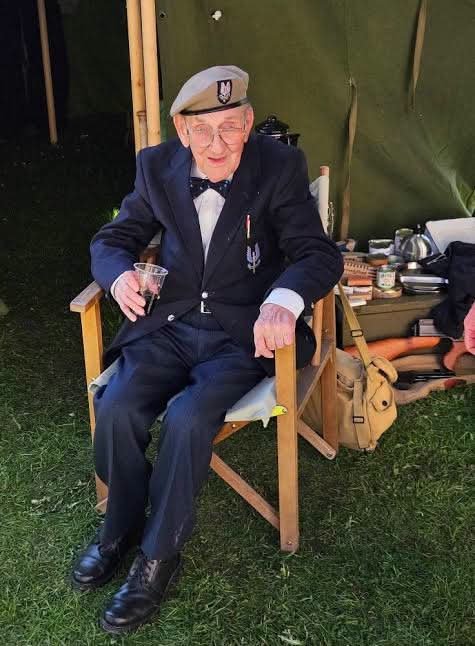
Sadly, the last known surviving WW2 veteran of the British SAS, Matthew "Matt/Jock" Mackinnon-Pattison died on Thursday 5th November aged 102years. We remember Matthew. Here is a summary of his wartime service. Please share widely: Matt MacKinnon Pattison was among hundreds of thousands of Allied soldiers who fought Germans in Italy in the spring of 1944.
Sometimes remembered as the "D-Day Dodgers", in reference to their role away from Normandy, men in Italy faced brutal conditions as they battled to take Monte Cassino and dislodge enemy soldiers.
"We came back from Italy having flogged ourselves to pieces, nervous wrecks, and people say 'where were you on D-Day?'" said Matt, from Penrith, Cumbria.
"We just say we were busy bloody well fighting."
British Prime Minister Winston Churchill thought of Italy as the "soft underbelly" of Nazi-dominated Europe, but the campaign there proved difficult and costly.
With perhaps typical military irony, the men in Italy adopted the "D-Day Dodgers" moniker, even creating a song to the tune of Lili Marleen, a famous wartime melody.
"We are the D-Day Dodgers in sunny Italy," rang the chorus.
But this was no sojourn in the sun and the Allied forces knew it.
Enemy soldiers were dug in on defensive lines across the country, and at Monte Cassino it took four separate attacks from US, British, Polish and Commonwealth forces to destroy and take the hilltop monastery.
Matt still has razor-sharp memories of the battles he fought, and the comrades he lost.
He fled agricultural service in Kilmarnock as a teenager to get to Glasgow to enlist as an infantryman before ending up "right in the forefront" of the battle for Monte Cassino.
Advancing up the slopes amid the fog of deadly artillery bomb blasts and the continual crackle of gunfire, the soldier saw many of his comrades fall.
But, he said, there was no time to be frightened.
"You don’t look upon it as bravery, you just look at it as part of your life," he told the BBC.
"When the officers told you to advance, that was what you had to do.
"Every battle is the same. You get pounded to death, whether it was Normandy, Burma or anywhere."
Matt was recruited for the SAS after being injured and taken to a Naples hospital to recover.
From 100 candidates, he was just one of 10 that made it. He was dropped behind enemy lines near Genoa, tasked with finding Italian dictator Mussolini who by then had been captured by partisans.
Once the war was over, he was sent to Germany as part of the War Crimes Unit to find Nazi suspects who had executed captured members of the SAS.
There, he said, he saw a broken nation, but people "just like us".
Eight decades on, he can clearly recall the claustrophobic horror of war, from German soldiers playing dead to entice Allied soldiers into shooting range, to landmines and enormous loss.
"I lost a lot of my mates, especially one called Ginger," he said.
"And when he died he was sitting in a trench with his head down. There was a smile on his face."
"Still a smile on his face that marked the place where he and his maker met.
"And that was Ginger. He was a good lad."
Dodging D-Day was no pass, and so many thousands paid the ultimate price in Italy.
In his flat, Matt still has his SAS beret, his medals and his memories.
He also has his nation’s thanks.
Absolute legend
Rip mate x