@sitsio Interesting. He's the brother of Fr. Pierre Duverger, SSPX, who's been both criminally investigated and civilly sued for alleged sex crimes against girls.
I love Archbishop Broglio’s observation that someone described Traditionis Custodes as “a solution in search of a problem.” It captures something of the really troubling nature of the entire approach of the Francis pontificate to the traditional liturgy.
The stated objective was ecclesial unity, yet the practical consequence has often been to alienate precisely those Catholics who are most passionately committed to the Church’s sacramental life, doctrinal integrity and continuity with her own history. Of course there are traditionalists whose attitude towards legitimate ecclesiastical authority is deeply problematic, but that is a question of ecclesiology and obedience, not an inherent defect in a liturgy that nourished countless saints.
Pope Benedict XVI understood something that seems to have been forgotten: unity does not require uniformity, and the Church’s inheritance is not a threat to her future. After all, the Catholic Church is not a liturgical monoculture. She embraces the Byzantine, Alexandrian, Armenian, Syriac and other venerable liturgical traditions, including those of the Syro-Malabar and Coptic Catholic Churches, each expressing the same Catholic faith through its own distinctive spiritual and liturgical inheritance. This extraordinary diversity is not regarded as an obstacle to ecclesial unity but as a manifestation of the Church's universality. What binds these communities together is their common faith and communion with the successor of Peter, not the uniformity of their worship. If the Church can accommodate such profound liturgical diversity across East and West, why should the coexistence of the older and newer forms of the Roman liturgy suddenly constitute an intolerable threat to unity? This reality makes Roche's demands about unity look, frankly, myopic. Indeed, it is rather difficult to explain why a Church that speaks incessantly about synodality, accompaniment, diversity and listening should regard the liturgical aspirations of some of her most committed faithful as a problem requiring suppression.
Surely the genuinely pastoral response is to welcome Catholics attached to the ancient liturgy into the full life of the Church, insisting upon communion with Peter while respecting their legitimate aspirations.
The great irony of Traditionis Custodes is that a measure ostensibly designed to overcome division may have deepened the very divisions it claimed to address. Archbishop Broglio is right to question the premise. Perhaps it is time Rome did the same.
Archbishop Broglio on the Latin Mass – “someone told me that Traditionis Custodes was a solution in search of a problem”
The former @USCCB president & current ordinary of @MilArchUSA called for wider availability of the old rite:
“I believe it’s not necessary to stifle this desire to worship God in this way.”
Details on @CatholicHerald via @tribuchretienne
This is why Pope Leo’s words moved me so deeply. He spoke directly to those mothers who had taught their children to pray, only to watch them abandon the faith, and who are left wondering whether their efforts had been futile. My own mother died, not knowing, but believing that hers were not. Recalling St Monica, whose prayers accompanied the long conversion of her son Augustine, Pope Leo reminded them that the seed can grow without the sower knowing how. What an immense consolation to parents who have spent years praying for children who seem lost to the world. What a magnificent vindication of the quiet, hidden lives of faithful mothers and fathers whose sacrifices will never be celebrated at a conference or recognised by the architects of our political future.
https://t.co/rO85ZO487Z
Pope Leo’s most challenging observation during his prison visit was that human beings can flourish through their limitations. That deserves consideration well beyond the prison walls, because we increasingly understand freedom as the removal of whatever obstructs our desires. On that account, dependence is humiliating, restraint is oppressive and fulfilment means acquiring ever greater control over our circumstances. Yet someone can possess considerable freedom of movement while remaining enslaved to addiction, resentment, greed or the need to dominate others. Conversely, a person deprived of liberty can begin to acquire the honesty and self-command that previously escaped him. Recognising this does not make imprisonment good in itself, excuse degrading conditions or diminish the suffering of victims. It does expose the inadequacy of treating freedom simply as the ability to do what we want. Sometimes our desires themselves need to change, and the encounter with a limit becomes the moment when we finally recognise that. Leo’s intervention suggests a demanding Christian understanding of rehabilitation: helping a person become capable of choosing the good, rather than merely waiting for the day when he can resume choosing without external restraint.
"When I was in prison, you came to visit me". Pope Leo’s visit to a Buenos Aires prison raises a difficult question: do we believe that someone guilty of a serious crime can become more than the worst thing he has done?
Meeting prisoners today, Leo expressed the hope that a new life is possible, a demanding Christian claim, especially when we remember that the consequences of an offender’s actions may remain with other people for the rest of their lives. Forgiveness cannot restore a murdered person to a family, erase abuse or make betrayal inconsequential. Forgiveness does not mean repentance removes the need for punishment, restitution where possible and protection against further harm. A claim to have changed must never become a convenient way of escaping scrutiny.
Yet despite this responsibility itself assumes that a person is more than an object to be managed. We hold people accountable because their choices matter and that same moral seriousness requires us to recognise that their subsequent choices matter too: whether they acknowledge what they did, abandon their excuses and begin the difficult work of living differently. There's a temptation to divide society into people whose futures deserve investment and people whose pasts have permanently disqualified them. Christianity resists that division without pretending that everyone can safely be trusted. A prison chaplain can believe in a man’s capacity for repentance while accepting that he must remain in custody. Hope does not require the suspension of judgement.
The Church’s presence in prison therefore makes an uncomfortable claim upon the rest of us. We must take wrongdoing seriously enough to demand accountability, and human dignity seriously enough to refuse to declare a person beyond the possibility of conversion. Neither obligation becomes easier because the other exists.
I agree wholeheartedly with my friend Professor Larry Chapp. There comes a point when the desire to avoid disruption risks perpetuating a far more damaging instability: the erosion of confidence in the Church’s doctrinal authority.
The Dicastery for the Doctrine of the Faith exists to safeguard and articulate the deposit of faith, not to generate further uncertainty about its meaning. The appointment of Fr Thomas Joseph White OP would signal something profoundly important about the direction of this pontificate: that theological precision, intellectual seriousness and fidelity to the Church’s perennial teaching are once again paramount.
As Larry rightly observes, this is not fundamentally a question of theological factions. It is about restoring the distinction between authentic doctrinal development and ambiguity masquerading as development. Unity cannot be sustained indefinitely by managing competing interpretations of the truth. Authentic ecclesial unity is founded upon the truth itself.
Pope Leo has increasingly supplied the theological clarity the Church so urgently needs in his preaching. The time has come for that clarity to find expression in the governance of the Church.
It is time for Pope Leo finally to send Cardinal Fernandez back to Argentina. I know that Leo moves slowly and cautiously, with an eye toward non-disruptive change that preserves ecclesial unity, as well as amity between competing factions, but the time has come in my humble opinion. My dream would be to see Fr. Thomas Joseph White, OP, currrently rector of the Angelicum, named as the new head of the DDF. And I say that as a "Communio" theologian who does not always agree with Fr. White's Thomism. Nevertheless, the strength of Thomism is its conceptual clarity and the sophistication of its distinctions. And nothing is needed more in the Church right now (at least as far as doctrine is concerned) than clarity and precision in disputed matters. And Fr. White would bring, not just clarity, but a profound scholarly mind.
@amc30096@EVR_Forge Well the Holy See offered dialogue about the SSPX's "issues" and the SSPX literally said there was no point. There is no Catholicism without Peter.
The shocking departure of a former European SSPX district superior, just months after the Society’s schismatic episcopal consecrations, looks like a devastating indictment of the direction it has taken. But it is where he has chosen to go that makes this development truly extraordinary...and raises some profoundly uncomfortable questions for the SSPX leadership.
Fr Patrick Duverger, formerly the SSPX district superior for Belgium, the Netherlands and Luxembourg, has left the Society and been welcomed into a traditional Latin Mass community served by the Priestly Fraternity of Saint Peter (FSSP), under the authority of the local diocesan bishop. His successor, Michel Poinsinet de Sivry, was among the four men consecrated bishops by the SSPX in July, without the authorisation of Pope Leo XIV.
Consider the historical irony. In 1988, Archbishop Lefebvre's illicit episcopal consecrations precipitated the departure of priests who founded the FSSP precisely because they believed that fidelity to the traditional liturgy could not justify separation from Rome. Thirty-eight years later, following another set of episcopal consecrations, a former SSPX district superior has found a home in the very Fraternity born of that original rupture. We do not yet know whether the July consecrations prompted Duverger's decision, and it would be premature to suggest an exodus. But his departure follows that of another former European district superior, Fr Firmin Udressy, who left in 2024 after more than twenty years of priestly service. Udressy's own explanation was revealing: he had come to desire a priesthood exercised in genuine communion with the Church's hierarchy and the universal Church.
Let's be clear, this is not a dispute between those who love tradition and those who despise it, these are priests formed by the SSPX, deeply attached to the Catholic inheritance, who have nevertheless chosen to exercise their priesthood within the Church's recognised structures. Surely therein lies the uncomfortable ecclesiological question the SSPX cannot indefinitely evade: at what point does an extraordinary response to a crisis become a permanent alternative to the Church's own authority?
Catholic tradition is not a possession to be defended against the Church, nor is communion with Peter some optional administrative arrangement that can be suspended until Rome becomes sufficiently agreeable. Apostolic tradition and apostolic communion belong together.
There are legitimate grievances about the treatment of traditional Catholics, and Rome must take them seriously. But the failures of ecclesiastical authority cannot become a justification for establishing a parallel ecclesial existence.
The tragedy would be for a movement founded to preserve Catholic tradition to lose sight of something essential to that tradition: the Church is not merely where the ancient liturgy is celebrated, but where the Catholic faith is professed cum Petro et sub Petro — with Peter and under Peter.
For the first time in 55 years, fewer than half of Americans support the death penalty, but the most interesting question for Catholics is not whether public opinion has changed, it's whether the Church's teaching has changed and what we actually mean by doctrinal development.
A new Gallup poll finds that just 49% of Americans favour capital punishment for convicted murderers, compared with 45% who oppose it. In 1994, support stood at 80%. Although the latest figure is statistically similar to last year's 52%, the longer-term movement is unmistakable. There are compelling reasons for Catholics to welcome a declining willingness to execute convicted criminals. The possibility of wrongful conviction, inequalities in the administration of justice, the disturbing record of botched executions and the availability of secure imprisonment all raise serious questions about whether the state should exercise such an irreversible power. The dignity of a human being does not disappear because he has committed a terrible crime, and the possibility of repentance remains a profound Christian consideration.
Yet the Catholic discussion cannot end there, because it raises a theological difficulty which I do not believe has been satisfactorily resolved. In 2018, Pope Francis revised paragraph 2267 of the Catechism to declare the death penalty inadmissible because it constitutes an attack upon the inviolability and dignity of the human person. The accompanying doctrinal explanation presented this as an authentic development in continuity with previous teaching. But the Church's historical position was not simply that capital punishment was an unfortunate necessity reluctantly tolerated by less enlightened societies. Scripture, the Fathers, St Thomas Aquinas and successive popes recognised that legitimate public authority could, under certain conditions, impose death as a just punishment for grave crimes. That judgement was understood in relation to justice, the common good and the moral authority of the state.
This creates a serious question about continuity. If capital punishment is intrinsically an attack upon human dignity, how could the Church have defended its legitimacy for so many centuries? Conversely, if the practice was not intrinsically immoral, on what precise grounds has its moral status changed? One possible answer lies in distinguishing an act's moral character from the circumstances in which it may legitimately be undertaken. Modern states possess means of protecting society that were unavailable to earlier generations. We may therefore conclude that executions are no longer justified under contemporary conditions without claiming that the Church's previous moral teaching was fundamentally erroneous.
Indeed, this was substantially the approach taken by St John Paul II, who argued that cases in which execution was absolutely necessary had become extremely rare, if not practically nonexistent. It provided a powerful argument against contemporary capital punishment while retaining an intelligible relationship with the Church's historical position. The difficulty with the 2018 formulation is that its appeal to the inviolability of human dignity appears to go beyond a judgement about necessity or changed social circumstances. Human dignity was not discovered in 2018. If it renders capital punishment morally impermissible in principle, then we must explain how that conclusion relates to the authoritative teaching which preceded it.
This is not an argument for restoring executions, still less for treating the lives of convicted criminals as disposable. It is an argument for theological honesty. Catholics should be capable of opposing the death penalty in practice while acknowledging that the relationship between the revised Catechism and the Church's earlier teaching remains a legitimate subject of serious theological examination. We also shouldn't imagine that a Gallup poll can resolve the matter. Public opinion may help create the political conditions for abolition, but it cannot determine the content of divine revelation or establish whether a proposed doctrinal development is coherent.
What is at stake extends beyond capital punishment. The Church's credibility depends upon our confidence that authentic doctrinal development deepens our understanding of revealed truth rather than simply replacing yesterday's moral conclusions with today's preferred judgements.
We can welcome a society becoming less willing to take the life of a criminal without pretending that the Church has always taught precisely what she teaches today. The task is to explain the continuity honestly, not to make the historical difficulty disappear.
"Fr Patrick Duverger, formerly the SSPX district superior for Belgium, the Netherlands and Luxembourg, has left the Society and been welcomed into . . . . the Priestly Fraternity of Saint Peter (FSSP), under the authority of the local diocesan bishop."
Welcome, Father!
No, no estás excomulgado. La excomunión es la pena canónica más grave de la Iglesia y puede producirse automáticamente por determinadas faltas graves, como la herejía, la apostasía, el cisma o la consagración de un obispo sin autorización papal, o bien ser impuesta formalmente por la autoridad eclesiástica.
Para incurrir en ella debe existir un grado suficiente de responsabilidad personal y, aunque desobedecer al Papa no constituye automáticamente un cisma, rechazar deliberadamente su autoridad legítima puede constituirlo y dar lugar a la excomunión automática.
El cambio es un proceso continuo en la vida de todos nosotros. San John Henry Newman dijo: «Vivir es cambiar, y ser perfecto es haber cambiado muchas veces».
La gracia que recibimos a través de los sacramentos de la Iglesia nos ayuda en ese camino de transformación.
Pope Leo XIV has taken one of the most famous phrases of Pope Francis' pontificate “Todos, todos, todos!” and supplied the theological clarity it so urgently needed!
Speaking to an enormous gathering of young people in Buenos Aires last night, Leo recalled Francis' insistence at World Youth Day in Lisbon that the Church must welcome everyone but essentially, he then explained what that universal invitation actually means: “Everyone towards Christ, everyone with Christ, everyone like Christ.” It's a deceptively simple formulation, but one which goes to the heart of a fundamental tension in contemporary Catholic life caused by the previous pontificate: What exactly do we mean when we say that the Church must welcome everyone? Is inclusion itself the destination, or is it the beginning of an encounter intended to transform the human person?
Pope Leo's answer is unmistakably (and increasingly characteristically) Christocentric. Nobody must first become perfect before approaching the Church, nobody is excluded because of their past, their wounds, their failures or the disorder in their lives. The Church is not a sanctuary for the already righteous, but the place where sinners encounter the mercy of God. However that mercy is not an affirmation that we should remain as we are, as Leo explained, Christ loves us as we are, but His love is too great to leave us imprisoned by sin. He spoke explicitly about conversion, recognising our faults, repairing the harm we have caused, approaching the Sacrament of Reconciliation and drawing close to Christ in the Eucharist.
This is the essential distinction that can become obscured when pastoral welcome is detached from the Church's evangelical mission. The Gospel does not offer unconditional love as an alternative to conversion, it is precisely because God's love is unconditional that He calls every one of us to conversion. His mercy meets us where we are, but it does not abandon us there.
The same principle applies to the Church's relationship with the wider world. Christianity is not simply a project of making people feel accepted, nor is evangelisation reducible to creating welcoming communities in which difficult questions about truth and morality are carefully avoided. The Church exists to proclaim Jesus Christ, to call humanity to repentance and to invite every person into the transforming life of grace.
There is also a danger in imagining that doctrinal clarity and pastoral charity are competing priorities. Truth without charity can become harsh and alienating, but charity without truth risks becoming a sentimental refusal to take seriously another person's eternal destiny. Genuine Christian love requires both, because the greatest good we can desire for another person is not merely that they feel comfortable in our company, but that they come to know and love God.
What makes Leo's intervention especially interesting is that he explicitly honours Francis rather than distancing himself from him. He takes his predecessor's universal invitation and unfolds its missionary and sacramental implications. Whether one regards this as continuity, clarification or a welcome change of emphasis, the theological significance is considerable.
Leo concluded by recalling that the Christian invitation must become a mission: go out and proclaim the Gospel. The Church welcomes everyone not because the differences between truth and error, virtue and sin, or belief and unbelief have ceased to matter, but because Christ desires the salvation of everyone.
There is room for everybody in the Church. But the Church is not simply somewhere to belong. She is the place where we are called to become something we could never become by ourselves: saints, transformed by grace into the likeness of Christ. Everyone is invited, everyone is loved, everyone is called to conversion.
That is not a contradiction of authentic inclusion. It is the very reason the Church exists.
Pope Leo XIV has just offered a rather important clarification of what authentic interreligious dialogue actually means and the contrast with Pope Francis' controversial remarks in Singapore is difficult to ignore.
In September 2024, addressing young people from different religious traditions in Singapore, Pope Francis declared that all religions are paths to God, comparing them to different languages expressing the divine. His remarks provoked considerable controversy, not because Catholics object to respectful dialogue with other religions, but because the analogy appeared to place fundamentally different religious claims on the same theological footing.
Yesterday, addressing Christian leaders and representatives of other religions in Buenos Aires, Leo XIV approached the same subject rather differently.
He began by explicitly professing faith in Jesus Christ, true God and true man, acknowledged the Church's spiritual relationship with the Jewish people, and affirmed the respect owed to whatever is holy and true in other religious traditions, in accordance with Nostra Aetate.
But his most significant intervention came when he invoked St John Paul II's teaching that genuine religious dialogue must take place “without relativism or syncretism of any kind”, and should deepen rather than diminish the obligation to bear witness and proclaim.
That distinction is absolutely fundamental.
Catholicism does not teach that other religions contain nothing true or good, nor that God's grace is confined to the visible boundaries of the Catholic Church. The Church explicitly recognises elements of truth and holiness outside her visible communion and acknowledges that those who, through no fault of their own, do not know Christ may nevertheless attain salvation through His grace.
But this is categorically different from suggesting that the world's religions are simply equivalent routes to God. The Catholic claim is not merely that Christianity offers one particularly helpful spiritual vocabulary among many. It is that God has definitively revealed Himself in Jesus Christ, whose Incarnation, death and Resurrection are the source of salvation for humanity.
The distinction matters because genuine dialogue presupposes that the participants actually believe something. If religious differences are ultimately reduced to alternative cultural expressions of an identical spiritual reality, dialogue risks becoming an exercise in mutual reassurance rather than a serious encounter between people committed to truth.
Indeed, there is something profoundly disrespectful about treating another person's religious convictions as interchangeable with one's own. Muslims, Jews, Hindus and Christians do not merely speak different languages about precisely the same theological propositions. Their beliefs contain real and sometimes irreconcilable differences, which deserve to be understood rather than politely dissolved.
Francis' defenders were right to emphasise that his remarks arose in an informal encounter intended to encourage friendship rather than theological confrontation. But pastoral context does not remove the responsibility to speak with doctrinal clarity, particularly when addressing young people who may have little understanding of what distinguishes Christianity from other faiths.
Leo, significantly, did not repudiate Francis. Quite the opposite: he explicitly praised his predecessor's commitment to dialogue and concluded with a prayer taken from Fratelli Tutti. Yet he situated that commitment within a more clearly articulated Catholic understanding of revelation, witness and proclamation.
This is precisely what the Church needs. Not a retreat into religious hostility, nor an accommodation which obscures the uniqueness of Christ, but the confidence to recognise truth wherever it is found while remaining faithful to the fullness of truth entrusted to the Church.
Dialogue is not the suspension of evangelisation. Properly understood, it is one of the places where authentic Christian witness becomes possible.
The Church can respect every person, recognise genuine goodness in other religious traditions and cooperate generously for the common good without pretending that the Great Commission has somehow been superseded.
That is the theological clarity which Leo's remarks help to recover, and it deserves considerably more attention than it has received.
@JoeUnauthorized Well you can argue that both ways. If he is constrained politically, maybe his personal preaching on his Apostolic journeys are the actions?
Pope Leo XIV is increasingly providing the doctrinal clarity many Catholics have been waiting for. So why is Cardinal Fernández still running the Dicastery for the Doctrine of the Faith?
Cardinal Joseph Zen has now publicly urged Leo to replace Fernández. Posters attacking the cardinal have appeared on the streets of Buenos Aires, while Die Tagespost reports an extraordinary dispute between Vatican dicasteries over an explanatory note whose claims about SSPX sacramental faculties appear to conflict with provisions authorised by Pope Francis himself. These developments are not all equally significant, but together they illustrate something deeply troubling: a growing crisis of confidence in the competence, judgement and credibility of those entrusted with some of the Church's highest offices.
What makes this particularly fascinating is the apparent contrast with Leo's own developing pontificate. In France and Argentina, he has spoken with refreshing clarity about conversion, the sanctity of life, the limits of interreligious dialogue and the impossibility of invoking supposedly "pastoral" considerations to justify what we know to be wrong. Yet Fernández, Roche, Grech and Hollerich remain influential figures within a Curia still profoundly shaped by the priorities of Pope Francis.
I have written a new essay for REGINA Unscripted examining this contradiction, the evidence of tensions within Rome and the increasingly urgent question of whether Leo intends to translate his theological clarity into meaningful institutional reform.
A Pope does not govern the Church through speeches alone. He governs through the men he appoints, the authority he delegates and the decisions he makes.
After eighteen months, surely it is reasonable to ask: when will clarity in preaching become clarity in governance?
Read Leo's Quiet Corrections Are No Longer Enough on REGINA Unscripted: https://t.co/lwX4pJirlY
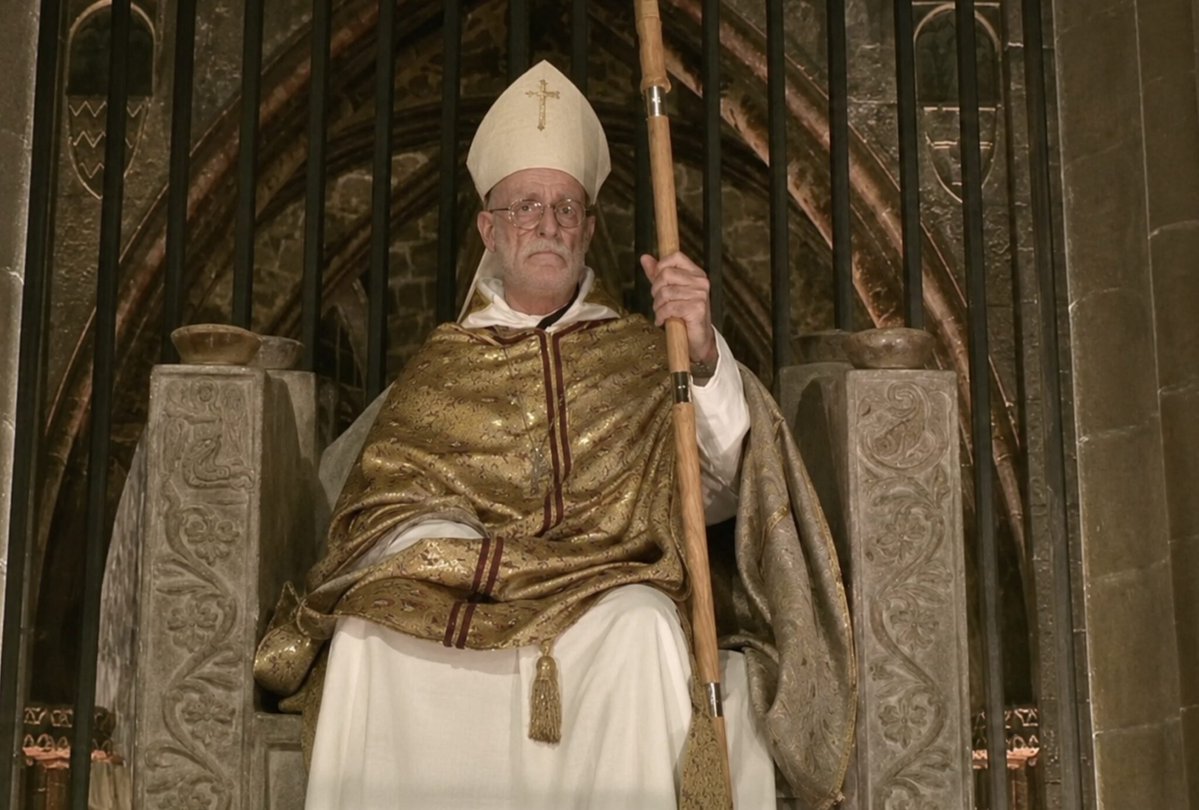
Pope Leo XIV has appointed a new Archbishop of Barcelona, I think the choice offers a fascinating insight into the direction of his pontificate.
Fra Octavi Vilà Mayo is a Cistercian monk, former Abbot of Poblet and Bishop of Girona, appointed to that diocese by Pope Francis in 2024. He succeeds Cardinal Omella, a central figure in the Francis-era establishment and member of the former Pope's inner circle of advisers. Interestingly, Vilà was reportedly the preferred candidate of Omella and Cardinal Cobo of Madrid, suggesting that Leo has little appetite for an immediate purge of the existing hierarchy. But there is more to this appointment than ecclesiastical politics. Vilà is steeped in Benedictine spirituality, with its emphasis on prayer, discipline and the centrality of Christ. He has previously warned that the Church cannot afford to lose its identity and predicted a future of smaller, more committed Christian communities, an assessment remarkably reminiscent of Joseph Ratzinger.
Most strikingly, in his first message to Barcelona today, he explicitly identifies evangelisation as the Church's indispensable mission, speaking of bringing the Gospel to unbelievers, bringing lapsed Catholics back to the faith, and proclaiming the Word of God in season and out of season. There are questions about his record, particularly his approach to Catholics attached to the traditional liturgy, and his commitment to synodality places him firmly within the vocabulary of the Francis pontificate. Nevertheless, perhaps something interesting is emerging here. Pope Leo may not be seeking a revolution in personnel so much as a reorientation of priorities: preserving ecclesial communion and institutional continuity while restoring greater emphasis to Christ, conversion and the Church's missionary mandate.
That would be a characteristically quiet form of reform, but its success will depend on whether episcopal appointments translate theological clarity into actual governance. The real test of the Leonine papacy may not be whom Leo removes, but what he expects of those he chooses to retain and promote.