I’ve been using GPT-5.6 Sol internally for the past two months, I've spent probably 25+ billion tokens. Here’s my review and comparison to Fable 5:
> Let's start with the analogy because everyone seems to be giving theirs - GPT-5.6 is likely the last version of the GPT-5 training run series. It's kind of like an athlete at their peak. Through years of experience in the game, they've become the most reliable player and has the highest game IQ. But, there's no more room to grow. Fable on the other hand, being essentially the first version of a new training run, is the first round draft pick rookie. Raw talent mixed with the energy only a young person would have results in some incredible plays we didn't think possible, but also mistakes due to lack of experience. But that rookie will only improve and likely will be better than the veteran ever was because it's a new game and a new era.
> GPT-5.6 is genuinely better at long, sustained work. With /goal, I've had it running complex projects for days with almost no intervention. It built a Minecraft-style game, kept adding features and mobs after the core game worked, and only stopped because I stopped the run. I never felt as though I had to jump in and guide it back to the right path.
> It keeps finding useful work when you give it a concrete finish line. I had it recreate Excel with a loop. It inspected the real desktop excel app with Computer Use, comparing that against its own build, and closing the gaps. I stopped it after six days after it had built an incredible amount of functionality.
> It's faster than other models in two different ways. The raw generation speed is higher, something OpenAI has been putting effort into. But it also takes a shorter path to solutions. It wanders less, changes less code, and generally knows how to get things done directly.
In daily use, it feels about 2-3x times faster than Fable. That's my impression, not a controlled benchmark. The difference is large enough that I notice it constantly.
> It works well across a wide range of tasks. I use it for one-line edits, quick questions, browser chores, and multi-day builds without changing my prompting style.
Speaking of browser control, its the best ever I've used. To the point where I actually use it often. If a task lives on a website, GPT-5.6 usually opens the browser and does it there instead of asking for an API key or forcing everything through the terminal. When I switched back to GPT-5.5, it went straight to the command line even when the browser was clearly the better tool.
> And it can handle real browser work, not just toy demos. During a data import, I had it monitor Supabase and resize instances as the load changed. It stayed on the dashboard, adjusted capacity, and checked the result without an API or a custom script.
> I also gave it a full Google Workspace migration. It moved Forward Future from https://t.co/SItHpn2TfH to https://t.co/s5tbuuNdjE, preserved the old aliases, and configured MX, SPF, and DKIM. Before a consequential save, it stopped, explained exactly what would change, and waited for confirmation.
> The reasoning setting matters a lot. Light is good for questions and small edits. High and Extra High are the sweet spots for serious work. Ultra usually takes longer than the extra thinking is worth and burns tokens.
> I love that 5.6 is split into 3 sizes. Not only can you control speed and cost that way, but you still also have the thinking effort setting for each of them. Very precise controls. I just wish Codex automatically routed my prompts for me.
> Its personality is blunt and a little bland. Claude feels warmer and more natural to talk to. GPT-5.6 is more clinical, but I like that for work. It gives me enough explanation and rarely pads the answer. I usually have to ask Fable to explain things more simply and/or more concise.
> Its front-end taste has improved, but the default is predictable. Left alone, it turns websites into PowerPoint decks with huge statements and hard section breaks. The good news is that it takes design direction well and can revise without destroying the parts that already work.
> It still makes confident mistakes. I asked it to rebuild parts of a system, and it told me the job was finished. Later, I found out it wasn't. Bits of its internal process also leak into the answer occasionally.
> Claude Fable is more naturally autonomous on large, open-ended projects. GPT-5.6 is easier to reach for. I don't need to invent a huge project to justify using it. It works just as well for a small edit or browser chore.
> GPT-5.6 is also cheaper. Sol costs $5 per million input tokens and $30 per million output tokens. Fable costs $10 and $50. Cached input is cheaper too. Still, cost per finished task matters more than cost per token.
> GPT-5.6 isn't the best at everything, and it still needs supervision. But it generates faster, wanders less, works at almost any scale, and wastes less of my time. It's the model I have the most confidence in to get the job done right the first time.
I put together a full breakdown with all the tests, prompts, and examples on a site. You can read it here: https://t.co/7v4L8aCvf3
I have been using GPT ImageGen-2 for the past weeks
I didn't think that better image-generators would be a big deal but it turns out that there is a quality threshold I didn't expect, where you can now get text, slides, academic papers
Look at what it does with my "otter test"!
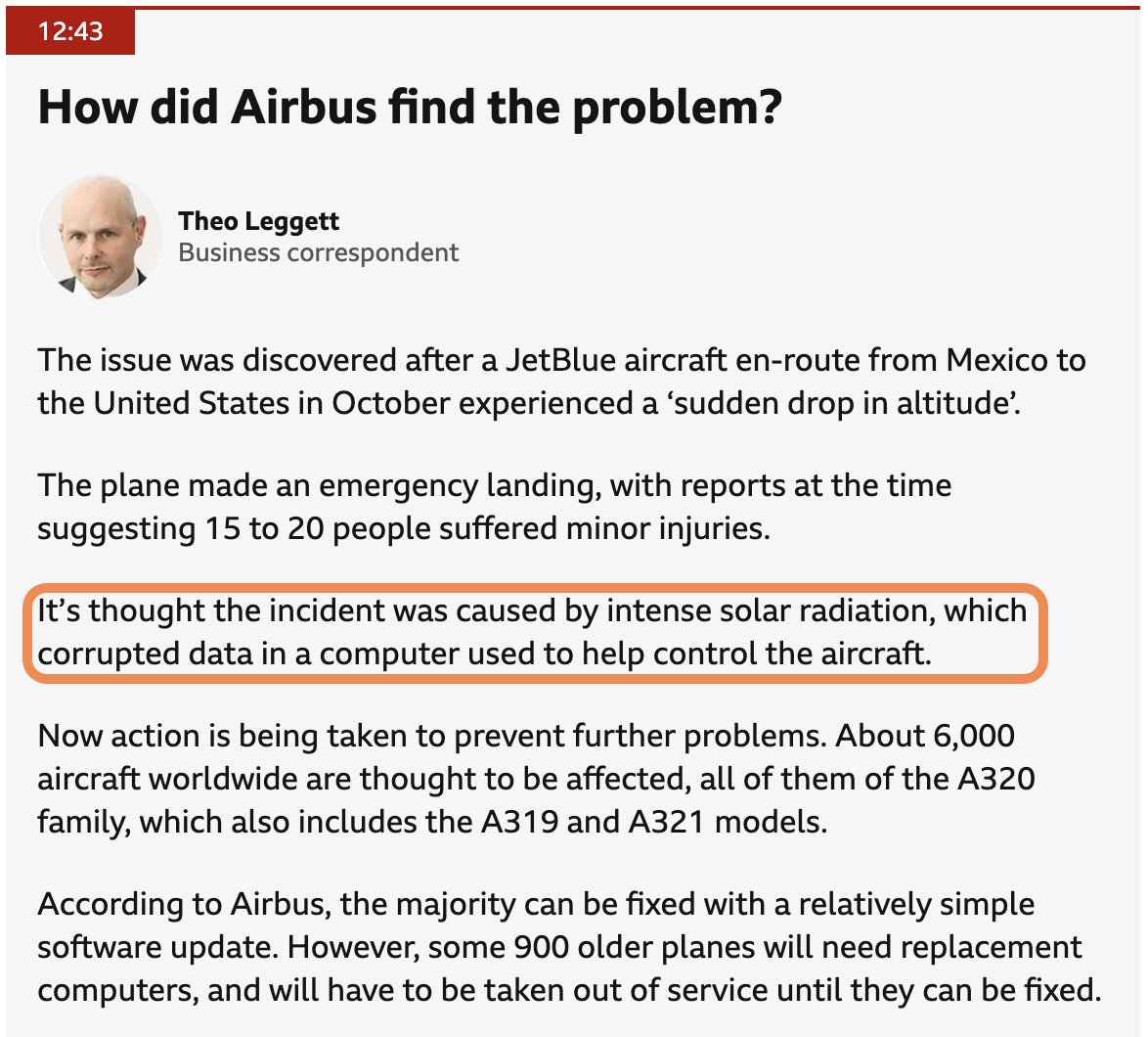
Airbus is rolling out a critical software update. Around 6,000 A320 aircraft have been grounded. The reason: solar radiation can cause failures in the onboard computer.
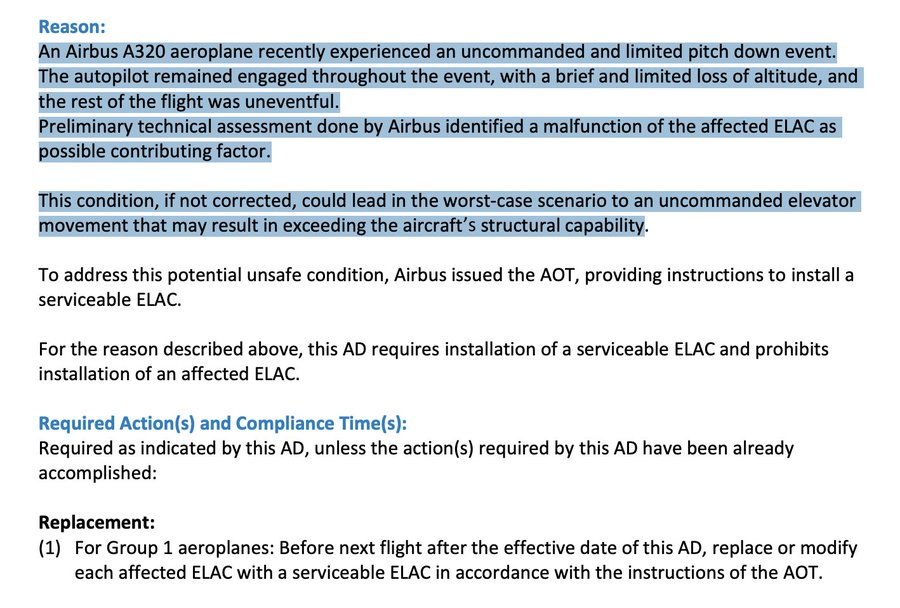
Recently, an A320 experienced an uncontrolled down “pull” while the autopilot was engaged. The cause turned out to be a problematic software update that led to a failure in the flight control computer (ELAC). In the worst-case scenario, this could push the aircraft beyond its structural limits. The ELAC system is designed with redundancy. Two onboard computers cross-check each other to avoid errors. When one provides incorrect data, the other should detect it and take over.
In software version L104, this logic was faulty, it failed to detect corrupted data caused by cosmic radiation. When radiation “flipped” bits in memory (e.g. from 0 to 1 or from 1 to 0, which does happen), the system did not recognize the error and executed an incorrect command. The solution is to revert to an older software version
A big day for space weather, with the BBC reporting that a Mexico-to-USA flight in October experienced a 'sudden drop in altitude', likely caused by *solar energetic particles* from the Sun. Here is an explanation and some thoughts as a solar astrophysicist (a thread): 1/8
LOOK: Aside from Davao City, thousands of supporters of former President Rodrigo Duterte have gathered and are also holding rallies in various areas in Mindanao, including Cotabato City, Tagum City, Iligan City, Valencia City in Bukidnon, and Ipil in Zamboanga Sibugay, this evening, March 11, 2025. | via Ivy Tejano
(Photos c/o Zee Pantao, Bandera News Cotabato, Engr. Berto, 95.1 Brigada News Iligan, DM Mclight, 92.7 XFM Ipil)
🚨 The Globalists Just Took Down Duterte – Who’s Next? 🚨
Rodrigo Duterte, the man who defied the globalist elite, has been ARRESTED today on ICC orders. This isn’t justice—it’s an attack on sovereignty. A THREAD 🧵👇 1/12
@AravSrinivas@perplexity_ai A scrappy startup already has a more effective product for daily life than the well-known 700+ person ChatGPT maker and tech giants. Tens of billions of funding aren't everything. Innovation and competition are grand. https://t.co/Dbv4laZv52