The Cost of Building vs. the Cost of Destruction
There is no equality between the cost of building and the cost of destruction in Lebanon. It takes decades to create an enterprise; endless resilience to return from the edge of despair time after time, that takes the last penny of the founder. It takes the team’s blood, sweat, and tears through years of sleepless nights and anxiety. But the fact is, it just takes a few minutes—maybe 30 minutes of paperwork and one minute of media frenzy—to destroy it all. There is a lack of balance, a lack of equality, between building and destroying.
A single, sensational social media feeding frenzy can detonate what a lifetime of work has built. The recent media frenzy around a 40-year-old bottled water company is proof: a social media influencer driven by an algorithm, a Government's hasty action and reaction, 48 hours later an apology for clear results. By then, the damage had already been done. This is the disequilibrium I’m writing about: when destruction is cheap and instantaneous, while building is costly and slow.
When public institutions are empowered to shutter, sanction, and shame more easily than they are equipped to verify, correct, and protect, the result is predictable: the wrecking ball swings faster than the scaffolding can rise.
Civilized societies admire builders and demand accountability from destroyers. Ours should be no different. If we truly want balance, the costs of destruction must be made to match the cost of building—not in money alone but in rigor: due process, transparent methods, validated labs, strict protocols, trained personnel, and a culture that understands the stakes. Agencies that can end livelihoods with a stamp and a microphone must be designed, staffed, and measured to protect legitimate enterprise, not erode it.
Too often, destructive power hides behind populous words. “Consumer protection” becomes a catch-all that justifies sloppy science, performative enforcement, and trial-by-press-release. Dictators in history wrapped harm in the language of safety; bureaucracies can do the same, unintentionally or otherwise. If protection is the goal, protocols and evidence—not theater—must lead the way.
Markets already punish bad products. Builders live or die by customers who can leave at any time. That natural balance is real and relentless. Layer on top of it careless intervention—ambiguous tests, unverified claims, public shaming—and we don’t make consumers safer; we make them poorer. We don’t improve quality; we stifle it. No society has prospered by vilifying its builders and deputizing its destroyers.
Lebanon knows how to build. From the Phoenicians’ purple dye and Mediterranean trade routes to the 1950s and 60s—when finance and services flourished here—we led by building. We lost our edge when overreach, over-regulation, and an ideological hostility to entrepreneurs took hold. The culture of “anti-builder” replaced the culture of “let's build”.
That post-60s posture—suspect the builder, celebrate the takedown—has turned a leading Mediterranean economy into a laggard. Until we change that culture and design institutions that can distinguish between a real public-health threat and a headline-driven pile-on, the cost of destruction will remain far lower than the cost of building. The recent needless damage should be our warning—and our turning point.
People are making $10K/month with ChatGPT.
But 90% of people don't know how to use it.
So I built Ultimate Prompt Engineering Guide for you:
Next 24 hrs, it's FREE!
To get it:
1. Follow me (so I can DM you)
2. Like and RT this tweet
3. Reply "SEND"
I'll DM you
Forbes has released its debut list of Customer Experience All-Stars, ranking the top 300 brands in the U.S. based on consumer perceptions of their products, services, and customer treatment.
The diverse list includes Buc-ee's, Chick-fil-A, In-N-Out Burger, Chewy, Toyota, Lexus, See's Candies, and Mario. The rankings were produced in partnership with a data analytics firm, using over 3.7 million ratings from an extensive online survey covering over 2,220 unique brands
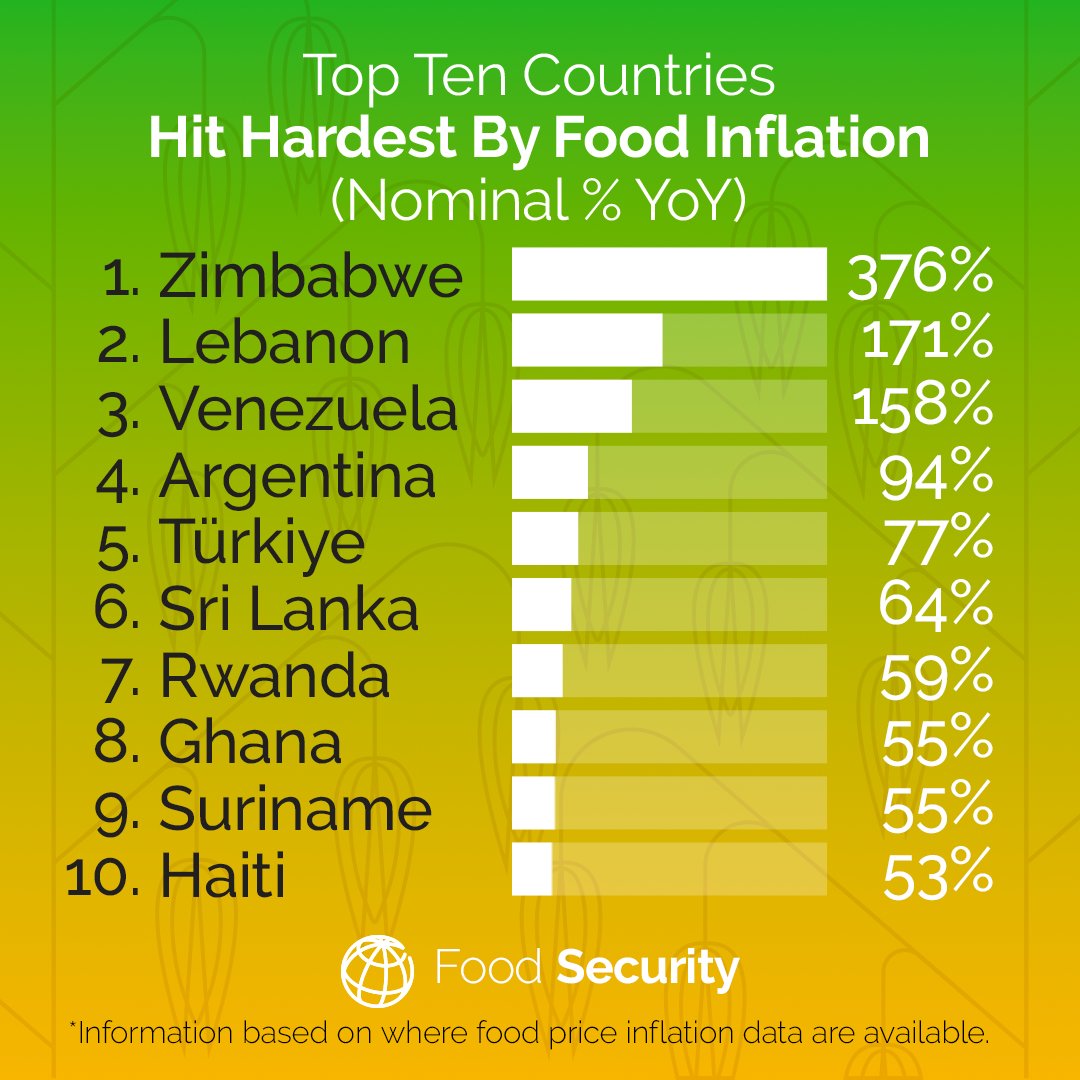
The latest #FoodSecurity Update from @WorldBank is out.
Download for insights on:
1️⃣ The global food market outlook
2️⃣ Emerging issues
3️⃣ Regional updates
🔗: https://t.co/ghbhIh8nBm
"The more time you spend complaining about what you deserve, the less time you have to focus on what you can create. Focus on what you can control."
– @JamesClear
"We don't rise to the level of our goals, we fall to the level of our systems" James Clear
There wont be improvements in Lebanon until the system(s) is/are changed/rebuilt.
Our system(s) just don't work.
Everything we call civilization was invented in the last 500 generations—way too short a time for our bodies and brains to re-optimize. We're a bunch of primates in a totally unnatural environment, trying our best. Good thing to keep in mind!
Here you go my article written by #ChatGPT about using Kano Model in #customerexperience
Although #AI content writers have been here for a while. this is very #innovative and accurate. check it out.
https://t.co/ICNekAAWyO
Ironic, this happens the same week Gov increased taxes 1000% but never did/can't/won't provide basic services. And nonchalance keeps robbing people of their livelihoods.