@cactus_is_love Super skatīties uz šādu pabeigtu un labi noformētu darbu.
Es 24. gadā iedomājos pamēģināt uztaisīt līdzīgu statistiku ar pilnīgi visu transportu - velo, mašīnu un katru sabiedriskā veidu -, lai pēc tam salīdzinātu, bet visu gadu tā arī neizturēju :D
@n_karklinz Manuprāt, tas nav nekas baigi īpašs. Krievu transportlidmašīnas un NATO izlūkošana jau gadu gadiem.
NATO valstu lidmašīnas, tai skaitā čārterreisi ar pasažieru lidmašīnām, veic kārtējo, ik 6 mēnešu, Latvijā izvietoto karavīru rotāciju, kas beidzas Janvārī un Jūlijā, ja nemaldos.
Man ir kauns par Saeimas lēmumu. No kura laika tāda atpakaļrāpulība? No kura laika mēs tādi esam palikuši? Kam ir izdevīgi kaitēt Latvijas kā modernas demokrātijas labajai slavai? Tiem, kuri gribētu mūs vājināt un atšķelt no Eiropas tautu saimes, - noteikti.
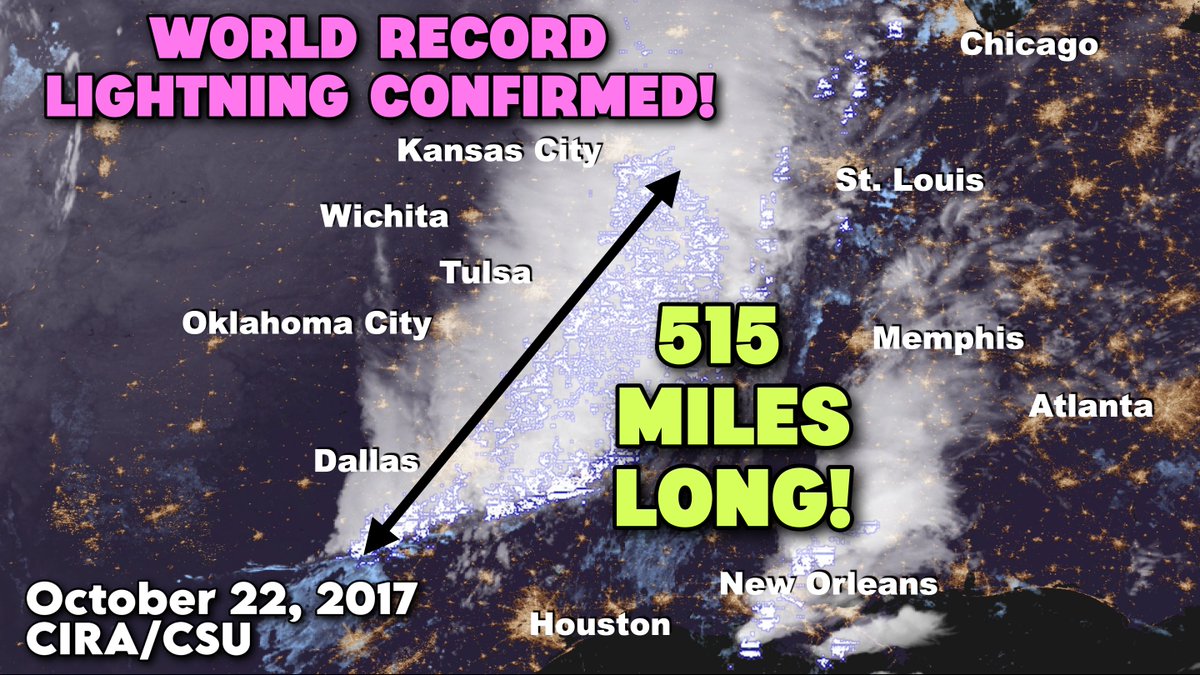
BREAKING: A world record 515 mile-long lightning bolt has been confirmed over parts of Texas, eastern Oklahoma, northwest Arkansas, southeast Kansas and southwest Missouri!
The World Meteorological Organization announced the discovery on Thursday. The strike occurred on October 22, 2017, but was only more recently discovered in data from the GOES East weather satellite.
Researchers call these enormous discharges "megaflashes". Conventional ground-based lightning detection networks can only detect ground strikes. By using satellite data, scientists were able to peer down from 22,236 miles above Earth's surface. That allowed researchers to determine that a SINGLE discharge stretched from east of Dallas all the way to near Kansas City.
Much of the discharge occurred within the clouds, but the same bolt also branched off and struck the ground in 64 different locations! How long is 515 miles? The equivalent is Boston to the Outer Banks, or from Brownsville, Texas to the Oklahoma border.
To get massive bolts, you need to have horizontally-extensive storm complexes. We call those MCSs, or mesoscale convective complexes.
Storms are "only" 10 to 12 miles tall at most, but large-scale complexes can be hundreds of miles long. A region of charge can spark a discharge, or bolt, in one cloud that can "crawl" through the remainder of the complex.
The new record beats a 477.2 mile-long bolt that discharged across parts of the southern Plains on April 29, 2020.
"These new findings highlight important public safety concerns about electrified clouds which can produce flashes which travel extremely large distances and have a major impact on the aviation sector and can spark wildfires,” World Meteorological Organization secretary-general Celeste Saulo said in a statement about the discovery.
Megaflashes are also known to be long in duration. On June 18, 2020, an enormous bolt spent a total of 17.1 seconds discharging over Uruguay and northern Argentina.
“The duration of this flash was over 7 seconds,” wrote Randy Cerveny, a researcher and professor at the University of Arizona, in an email.
In its new announcement, the WMO also referenced two other lightning records — both for fatality counts from single strikes.
In 1975, 21 people in Zimbabwe were killed by a bolt as they huddled inside a hut for safety. And in 1994, 469 people were killed in Dronka, Egypt when lighting struck a set of oil tanks, sparking a fire and causing burning oil to flood the town.
@UldisGelins@MeteoLatvia Jā, radars ir vecs un praktiski vairs nedarbojas. Jauni meteoroloģiskie radari palīdzētu izplatīt precīzākus un detalizētākus brīdinājumus, nevis kā tagad visaptverošus.
2 mezocikloni (rotējoši negaisa mākoņi) uz dienvidiem no Jelgavas, vakar (17.07.) ap plkst. 19.30. Vidējā atmosfēras slānī sauss gaiss (dry air entrainment), kas liedza tiem kļūt robustākiem.
@Djpuco A few more photos from the same location. I suspect some of the hailstones definitely were around 10 cm. If so, that would be the first recorded giant hail event in Latvia and already breaks the previous record (30-08-2023, Rite - 8.5 cm).
📸 Dita Brante