🧵 THREAD: How one Tesla owner cracked European FSD bureaucracy (and caught Tesla off guard) 🇱🇹🔥
Part 1/5
Yesterday, @TeslaEurope officially announced that FSD (Supervised) is rolling out in Lithuania — making it the 2nd country in Europe after the Netherlands. But the real story behind this is wild. This wasn’t a top-down strategic move by Tesla HQ; it was the work of a single Reddit user: andriuslink. 👇
Sabiedriskā labuma organizācija “Drosme Darīt” vērsusies pie atbildīgajiem ministriem, aicinot neatbalstīt trīs vēja elektrostaciju projektus. Kā argumenti tiek norādīti nepilnīgi ietekmes uz vidi novērtējumi, būtiski drošības riski un iespējamie tiesiskuma pārkāpumi.
🖥️ https://t.co/AlnF9pyfwV
@Eglajs Paldies par komentāru!
Vadījos pēc šī 2017. g. ļoti neoficiālā raksta https://t.co/c83gdnzaaR, ko arī māksliniecisku apsvērumu dēļ izlēmu baigi neapšaubīt.
Šādi izskatītos ar korektāto 800 slieksni.
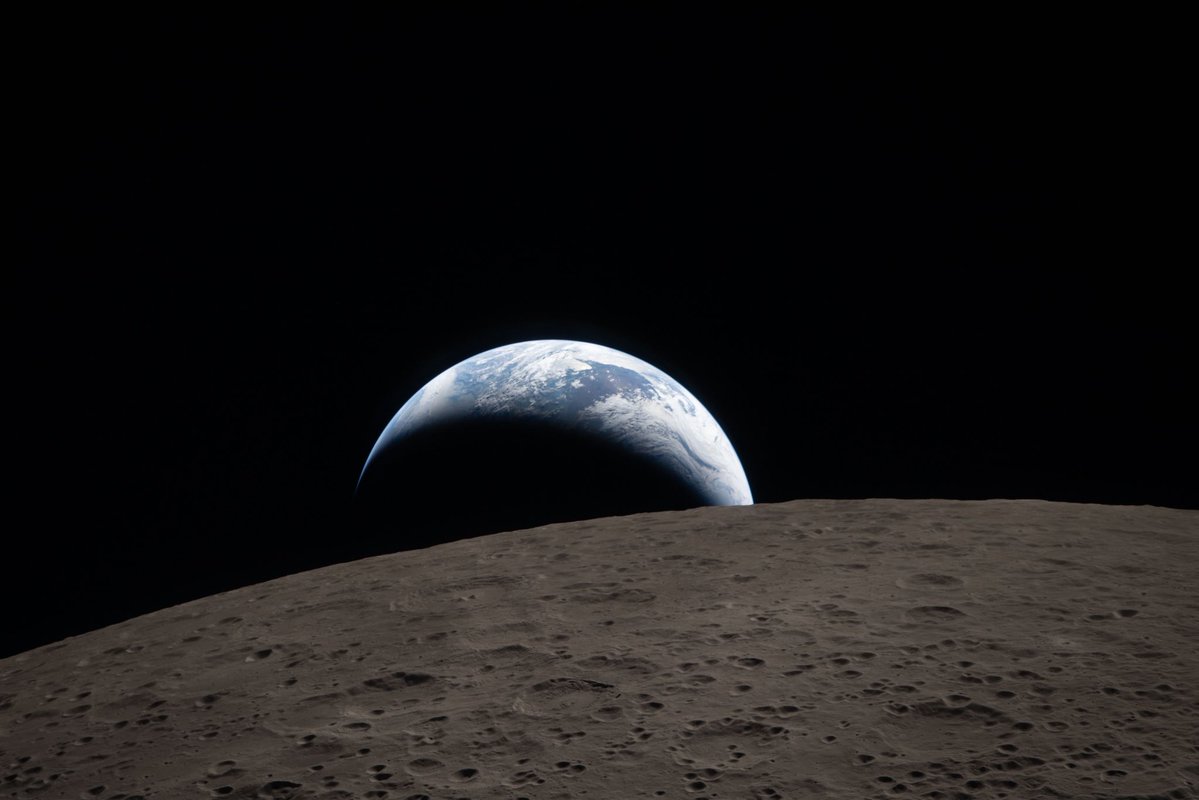
EARTHSET.
April 6, 2026.
Humanity, from the other side. First photo from the far side of the Moon. Captured from Orion as Earth dips beyond the lunar horizon. Photo: NASA
To think that we aren't just going "to the Moon," but rather traveling to meet it at an exact point in space... changes everything.
It all comes down to orbital mechanics: arriving at the precise location, at the precise moment.
One tiny error... and it simply doesn't happen
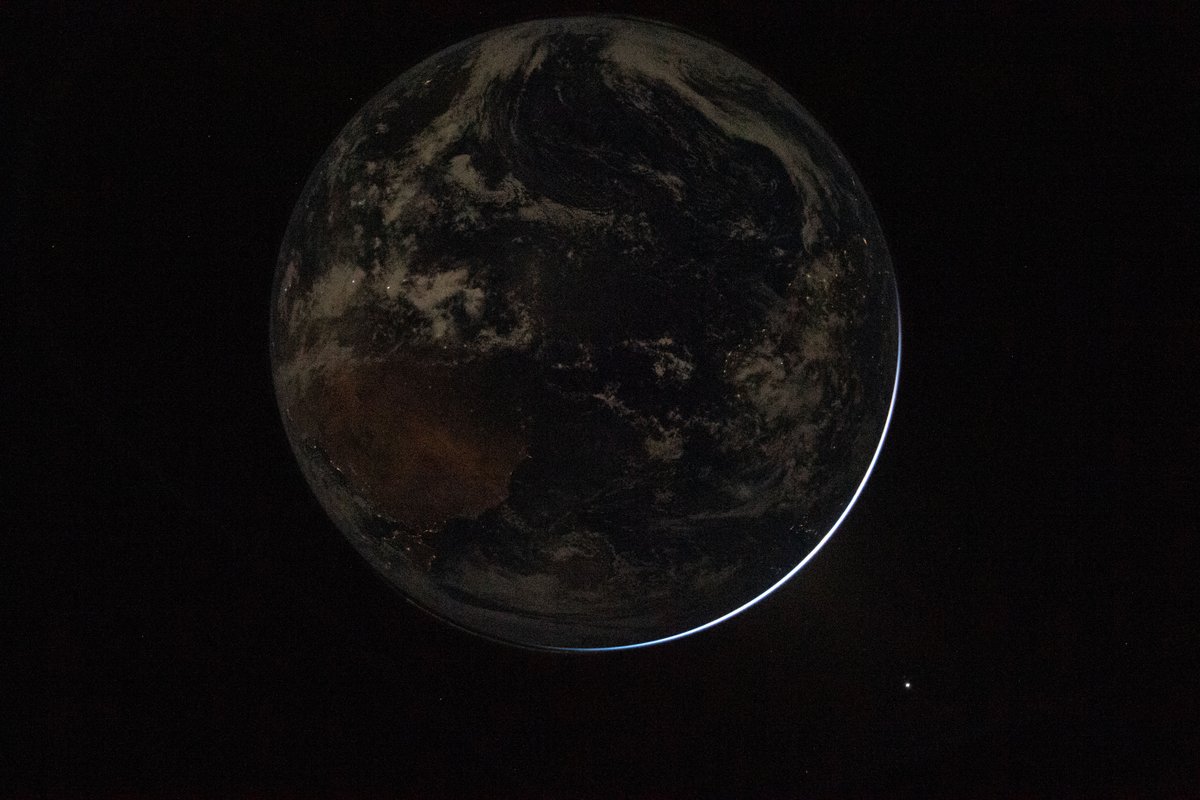
Even in darkness, we glow.
In this image of Earth taken by the Artemis II crew, we can see the electric lights of human activity. In the lower right, sunlight illuminates the limb of the planet.
That's us! 🌍
The Artemis II crew captured beautiful, high-resolution images of our home planet during their journey to the Moon. As @Astro_Christina put it: "You guys look great."
If you're under 53 years old, you have never once been alive while a human was farther than 250 miles from Earth. Tonight, four astronauts are heading 252,000 miles out. That's a thousand times farther than any person has gone in your lifetime.
The 250-mile ceiling is where the International Space Station floats. Every astronaut since December 1972 has been stuck in that zone. Spacewalks, science experiments, cool photos from orbit, sure. But nobody left the neighborhood.
The last crew to go farther was Apollo 17. December 1972. Nixon was president. The internet didn't exist. Cell phones were 11 years away. The youngest member of that crew is now 90 years old.
The farthest any human has ever been from Earth is 248,655 miles. The Apollo 13 crew set that number in 1970, and they didn't mean to. Their oxygen tank blew up, and the emergency route home took them farther out than anyone before or since. Tonight's crew will break that record on purpose.
And the crew itself. Victor Glover becomes the first Black astronaut to leave Earth's neighborhood. Christina Koch becomes the first woman. Jeremy Hansen, a Canadian fighter pilot, becomes the first non-American to do so. When they come home, they'll slam into the atmosphere at 25,000 mph, faster than any human has ever traveled.
The Moon's south pole has ice. Water ice, sitting in craters so deep that sunlight hasn't hit them in billions of years. A 2024 NASA study found way more of it than anyone expected. You can split water into hydrogen and oxygen, which gives you rocket fuel, breathable air, and drinking water, all made on the Moon instead of hauled up from Earth. George Sowers at Colorado School of Mines calculated that Moon-made fuel could shave $12 billion off a single trip to Mars. The Moon is a gas station on the road to Mars.
NASA Administrator Jared Isaacman announced last week a $20 billion plan to build a permanent base at the South Pole over the next seven years, with landings every six months. China is developing its own lunar lander and spacesuit, aiming for a crewed landing by 2030. The Artemis program has burned through $93 billion so far, and the first actual surface landing is penciled in for 2028. There's a real question of who gets there first this time around.
Harrison Schmitt walked on the Moon in December 1972 as part of Apollo 17. He's 90. Asked about it this week, he sounded pretty relaxed. "Mars is attainable," he said. "We're humans. That's what we've always done."
Awesome bit of data that makes intuitive sense.
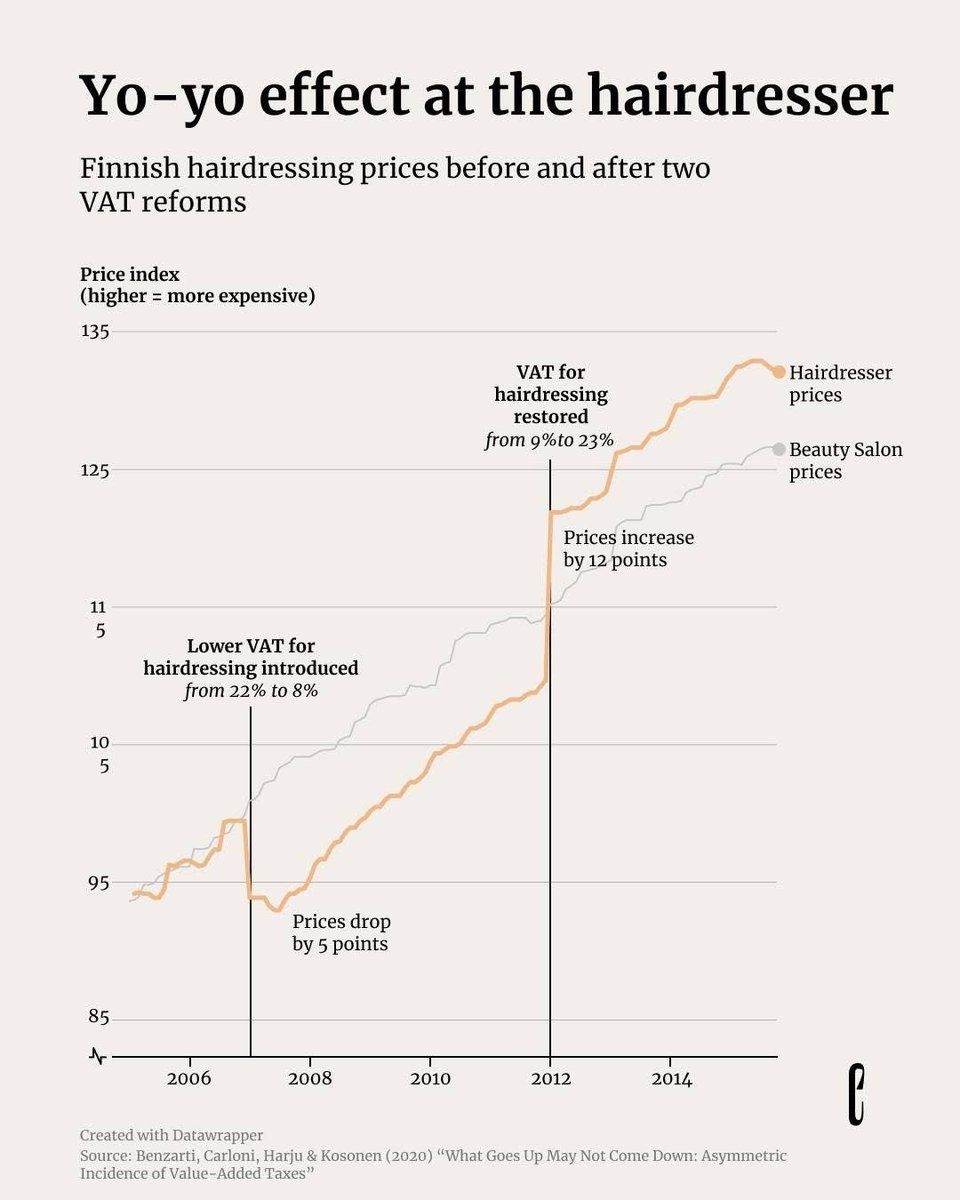
“Finland cut VAT on haircuts in 2007 to see if cheaper prices would boost demand and jobs. But when the tax fell by €4, many salons lowered prices by only €2 and kept the rest as profit. When VAT rose again, prices jumped by the full €4, turning a temporary tax cut into a permanent price hike. It’s tax incidence in action: firms with pricing power pass on cuts partly, and hikes fully.”
Source: https://t.co/5I8QnEInku
@ChrisHillfield Es kaut kur dzirdēju, ka lielos ātrumus arī gaisa pretestība ir proporcionāla v^2, tātad gan jau viss beigu beigās izlīdzinās.
Uz citas nots - man no seniem laikiem stāv prātā UK pētījums par to, ka čance avarēt ir proporcionāla v^3 un avarēt letāli v^4.
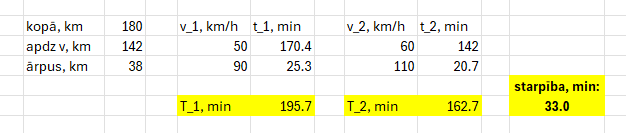
@KraKrapsis80788 Izskatās, ka kaut kas eksperimentā pa ceļam nogāja greizi.
Pieņemot dotos lielumus par patiesību, no kopējiem 180 km ar lēno ātrumu būtu bijis jābrauc 142 km no tiem.
Kas neizklausās ticami un attiecīgi liek domāt, ka dotie lielumi tomēr nav pilnīgi korekti.
@kasparsf@Unabomberz Nav tiesa.
Jo ātrāk brauc, jo mazāk katri nākamie ekstra 20 km/h dod.
Ja salīdzina 1 km/h un 21 km/h, Krāslavai atšķirība būs n-tās reizes, nevis tās pašas 40 minūtes.
Rupji rēķinot: 200 km ar 1km/h ir 200h, bet ar 21km/h ir ~10h.
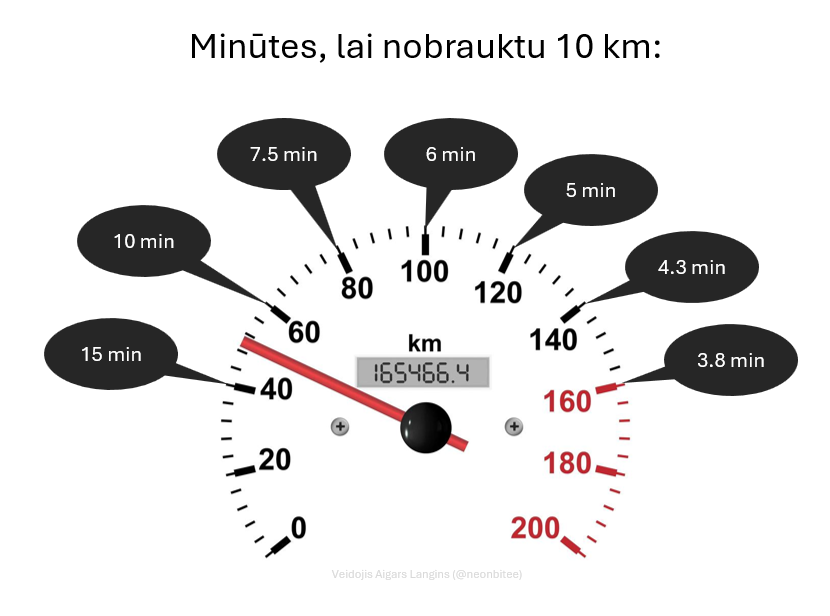
@imishs Rēķināju uz 10 km, jo tādā posmā ir daudz vieglāk runāt par vienu konkrētu ātrumu.
Uz 100 km jau būs daudz apdzīvotu vietu utml.
Kas "īsti nav pareizi"?